Filed Under:
One bite at a time: Writing reentry
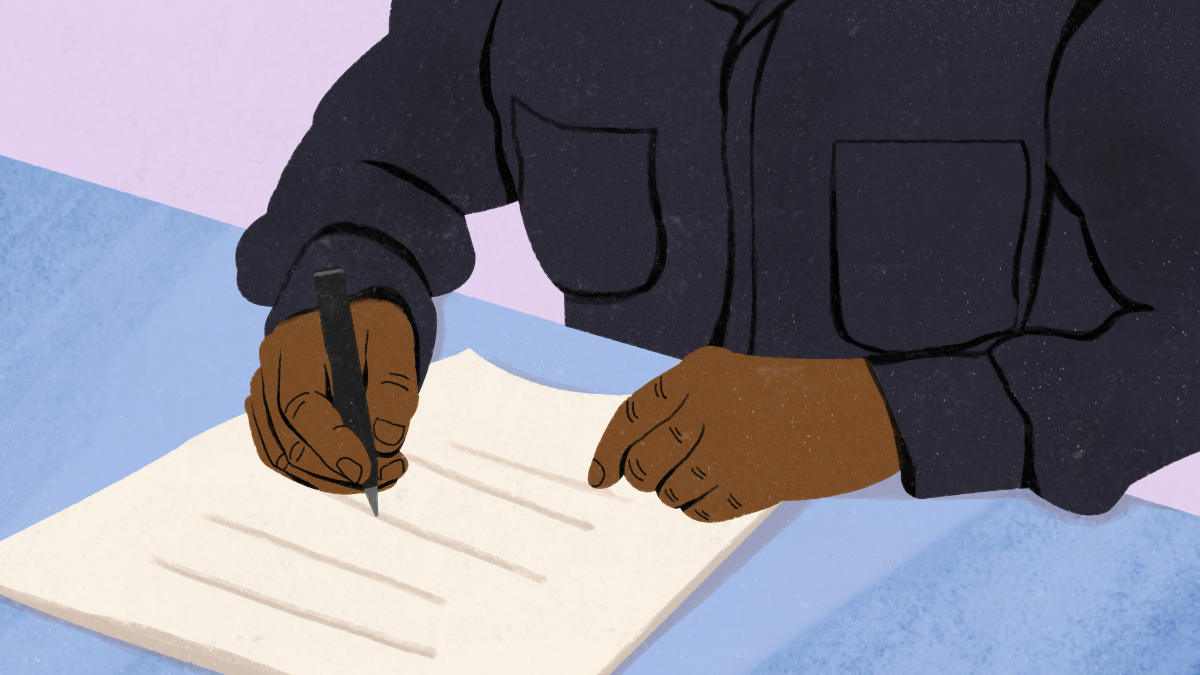
Writing this column about the brutality of prison and the complexity of reentry has taught me that hardship rarely ends with a clean lesson
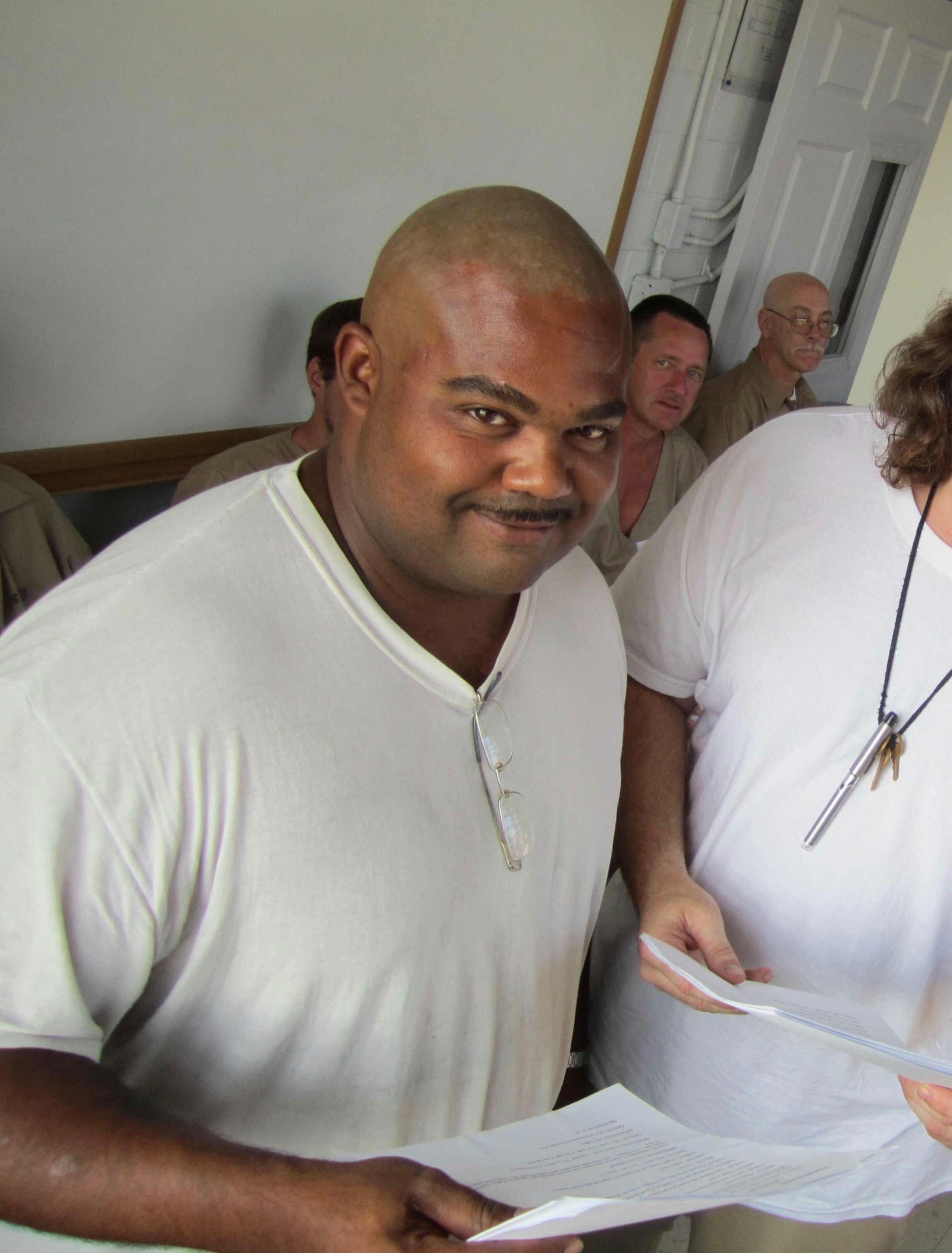
Derek R. Trumbo, Sr.
Real journalists wrote and edited this (not AI). Independent, community-driven journalism survives because you back it. Donate to sustain Prism’s mission and the humans behind it.
Real journalists wrote and edited this (not AI)—independent, community-driven journalism survives because you back it. Donate to sustain Prism’s mission and the humans behind it.
Dear Reader,
When I look back over my “One Bite at a Time” columns, I do not see a neat set of essays lined up by publication date. I see myself figuring life out in real time.
I also see a man who, after 20 years in prison, was learning how to make ordinary choices, trust himself again, and live around people without letting fear take over. At the time of my release, I was mostly trying to pay attention and be honest on the page. Now I can see how each column caught me at a different stage of reentry. One piece led to the next because life kept asking new questions before I finished answering the old ones.
This process has taught me that writing is less about proving I have something to say and more about paying attention until meaning shows itself. Being inside taught me to write against erasure. Being home is teaching me to write with responsibility. Now the page asks different questions of me. Did I listen before I responded? Did I notice what my fear was doing to the people around me? Did I turn a private wound into public language because it needed to be said or because I wanted to be understood? Those are not always comfortable questions, but they make my writing better because answering them makes me more honest.
This awareness has changed the way I see the world. I simply notice more now: the way stress sits in people’s bodies; the patience it sometimes takes for others to walk beside me while I learn new things; the trust my family and mentors extend when they believe in my future. I notice my fiancée’s peace and how easily it can be affected by my tone, my schedule, my worries, or my silence. I notice small kindnesses, too, such as a cashier patiently waiting while I figure out a card reader and a friend checking in because they know reentry does not end just because my incarceration did. Those moments teach me how much we are always affecting each other.
These days, I am feeling very reflective—about my life and my writing. So much, in fact, that I recently reread the columns I’ve written since my release from prison last year. So I figured: Why not take this stroll down memory lane together?
When I look back at my first column after reentry, I see it now as an illustration of the shock of freedom. After all that time inside, I suddenly had options again—and it was terrifying. I could now decide what to eat, where to go, when to answer my phone, and whether I wanted to sit in silence or turn on the television. These things sound small, but they are not when they have been taken from you for almost 20 years. I remember standing in front of a fast food menu after my release and feeling almost embarrassed by how hard it was to choose. Everyone else seemed to know what they wanted. I stood staring at the menu as if it were a test. That moment carried the weight of coming home: Freedom was beautiful, but it was also full of pressure.
Changing my column to focus on reentry gave me a way to name what was happening. Reentry was not something I could swallow whole; I had to take it one bite at a time. What started as my column’s refreshed title became my approach to life. Some days that meant learning how to use a debit card without feeling like everyone in the store was watching me. Other days it meant walking through a grocery aisle and not getting irritated because there were 10 kinds of the same product. Inside prison, writing helped me survive confinement. Once I got out, writing helped me slow down long enough to understand why ordinary life felt so overwhelming.
The column focused on parole was about the strings that still attached me to prison. I was no longer behind prison walls, but my life was still marked by rules, check-ins, travel restrictions, and the fear of being misunderstood. Before I went somewhere, I had to think about whether I was allowed to be there. Before making plans, I had to consider whether a schedule change might create a problem. Even a simple trip across town came with a quiet mental scan: Do I need permission? Could this look bad? What happens if I make an honest mistake? People often imagine release as the end of punishment. Parole taught me that the line between freedom and confinement can remain thin, long after the gate opens.
Writing about parole helped me understand that accountability is not the same as pretending a system is simple.
Writing about parole helped me understand that accountability is not the same as pretending a system is simple. I could take responsibility for my choices and describe the pressure of moving through a world where one wrong turn could carry consequences most people never have to consider.
Writing honestly about the new rules that dictated my life also led me to write about a dream that surprised me: homeownership. Before prison, I never imagined owning a house. Inside, my world had shrunk so much that a bunk area in a dormitory-style prison wing was the closest thing to a private space I could hope to have. I called that area “home” because I had to call it something. A locker, a mattress, a few photographs, some books—that was my home for almost 20 years.
Through writing about my desire to own a home, I came to understand how incarceration shaped my imagination. It taught me to endure with very little, but endurance is not the same as living. Once outside, I asked myself questions I didn’t previously allow myself to ask: Could I buy a house? Could I build real stability? That piece marked a shift from fear toward possibility. Fear was still there, but it was no longer the only voice in the room.
My column about joining the Writing Freedom Fellowship turned these questions inward. Wanting a home was one kind of belief; believing I deserved stability, recognition, and opportunity was another. When I learned I was chosen for the fellowship, I did not immediately celebrate, and that reaction was a revelation. Even after years of writing, mentoring others, winning awards, and taking my craft seriously, a part of me still questioned whether I belonged in literary spaces.
Publicly grappling with my feelings around the fellowship helped me admit how hard it was for me to receive good things after years of rejection, punishment, and survival. It also helped me see my work more clearly. I was not only a man with a prison story; I was a writer with a voice. That realization did not come from ego; it came from unapologetically allowing myself to accept that my words had value. I was learning that reentry is not only about finding housing, work, or a way to satisfy parole. It is also about learning how to embrace opportunity.
My column about love grew out of the one about validation. Accepting professional affirmation is one thing; accepting love requires a different kind of courage. Behind bars, I worked hard to grow mentally, emotionally, and spiritually. I read, wrote, joined programs, and tried to become a man who could look at himself without flinching. But companionship was something I could not create by discipline alone. Prison limits touch, privacy, tenderness, ordinary care, and the small daily exchanges that make people feel human. For years, the memories of love and laughter I carried felt like remnants from a past life.
Writing about love made accountability more intimate. It is easy to speak of growth generally. It is harder to practice growth with someone close enough to be hurt by my silence, impatience, and fear. Love asks for listening, honesty, humility, consistency, and repair. It asks me to pay attention to my tone when I am tired; to answer instead of shutting down; to explain what I am feeling instead of making someone guess. My column about love illustrated how my choices were no longer mine alone to carry. They affected the woman I love, my family, and the people who chose to trust me after years of absence.
The column about regaining my faith carried this inward work further. Earlier pieces focused on release, parole, housing, validation, and love, but faith propelled me to think about what held me together.
That column reminded me that writing has always been part of my spiritual practice—even when I would not have described writing that way. Writing gives me a place to wrestle. It lets me sit with questions that do not resolve quickly. It lets me admit uncertainty without dressing it up as wisdom. Some days faith looks like prayer. Others, it looks like getting up, making coffee, going to work, paying my bills, and doing the next right thing even when I do not feel especially inspired. I do not want my columns to become a performance of redemption, where every struggle is packaged into a lesson and every wound is forced to prove its usefulness. I want this writing work to stay alive and honest.
When I recently wrote about my home as my sanctuary and responsibility, my dream of homeownership was realized. My fiancée and I closed on a home in Kentucky, the state where I was born and where I spent nearly 20 years incarcerated. I expected that milestone to feel like pure joy. Instead, joy commingled with fear. I knew what it meant to lose stability and to have nothing solid under my feet. Owning a home did not erase that anxiety. In some ways, it only made me more aware of what I had to protect. A leaky faucet, a lawn that needs cutting, and rooms that require cleaning are all reminders that home is not just something you get. It is something you tend. The man who once called a prison bed “home” now had to learn what a real home required. That humbled me.
By the time I wrote my latest column, about media as a mirror, my lens had widened again. Reentry was explored through exposure. I returned to a world that moved faster than the one I left. Smartphones, streaming, social media, viral moments, music, headlines, and new slang made me feel like I walked into a conversation that had started years before I arrived. Everybody seemed to know the references, the jokes, the pace. I was catching up while trying not to lose myself in the noise.
That column helped me see that I can scroll without thinking, or I can ask why something holds my attention. I can use media to escape, or I can let it show me what I am still carrying. A song playing in the car, a movie scene, a podcast, or a headline can bring up memories I did not know were so close to the surface. Sometimes I catch myself reacting to a joke, a trend, or an argument online and realize the reaction says more about me than about whatever is on the screen. As I explore and revisit media, it’s showing me who I was, how the world kept moving while I was away, and who I am still becoming.
Taken together, my reentry columns trace a season in my life I did not fully see while I was writing. Each subject prepared me for the next because my new life outside demanded more from me.
My columns are the place where these different versions of me intersect. The man who survived prison meets the man trying to build a home. The writer who learned to create under confinement meets the writer learning to create in motion. I am proud of this growth, but I do not want to romanticize it. Growth has to be practiced when I am tired, irritated, scared, or unsure. It has to show up in how I listen, how I love, how I work, how I rest, and how I respond when life refuses to follow the plan in my head.
If there is a thread running through “One Bite at a Time,” it is that I am learning to live with my eyes open, and that means understanding that my life does not belong only to me. My healing affects other people. My failures do too.
That is why writing feels so different now. It is still a lifeline, but it also requires accountability. Writing helps me explore whether I am becoming the kind of man my words suggest I want to be, and it shows me when I am slipping into fear, defensiveness, pride, or old survival habits. It also reminds me that the people around me are not background characters in my reentry story. They are human beings with their own burdens, hopes, histories, and needs. My life now intersects with theirs in ways I am responsible for noticing.
That is why I want the column to keep changing. I do not want “One Bite at a Time” to become a formula where each essay begins with hardship and ends with a clean lesson. My life has not worked that way—and neither has yours. Some days we feel clear and grateful. Other days, we are anxious, impatient, and maybe even angry. Personally, I am still surprised by how much prison taught my body to expect danger.
What is true for all of us is that accountability does not announce itself as big, moral tests. It shows up in whether we return a call, keep our word, tell the truth when it would be easier to stay quiet, or admit that we are wrong before someone has to drag an apology out of us. For me, accountability shows up when I am tired after work and still need to be kind. This is how I know whether change is real or merely stays on the page.
I do not know exactly where the next columns will take me. I only know they will keep asking me to make meaning from what I am living, and be honest about the growth that is still unfinished. If my earlier writing was about surviving incarceration, these columns are about learning how to live after it. For me and many people on parole, freedom is not a single event; it is a daily practice. Personally, I am learning that creativity is not separate from accountability.
Perhaps the biggest lesson I have taken from this walk down memory lane is the understanding that for me, becoming a better writer and becoming a better man are part of the same work.
The Right to Write (R2W) project is an editorial initiative where Prism works with incarcerated writers to share their reporting and perspectives across our verticals and coverage areas. Learn more about R2W and how to pitch here.
Editors:
Tina Vasquez, Lead Editor
Carolyn Copeland, Top Editor
Stephanie Harris, Copy Editor