Filed Under:
One bite at a time: My own personal slice of the American pie
Formerly incarcerated people are almost 10 times more likely to be homeless than the general population. So when a friend introduced the idea of homeownership, I found myself wondering: Could I purchase a house?
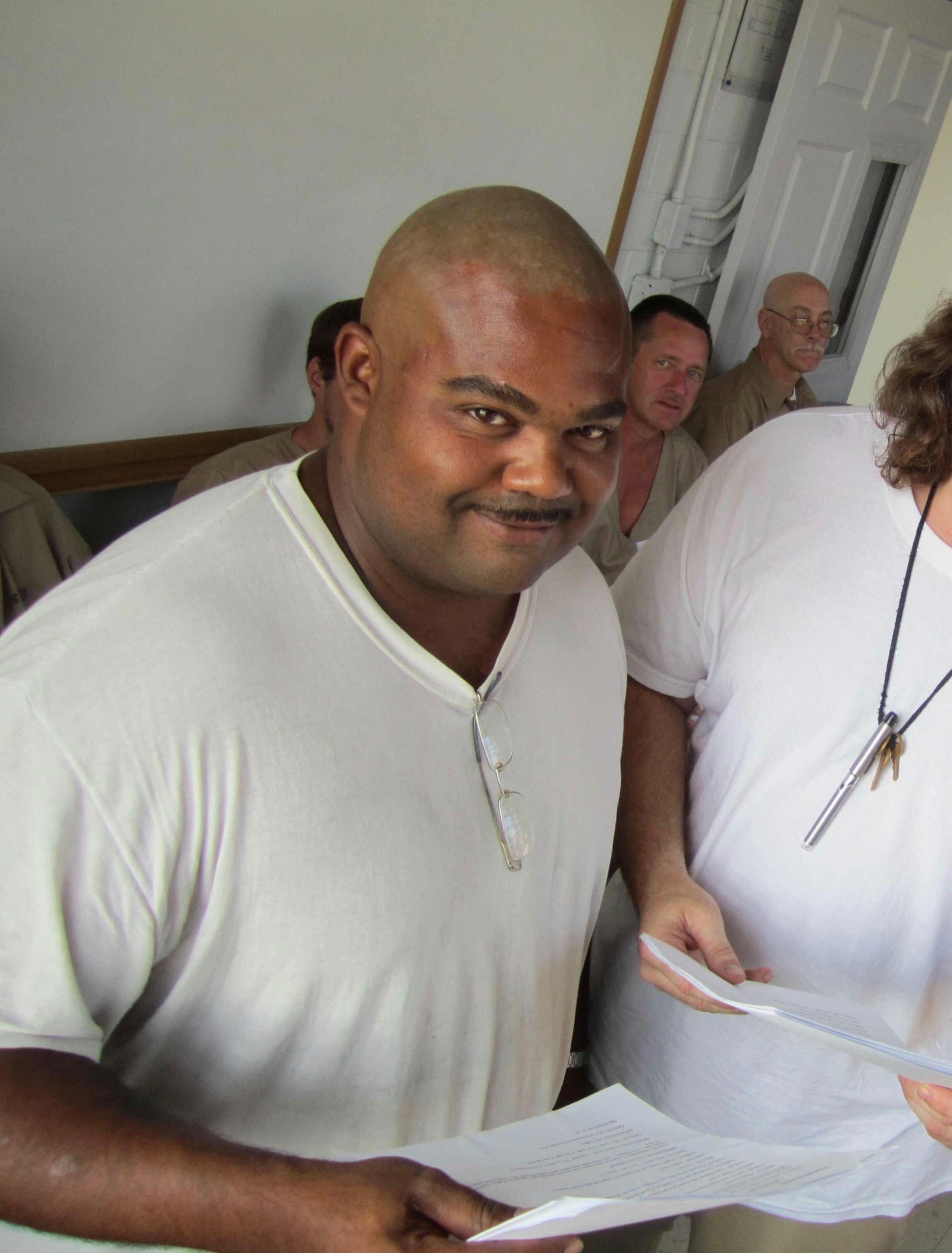
Derek R. Trumbo, Sr.
Real journalists wrote and edited this (not AI). Independent, community-driven journalism survives because you back it. Donate to sustain Prism’s mission and the humans behind it.
Real journalists wrote and edited this (not AI)—independent, community-driven journalism survives because you back it. Donate to sustain Prism’s mission and the humans behind it.
Dear Reader,
I know many of you have had the impression that incarcerated people live in small, cramped cells with bars for windows and long nights of solitude. Well, you’re generally right in that assumption. But that wasn’t my reality.
At Kentucky’s Northpoint Training Center where I spent nearly 20 years, I was in what’s commonly referred to as an “open-wing environment.” This is typically described as a “dorm-like setting,” but the many rows of bunk beds reminded me of an Army barracks some days and the belly of a slave ship on others. But no matter how I perceived my surroundings on any given day, the prison never allowed for privacy, peace of mind, or an alternative to the soul-sucking monotony of incarceration.
Our living space was called our “bed area.” If you’ve never been inside, this might be hard for you to understand: While prison was torture, for close to two decades, it was also my home, and my small area was my place of residence. Not everyone feels this way, of course. I can recall many times when other men inside became incensed when I referred to my bed area as my “home.” To them, calling prison home was akin to becoming complacent with the conditions of mass incarceration.
But I didn’t know what it was to have a real home or an understanding of what owning a home even meant.
Prison was my residence, and my bed area was the only safe space I knew—until now.
Now that I am out of prison and on parole, I often reflect on how limited our dreams are when we are incarcerated. Prison was definitely not my home. My bed area was never a safe space. Why did I allow myself to become so accepting of these circumstances? That answer is both simple and incredibly complicated: I did the very best I could with what I had at the time. My small corner of prison was my sanctuary because I didn’t know any better.
The conditions created by mass incarceration shrink our worldview and have us dreaming of scraps.
How many guys did I know inside who became terrified as their release date approached because the cost of prison meant they were leaving with nothing but debt? How many told me they were “scared to death” of their financial futures because working in prison, they earned the slave wage of $1.76 a day for performing 40 weekly hours of backbreaking manual labor? How many were elderly, disabled, and abandoned by their families and the state?
And when people get out of prison, what exactly are they going “home” to?
Incarcerated people are less likely to have access to affordable housing due to discrimination regarding their criminal history, and a majority struggle to secure stable employment due to criminal record checks. In fact, formerly incarcerated people are “unemployed at a rate of over 27%—higher than the total U.S. unemployment rate during the Great Depression,” according to the nonprofit, nonpartisan Prison Policy Initiative. Broadly, people who have spent time in prison not only come from impoverished families, but see their subsequent annual earnings reduced by an average of 52%. They are also almost 10 times more likely to be homeless than the general population. Given these conditions, is it really a surprise that within five years of their release, nearly 55% of formerly incarcerated people are rearrested—often stemming from unstable housing and lack of employment opportunities?
These sobering statistics highlight how systemic obstacles make it mostly useless for formerly incarcerated people to dream big. Would you, when so many of the conditions that shape your life only reinforce poverty and instability?
And before you say it: Yes, people often find themselves in prison because they caused harm or otherwise made poor decisions, but this is a small piece of the mass incarceration puzzle. A person can only live as big as their dreams allow. For many people who’ve been in prison, our dreams were fueled by the nightmares of poverty, racism, and divestment. Many of us were pipelined into the prison industrial complex, and it is because of the conditions that fueled our imprisonment—and the harsh realities of mass incarceration—that for many leaving prison, the absolute most they can hope for is a place to sleep.
My reality before incarceration was of claiming a certain city block, or at most, renting a space.
Given the circumstances of my life, I never saw myself pursuing the quest for the so-called American Dream. Being in prison meant I didn’t experience many of the usual milestones associated with it. I could not fully pursue my writing career. I could not parent my child. I never even thought of homeownership. My reality before incarceration was of claiming a certain city block, or at most, renting a space.
My worldview—and what I thought possible for myself—totally changed when a good friend introduced the idea of homeownership, suggesting I take it into consideration. Could I own a home?
The more I reflected on the possibility, the more I wanted homeownership for myself. The mere idea of it grew into an outsized symbol of my stability and independence. This milestone—one that once seemed so impossible, one that so many formerly incarcerated people never reach—soon became my most pressing goal.
I’m now in the process of buying my first home. But here’s the trick: I’m only able to do this because the groundwork was laid years prior. I earned slave wages while working inside, but I literally saved every penny I could by sacrificing the few human comforts prison allows, such as more edible food from the commissary or the ability to wear a new T-shirt.
I also sought out any educational or work opportunities available.
Writing changed the course of my life inside and shaped my future beyond bars. I learned how to write stories about the prison I was caged in and used the income generated from my stories and writing competition awards to fund my savings. Many people inside develop hustles that allow them to supplement their prison slave wages. Being an artist or a cook, for example, can translate to additional income. The key, really, is to make the most of your talent and potential.
I could not be on the road I am today without a strong support network. My access to family, mentors, and organizations dedicated to reentry contributed significantly to my ability to save money and plan for the future.
Support systems are crucial for navigating the hardships of incarceration and release. I have leaned heavily on family, friends, and community organizations that believe in second chances and know how to find answers and resources when others tell me what I want to do is impossible.
Because now, one year post-release, I want more than just freedom; I want my own personal piece of the American pie. When I said I wanted to find a good job, support myself as a writer, and maybe even buy a house, many people scoffed at me. But I didn’t listen to them. I listened to the people who kept telling me that my dreams weren’t too far-fetched. Their encouragement and tangible help—in the form of financial advice, emotional support, and assistance finding resources—made all the difference. Without these networks, even just the thought of homeownership would have seemed impossible.
There is a lot stacked against us: the many systemic barriers, the high rates of homelessness and unemployment. I know that I’m an outlier; I know that being able to save money and purchase a home is statistically rare for people who’ve spent decades of their lives behind bars.
But if you are newly released, I want to tell you: Please dare to dream. Allow yourself to be brash in your wants and goals. I am a testament to what is possible when you allow yourself to think you deserve better.
Editorial Team:
Tina Vasquez, Lead Editor
Lara Witt, Top Editor
Stephanie Harris, Copy Editor