Filed Under:
One bite at a time
Almost one year after his release from prison, Derek R. Trumbo, Sr. is ready to start fresh with a new column focused on reentry and life after prison
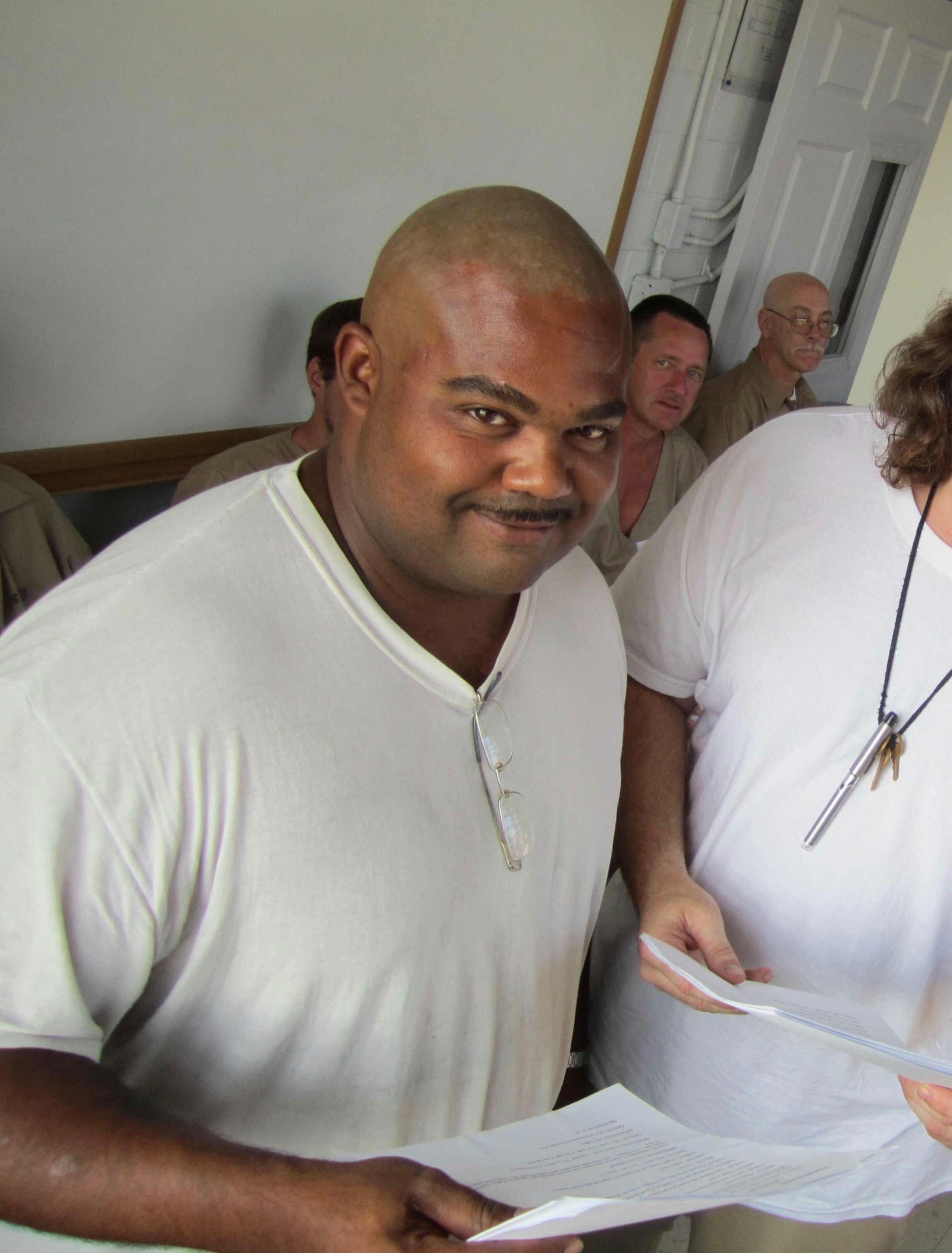
Derek R. Trumbo, Sr.
Real journalists wrote and edited this (not AI). Independent, community-driven journalism survives because you back it. Donate to sustain Prism’s mission and the humans behind it.
Real journalists wrote and edited this (not AI)—independent, community-driven journalism survives because you back it. Donate to sustain Prism’s mission and the humans behind it.
Dear Reader,
If you’ve spent the last few years reading my column, you know that I have used this platform to provide an in-depth analysis of incarceration from the perspective of someone inside the belly of the beast. Then a funny thing happened: I was released from prison, and my entire life began anew. No longer was I confined by iron cages and vast distances. I was actually out of prison, I had options and choices, and I could make my own decisions without worrying about corrections officers looking over my shoulder.
But as I’ve shared with you, freedom has been a lot to handle. Sometimes it feels like there are too many options and very hard choices, and of course I have an abundance of anxiety over whether I am on the right track. Through all of these tremendous life changes, you have continued to read my writing, so I decided to continue telling my stories, now focused on the highs and lows of reentry. Gone are the stories about prison, though I’m still haunted and traumatized by my memories of almost 20 years in confinement. Naturally, I want to put as much distance between myself and those razor wire fences.
While I’ve been out of prison for almost a year, it only recently occurred to me that the name of my Prism column no longer reflects my life—and it’s time to change that. So, let me introduce you to my column’s new name and the decision-making behind it.
I think it’s important to make clear that life post-incarceration isn’t exactly free from turgid regulations. Life on parole comes with its own set of rules, obstacles, and harsh conditions. My freedom, while more real and precious to me, still hangs in the balance. Like my first time staring at the menu in a fast-food restaurant after I was released last spring, the smorgasbord of options now available to me can either make or break me.
When I speak to people about incarceration and reentry, I quickly address the elephant in the room, which is that all people on parole face a fork in the road: reincarceration, or navigating the sometimes insurmountable-seeming hurdles posed by reentry. How would you eat this elephant if you had no other choice? I assume you have a flabbergasted look on your face. How does one eat an elephant? One bite at a time, of course, which is now the name of my Prism column.
As you might have gathered, along with the new column name comes a new focus on reentry—a subject that appears to be endlessly interesting to people.
Whenever a new person in my life learns of my time in prison, they almost always ask me whether they could survive being locked up, how I made it through the system, how I’m managing life on parole, and if my time inside changed me for the better. I’ve been asked these questions so often, I now have a bit of a routine response, heavy on the dad jokes. I say that prison can sometimes be hard to stomach, and that it’s not for finicky eaters. After all, a constant diet of negativity and oppression doesn’t really provide the best nutrition for growing healthy humans. Yet, prison is survivable, as evidenced by the many people who have remained behind bars far longer than the almost 20 years I endured.
Let me be abundantly candid with you: Stepping back into life outside has been incredibly challenging. Imagine you’ve been living under a strict set of rules for almost two decades, requiring that you basically follow a manual for every facet of your day. Prison routines shape every incarcerated person’s life, for better or worse. Then, very suddenly, you’re dropped into the free world without any manual or guidance, and the world you once knew has totally changed. Even simple tasks, such as choosing toothpaste or figuring out a smartphone, feel overwhelming. Sometimes it feels like you’re visiting a country where you barely speak the language. Still, with every awkward moment and small win, I keep moving forward, determined to find my place in a world that feels as if I’ve somehow jumped timelines and everything is both familiar and brand new.
Reentry isn’t a straight path; it’s a bumpy ride with a whole lot of unexpected twists and turns.
What I hope my reshaped column helps readers understand is that reentry isn’t a straight path; it’s a bumpy ride with a whole lot of unexpected twists and turns.
There have been many good moments for me, such as reuniting with family, meeting new and supportive people, and celebrating small wins, like not getting lost on the way to a job interview and talking to strangers who don’t judge me for my incarceration. And don’t get me started on the food! I cannot really convey how good it feels to be away from prison food or articulate the joy I felt making a real meal for the first time in almost two decades. In my first week of freedom, I feasted on real ham, instead of the “turkey” meat stuff I was fed all of those years inside. I ate real beef stew—not junk out of a can—that was heavy on carrots, onions, and potatoes. I also devoured a steak big enough to feed three people.
But there have also been many tough times: facing rejection because of my past, sensing people’s doubts, and feeling pressure to prove I’ve changed. Every day, I’m still learning that returning to society means figuring out new routines and being patient with myself, even when things don’t go smoothly. If variety is the spice of life, I have sometimes found myself overwhelmed by the vast array of new flavors I now have access to—and I mean that literally.
Early on in my reentry, I ate far too much, overindulging in all the things I was denied. I quickly gained weight and eventually realized I wasn’t eating because I was hungry, and I wasn’t eating nourishing foods to sustain my health. Rather, I was gorging to quench my anxiety and feed my sense of inadequacy. It was a rut I knew I had to get out of because routines form habits, habits become patterns, and those patterns have the power to shape the ways we move in the world. When I was shot down for multiple jobs or found myself waking up in a cold sweat from nightmares about confinement, I turned to food to quell the feeling that my freedom sometimes felt like biting off more than I could chew.
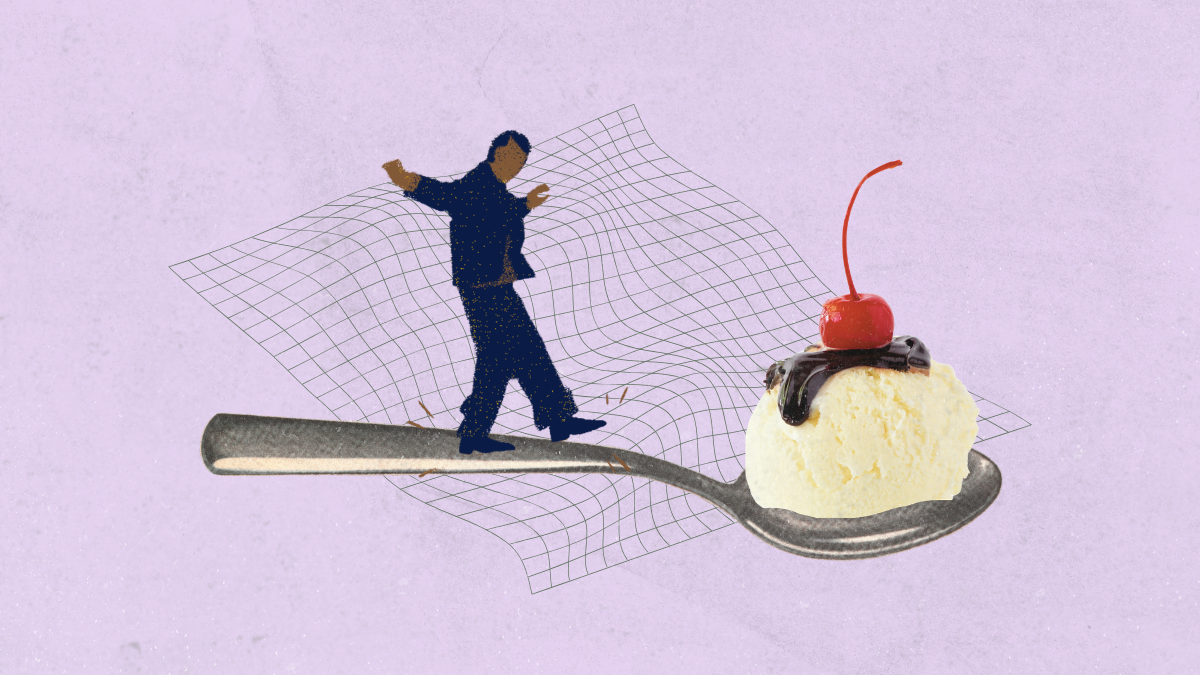
As time goes on, I am understanding how important it is to pace myself. Freedom—much like a lavish buffet of steak, ham, deviled eggs, and all the ice cream you could ever want—offers endless choices. But not every option is good for you.
I am still learning which flavors nourish my soul and which ones leave me feeling somehow both empty and weighed down. I admit: I still get carried away with the excitement of new experiences, sampling a little bit of everything, eager to fill the gaps left by years of deprivation. Eventually, I re-remember that balance is the secret ingredient missing from my plate. There are days I savor a small victory, such as getting through a stressful interview without stumbling over my words or walking into a crowded room and not shrinking away from curious glances. Other times, setbacks leave a bitter aftertaste like a rancid lemon: doors slamming shut due to my record, old anxieties resurfacing like the smell of two-week-old leftovers hidden in the back of the fridge. I learned to stomach these disappointments, knowing that resilience—much like the flavors of well-seasoned stew—takes time to develop.
I have to to trust that every small bite—each effort to connect, rebuild trust, or bounce back from self-doubt—is part of a larger meal, one that can actually nourish my future. So far, my approach has panned out. Unlike many formerly incarcerated people, I have been blessed to find a job, which is not only often a requirement of parole and a necessity in today’s ultra-expensive world, but something that allows me to avoid sitting around all day fearing the outside world or otherwise fixating on which menu item might take my mind off my stress. Work also gives me a sense of purpose (and helps control my growing waistline), and volunteering at church gives me a healthy outlet for channeling my worries. Instead of enjoying fast food and eating to excess, my volunteer work allows me to serve nourishing food to those in dire need of sustenance.
I plan to share these reentry stories not just as a way to vent, but to encourage others starting fresh after prison or generally tackling major life challenges. Yes, it will be hard. But I want to serve the constant reminder that it’s possible. My ultimate hope is that we can build a community around this column. Whenever you are faced with what feels like an impossible challenge, I want you to know that you have a friend in me, one who can offer advice for how to take it step by step, or as I like to say: one bite at a time.
The Right to Write (R2W) project is an editorial initiative where Prism works with incarcerated writers to share their reporting and perspectives across our verticals and coverage areas. Learn more about R2W and how to pitch here.
Editorial Team:
Tina Vasquez, Lead Editor
Lara Witt, Top Editor
Stephanie Harris, Copy Editor