Filed Under:
One bite at a time: A form of validation I never knew I needed
While industry awards aren’t everything, becoming a Writing Freedom Fellowship recipient has made me feel like I’m a real writer with something to offer the world
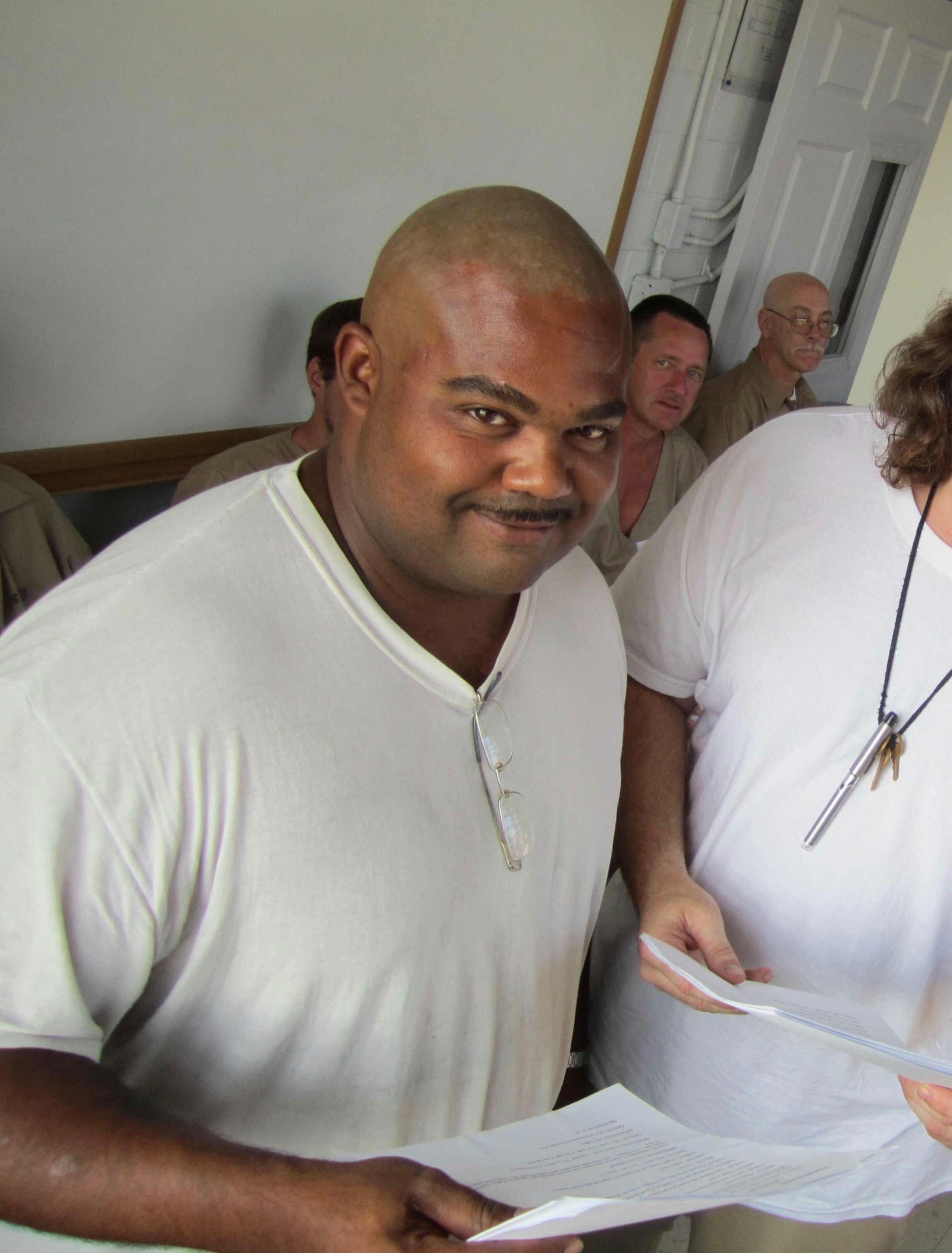
Derek R. Trumbo, Sr.
Real journalists wrote and edited this (not AI). Independent, community-driven journalism survives because you back it. Donate to sustain Prism’s mission and the humans behind it.
Real journalists wrote and edited this (not AI)—independent, community-driven journalism survives because you back it. Donate to sustain Prism’s mission and the humans behind it.
Dear Reader,
Reentry, even with terrific mentors and a strong support system, can still feel perilous and nearly impossible. Life is filled with obstacles and endurance challenges, but sometimes there are also pleasant surprises.
Lately, there are definitely more good days than bad. The secret for me is to fully take stock of where I am mentally and emotionally. I am learning how to accept the good things in life. I am taking time to relax and let my blessings sink in. Celebrating myself has always been hard for me, even as a person whose drive and passion for work is a source of validation and a measure of just how far I’ve come. My childhood was rough. I was often told that I wasn’t shit, would never amount to shit, and would never be shit. It pains me to share this, though I have been told that there is strength in vulnerability. I believe this—on the surface—but I have often struggled to integrate this belief into my daily life.
Even when something good happens, I realize now how much I internalize my dad’s stoicism. He was a man who never hugged me when I needed it most, and he never did much to build me up. The man who sat idly by as life hurled stones at me, his face stern and unreadable, now stares back at me in the mirror. In the nearly two decades since my dad has been gone, my life has transformed. Not only am I free, but I am flourishing. My writing is opening doors for me that I always believed would remain closed, and I am thriving instead of merely surviving.
It still feels hard to shake the voices of denial and rejection, even as I’ve learned to celebrate small victories. But what about major victories? That’s a different story…
So let me first share the big news: Earlier this month, I was announced as a recipient of the Writing Freedom Fellowship. The program, developed and administered by Haymarket Books and the Mellon Foundation, awards critical support to poets and writers impacted by the carceral system.
When I learned that I was chosen as a fellow, I sat stoically and reread the message several times. Surely, I thought, this was a mistake. But it wasn’t. A reader nominated me and other writers read my work, critiqued my craft, and encouraged my nomination. They recognized that I am more than my incarceration; I am more than the number assigned to me for nearly two decades that defined how others viewed me. I am more than a conviction. I matter.
I reread the message again, took a few deep breaths, and allowed myself to smile. Then I cried, hard, and for a long time. I allowed myself to feel hopeful.
I cannot truly describe how it feels to be recognized among writers with MFAs whose experiences and journeys have led them all over the world, where they sharpened their tools and shaped their literary voices to such a degree that readers recognize their faces in a crowd.
I truly believe that embracing vulnerability as part of this column opened this new door for me—and this extends beyond recognition for my writing. By allowing myself to feel—and by acknowledging my struggles and my joys—I am gradually discovering a deeper sense of peace.
As I sit typing away on my laptop, sharing my most vulnerable truths, I am reminded that I have come a long way from the razor wire and concrete buildings that hid me away for so many years. But others in my fellowship cohort are still deep in the midst of this horrible reality.
Lyle May, another new Writing Freedom fellow, said he was cleaning up the day room at his North Carolina prison in the sweltering heat when he got the news he was chosen as a fellow. During a call with the fellowship program director, Lyle said he took notes about the details, but remembered being distracted by the heat and the broken HVAC unit at his prison.
“I felt like I should have been more excited than I was,” Lyle wrote in a message. “It took a few days before it really sank in and I began to get excited… It’s an honor to be named a Writing Freedom Fellow. I can only point to those who came before me fighting to make their voices heard as my inspiration.”
It is difficult to make your voice heard from prison, and as Lyle told me, the fellowship is “a game changer” for incarcerated writers. I still can’t believe I launched this column from prison and that I now have readers who laugh, cry, and attempt to make sense of mass incarceration alongside me. It is a constant reminder that progress is not always measured by grand achievements. Sometimes, simply waking up and choosing to keep going is a victory.
The stories we write from prison can be a balm for others who have loved ones also locked in cages, or for those who need help understanding the realities of prison.
Still, there is a part of me that feels like this fellowship confirms that I am a real writer with something to say. I am not a piece of shit. I do matter. I am somebody. Becoming a Writing Freedom fellow is more than just a blessing; it is a form of validation that I never knew I needed. It is a reminder that my life matters and that the stories we write from prison can be a balm for others who have loved ones also locked in cages, or for those who need help understanding the realities of prison. This fellowship makes me feel like I have something valuable to offer humanity. I know this sense of validation teeters on unhealthy. These feelings are the result of voices from my past that continue to linger and chip away at my resolve. Yet, you should know there are also new and affirming voices bolstering my spirit.
I am excited for whatever comes next—and this includes learning from other fellows such as Lyle. As a writer, he told me that he has always wanted as many people as possible to read his work, allowing him to challenge narratives and influence people’s understandings of prison. During the fellowship, he plans to focus on a new book about the politics of mercy, covering clemency, parole, charging decisions by prosecutors, and how the public misunderstands the punishment of crime.
“This is a topic with which I am intimately familiar after seeing many of my friends and peers denied clemency and executed, for no better reason than the politics of crime,” said Lyle, who is on death row. “Clemency and parole stopped being about mercy many years ago because the decision making process was supplanted by political considerations.”
Being a fellow alongside writers such as Lyle is a tremendous honor, and it also means I now have the opportunity to learn so much more as a writer and truthteller. And with this new opportunity, I hope to no longer allow myself to listen to the voices of my past.
How long did I allow myself to be judged by people whose observations of me were predicated on only my worst mistakes? How many writers inside still find themselves navigating this exact predicament? Yet, we persevere. We continue to chronicle our journeys and speak about our dark nights of the soul. We do the best we can, though it’s not always easy.
In writing these columns, I expose my fears and my challenges. I bare my soul to you, dear reader, and you have accepted me. Not for what I could do for you, but for what I was able to do for myself. I may have been the one to receive this fellowship, but it is all of us being rewarded for seeking humanity in the face of suffering. I lived many years in the dark, and you became the light at the end of the tunnel that led me into the world. Thank you for being part of this journey with me. I cannot wait to make you proud.
The Right to Write (R2W) project is an editorial initiative where Prism works with incarcerated writers to share their reporting and perspectives across our verticals and coverage areas. Learn more about R2W and how to pitch here.
Editorial Team:
Tina Vasquez, Lead Editor
Lara Witt, Top Editor
Rashmee Kumar, Copy Editor