Filed Under:
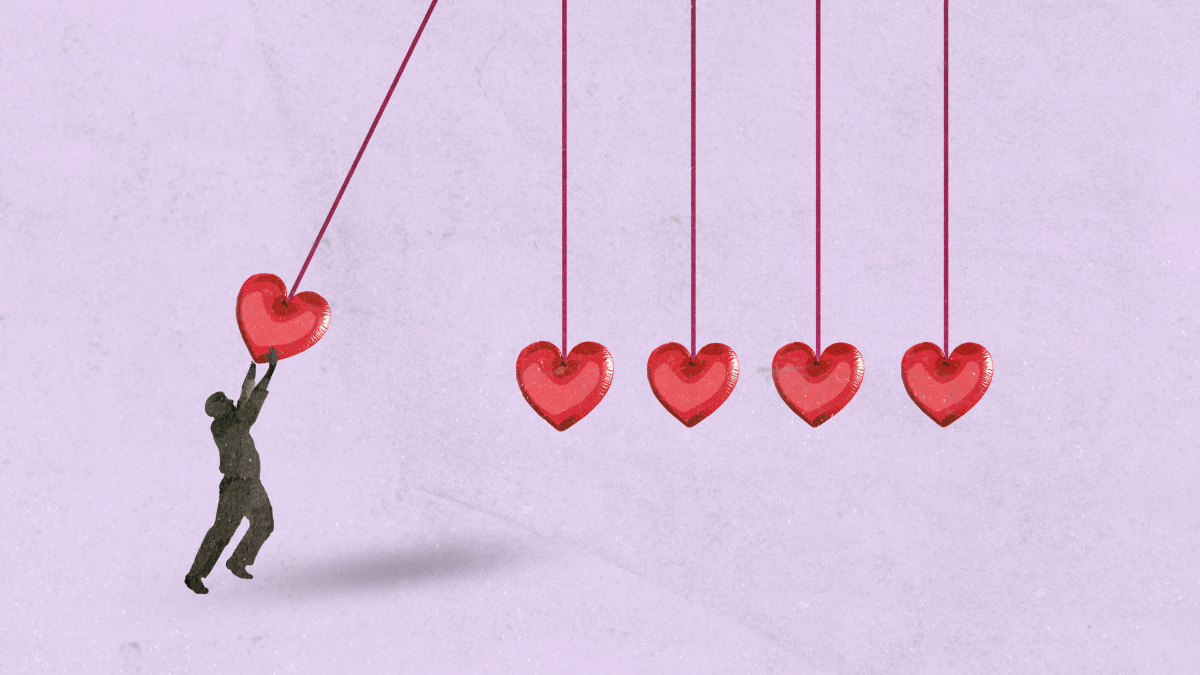
One bite at a time: Love is patient, love is kind
Behind bars, I strived to grow mentally and emotionally, but there was an absence I couldn’t fill on my own: companionship
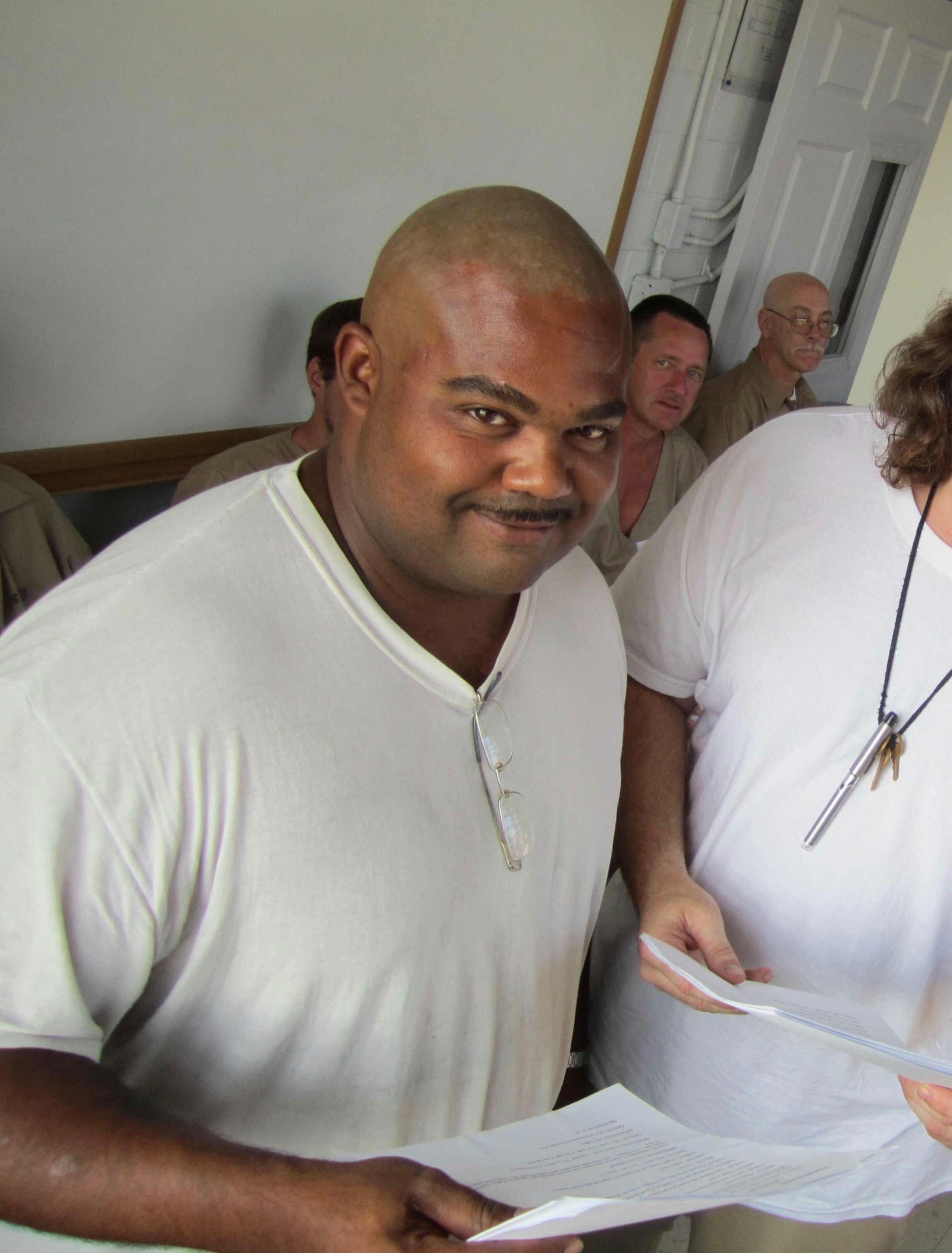
Derek R. Trumbo, Sr.
Real journalists wrote and edited this (not AI). Independent, community-driven journalism survives because you back it. Donate to sustain Prism’s mission and the humans behind it.
Real journalists wrote and edited this (not AI)—independent, community-driven journalism survives because you back it. Donate to sustain Prism’s mission and the humans behind it.
Dear Reader,
Now that I’m no longer incarcerated, it feels like so much can happen in the span of 24 hours. It didn’t feel this way inside. Over the years, I learned that time didn’t actually slow down for incarceration. It simply passed differently.
One of the things I missed most about freedom wasn’t movement or choice; it was the living part. How does a person truly live while confined? I did what I could. I read, I studied writers I admired, and I participated in every program and activity available. I wasn’t idle. Still, much of what I did was a defensive measure against boredom, against becoming complacent, against losing myself. Even as I worked to grow mentally and emotionally, there was an absence I couldn’t fill on my own: companionship.
There were days when loneliness settled so heavily, I thought it might break me. On those days, recollections of laughter and human touch felt like memories from another life. I held onto them not to escape reality, but to help shape the man I was still becoming. If nothing else, I could work toward being worthy of love—and I learned that love has to begin with self‑respect. Sometimes it was the smallest reminders that kept me grounded: a letter, a moment of kindness, a passing smile. Those moments mattered more than anything. They reminded me that I was still connected to the world, still human, still capable of growth. Learning to forgive myself became part of that process. In doing so, I began to believe that forgiveness from others might be possible.
I wanted to love, and to be loved, but incarceration complicates that desire in ways most people never have to consider. Over time, I nearly convinced myself that no one would ever see past my conviction. Yet even in isolation, a small but persistent voice reminded me that hope has a way of surviving—even behind bars.
When my life was still defined by concrete and steel, I refused to let my heart accept the same limitations. Over time, I learned that love doesn’t begin as romance. It begins with care, patience, and accountability. Every day I chose to move forward deliberately, one breath and one decision at a time. Somewhere in those small, consistent choices, I found a sense of freedom long before my release.
And now, I’ve found the love I was always hoping for.
Relationships are fragile even under the best circumstances. Nationally, a third of Americans who have ever been married have also experienced divorce. For married people emerging from a long incarceration, the challenges multiply. Imprisonment places extraordinary strain on relationships: Long separations, unresolved trauma, financial instability, and stigma all take their toll. Love is asked to exist under pressure that few relationships ever face or could reasonably survive.
I was painfully aware of these realities when I stepped back into the free world.
Statistically and socially, I am not a safe bet for a potential partner. Yet despite the odds, I’ve been blessed with an extraordinary partner—one who listens, respects my perspective, and understands how much intentional effort it takes to build a foundation together when one person is rebuilding their entire life.
What we share isn’t miraculous because it happened; it’s miraculous because we work at it.
I met the love of my life, Claudia, at a writing conference just weeks after my release last year. Our meeting felt accidental, but history had already written a prologue.
Nearly five years earlier while still incarcerated, I saw Claudia’s photograph in a magazine, and I wrote to her through an intermediary, hoping for mentorship. She read my work and decided I didn’t need tutoring, only opportunity. Our correspondence was brief and professional, and then life carried on.
Fast forward to 2025 and unbeknown to either of us, Claudia was a guest speaker at the conference I attended. Sitting in the crowd, I listened as she discussed writing through grief; about transforming pain into purpose. It felt as though she was narrating chapters of my own life. She understood trauma not as theory, but as lived experience. When she spoke, something stirred. Her words felt familiar, not because our lives were the same, but because the language of survival is universal. After her reading, I approached her and said, “You probably don’t remember me, but my name is Derek. I wrote to you a few years ago.” She remembered me and more than that, she remembered my work. She spoke candidly about wanting to build prison writing programs and lamented the lack of institutional support. We exchanged contact information, wished each other well, and parted—or so I thought.
Fate had another page to turn.
Later that same day, I met one of Claudia’s close friends at a church event. During a casual conversation, I mentioned that I was a writer, and her friend took note. They later told Claudia that they met someone they thought would be perfect for her. Claudia was understandably skeptical—especially of a stranger who was also a former inmate. But when my name surfaced again, Claudia’s curiosity overcame her hesitation.
Our relationship isn’t special because it defies statistics; it’s special because we acknowledge them.
We first connected as friends. Long phone calls stretched into hours, filled with stories, laughter, and questions. Claudia knew about my incarceration and voiced the concerns any thoughtful person would have. Crime dramas that Claudia watched over the years—depicting terrible outcomes for lonely women seeking love in the arms of a felon or that otherwise served as cautionary tales about the emotional damage caused by prison—became a regular topic of conversation. We examined and discussed these tropes honestly and without defensiveness. Trust also didn’t arrive all at once. It grew slowly and intentionally.
Our relationship isn’t special because it defies statistics; it’s special because we acknowledge them.
We face a difficult reality together, aware that love after decades of incarceration requires patience. Stable partnerships are shown to support successful reentry, but no research captures the challenges or the courage it takes for a partner to support us through the ups, downs, and anxieties of life on parole. Of course, Claudia’s love can’t erase my past, but it didn’t ask me to be imprisoned by it either. In her, I found partnership, not rescue. She walks beside me, rather than seeking to guide me.
Through our partnership, I am learning that love—like freedom—is something you practice, one deliberate choice at a time. And love after incarceration requires confronting the past without being shackled by it.
After almost 20 years of being denied partnership, affection, intimacy, and interaction with a woman, it hasn’t always been easy to navigate love on the outside—even when it’s what I have always wanted and even though Claudia is the love of my life. Claudia has encountered extreme judgement from well-meaning people in her life, friends and family members who question my motivations and my past. Their unsolicited advice and derision hurt her deeply, and made me feel inadequate because I could not shield her from this pain.
I also just didn’t realize how strongly people’s perceptions of prison are shaped by pop culture. Being incarcerated for nearly 20 years means I’m quite out of touch when it comes to culture and societal norms. For example, I wasn’t privy to shows such as “Prison Brides” and “Love After Lockup,” which lent to how people in Claudia’s life perceived our relationship, assuming that our love is toxic. For a while, I was just going with the flow and doing my best to be a good man to her, totally unaware of how badly her loved one’s assumptions were making her feel. When we finally began to talk about this unspoken dynamic in her life, I grew quiet and contemplative, sad that I brought so much pain to someone I loved. In time, how others perceived our relationship mattered less, but for Claudia, the pain still lingers.
I want to be clear: Prison did change me in more ways than I can articulate, and in some ways that I only realized later with Claudia’s help. For example, when we disagree about something, I find myself actually wanting to be closer to Claudia in those moments, illustrating a sort of anxious attachment deeply tied to my fear of loneliness.
This love of ours has taken work. I am not one for stress or conflict. Whenever Claudia and I have run into thornier patches, I have shut down and gone inward rather than hash out the problem. It took me a while to express that I’d seen enough contention while incarcerated that it made me want to avoid it at all costs. But I had to learn how to talk through conflict with Claudia so that we could develop a stronger, healthier bond. Finding a counselor to speak to about my anxiety and fears was also tremendously helpful. It’s given me tools to better describe how I’m feeling as well as language to describe my traumas, and it has generally made me feel more empowered to voice my concerns.
Claudia says she sees an improvement in me, and that makes the bond we share feel stronger. Most of all, Claudia’s love has taught me that it’s easy to fly high on the good days. What really matters is how we walk through the fire together.
The Right to Write (R2W) project is an editorial initiative where Prism works with incarcerated writers to share their reporting and perspectives across our verticals and coverage areas. Learn more about R2W and how to pitch here.
Editorial Team:
Tina Vasquez, Lead Editor
Lara Witt, Top Editor
Rashmee Kumar, Copy Editor