Democrats retake House and Senate in sweeping rebuke of Trump
Tuesday’s elections also produced historic firsts while delivering a major setback to the Republican agenda

Sahar Fatima
Real journalists wrote and edited this (not AI). Independent, community-driven journalism survives because you back it. Donate to sustain Prism’s mission and the humans behind it.
Democrats retook control of both the U.S. House and Senate in Tuesday’s midterm elections, delivering a major setback to President Donald Trump and his agenda two years into his second term. The results marked a sharp shift in the balance of power in Washington, giving Democrats the ability to challenge the administration’s legislative priorities.
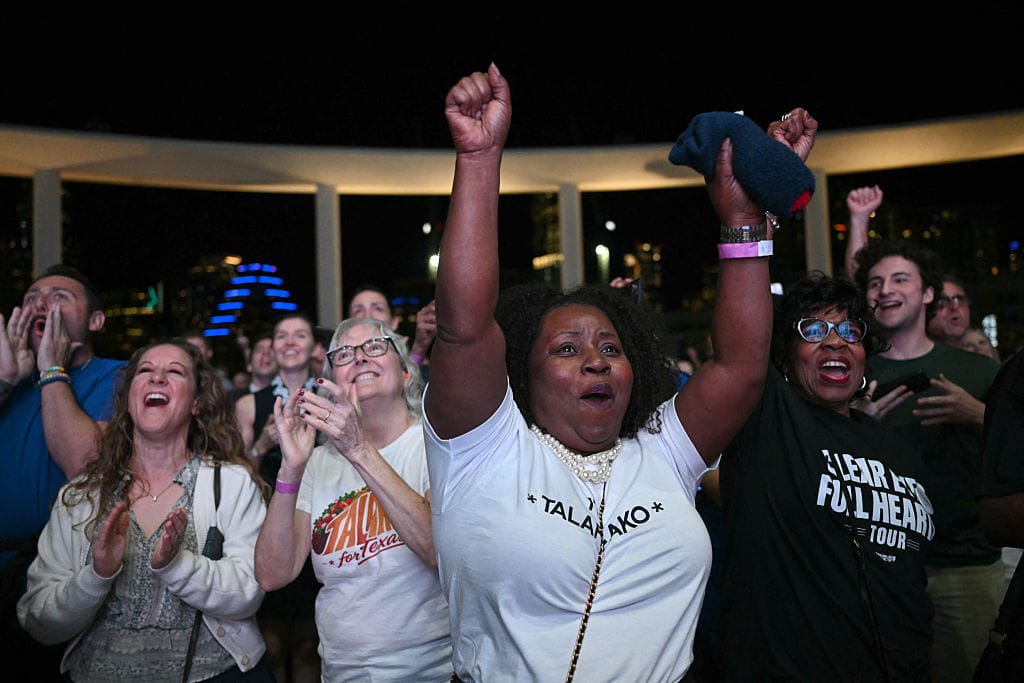
But beyond the national shift in power, Tuesday night was also defined by a remarkable number of historic firsts across the country, with voters electing candidates who broke longstanding racial, gender, and generational barriers. From Texas and Georgia to New Mexico and Colorado, the results showed a political landscape injected with new energy and produced milestones for communities that have long been underrepresented in elected office.
A night of firsts
Tuesday’s elections produced a number of historic milestones.
In Georgia, Democrat Keisha Lance Bottoms defeated Republican businessman Rick Jackson, becoming the first Black woman elected governor in U.S. history. She will also become Georgia’s first woman governor and its first Black governor. A former Atlanta mayor, Bottoms’ victory returns the governor’s office to Democratic control for the first time since 2002, ending more than two decades of Republican leadership.
In New Mexico, Democrat Deb Haaland defeated Republican Gregg Hull to become the first Native American woman elected governor of a state. Haaland, a citizen of the Laguna Pueblo, previously made history as the first Native American to serve as a Cabinet secretary when President Joe Biden appointed her to lead the Interior Department in 2021. In Minnesota, Peggy Flanagan, a citizen of the White Earth Nation, also became the first Native American woman to be elected to the U.S. Senate.
Colorado voters elected 29-year-old Democrat Melat Kiros to Congress, making her the first Gen Z woman elected to the House of Representatives. An Ethiopian immigrant and attorney, Kiros defeated longtime Democratic Rep. Diana DeGette in the primary before winning the general election.
In South Carolina, Democrat Annie Andrews defeated Republican Sen. Darline Graham to become the first woman elected to represent the state in the U.S. Senate. Graham, who was appointed to the Senate following the death of her brother, Lindsey Graham, had been the first woman to serve in the state’s Senate delegation.
Florida also made history. Republican U.S. Rep. Byron Donalds defeated Democrat David Jolly to become the state’s first Black governor and the first Black Republican elected governor in American history. Donalds, a close Trump ally, will succeed Gov. Ron DeSantis, extending Republican control of the governor’s office.
Other historic victories included Democrat Abdul El-Sayed in Michigan becoming the first Muslim elected to the U.S. Senate and New Hampshire Democrat Chris Pappas becoming the first openly gay man elected to the chamber.
Other notable races
In Michigan, El-Sayed defeated Republican Mike Rogers. This contest was particularly contentious, with El-Sayed facing intense anti-Muslim and anti-Arab rhetoric and attacks throughout the race. El-Sayed—who campaigned on Medicare for All and ending U.S. military support for Israel—faced intense opposition, including during the primaries when he overcame $70 million in spending against him, including $30 million by pro-Israel lobby group AIPAC, according to his campaign.
After he won the Democratic nomination, Republican Sen. Tommy Tuberville called him a “terrorist” and “radical Islamist” on social media, while the National Republican Senatorial Committee released an advertisement emphasizing his full Arabic name and attempting to link him to the Muslim Brotherhood. Conservative activist Laura Loomer also urged Republicans to describe him as a “jihadist.” The attacks escalated in October when Trump himself called El-Sayed a “jihadist” and suggested he would need to pass through a metal detector to enter the Senate, invoking the Sept. 11 terrorist attacks. El-Sayed was also dogged by accusations of antisemitism due to his criticism of Israel. Hayley Stevens, who lost in the primary against El-Sayed and once said Israel comes to her in her dreams, endorsed Rogers days before the election. The move led to a wave of criticism against Stevens and led to El-Sayed raising more than $2.4 million in one day, according to his campaign.
In Maine, Democrat Troy Jackson defeated longtime Republican Sen. Susan Collins. Jackson, a former president of the state Senate and fifth-generation logger, campaigned on his working-class background and criticized Collins’ record, including her role in confirming Supreme Court Justice Brett Kavanaugh. Trump appointees on the Supreme Court later helped overturn Roe v. Wade.
In Ohio, former Democratic Sen. Sherrod Brown defeated Republican Sen. Jon Husted, returning to the Senate after losing his seat in 2024. Husted had been appointed to replace JD Vance after Vance became vice president.
In a major flip in Kansas, Democrat Adam Hamilton defeated Republican Roger Marshall to become the first Democrat elected to the Senate from the state in nearly a century.
Abortion rights
Abortion rights were on the ballot in four states this election. Three of them voted in favor of protecting those rights, while one did not.
Nevada and Virginia, where the procedure is already legal, both voted overwhelmingly to enshrine the right to abortion before the point of fetal viability into their state constitutions. The measures leave open the possibility of restrictions on abortions in the third trimester.
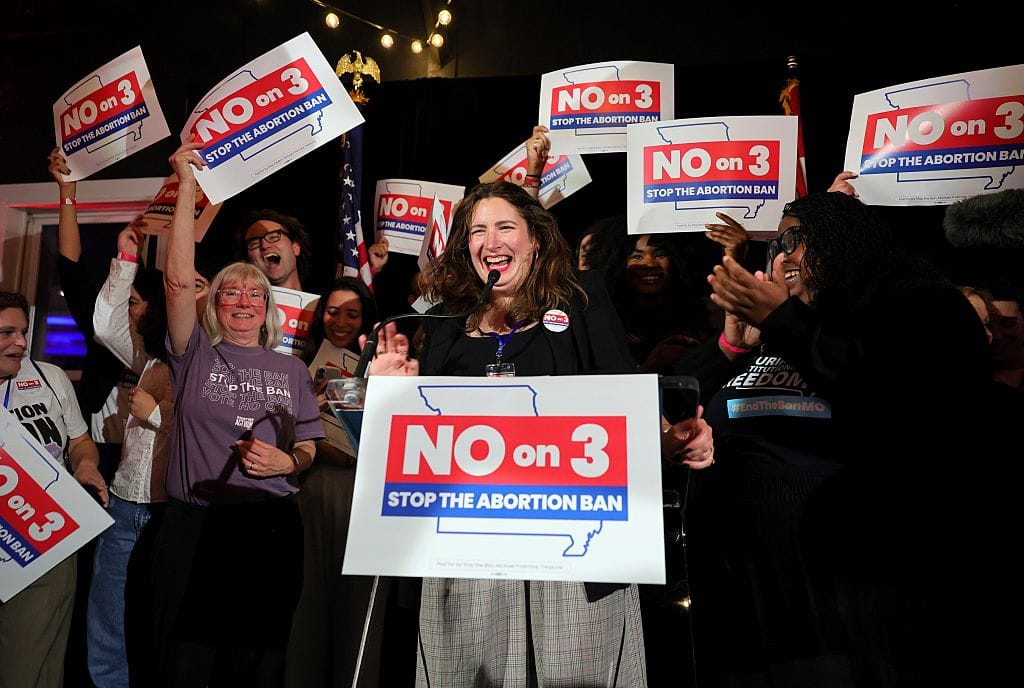
In Missouri, voters rejected a measure that would have repealed abortion protections they approved in 2024. The ballot proposal also included a ban on gender-affirming care for minors. The measure’s defeat leaves in place the constitutional right to abortion up to the point of fetal viability. If passed, the proposal would have banned nearly all elective abortions.
Voters chose a decidedly different outcome in Idaho, which has one of the most restrictive abortion laws in the country, according to the Guttmacher Institute, a research and policy organization focused on sexual and reproductive health and rights. The majority of voters rejected a proposal to create the right to reproductive freedom and privacy and legalize abortion up until the point of fetal viability. The vote keeps Idaho’s total abortion ban in place.
Ballot measures affecting immigrants
Several ballot measures targeting immigrant communities saw some wins, while others were rejected.
Idaho passed a constitutional amendment to make English the official language.
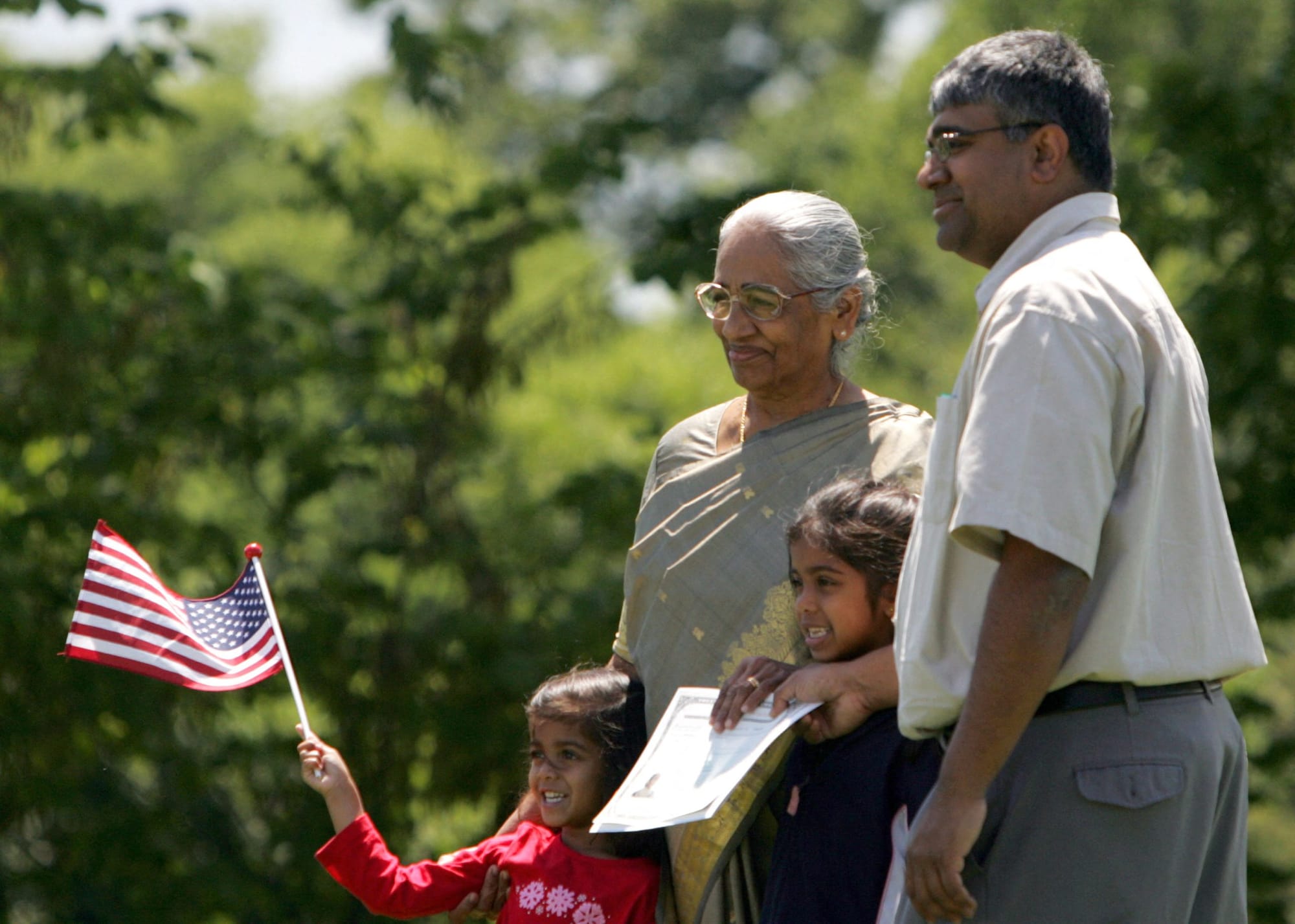
Several states also took aim at the alleged threat of noncitizen voting, which remains unfounded. While some municipalities allow noncitizens to vote in local elections, federal law has long prohibited noncitizens from voting in federal elections, and many states similarly limit voting to citizens only. But voters passed ballot measures specifying that only citizens can vote in Alaska, Arkansas, Kansas, South Dakota, and West Virginia. Votes were still being tallied for a similar measure in Arizona, but voters looked poised to reject the proposed constitutional amendment as of Wednesday morning.
In California, a ballot measure that would require ID to vote was soundly rejected. Colorado voters also rejected a measure that would require voters to present the last four digits of their driver’s license or Social Security number along with a signature. Meanwhile, Massachusetts passed a proposal for same-day voter registration.
Voters in Colorado also weighed a proposal to require law enforcement to collaborate with the Department of Homeland Security on immigration. Results were too early to call as of Wednesday morning, but the “no” side was leading.
Editorial Team:
Sahar Fatima, Lead Editor
Carolyn Copeland, Top Editor
Lauren Hardie, Copy Editor
Sahar Fatima