Filed Under:
Missouri LGBTQIA+ group used ‘deep canvassing’ to build a pro-trans majority
PROMO Missouri focused its energy on Amendment 3, which sought to reinstate an abortion ban and enshrine a gender-affirming care ban

Hope Davis
Real journalists wrote and edited this (not AI). Independent, community-driven journalism survives because you back it. Donate to sustain Prism’s mission and the humans behind it.
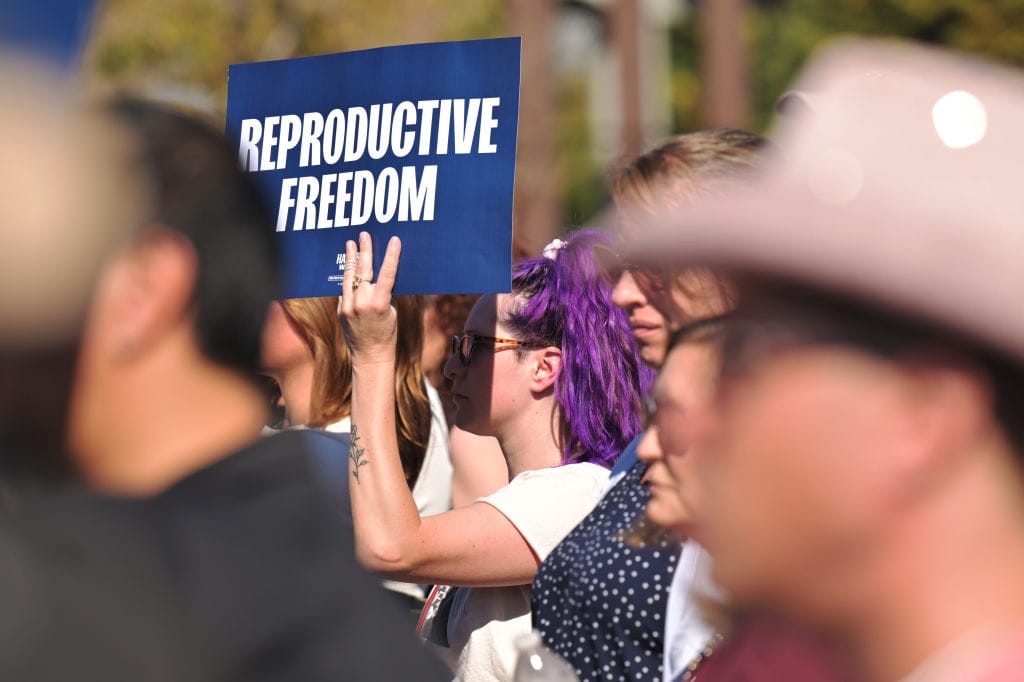
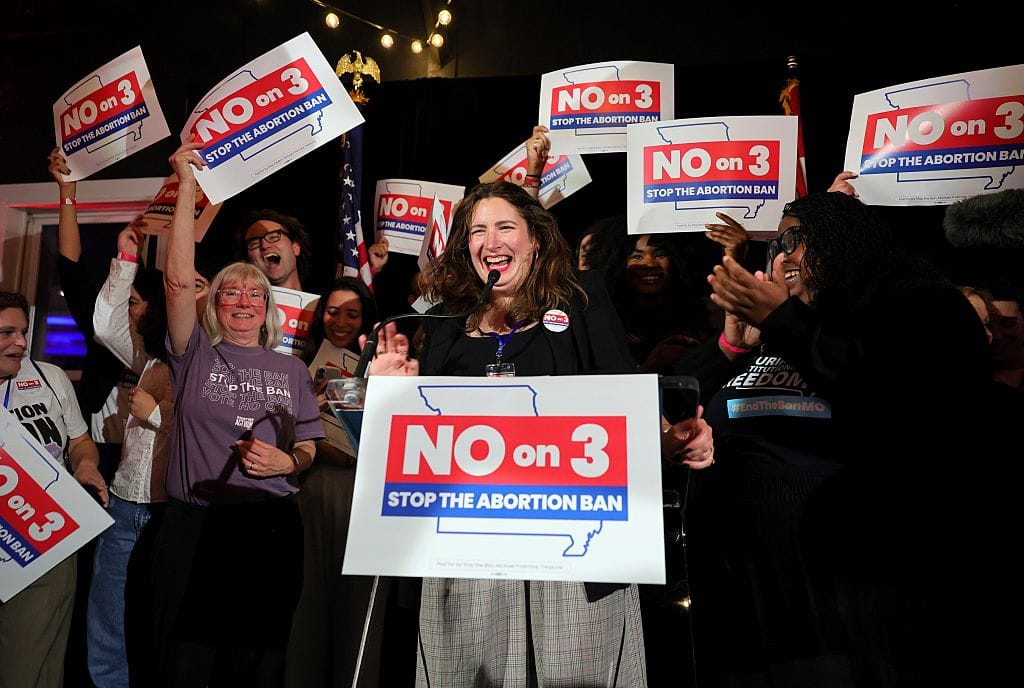
Missouri lawmakers tried—and failed—to enshrine constitutional bans on abortion and gender-affirming care for minors in the form of Amendment 3 in Tuesday’s midterm elections. The day after the election, headlines focused on voters’ rejection of the abortion ban and less on the “ballot candy” part of the measure: the permanent ban on gender-affirming care for minors.
Transgender people and their allies in the LGBTQIA+ advocacy group PROMO Missouri spent the better part of 2026 knocking doors to talk with voters about the amendment as part of a project that predates this election.
PROMO launched its first deep canvassing project in 2024 as a power-building strategy that uses face-to-face conversations to counteract anti-trans political rhetoric and work toward a pro-trans majority among voters. Deep canvassing involves lengthier conversations than typical “get out the vote” canvassing. PROMO characterizes these efforts as “honest, emotional conversations about healthcare and protections for LGBTQ+ individuals, especially trans and gender-expansive people.”
What started with four paid canvassers across two cities now includes over 40 paid canvassers and about 120 volunteers across five Missouri cities, said PROMO Field Director Courtney Cook.
According to PROMO’s press release following the defeat of Missouri’s Amendment 3, also known as “The Right to Reproductive Freedom Initiative,” canvassers had over 13,000 conversations with voters in the lead-up to the election. While their script for canvassing opened with questions about the ballot measure, canvassers had a broader goal: using narrative change to build a pro-trans majority in the state.
In the Tuesday night press release, Robert Fischer, PROMO’s director of communications, said the Nov. 3 election made Missouri “the first state in the nation to defeat an attempt to write a ban on healthcare for transgender youth into a state constitution.”
Examining misconceptions
PROMO’s deep canvassing began in response to a 2023 state law that banned gender-affirming care—including puberty blockers and hormones—for trans youth through August 2027 and prohibited adults from receiving the same care through Medicaid. The state’s ban on gender-affirming surgeries for minors is permanent. In her “anti-trans legal risk” maps tracking anti-trans legislation, independent journalist Erin Reed classified Missouri as “high risk” for trans adults and among the states with the “worst laws passed” for trans minors.
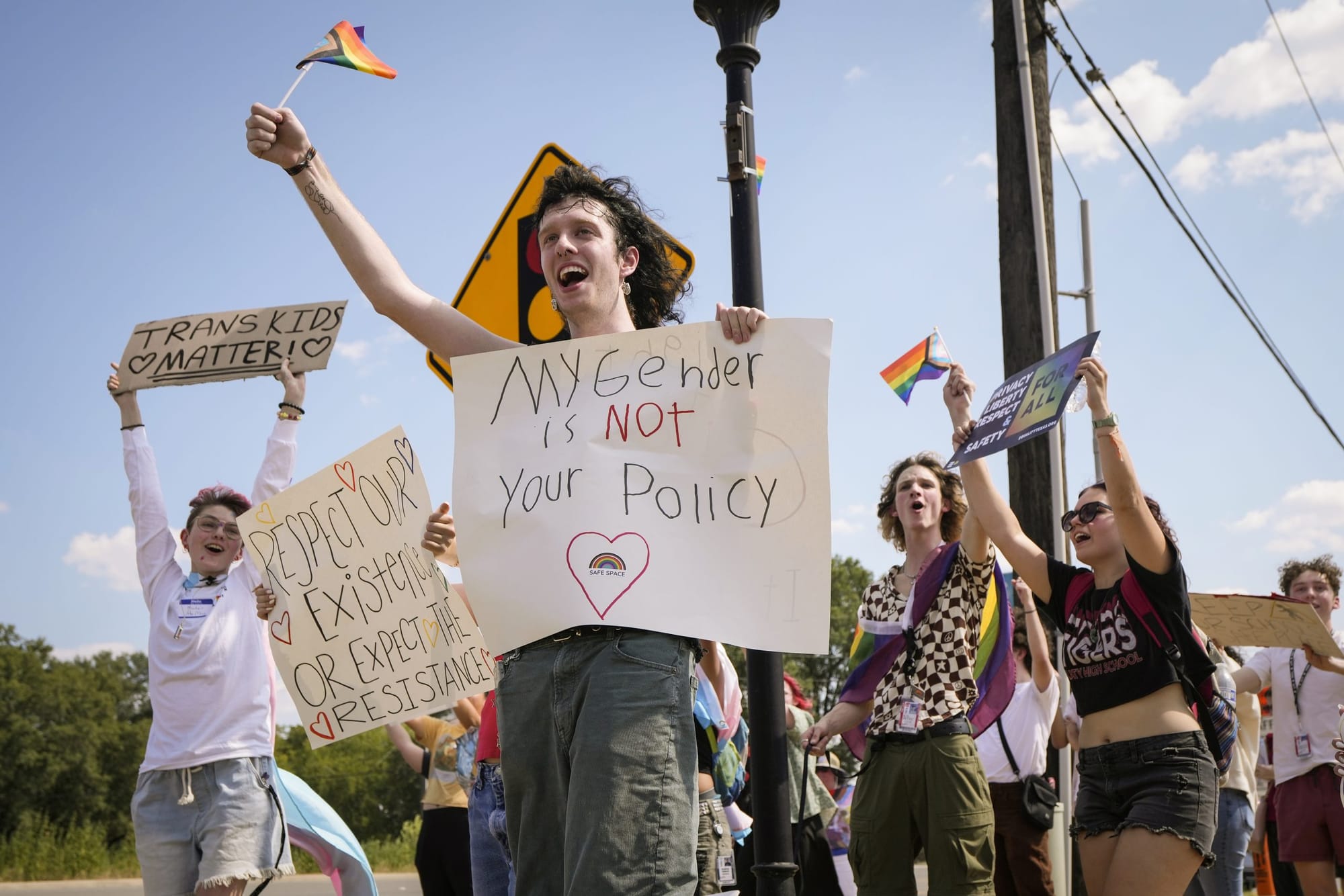
Opponents of Amendment 3 argued that the state’s majority-Republican legislature put the amendment on the ballot to use trans people as a scapegoat in their fight against abortion rights. Canvassers with PROMO aimed to disrupt the game plan by providing counternarratives to voters, who commonly told trans canvassers, “You’re the first trans person I’ve ever met.”
These interactions created an opportunity to help voters understand the trans experience and interrupt narratives that “other” trans people.
This included efforts by Her Health, Her Future, the political action committee campaigning for Amendment 3. The group placed trans people front and center in its campaign with a website homepage reading, “Our children are not lab experiments,” and yard signs calling to ban “transgender surgeries” for minors. Gender-affirming surgeries for youth are already permanently banned in the state.
PROMO fought this othering of trans people at every turn. The organization even had a billboard that read, “Trans Missourians are your neighbors.”
Keaton Carpenter, who goes by KC, is a nonbinary canvasser who said canvassing helped restore their “faith in humanity a bit.” They went door-to-door in Springfield, in southwestern Missouri, an area with substantial evangelical and conservative communities, known by locals as the “buckle of the Bible Belt.” Still, KC said they experienced less hostility than they expected, and the work of deep canvassing was transformative in fighting their own feelings of alienation and hopelessness.
“I’ve had a number of experiences at the doors of people who are well-meaning but have dangerous misconceptions about the transgender community and what it means to transition,” KC said.
Deep canvassing creates space to examine those misconceptions.
“Whenever I can actually talk to them about that and get to the root of where that’s coming from—talk to them about the legitimacy of the [transition] process and how vital it is to healthcare—I’ve been able to reach a lot of people,” said KC. “It’s been a transformative experience.”
A numbers game
When PROMO first began deep canvassing in 2024, canvassers asked voters to place themselves on a scale based on whether they believe trans people should have access to gender-affirming healthcare. Cook, PROMO’s field director, said they saw a trend of voters supporting access for adults but expressing hesitation about minors—especially in Springfield.
Since the spring of 2026, PROMO has worked in coalition with the Stop the Ban MO campaign, focusing its deep canvassing on Amendment 3. Using canvassing software called OpenField that captures qualitative data from conversations, the group has been trying to reach voters who support abortion access and may even consider themselves allies to the gay and lesbian communities, but remain iffy on trans issues.
On a hot October afternoon in suburban Springfield, PROMO’s Paid Campaign Field Manager Sayer Johnson spoke with a voter who planned to vote “no” on the amendment, but was uncertain about supporting a ban on gender-affirming care for youth. Johnson asked questions to open a dialogue: Why is that the right answer for you? Do you believe people can really be transgender? Do you know any trans folks?
Canvassers often asked whether a voter had any kids they cared about, and sometimes even explained how the process of transitioning actually works.
Johnson mentioned his own experience as a transgender man raising a trans child, but the voter was not interested in talking. Outside election season, Johnson said he would probably try harder to engage with the person, but less than a month before the midterms, canvassers were moving quicker than they usually do.
“I’d rather spin my wheels talking to folks who have questions and are concerned, and it’s affecting their ability to vote ‘no,’” Johnson said.
Reaching people who are interested in engaging is a numbers game. Cook said about a quarter of people answered the door in St. Louis, versus about 15-18% in Springfield. If a voter doesn’t answer or isn’t open to engaging, Johnson said they could be reached by a different canvasser in the future as PROMO continues its broader power-building project.
When canvassers knocked on doors leading up to the midterms, they used a script to structure their conversation. Canvassers asked voters to rate their support for Amendment 3’s abortion ban and gender-affirming care ban on a scale of zero to 10. A zero was “totally against” a ban and 10 was “totally for.”
Cook said voters have a sense of fatigue during elections, and that makes canvassing more challenging. In the final weeks before the Nov. 3 midterms, PROMO shifted to the more “get out the vote” style of canvassing, but still encouraged deep canvass conversations with voters who fell between four and seven on the “trans scale.” Cook referred to these voters as being in the “sticky middle” where they’re more likely to be moved by an earnest conversation.
Deep canvassing encourages longer conversations that can go on for 45 minutes. Canvassers are meant to use a listen-first approach to sincerely address people’s concerns. Rex Ybañez, a regional PROMO organizer for Southwest Missouri, sees voters’ positions on the scale as stakes in the ground with zeros on one side of a field and 10s on the other. A successful deep canvass conversation lifts the stake and opens the possibility for movement. Even if a conversation doesn’t immediately move a voter’s position—or shift the stake to a new place on the continuum—Ybañez said it could plant a seed that leads them to be skeptical of future anti-trans campaigns.
In St. Louis, Ybañez had the rare experience of moving a voter from identifying as 10-10, a supporter of both the abortion ban and trans healthcare ban, to claiming a zero position on banning trans healthcare. Ultimately, the voter said he was unsure whether he would vote for Amendment 3. Ybañez said the man claimed to only know about trans people from ads talking about surgeries in schools. By the end of their chat, the man said he wanted to do more research, and Ybañez shared information from the World Professional Association for Transgender Health.
The number one role of an organizer is to stay curious. Stay curious about other people.
Rex Ybañez, PROMO’s Southwest Missouri Regional organizer
While PROMO doesn’t target 10-10 voters for conversations, Ybañez said he’s happy to try. “The number one role of an organizer is to stay curious. Stay curious about other people,” Ybañez said. Both Ybañez and KC said the conversations require vulnerability and emotional labor, but their masculine presentations likely make them more approachable to voters, KC said.
KC loves meeting voters who appear to rarely have the opportunity to have introspective conversations about trans rights. These voters are often cis-hetero men, KC told Prism.
“When they see that they can actually open up about these things that they’ve been thinking about without any sort of huffing and puffing or peeing contests going on, I think it’s very cathartic for them,” KC said.
When KC explains how transitioning works, these voters “are hungry to actually learn about it and actually expand their understanding of things,” KC said, characterizing these exchanges as “extremely gratifying.”
Still, there are safety issues to consider when having these kinds of conversations in such a volatile political landscape. Johnson said that PROMO takes canvassers’ physical and emotional safety seriously. Canvassers stay within eyesight of each other and gather on Zoom at the end of each shift to debrief the day’s positive and negative experiences. PROMO also partnered with St. Louis Queer Support and Healing to connect canvassers with free services like therapy and peer support groups.
“You have a stake, and you have some kind of power”
Before working for PROMO, KC told Prism they “felt very isolated in a lot of ways.” Reading the news would leave them feeling hopeless. Canvassing was a way to fight that alienation.
“I could feel my own sense of power start to grow in the community,” KC said, acknowledging that it was validating to meet strangers who “also feel that same kind of despair and isolation because we live in very isolating times now.” Through canvassing, they’ve been able to show people “you have a stake and you have some amount of power in your community.”
Activated voters can also sign up to volunteer with PROMO. In a conservative area of a red state such as Missouri, in-person conversations can fight what the national collective of narrative workers known as BLIS Collective calls the “hope gap.” The hope gap refers to the gap between the number of people who support a cause and the number who think it’s actually feasible to win. The lack of belief that success is possible creates disempowerment. However, the visibility that canvassers create could inspire people to talk to their neighbors and friends.
Anna Castro, the principal narrative strategist for the Transgender Law Center, said that a lack of visible support for trans communities harms trans rights because people want to be on the “winning team.” Fischer, PROMO’s director of communications, echoed Castro, telling Prism that people can be “a little hesitant to say they support trans rights because they feel like no one else on their street does.”
When we knock on their doors, we get to say that, ‘Actually, we just talked to your neighbors and they do support. They have the same thoughts that you do.’
Robert Fischer, PROMO’s director of communications
“When we knock on their doors, we get to say that, ‘Actually, we just talked to your neighbors and they do support. They have the same thoughts that you do,’” Fischer said.
This is how PROMO works against the hope gap.
“It’s not about, ‘Do we have the right message?’” Castro said. “It’s about, ‘Do we believe in our message?’ and, ‘Are we confident enough to go and talk to people about it?’”
Johnson, PROMO’s paid campaign field manager, said he’s been involved in queer organizing since his teen years in the ’80s and ’90s, and described PROMO’s deep canvassing project as one of the most powerful actions he’s been a part of. As he walked along some suburban streets in Southeast Springfield, Johnson remembered the AIDS crisis slogan, “Out of the bars and into the streets.” Today, he thinks it should be updated to, “Off of the keyboards and onto the doorsteps.”
“I’ve had some really intense emotional experiences on these doors,” Johnson said while canvassing. “And I’ve just had experiences walking in the community with my ‘Protect Trans Kids’ shirt on, where people will just stop me and hug me and cry on me. There are so many unintended consequences, in the best way … that are going to ripple and affect trans people and their lives in the positive. I believe that.”
Editorial Team:
Tina Vasquez, Lead Editor
Carolyn Copeland, Top Editor
Lauren Hardie, Copy Editor
Hope Davis
Filed Under: