Filed Under:
Another way out: Public execution is an everyday reality—livestreamed or not
For some, the Trump administration’s plan to livestream an execution was unacceptable because it wouldn’t happen behind closed doors
William C. Anderson
Real journalists wrote and edited this (not AI). Independent, community-driven journalism survives because you back it. Donate to sustain Prism’s mission and the humans behind it.
Real journalists wrote and edited this (not AI)—independent, community-driven journalism survives because you back it. Donate to sustain Prism’s mission and the humans behind it.
“There are people, who in good faith ask this question: How would it be possible to live without government? And they conclude saying that a supreme chief, a crowd of officials, large and small, such as ministers, judges, magistrates, legislators, soldiers, jailers, policemen, and executioners, are necessary.” –Ricardo Flores Magón
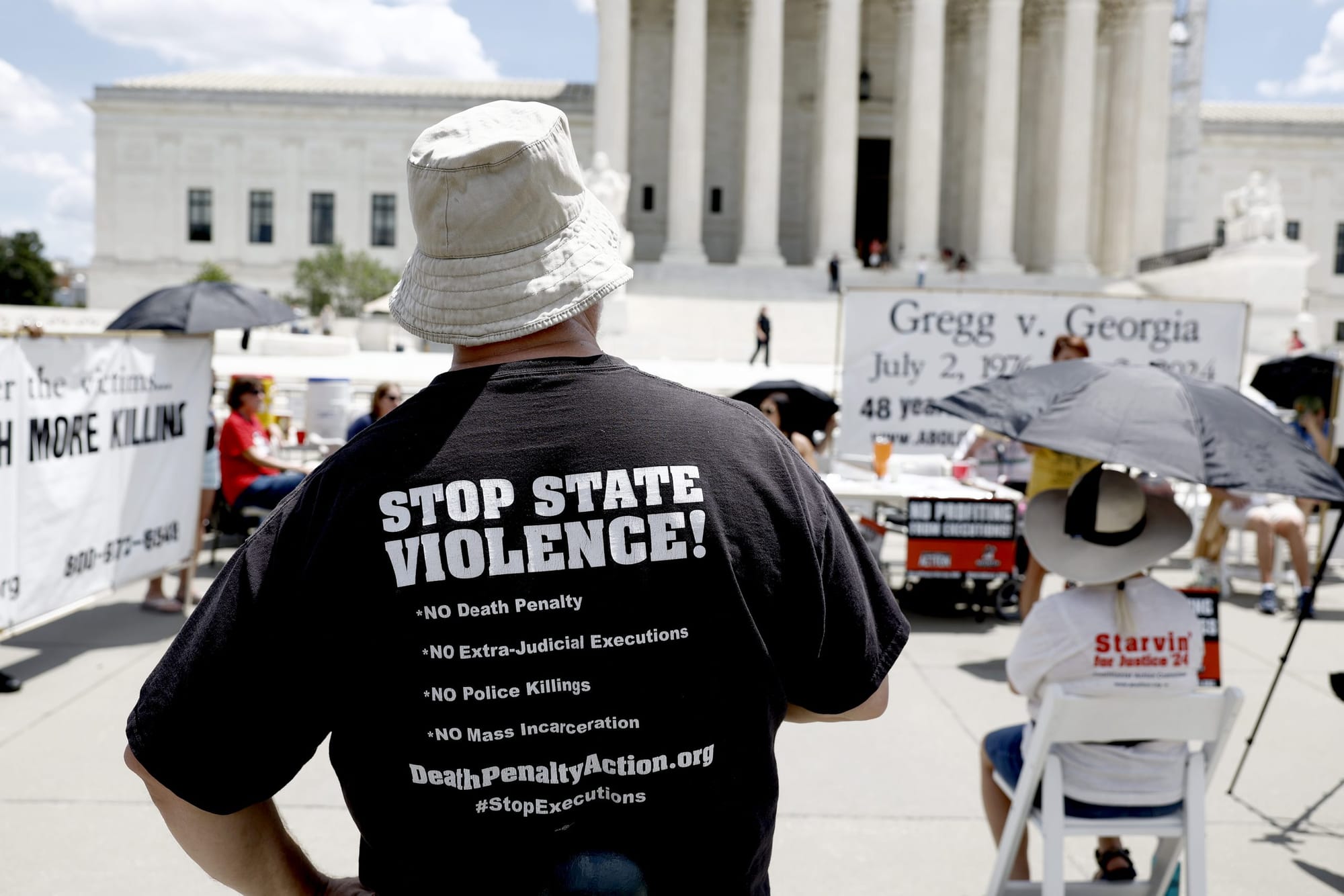
When Secretary of Defense Pete Hegseth announced the now-canceled plan to livestream the execution of Nidal Hasan, a former Army psychiatrist who killed 13 people in 2009 at Fort Hood, Texas, the response was mixed. A Washington Post-ABC-Ipsos poll revealed that 8 in 10 people believed “the execution should not be live-streamed to the public.” However, “a narrow 53 percent majority of Americans support executing Hasan by firing squad.” All of this information has to be digested in relation to the fact that livestreamed executions are an everyday reality in the U.S. The Trump administration’s plan wasn’t necessarily abnormal, but many found its formalization shocking. This is a problem the U.S. public has yet to overcome: It often decries atrocities when they are announced plainly, while ignoring the fact that they are a part of the society’s culture.
President Donald Trump is the embodiment of this sort of conundrum, as someone liberals commonly denounce for not being “a real American.” However, Trump, like public execution, represents much of what’s at the core of the U.S., and we only have to look around to understand why.
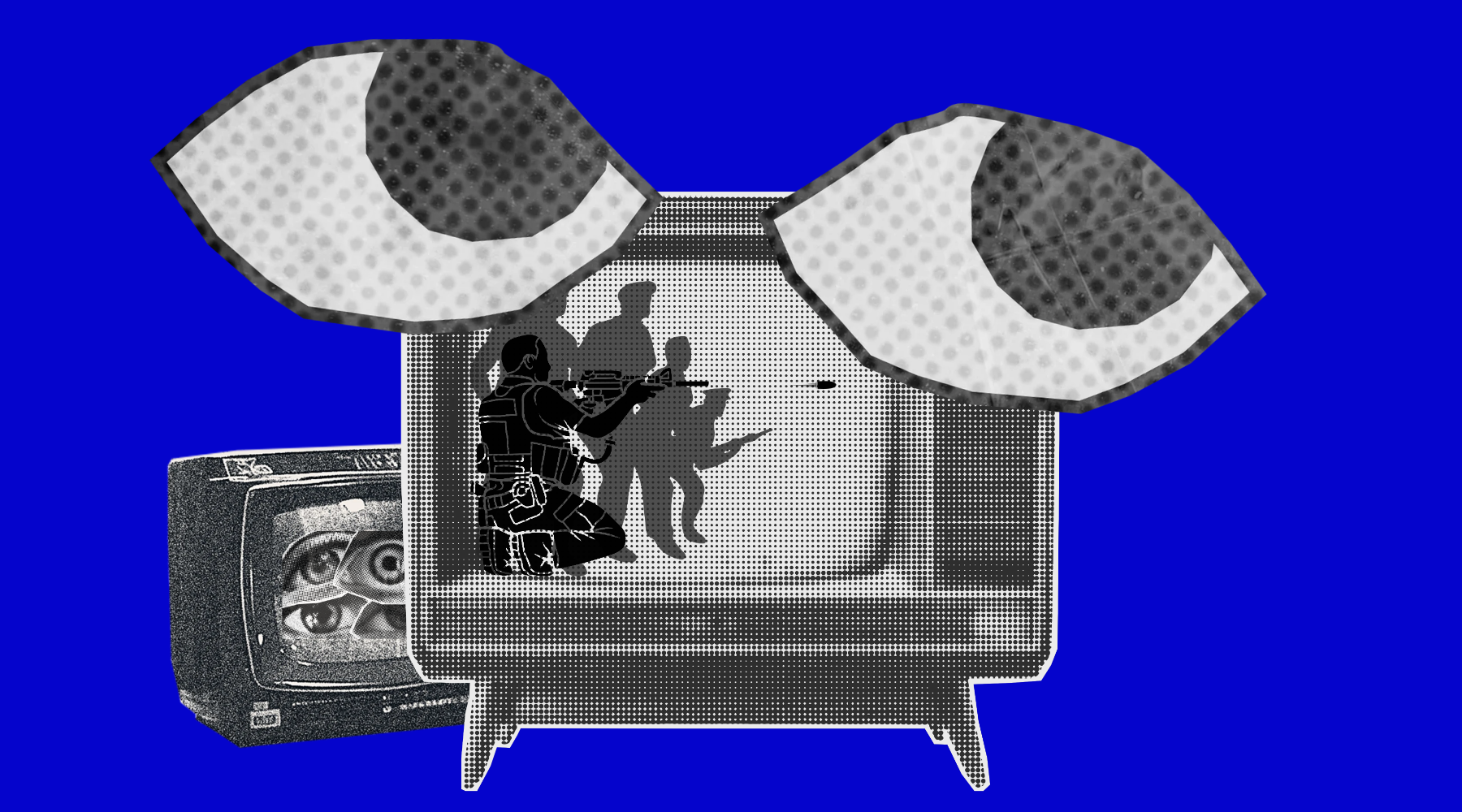
In my 2023 essay, “Police killings are public executions,” I argued that extrajudicial killing is so normalized that it has failed to register with onlookers as a propagandistic broadcast. This is how the “psychological augmentation of the police state” becomes deeply ingrained in us “as accepted fascistic violence.” I highlighted that it was so regular that people like Keenan Anderson and Sean Monterrosa referenced the public execution of George Floyd just before they themselves were executed. Take this into account along with the practice of spectatorship, the recording of police murders that then go viral, and the institutional faux accountability measure of police body cameras. Combined, we have much of what we need to create a readymade meal for societal conditioning. Those who watch the murder have digested it to such an extent that they become desensitized, avoidant, and disempowered. That’s what makes the livestream execution debacle particularly curious.
The “global condemnation” of livestreamed execution mirrors the patriotic liberal practice of rejecting unabashed expressions of modern state violence while glorifying the historical and foundational violence that underpins it. So despite deserved condemnations like the U.S. Conference of Catholic Bishops calling the plan “barbaric,” if such denunciation happens from a place of exception, then it rings hollow. Real opposition, at its core, is a maneuver to overturn what dictates what one opposes. Instead, liberalism is constantly trying to massage and rearrange the established configuration of fascism we’re burdened with. So for some, this potential livestreamed execution was only bad because it’s “Trumpian,” as opposed to routine public police executions. For some, the livestreamed public execution was unacceptable because it wouldn’t happen behind closed doors with private witnesses, as state-sponsored murders typically are. For others, it wasn’t bad at all, and these are the people who have much more influence on U.S. society than we might like to admit.
In addition to acknowledging how normal public killing is in the U.S., we have to also observe the method of execution. Just a couple of years ago, Alabama marked the first known use of nitrogen hypoxia to execute Kenneth Eugene Smith. The execution coincided with the 107th anniversary of the Bath Riots, when a teenage Carmelita Torres refused to take a kerosene bath at the U.S.-Mexico border. These “delousing” baths included the chemical Zyklon B, a cyanide-based pesticide that the Nazis were later inspired to use to kill millions during the Holocaust.
The public execution plan evoked trite and predictable comparisons to the Nazis that made their way to the likes of “Saturday Night Live,” while others chose to condemn governments like Iran, and still others compared the proposal to the Islamic State. Meanwhile, U.S. execution states are prepared to kill with lethal injections, electric chairs, firing squads, hangings, and lethal gas (including cyanide), which—I must again emphasize—inspired the Nazis. The depravity of expanding execution reigns in “Death Camp USA,” while much of the world has distanced itself from this “barbaric” practice.
What has been allowed to occur in prisons and at the expense of U.S. society’s most marginalized populations will be extended to much more of the population. A majority of the country favors the practice of execution and finds it “moral,” according to Pew Research Center. This support has increased since Trump was reelected. So much of the stark terror of the reality before us is beating us over the head. Recently, prison officials failed in their state-sponsored murder of death row inmate Christa Pike and then called 911 to get her lifesaving care. The absurdity is palpable. It’s just as ridiculous as when Troy Davis, Nathaniel Woods, and Marcellus Williams made headlines. And it will be just as horrific should the executions of Meilssa Lucio, Rodney Reed, and countless others take place. It’s the same murderous system that tricked Tommy Lee Walker “out of [his] life” in 1956. It has nothing to do with innocence or guilt; it’s rooted in lynching, genocide, and a white supremacist societal impulse that treats open killing as entertainment.
In her “Reflections on the Way to the Gallows,” Japanese anarchist-feminist Kanno Sugako wrote about how the authorities that prop up the execution system were enslaved by it. Before she was hanged following the High Treason Incident for the attempted assassination of Emperor Meiji in 1910, she wrote:
You poor pitiful judges. All you wanted to do was protect your positions. To safeguard them, you handed down these verdicts even though you knew they were unlawful and arbitrary. You went against your consciences. You poor judges, poor slaves of the government. I should be angry at you, but I pity you instead. Here I am bound by this barred window, but my thoughts still spread their wings in the free world of ideas. Nothing can bind my thoughts or interfere with them. You may live for a hundred years, but what is a life without freedom, a life of slavery, worth? You poor slaves.
In the U.S., it’s not just the authorities who are captured by the endless killing; it’s the public itself. Though I can’t say I pity the killers as much as Sugako might have in her final moments, I admire her clear-eyed reading of their entrapment. My sympathies extend much more to the very people who encourage it and may very well be devoured by it. These are people who think their lives would be chaos without the same structures set up to destroy them.
In the U.S., it’s not just the authorities who are captured by the endless killing; it’s the public itself.
What we know as “the state” is, in essence, a codified monopoly on violence formed into a class instrument through which a ruling group governs masses of people. Law is the hand of these ruling administrators, exercising their will and control over those they govern through unchecked authority. The police are the domestic military weapon they use to enact violence when necessary against those who might challenge designated norms, authority, and rules based on their idea of what society should be. The public executions the police commit affirm all of the above. In “Critique of Violence,” the Marxist philosopher Walter Benjamin explains the distinctions here around the two forms of “lawmaking and law-preserving violence”:
In a far more unnatural combination than in the death penalty, in a kind of spectral mixture, these two forms of violence are present in another institution of the modern state: the police. … In this authority the separation of lawmaking and law-preserving violence is suspended. If the first is required to prove its worth in victory, the second is subject to the restriction that it may not set itself new ends. Police violence is emancipated from both conditions. It is lawmaking, because its characteristic function is not the promulgation of laws but the assertion of legal claims for any decree, and law-preserving, because it is at the disposal of these ends. The assertion that the ends of police violence are always identical or even connected to those of general law is entirely untrue. Rather, the “law” of the police really marks the point at which the state, whether from impotence or because of the immanent connections within any legal system, can no longer guarantee through the legal system the empirical ends that it desires at any price to attain.
The rules will change based on what those who rule over us desire. Will the next execution be livesteamed officially or unofficially? Both are already happening. Both are already unacceptable. Both sit before us, waiting to be upended by a righteous desire to create a world where we live free from state-sanctioned murder justified by the crime it births from an unjust society.
Editorial Team:
Lara Witt, Lead Editor
Carolyn Copeland, Top Editor
Rashmee Kumar, Copy Editor