Filed Under:
One bite at a time: My telltale heart
Facing mortality is a strange business. A recent hospitalization both narrowed my vision and widened the world
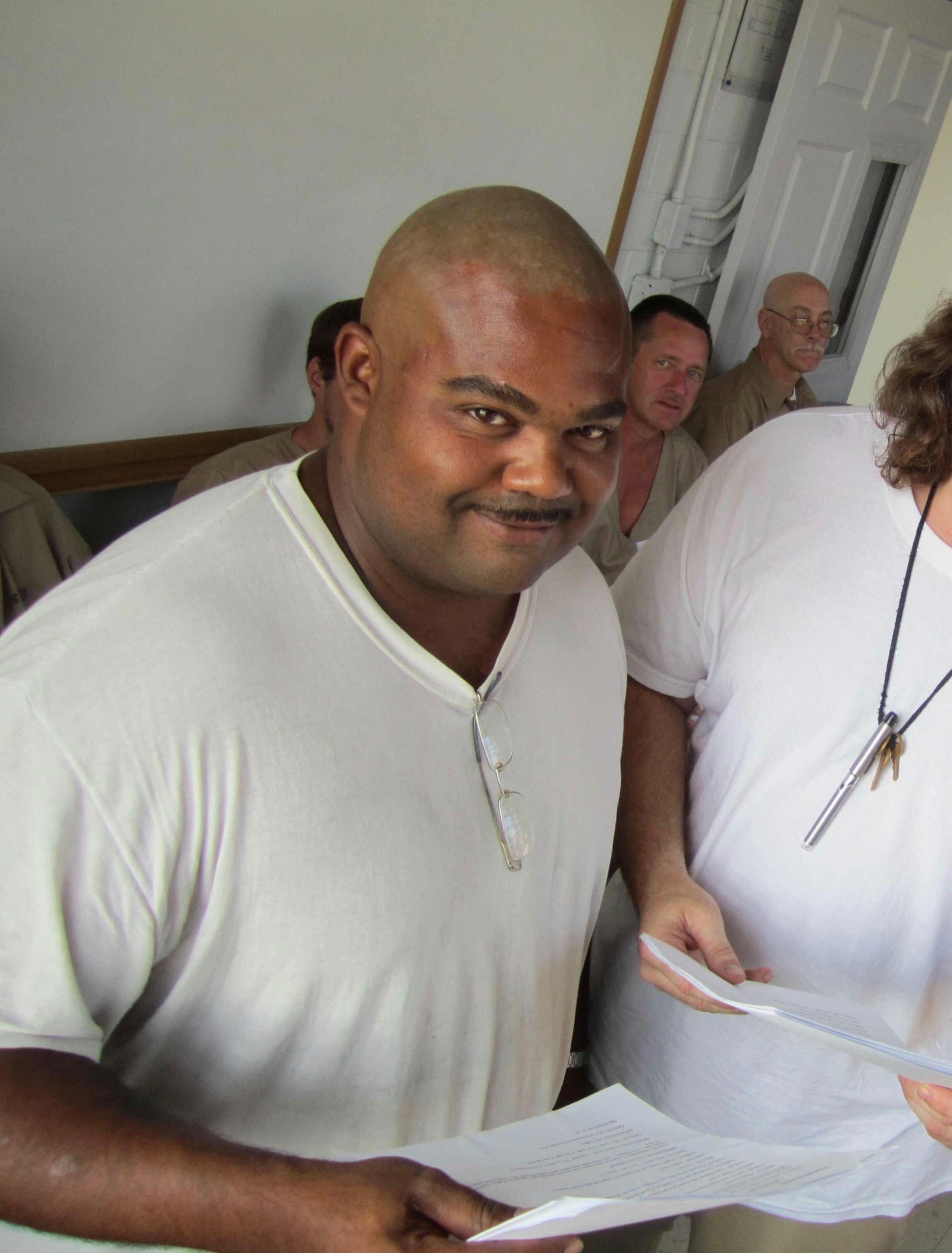
Derek R. Trumbo, Sr.
Real journalists wrote and edited this (not AI). Independent, community-driven journalism survives because you back it. Donate to sustain Prism’s mission and the humans behind it.
Real journalists wrote and edited this (not AI)—independent, community-driven journalism survives because you back it. Donate to sustain Prism’s mission and the humans behind it.
Dear Reader,
I did not expect my body to stage an intervention in August, but in hindsight, my body tried for weeks to get my attention.
At the time, I was working as a groundskeeper, a difficult job I was proud to hold and one that required a great deal from me physically. Many days I felt dizzy, short of breath, and sick, but I kept going because that is what I trained myself to do. When I finally went to a doctor, I was told I had an ear and sinus infection. I was given antibiotics and sent on my way to continue laboring under the blazing summertime sun. I somehow believed that if I could just make it through another day, I would be fine.
But I was not fine.
The dizziness remained. My breathing grew more difficult. Then my chest began to tighten, first a few times a day, and then so often that it became impossible to ignore.
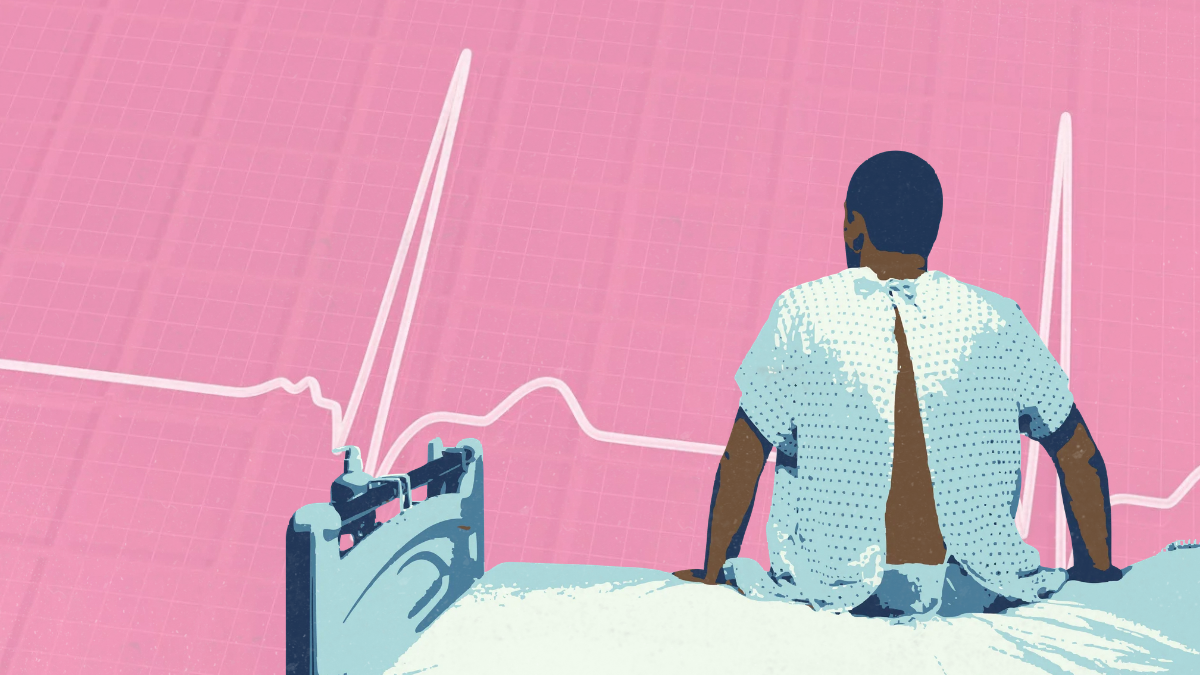
One Saturday morning, after my chest tightened more than two dozen times in four hours and I began to vomit, I went to the hospital. I learned that my kidneys were shutting down, I was severely dehydrated, I had angina, and I needed a heart catheter. I suffered a mild heart attack, a doctor told me, and I was diagnosed with a myocardial bridge, a condition in which part of an artery tunnels into the heart muscle instead of resting on top of it.
Suffice it to say, this was not good news.
My doctors told me I could no longer work as a groundskeeper, and they suggested I do something easier. I eventually found work as a housekeeper, which paid $4 less per hour than my previous job.
It is humbling to realize that your body first whispered, then raised its voice, and finally banged rakes and shovels together just to get your attention. Apparently, my body had to hire a full marching band to get me to listen. I wish I could say I received the message with grace, but the truth is I was stubborn and scared.
A trip not long after this ordeal reminded me that I—no, we—have a lot to accomplish. But we can’t let paid labor get in the way of the work we must all do to fight for a better tomorrow.
Facing mortality is a strange business. It does not always arrive with thunder and lightning. Sometimes it comes disguised in a hospital bracelet, smelling faintly of antiseptic, with a nurse checking your vitals and a doctor explaining things you never thought would apply to you.
My hospital stay narrowed my vision and also widened the world. Suddenly, small things no longer seemed inconsequential. A deep breath that does not fight back. A familiar, loving voice. A sunrise I did not have to earn.
I have thought a lot about these gifts. Not in a dark way, though gloom certainly visits whenever it pleases. It’s similar to the way I turn my new house key over in my hand, not noticing its weight, its edges, or the surprising comfort of it—until I need it to unlock my door.
I am still here. That sentence does not come with fireworks because it is fireworks enough.
In the months since I was hospitalized, I’ve had to slow down. I have to repeatedly tell myself that rest is not laziness; that asking for help is not weakness; and that being useful does not require wearing myself down to the nub. I have spent so much time proving I could endure hardship that I nearly forgot I am also allowed to recover from it.
Not long after my health scare, I flew to Chicago for Haymarket Books’ Socialism Conference, which felt surreal as I was still relearning to trust my own heart again. I sat in awe of a session with scholar, writer, and activist Angela Davis. Seeing her in person and hearing her speak made history feel alive.
At the conference, I also mingled with unfamiliar people, which does not come naturally to me unless coffee and a good exit strategy are involved. But through my conversations with strangers, I was reminded that the world is full of people trying to make something better than what they inherited.
I attended the conference with other writers in Haymarket’s 2026 Writing Freedom Fellowship. If I am being honest, that sentence still feels like it belongs to somebody with more sensibility, better shoes, and a more organized calendar. I was grateful, certainly, but gratitude and impostor syndrome apparently know how to ride in the same elevator. Part of me wanted to shrink, to explain myself before anyone asked, to make sure every person I encountered knew that I too was surprised I was there. But another part of me—the part that had recently been reminded that tomorrow is not guaranteed—kept tapping me on the shoulder and saying, “Be here. Don’t spend the whole miracle apologizing for it.”
Impostor syndrome is a clever little pest because it rarely says anything original. It just repeats the same tired lines in a voice that sounds enough like our own to fool us. “Who do you think you are?” the voice asks over and over again. “Don’t you know you don’t belong here? Why are you wasting everyone’s time?” But near-death can also influence us to strike back. Who do I think I am? I am a man who was almost not here. I am a writer. I am a person who has been given another morning, another sentence, another chance to stand at a window and watch the light move across the water.
From my hotel room in Chicago, I did indeed love watching the light glint across Lake Michigan. The water stretched beyond the glass with a calm authority, wide and blue and indifferent in the way only nature can be. Lake Michigan had no idea who I was, what I survived, what I feared, or what I was still trying to become. Strangely, that was comforting. I stood at the window often, letting my emotions pour into that enormous body of water. The city moved beneath me, traffic and people and sirens all carrying on, while the water held steady in the distance. There was something almost healing about that view. It reminded me that life is fragile and vast.
I do not pretend to have solved the problems facing low-wage workers on a Chicago street with a cookie in my hand, though I will say: Cookies make most revolutions at least 15% more pleasant.
Still, I struggled to fight that little voice that asked who I thought I was to be at the conference among organizers, thinkers, seasoned activists, brilliant writers, and people who seemed to know exactly which room they were supposed to be in. Admittedly, I stumbled into many sessions where I had no idea what I was listening to, but I stayed nonetheless to observe and be exposed to something new. I let myself be one writer among many others—not above or beneath anyone, just alive, tender, nervous, and curious.
One evening, just before the end of the conference, I joined Haymarket staff on a small expedition for cookies, which is exactly the kind of conference activity I can fully endorse. There is a particular joy in moving through a city with people you have only recently met, all of you bound together by the humble and noble pursuit of baked goods.
Somewhere between the streets, sidewalks, storefronts, and whatever sugar-fueled optimism cookies tend to produce, the conversation deepened. We began talking about labor, dignity, and what it means for people to be paid what they deserve—not merely enough to survive, but enough to live with some ease, security, and room to dream.
That conversation stayed with me because it touched something I carried in my own body. I knew what it meant to give a job everything I had until there was not much of myself left to give. I knew what it meant to keep showing up because my mortgage was due, because bills do not pause for chest pain, because pride and responsibility can dress themselves up as endurance. We talked about how strange it is that working people are often praised for sacrifice when their sacrifice was never a choice in the first place. Workers are called “essential” and characterized as “the backbone” of industry, yet paid a pittance and still asked to give even more of themselves.
What I appreciated was that the conversation never became a cold policy debate floating above ordinary life. It stayed human: rent, gas, medicine, groceries, child care, and the quiet panic of one unexpected bill knocking a month sideways. Fair pay is not greed or luxury. It is the reasonable belief that if a person gives their time, skill, patience, sweat, and sometimes even their health to a job, then that job should give enough back for them to live with dignity.
By the time we got the cookies, I realized we were talking about more than wages. We were talking about the kind of world working people deserve. I do not pretend to have solved the problems facing low-wage workers on a Chicago street with a cookie in my hand, though I will say: Cookies make most revolutions at least 15% more pleasant.
As we head deeper into the fall, I am still holding September close: the lake, the conference, the fellowship. Angela Davis’ voice still echoes in my mind, and so does my own stubborn little pulse. I continue to reflect on how easy it is to miss your own life when you are busy trying to prove you deserve one.
Chicago did not cure me of that, but it gave me practice.
The Right to Write (R2W) project is an editorial initiative where Prism works with incarcerated writers to share their reporting and perspectives across our verticals and coverage areas. Learn more about R2W and how to pitch here.
Editorial Team:
Tina Vásquez, Lead Editor
Carolyn Copeland, Top Editor
Lauren Hardie, Copy Editor