Filed Under:
Where are the campus anti-war protests? Well, they were brutally repressed
Campus insiders point to repression faced by pro-Palestine protesters, divisions among the Iranian diaspora, and differences in the conflict

Meghnad Bose
Real journalists wrote and edited this (not AI). Independent, community-driven journalism survives because you back it. Donate to sustain Prism’s mission and the humans behind it.
Real journalists wrote and edited this (not AI)—independent, community-driven journalism survives because you back it. Donate to sustain Prism’s mission and the humans behind it.
Assal Rad, a historian of the modern Middle East, has been contemplating why the protests against the U.S.-Israel war on Iran have been relatively muted in the U.S., given its historic domestic unpopularity.
“If you look at the protests against the war in Iraq in 2003, at the time of the war, a majority of Americans actually supported it, and yet you saw these massive protests. At the time of this war [on Iran], at the very beginning, a majority of Americans did not support it,” Rad said.
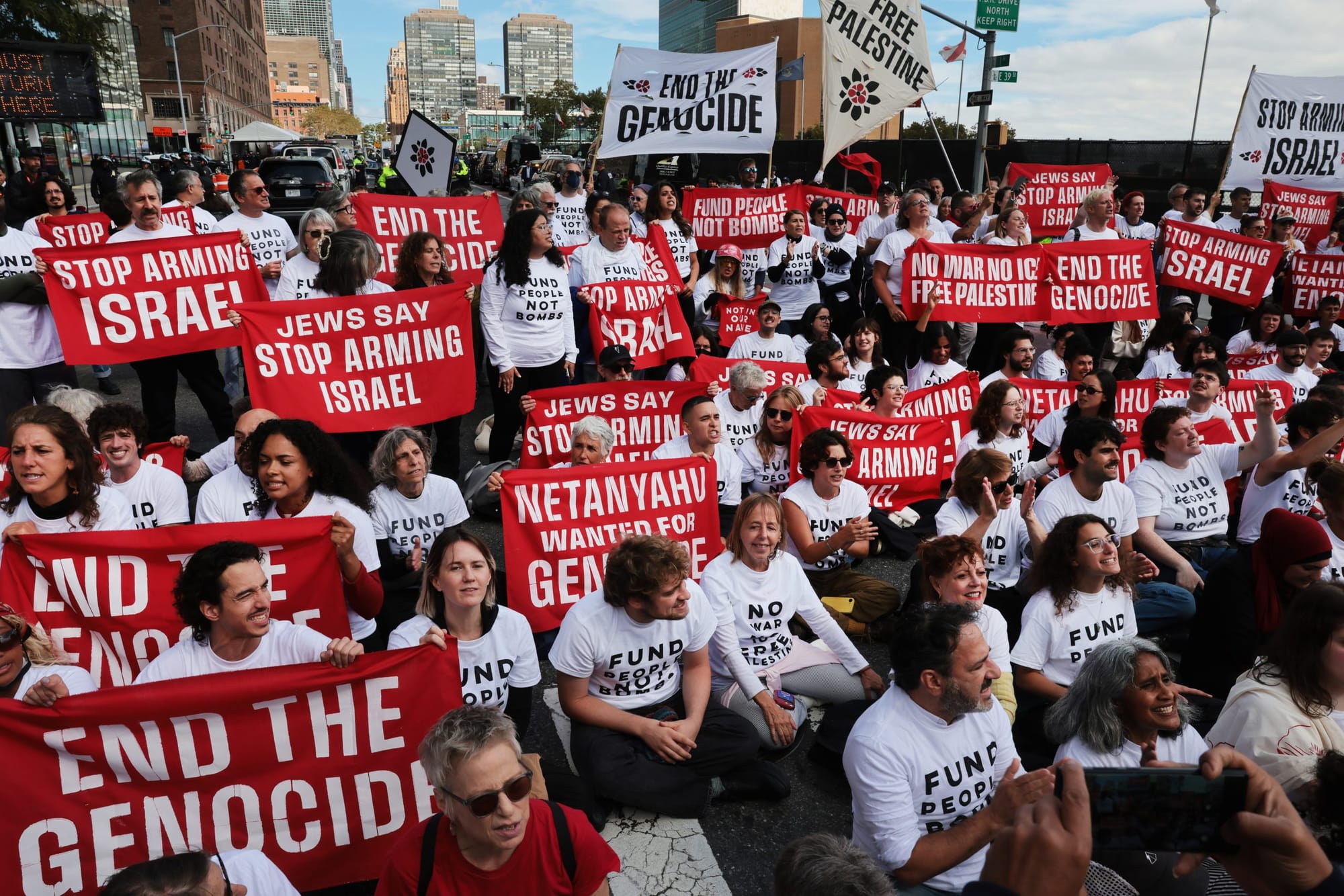
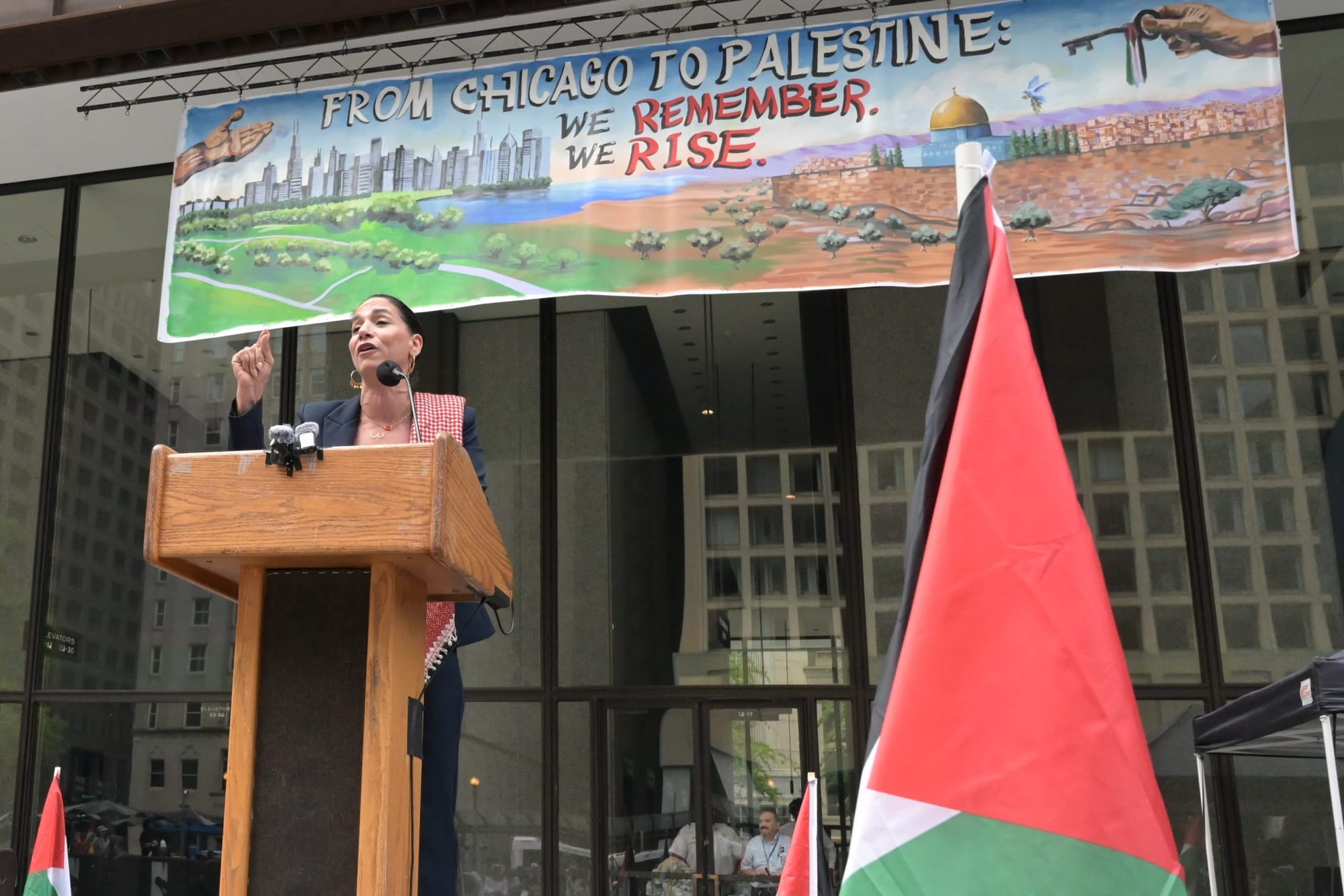
Nowhere has that contrast felt as pronounced as on college and university campuses, which saw a surge in protests over the past couple of years as thousands of students, faculty, and staff registered their dissent against the genocide in Gaza bankrolled by their taxes and their colleges’ collaborations with Israel as it destroyed every university within the Strip.
Media commentators have wondered why colleges and universities aren’t witnessing similar levels of student protest against the U.S.-Israel war on Iran as there were about Palestine. Two years since encampments in solidarity with Gaza took over dozens of university commons, publications ranging from The New York Times to The Bulwark have questioned, “Why aren’t the kids out protesting against Trump?” and concluded that “the campus protest culture that targeted Biden goes silent for Trump.”
The Atlantic, which in 2024 published pieces that said campus protest encampments were “unethical” and described the one at Columbia University as having “a fervor that borders on the oppressive” is also among the publications now asking “Where are all the campus protests?”
But student organizers, professors, and experts told Prism that this is less of a “gotcha” moment about how students aren’t showing up to protest, and more the result of a combination of factors—not least the extreme lengths to which universities, police departments, and the Trump administration have gone to punish pro-Palestine protesters. In addition, they highlighted divisions in the Iranian diaspora, differences in the nature of conflict, and other reasons for the relative contrast on college campuses.
Amir Moghaddam, a graduate student organizer at Columbia, said campus repression should be the first clause of every headline asking what happened to the anti-war student protest movement.
“To just make it seem like, ‘Oh, students just got bored. Oh, they never actually cared. It was just the fashionable thing.’ No, people were viscerally offended to see people slaughtered with the fruits of their labor and then they’re told to shut up or lose their future employment or have their degree revoked,” Moghaddam said.
At universities across the U.S., students who protested for Gaza have been disciplined severely, suspended, expelled, arrested, and had job offers revoked by firms angered by the protesters’ criticism of Israel’s actions.
“Their entire futures were being destroyed, and then people wonder why don’t you have the same response from students who are protesting,” Rad said.
The crackdown has made protesting on college campuses more difficult and risk-prone.
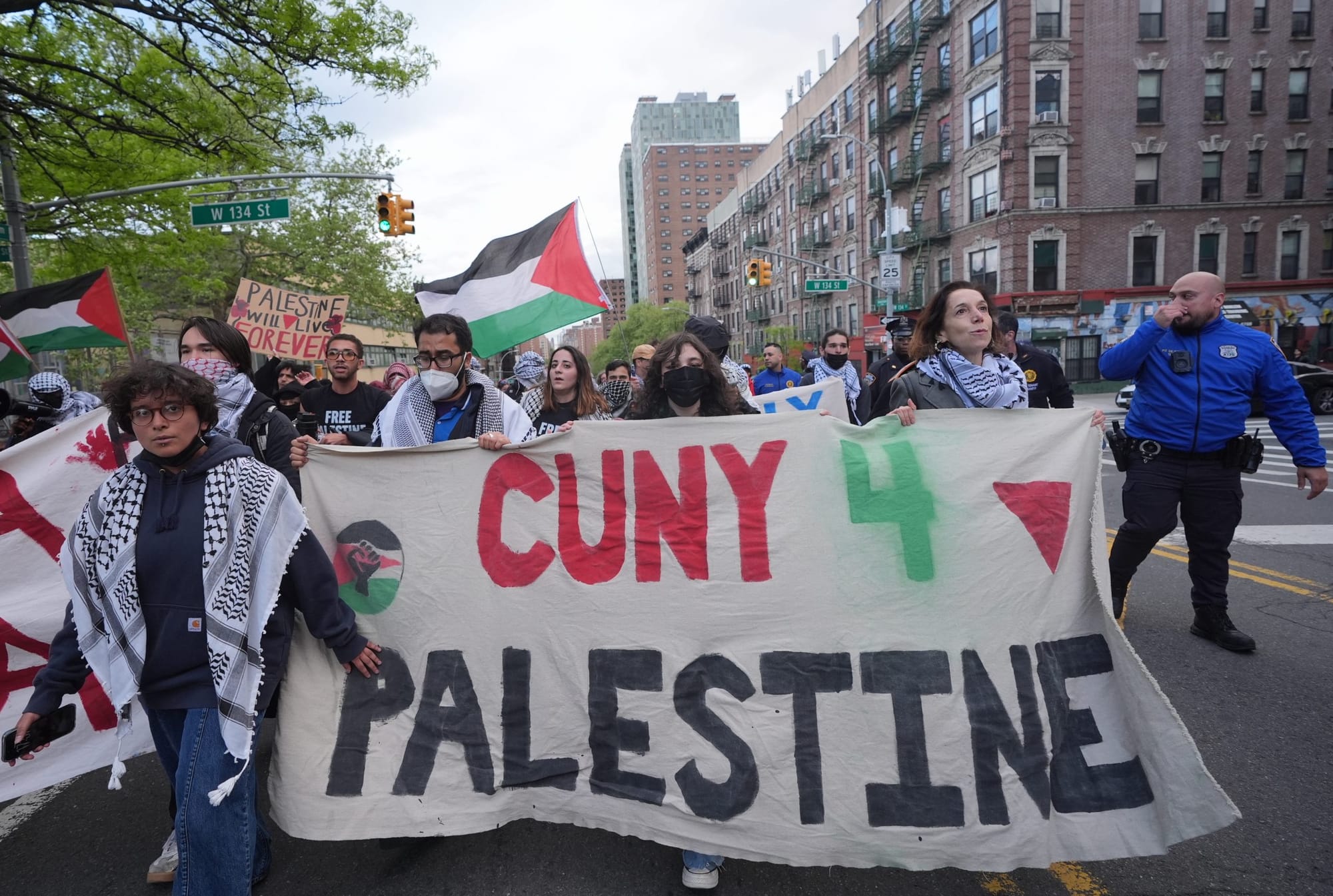
“Where are the protests? Well, those protests were brutally cracked down,” Rad said. “Thousands of people were arrested, including students and faculty. There were images of snipers on rooftops at universities. Those are harrowing, frightening images.”
Intense repression
Universities seeking to intimidate and punish pro-Palestine protesters took extraordinary measures to do so. The University of Michigan hired undercover investigators to trail, record, and surveil pro-Palestine student organizers on and off campus. Columbia’s board of trustees convened on a day of a pro-Palestine protest in a university library and radically changed the university’s disciplinary procedures that would then be used to execute mass sanctions on nearly 80 protesters. On many campuses, including the City College of New York (CCNY), “time, place and manner” restrictions were implemented or severely tightened, impacting the ways in which students could organize.
Rhiannon Rashidi is an Iranian American journalist who covered the protests at CCNY with the student outlet The Paper. She recalled when protest regulations began to change.
“They created protest zones, which was a crazy small section that was fenced in, and they were like, this is where you can protest,” Rashidi said. “And people did it because they were afraid.”
The backsliding of free speech on certain university campuses in the wake of the crackdown on pro-Palestine advocacy has been marked. Recently, a student organizer at Columbia, who asked to remain anonymous for fear of retaliation, began being investigated by the university’s Office of Institutional Equity for having distributed flyers that contained publicly available information about members of Columbia’s board of trustees. In an extraordinary step, the university branded this criticism of the trustees as exposing “individuals to ongoing harassment.” Though the investigation was eventually dropped after public outrage, the student said that such draconian disciplinary measures and crackdowns on even the most basic protests have a major chilling effect on students who might be considering joining one.
Moghaddam said this fear is amplified further for international students.
“They all know what to do and what not to do, and it basically means don’t touch politics, don’t pen an op-ed, cover your face if you’re even passing by [a protest], or scurry on by as quickly as you can,” Moghaddam said.
Rümeysa Öztürk, a Tufts University scholar, who was detained by Immigration and Customs Enforcement (ICE) over co-authoring an op-ed that demanded that her university acknowledge the genocide in Gaza, recently left the U.S. after a monthslong legal saga. Meanwhile, Mahmoud Khalil, a Palestinian activist and U.S. green card holder who spent more than 100 days in ICE detention, still faces an uncertain future in the country. Recent media reports also revealed that the Trump administration has issued new guidance under which immigrants can now be denied permanent residency for expressing political opinions such as participating in pro-Palestinian campus protests or posting criticism of Israel on social media.
Universities are also preemptively seeking to eliminate opportunities that gave space to students speaking up against the genocide in Gaza. New York University, for example, will no longer allow graduating student speakers to deliver live remarks at their commencement ceremonies, and will instead play recorded, pre-approved messages after a graduate condemned the “genocide currently occurring in Gaza” in their speech last May.
Parsa Zarrineghbal, a senior at Loyola Marymount University in Los Angeles, said the university discourages campus clubs, including the Persian Cultural Association (PCA) that he is a member of, from political involvement. One of the few political statements released by the PCA this year was a condemnation of the university’s decision to include the Islamic Republic of Iran flag on a campus display of national flags, suggesting instead that the school use the pre-Islamic Revolution “Lion and Sun” flag often flown at rallies held by supporters of Shah Mohammad Reza Pahlavi.
“But that was just like, ‘We don’t support that [flag], it’s not us.’ It’s just certain small things. Besides that, it’s just really hard to do a movement there,” Zarrineghbal said.
On top of the wide-ranging institutional barriers to organizing and advocacy, student protesters do not feel that administrators hear their complaints.
“We’ve escalated in every way that students traditionally have. We’ve occupied space, we’ve occupied buildings, we’ve chained ourselves to the gates, we’ve tried to do student strikes, we’ve gone to the homes and offices of admin,” the Columbia organizer said. “None of that is working.”
Divisions within the diaspora
Palestinian students largely led the Gaza protests on college campuses. When it comes to the movement against the war on Iran, however, the Iranian diaspora is far more divided, said Hamid Dabashi, a Columbia professor of Iranian studies and comparative literature.
“I’m a lifetime opponent of the Islamic Republic; I can’t even go to my own country,” said Dabashi, who was born and raised in Ahvaz in southern Iran and moved to the U.S. in 1976, three years before the revolution. “But I’m against war and I have been against the Iraq war, the Afghan war, right now I’m as much against the embargo against Cuba as I am against [the war on] Iran.”
But he knows there are sections of the Iranian diaspora who would not agree with him. “Most East Coast Iranians came before the revolution. Most West Coast Iranians came after the revolution,” Dabashi explained, leading to differences in opinions on the politics of their home country and subsequently, the current war.
Rashidi, the journalist, has noticed these differences among her own community in Los Angeles. “People who came after the revolution left only because of the revolution. Automatically their perspective is going to be more inclined to be against the regime, …. Any power in the world that is standing against the Islamic Republic, to them, is going to be a positive thing.”
Some Iranians, like Zarrineghbal, are not entirely opposed to the war.
“We want the war, but it’s a war and it’s caused a lot of people stress. At first I was excited … because the leader died … but then it just kept stretching. We all thought that that’d be done in like two weeks,” he said. “It sucks that our only hope is a war.”
Anti-war protests have been taking place, however, albeit at a smaller scale and frequency than those for Gaza. Organizers on Columbia’s campus held a “Hands Off Iran” protest in early March.
In the protest, we were like, we’re not going to be pro-Shah, we’re going to not be pro-Ayatollah. We just want to be anti-bombing children’s schools … or the U.S.’s military overreach in the Middle East.
Student organizer at Columbia University
“In the protest that we did, we were like, we’re not going to be pro-Shah, we’re going to not be pro-Ayatollah. We just want to be anti-bombing children’s schools or bombing anyone for that matter, or just [anti-] the U.S.’s military overreach in the Middle East,” the Columbia organizer told Prism.
Yet, at the same institution, a post by a group named Columbia for Palestine highlighted the range of opinions on the subject, even among those opposed to the war. The post mourned the “devastating loss” of Ayatollah Ali Khamenei, the Iranian supreme leader who was also a prominent Shia cleric, and expressed “full and unconditional support for the Axis of Resistance as they combat U.S.-Zionist imperialist aggression in the region and beyond.”
Comparing asymmetries
Dabashi also pointed out that the dynamics of an anti-war movement are different when it is perceived to be a relatively more balanced conflict. Iran has drones and missiles, and controls a large part of the world’s oil circulation.
“The dynamics are different than what we saw between 2023 and 2025, where you have one of the most lethal armies on planet Earth just slaughtering tens of thousands of human beings in Gaza,” Dabashi said.
There is also a level of protest fatigue that has crept in, Rad said. “People are exhausted from having to protest so many different things.” She added, “I think the strategy of this administration is in many ways to create these tensions, right? People are so scared constantly of what’s going to happen.”
Still, debilitating U.S. sanctions on Iran remain, and efforts on campuses to organize against the war have continued.
“I’m never going to stop organizing,” said Moghaddam, the Columbia graduate student. “It’s the least I can do to help Iranians that aren’t in such a privileged position as myself.”
Editorial Team:
Sahar Fatima, Lead Editor
Lara Witt, Top Editor
Stephanie Harris, Copy Editor