Filed Under:
As Florida residents challenge Israel bond investments, public meetings grow contentious
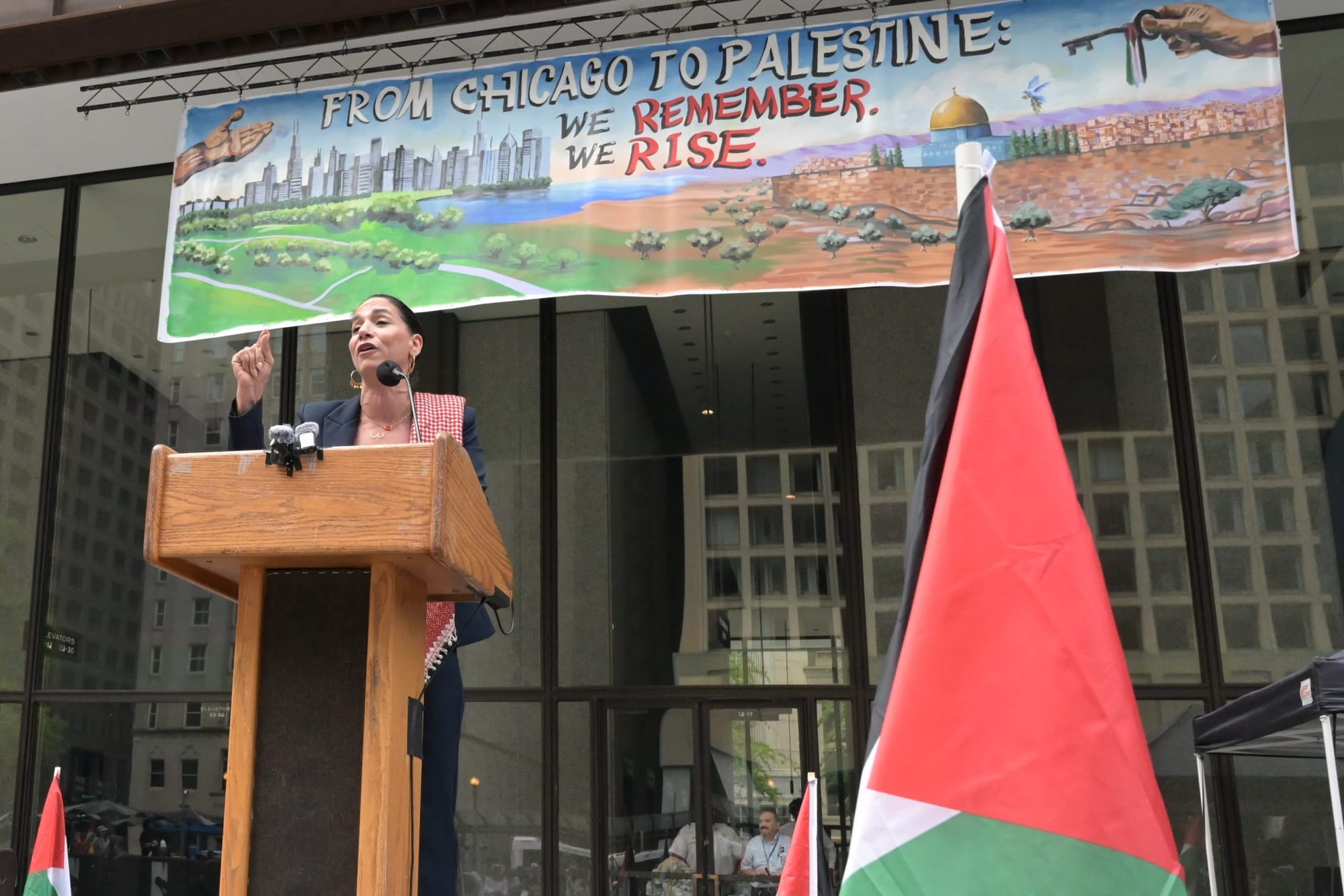
Human rights attorney Noura Erakat was arrested after refusing to leave a Palm Beach County meeting where community members were barred from speaking about Israel bonds
Alexandra Martinez
Real journalists wrote and edited this (not AI). Independent, community-driven journalism survives because you back it. Donate to sustain Prism’s mission and the humans behind it.
Real journalists wrote and edited this (not AI)—independent, community-driven journalism survives because you back it. Donate to sustain Prism’s mission and the humans behind it.
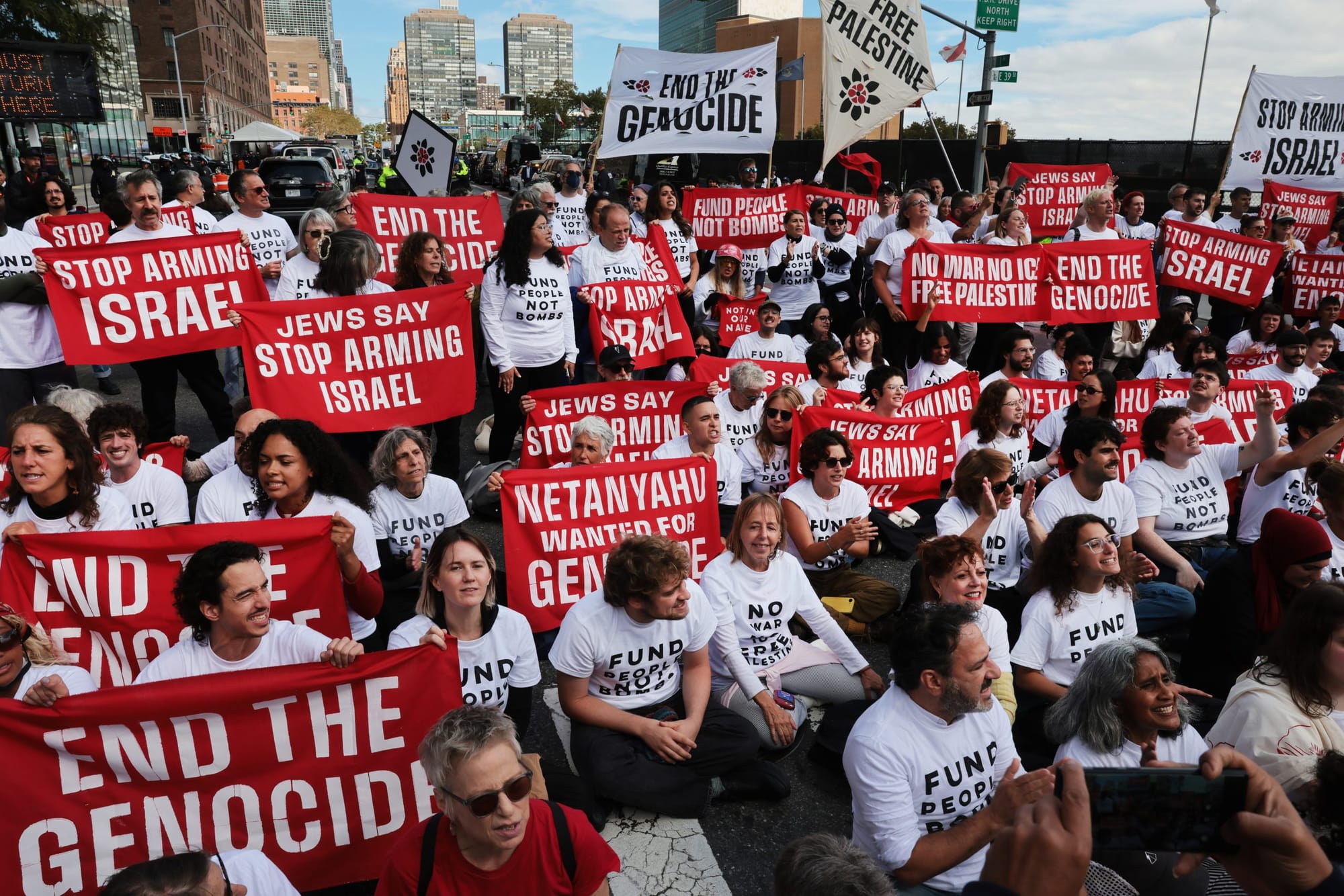
At a Palm Beach County budget hearing on Sept. 15, a dispute over Israel bond investments escalated into a confrontation between protesters and law enforcement, culminating in the arrest of human rights attorney Noura Erakat.
The incident was the latest in a series of contentious public meetings in South Florida, where residents have attempted to challenge government investments in Israel bonds.
Protesters sought to raise concerns about the county’s more than $1 billion investment in Israel bonds, the largest of any single investor in the world, and to stop a reinvestment of $67.5 million that is set to happen on Nov. 1. Officials, however, maintained that the hearing concerned the county’s proposed budget and that the Israel bond investments were not part of the matter before commissioners.

Several speakers attempted to address the county’s Israel bond holdings during public comment. The meeting eventually descended into disorder, with sheriff’s deputies removing people from the chamber. Erakat remained inside and was arrested after refusing orders to leave, according to a probable cause affidavit obtained by CBS12 News. She was charged with misdemeanor trespassing.
Erakat did not respond to Prism’s request for comment. In a statement published to social media, Erakat said she was released on bond at 1 a.m. on Sept. 16 and is awaiting a court date.
“What we witnessed tonight in Palm Beach County was alarming and terrifying,” Erakat wrote. “The whole scenario was absurd and a glimpse into how protecting Israel requires the sabotage of democratic norms.”
She added that the Palm Beach County organizers plan to continue pressuring the commission to divest from Israel bonds and that she is honored to support their efforts.
The Council on American-Islamic Relations (CAIR), its Florida chapter (CAIR-FL), and the Internationalist Law Center have condemned the arrest, arguing that Erakat and other protesters were exercising their right to speak about how public money is invested.
“Noura Erakat was arrested unjustly for speaking out against a horrific policy,” CAIR-FL Communications Director Wilfredo Amr Ruiz said in a statement. “Palm Beach County commissioners must immediately stop using more than a billion dollars in public taxpayer funds to bankroll death, enable war crimes, and finance the slaughter of innocent children. Dumping our community’s hard-earned resources into these toxic, high-risk Israeli bonds makes our local government directly complicit in catastrophic human suffering. We demand our elected officials divest without delay, prioritize our residents’ needs at home, and refuse to let our tax dollars underwrite atrocities abroad.”

Amr Ruiz, who was also dismissed from speaking at the Sept. 15 meeting, described similar confrontations at Miami-Dade County meetings, including his own removal by police after he criticized the county’s Israel bond investments during a 2024 meeting.
He said CAIR wants local officials to reconsider the investments as the bonds’ financial ratings have deteriorated. Ruiz argued that investing large sums of public money in Israel bonds raises questions about whether the decisions are being driven by financial considerations or political lobbying.
In a Sept. 24 statement, the Internationalist Law Center said they mobilized 100 South Florida residents to oppose Palm Beach County’s planned investment. The group said its campaign will continue through additional public comment mobilizations ahead of the Nov. 1 decision. The group is encouraging residents to attend upcoming meetings and give public comment on Oct. 6 and Oct. 20.
“The will of the people is unmistakably clear: stop funding genocide,” the group wrote. “On November 1, we can make a material difference for Palestine right here in Palm Beach County by stopping 67.5 million more dollars of local funds from being invested in Israel Bonds.”
Eddie Arroyo, a Miami-based artist and activist who attended the Palm Beach County hearing with members of the Internationalist Law Center, said the restrictions on public comment were apparent from the beginning.
Arroyo said people were required to submit forms before speaking and that officials reviewed the forms to determine whether speakers were eligible to address the commission. Arroyo said he was not allowed to speak because he did not have a West Palm Beach address. That experience, he said, differed from earlier public meetings he had attended.
“When I began speaking, we didn’t have to fill out any kind of forms to speak at a public meeting,” Eddie said. “And now we’re at a point where forms have to be filled out. Then there is a vetting process on the spot.”
Arroyo characterized the process as “overt censorship in real time.”
“It was a roundabout way of saying, ‘Yes … investment bonds do affect the budget, but we’re not going to talk about the investment clause,’” Arroyo said.
The confrontation intensified after a veteran wearing a U.S. Air Force uniform spoke against the county’s investment in Israel bonds.
According to video and accounts of the meeting, Commissioner Joel Flores told the veteran, “You’re embarrassing that uniform, sir,” as the veteran was removed from the chamber.
Flores and the Palm Beach County commissioners did not respond to Prism’s request for comment.
The comment triggered an angry reaction from some people in the audience. Commissioners then called a recess, and the chamber was cleared. Arroyo said deputies subsequently moved attendees out of the building and onto the sidewalk. Erakat remained inside.
“I was talking to her because I don’t really know her,” Arroyo said. “I asked her, ‘What do you want us to do?’”
According to Arroyo, Erakat indicated that she intended to stay. Erakat was subsequently arrested. The probable-cause affidavit says deputies repeatedly instructed her to leave and that she refused. The affidavit also describes officers attempting to remove her from the building as tensions escalated.
Not the first confrontation
For Arroyo, the Palm Beach County hearing felt familiar. On Sept. 1, he attended a Miami-Dade County commissioners meeting where he attempted to speak about Israel bond investments. He said law enforcement was heavily present and that people attempting to participate in public comment were removed from the meeting.
“We basically got moved into this back-exit corridor,” Arroyo said. “Honestly, I thought there was going to be like a paddy wagon waiting for us downstairs. That’s how intense it was in Miami.”
The experiences prompted him to travel to West Palm Beach when he learned that residents planned to challenge the county’s substantially larger Israel bond holdings.
There, he said, he encountered an even heavier police presence: “It was actually far more intimidating.”
Still, Arroyo plans to continue attending public meetings.
“It’s not a matter of if I’ll speak again,” Arroyo said. “It’s if I’m going to be allowed to speak again.”
Editorial Team:
Sahar Fatima, Lead Editor
Carolyn Copeland, Top Editor
Rashmee Kumar, Copy Editor