Filed Under:
Illegal bombardment of Iran by U.S. and Israel causes further escalation across the region
More than 550 Iranians, including Supreme Leader Ayatollah Ali Khamenei, have been killed, with U.S. and Israeli airstrikes hitting an elementary school and a hospital
Neha Madhira
Real journalists wrote and edited this (not AI). Independent, community-driven journalism survives because you back it. Donate to sustain Prism’s mission and the humans behind it.
Real journalists wrote and edited this (not AI)—independent, community-driven journalism survives because you back it. Donate to sustain Prism’s mission and the humans behind it.
More than 550 Iranians, including Supreme Leader Ayatollah Ali Khamenei, have been killed after the U.S. and Israel launched an unprovoked bombing on Feb. 28. The deaths included 165 killed in an airstrike on a girls’ elementary school in southern Iran, and others in attacks targeting a major hospital in Tehran and residential areas in 24 of the country’s 31 provinces.
Simultaneously, Israel continued attacks in Lebanon, killing over 30 people, and immediately closed all border crossings into Gaza. Meanwhile, Iran has retaliated with missile attacks targeting U.S. military assets in other countries in the region, including the United Arab Emirates, Bahrain, Saudi Arabia, and Qatar.
“Grave war crimes against the Iranian people have already been committed in two days of war, including strikes on hospitals and schools that have killed children. Such strikes are among the gravest possible violations of international law, and we wholeheartedly condemn them and call for an independent investigation and accountability,” the National Iranian Council of America wrote in an X post. “We mourn the loss of everyone who has been victimized by this abhorrent and senseless war. We call on the United States and Israel to halt their illegal attacks, and for Iran to follow suit, before more lives are lost.”
U.S. President Donald Trump and Israeli Prime Minister Benjamin Netanyahu have stated a large part of their current and previous attacks are regarding “Iran’s nuclear program” and to change the country’s leadership. However, Iran does not have any nuclear weapons, while both the U.S. and Israel do. After the U.S. joined Israel’s 12-day war with Iran last year, Trump claimed that U.S. strikes had “obliterated” Iran’s capability of pursuing a nuclear bomb.
“The Islamic Republic’s actions represent a dangerous escalation that violates the sovereignty of multiple states and threatens regional stability,” the U.S. Department of State said in a March 1 press release. “The targeting of civilians and of countries not engaged in hostilities is reckless and destabilizing behavior.”
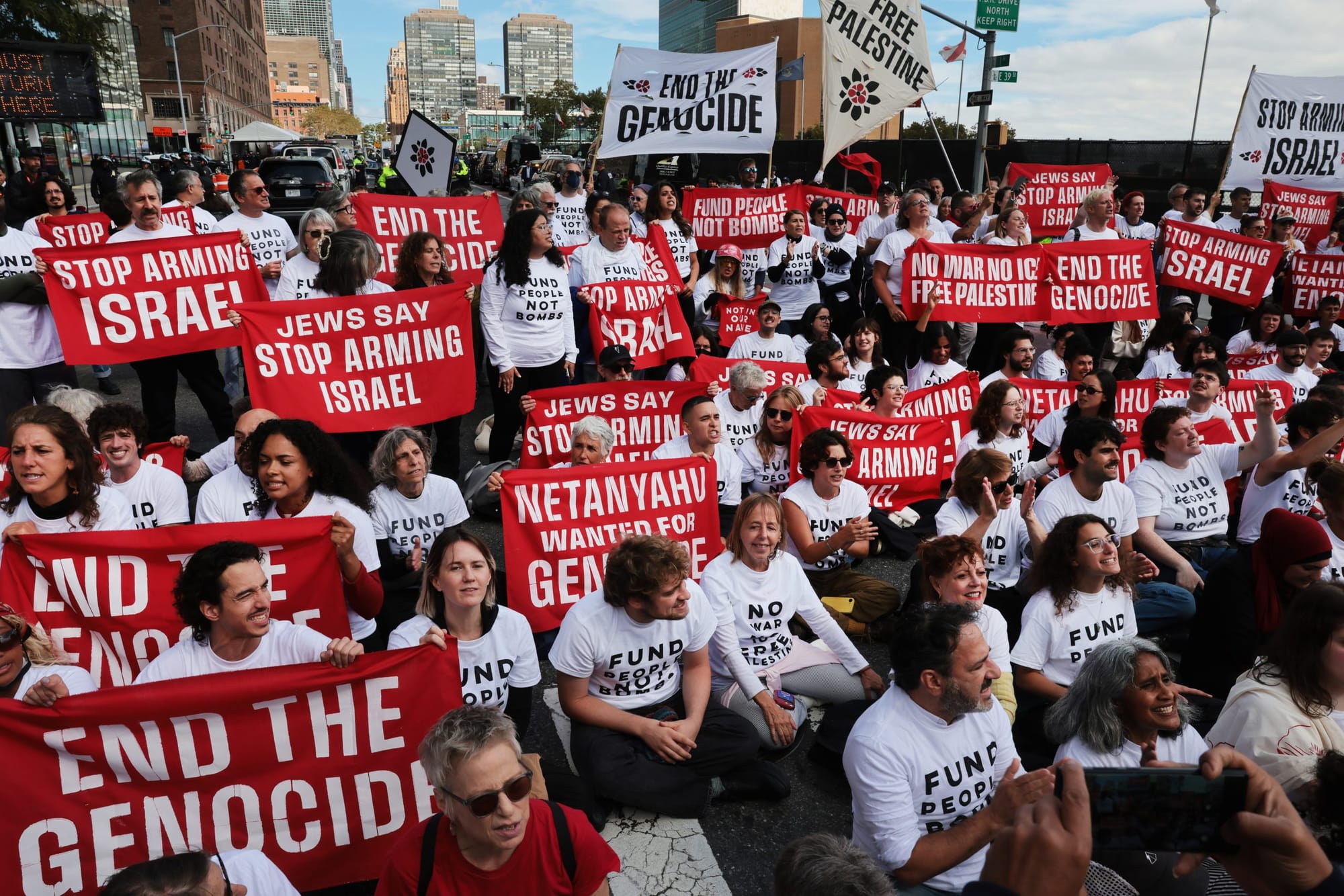
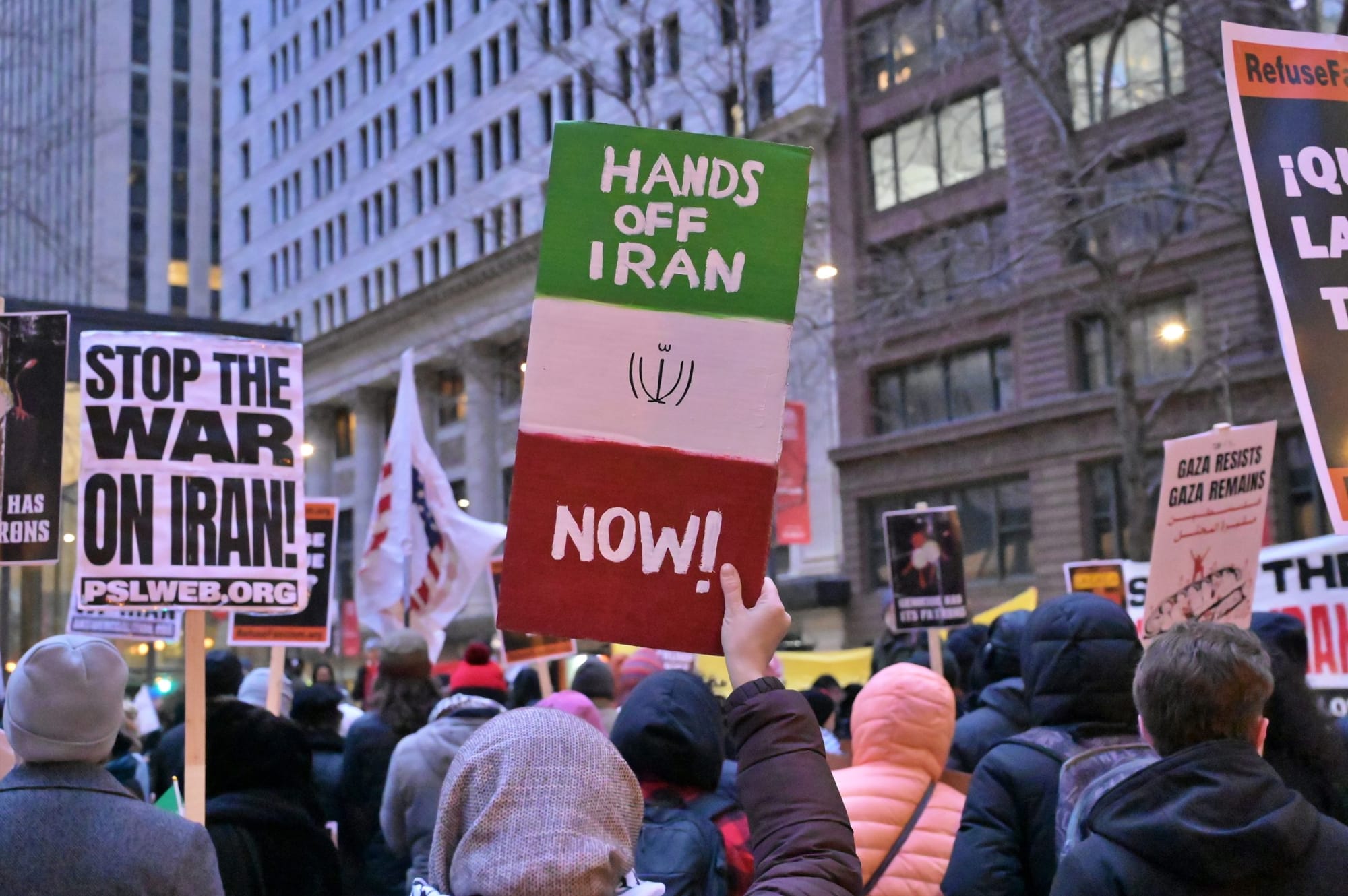
Civil rights groups, international law and military experts, and some Democratic lawmakers have said the U.S. and Israeli strikes on Iran were “illegal” and “unconstitutional.” Anti-war protests have broken out across the U.S. and the world, coming on the heels of the largest anti-regime protests within Iran since the 2022 “Woman Life Freedom” revolution. Meanwhile, Shia Muslims around the world mourned the death of Khamenei, who was a prominent cleric.
“ Paperwork, trauma, and war don’t arrive as freedom,” said Negar Vaezzadeh, an Iranian-Turkish sociologist and women’s rights activist based in California. “It arrives as displacement, missing family members, medical shortages, and children who stop sleeping. When I see external military powers entering the situation, I don’t feel hope; I feel the weight.”
Vaezzadeh, who grew up in Tabriz, said she spent many years as an activist in Iran after her father was imprisoned when she was 5 years old in 1988, a year when thousands of mass arrests and executions of activists and political prisoners were ordered by Iranian authorities.
“ I became an activist because politics entered my life very early,” Vaezzadeh said. “As a child, you don’t understand exactly what’s happening, but activism was not a sudden decision. It was a slow process, turning private pain into public responsibility and turning silence into solidarity.”
Khamenei, who took power in June 1989 and ruled Iran for close to four decades, ran an authoritative and oppressive regime, according to human rights groups, with tens of thousands of activists arrested and executed during his rule. The anti-regime protests that erupted within Iran in late December, after a collapse of Iran’s currency, led to thousands of deaths.
Vaezzadeh said she often feels she has “no place to stand” when talking about the violence in Iran, as some Iranians and diaspora members support Israel through their anger at the leadership of Iran.
“ A government [that] is criminal, [that] has done mass killings and genocide, cannot help [our] country,” Vaezzadeh said. “I oppose the Iranian regime’s suppression, but I also oppose foreign military violence. … Civilian life is not a tool for politics, so I feel sadness. I feel grief and fear for ordinary people.”
Some experts have compared the U.S. and Israeli attacks on Iran to other regime change operations by the West to intervene in other countries, such as Iraq, Venezuela, and Afghanistan.
“Israel has killed over 20,000 children in Gaza,” the Institute for Middle East Understanding said in a Feb. 28 statement. “Now they are bombing schools and killing children in Iran. The U.S. has abetted and partnered in these atrocities every step of the way. Congress must immediately return and vote to end Trump’s unconstitutional war against Iran.”
Editorial Team:
Sahar Fatima, Lead Editor
Lara Witt, Top Editor
Stephanie Harris, Copy Editor