Filed Under:
These Indigenous Iditarod mushers are preserving dogsled culture
While fewer Alaska Natives participate in the race as costs increase and foodways collapse, this year’s rookies want to ensure mushing remains foundational to their people

Alyssa Choiniere
Real journalists wrote and edited this (not AI). Independent, community-driven journalism survives because you back it. Donate to sustain Prism’s mission and the humans behind it.
Real journalists wrote and edited this (not AI)—independent, community-driven journalism survives because you back it. Donate to sustain Prism’s mission and the humans behind it.
Jody Potts-Joseph of Eagle Village, Alaska, grew up riding in sled dog baskets across her ancestral lands. In March, she became the first Gwich’in woman to run a sled dog team in the Iditarod.
The race traverses 1,000 miles of Alaska wilderness, passing through Dena’ina, Iñupiaq, Athabaskan, and Yup’ik land. Potts-Joseph belongs to an Athabaskan community that settled along the Upper Yukon River in Alaska and Canada.
“It’s a way for me to challenge myself but also … honor the culture of dog mushing of Alaska Native people, honor my culture and my ancestors by doing Iditarod,” she said.
Mushing is foundational to the lifeways of Indigenous people in Alaska. Since time immemorial, Alaska Natives have followed ancestral trails on dog sleds to harvest food, firewood, and other resources. These trails were also used for trade and transportation, as frozen waterways became winter highways.
But the ancestral practice is under threat as traditional foodways collapse. Costs to care for dog teams continue to skyrocket, leaving few rural Alaskans who can afford to participate in the Iditarod. Most rural villages, which are majority-Indigenous communities, are also not connected to the highway system, and freighting in dog food by air cargo doubles the cost.
Potts-Joseph, 48, whose village is 6 miles from the Canadian border, and Kevin Hansen, 35, an Iñupiaq from the coastal Arctic village of Kotzebue, both joined the Iditarod as rookies to help preserve their Native culture.
“It was a big part of our culture and upbringing and what our ancestors depended on,” Hansen said. “[Kotzebue] used to be a big mushing community; it’s kind of going downhill.”
Founded on Alaska Native cultural preservation
Without roads connecting most Alaska Native villages, locals traditionally traveled by dogsled. The Iditarod was co-founded by Joe Redington in 1973 to preserve both the tradition and the Alaskan husky breed, as snowmobiles were increasingly replacing dogsled teams. Half a century on, sled dogs remain the safest and most reliable means of transportation across the Alaskan wilderness.
Redington’s son, Raymie Redington, ran in the first Iditarod. Joe Redington’s grandson, Ryan Redington, who is Iñupiaq, competed in the Iditarod 19 times and won in 2023.
Raymie Redington has seen the Iditarod change over the years, from a loosely organized race to an internationally recognized event. But as the race has formalized and gained attention, mushing has become cost-prohibitive.
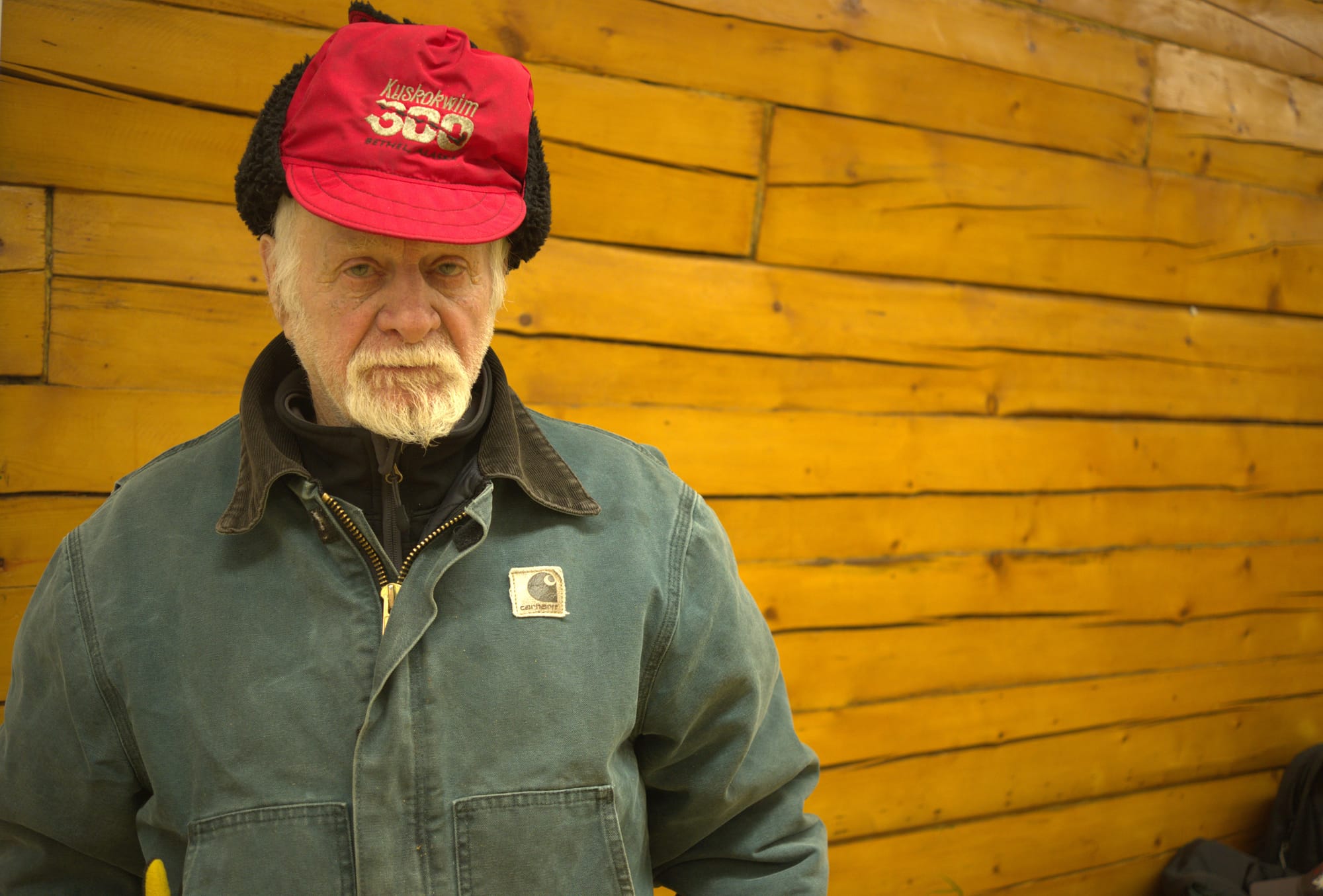
“Now everything is so expensive, and villagers can hardly afford to do it,” Raymie Redington said. “We need more Native teams in the race.”
Iditarod teams consist of 16 dogs, though mushers typically have kennels with more than 40 dogs to ensure a full team is trained, healthy, and fit to race. Hansen and Potts-Joseph have small kennels to keep costs low. Potts-Joseph has 30 dogs, and Hansen has 24.
Many mushers, including Potts-Joseph, provide sled dog tours to pay for some of the costs of keeping dog teams. Sponsors also enable Iditarod mushers to pay their $3,000 entrance fees, plus transportation and other costs. Hansen’s round-trip transportation bill to fly his team about 550 miles from his home in Kotzebue, Alaska, to Anchorage, where the race begins, was about $10,000.
Despite the high cost, Potts-Joseph and Hansen said they continue mushing to help preserve their tradition, and because of their connection to their lands and ancestors.
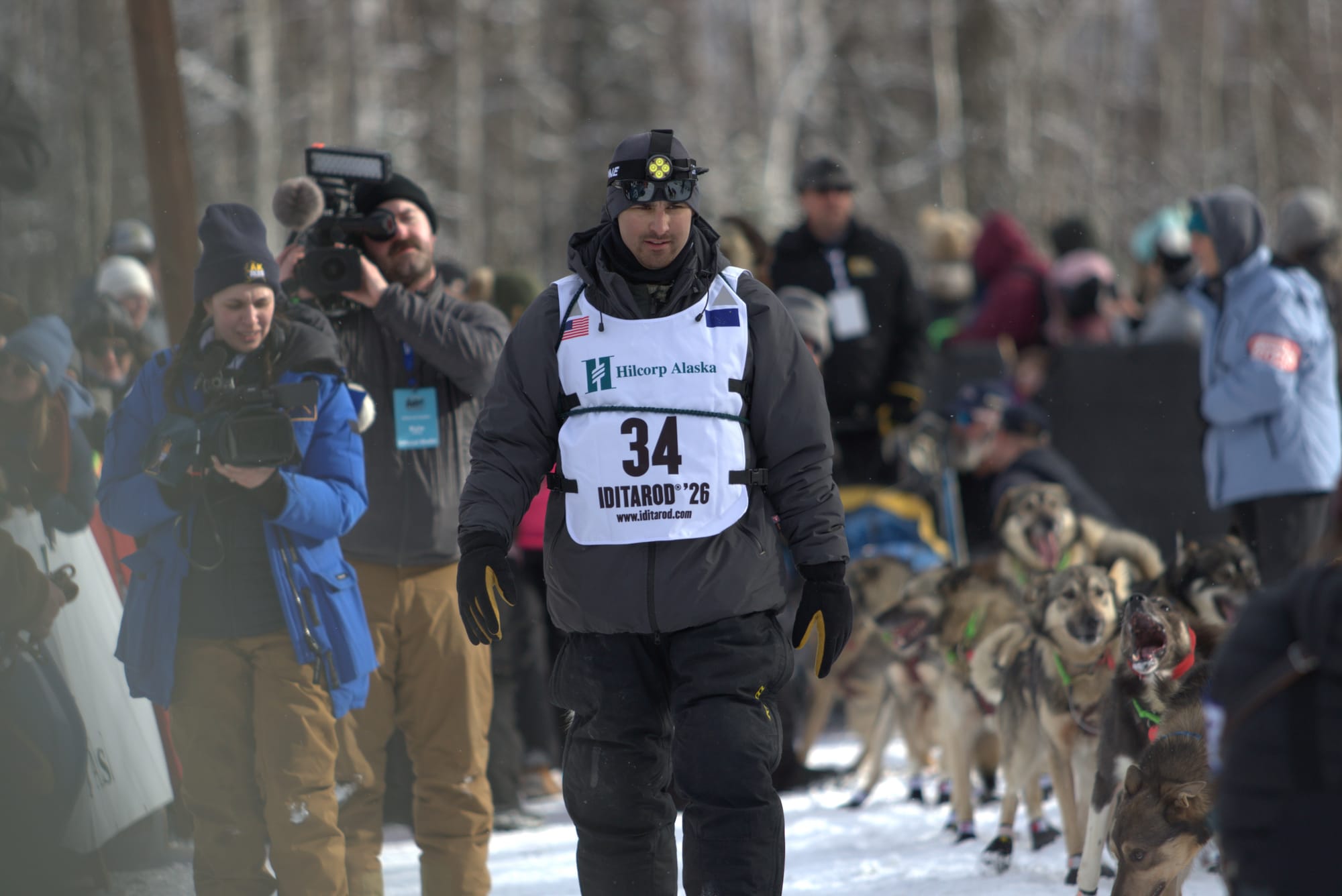
“It’s really special and powerful. I don’t think I would do it otherwise if I didn’t have it as part of my culture,” Potts-Joseph said. “It feels sacred.”
Iditarod Race Director Mark Nordman said he would like to see the Iditarod support villagers from rural Alaska participating in the race, characterizing this sponsorship as “crucial.”
“It’s where we all started,” he said. “The race needs to remember where we came from.”
On the trail
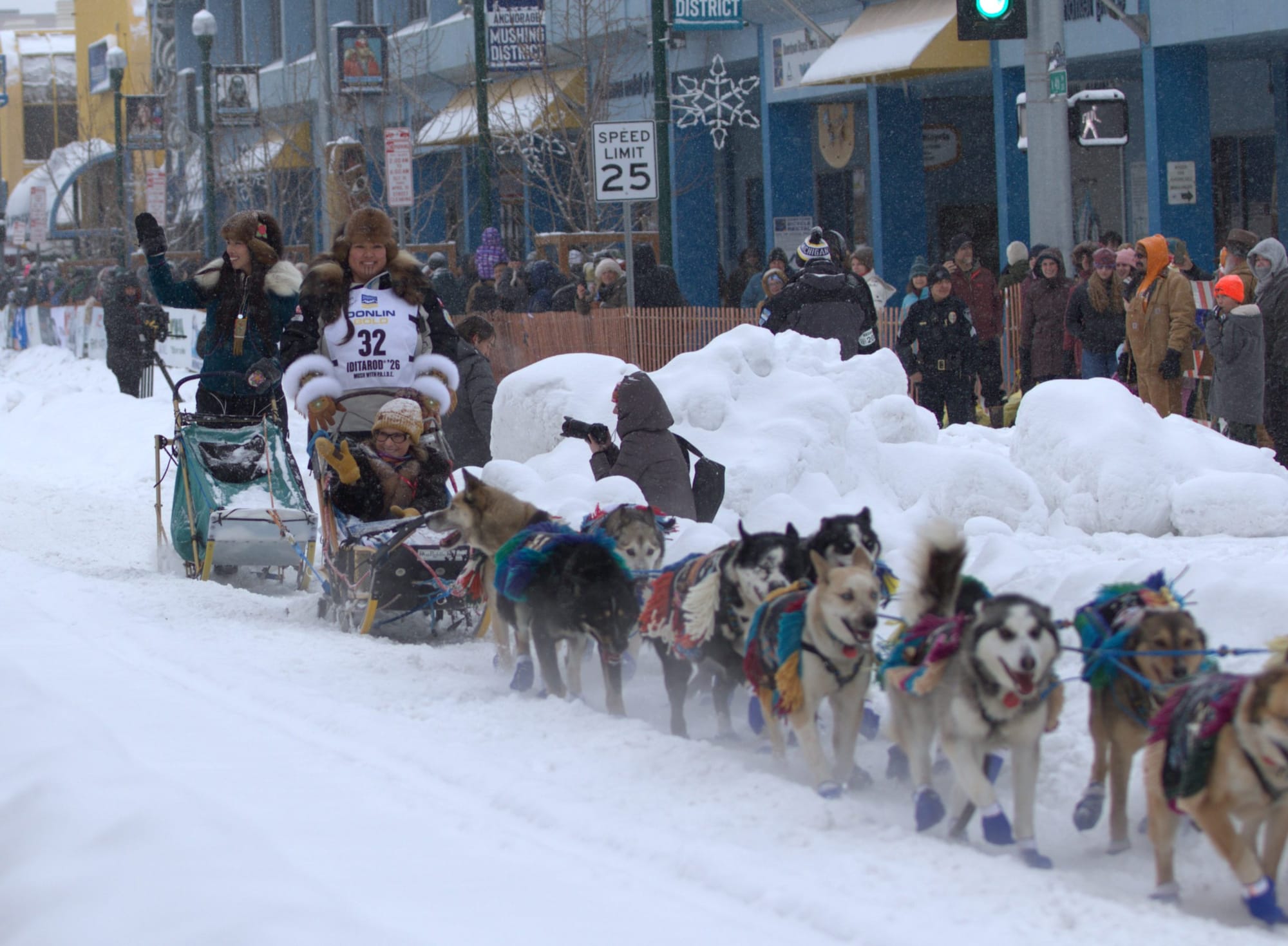
As a part of an Indigenous dogsledding tradition, Potts-Joseph’s team of 16 dogs was decked out in handmade beaded blankets, each crafted by an Indigenous woman.
“Traditionally, back in the day, before a family would arrive by dog team in a village, they’d always put their blankets on, and they had bells on them, and then everyone would come out and greet them,” she said. “The blankets represent our love and respect for our dogs, but also arriving in someone else’s village with respect and care and intention.”
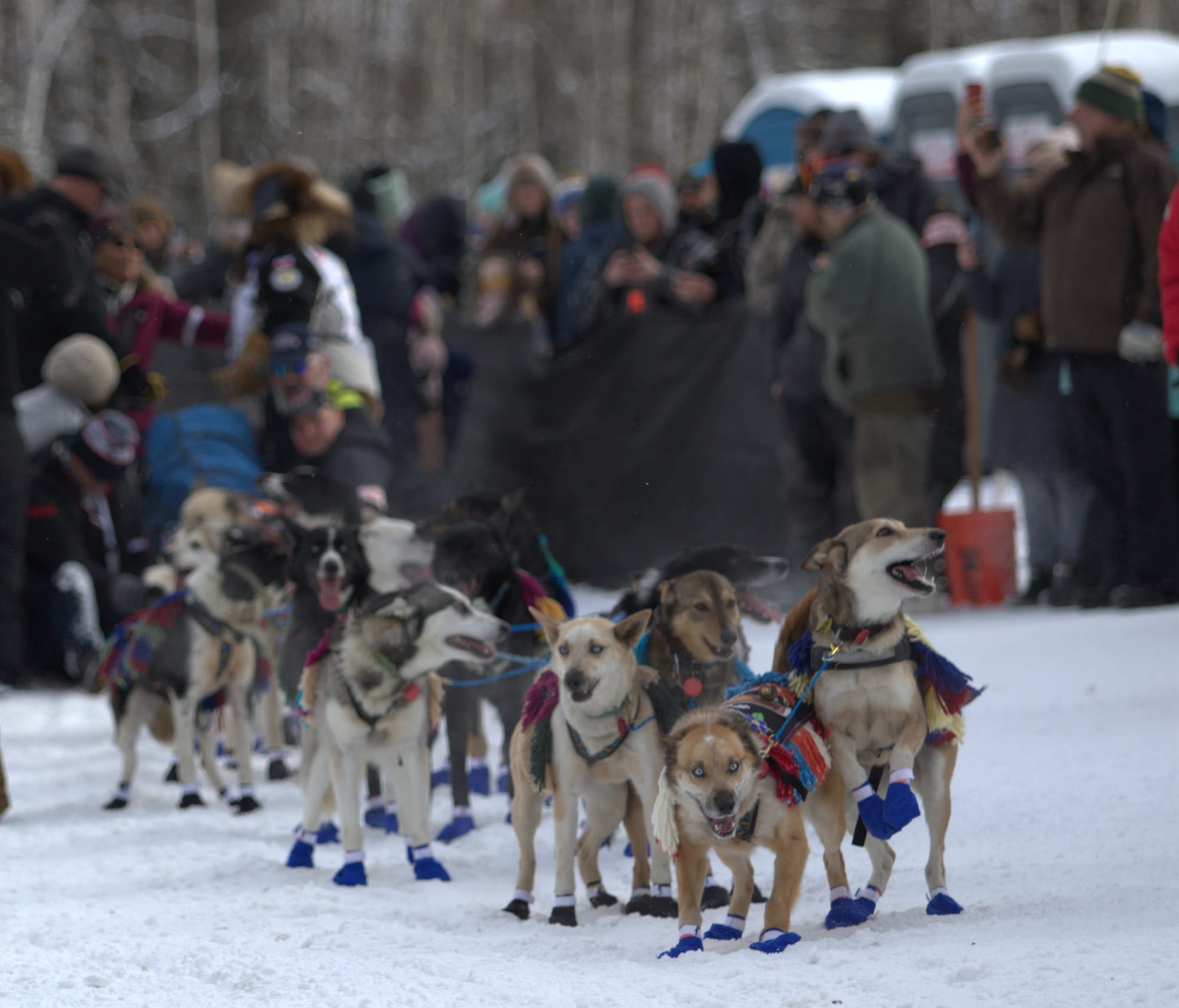
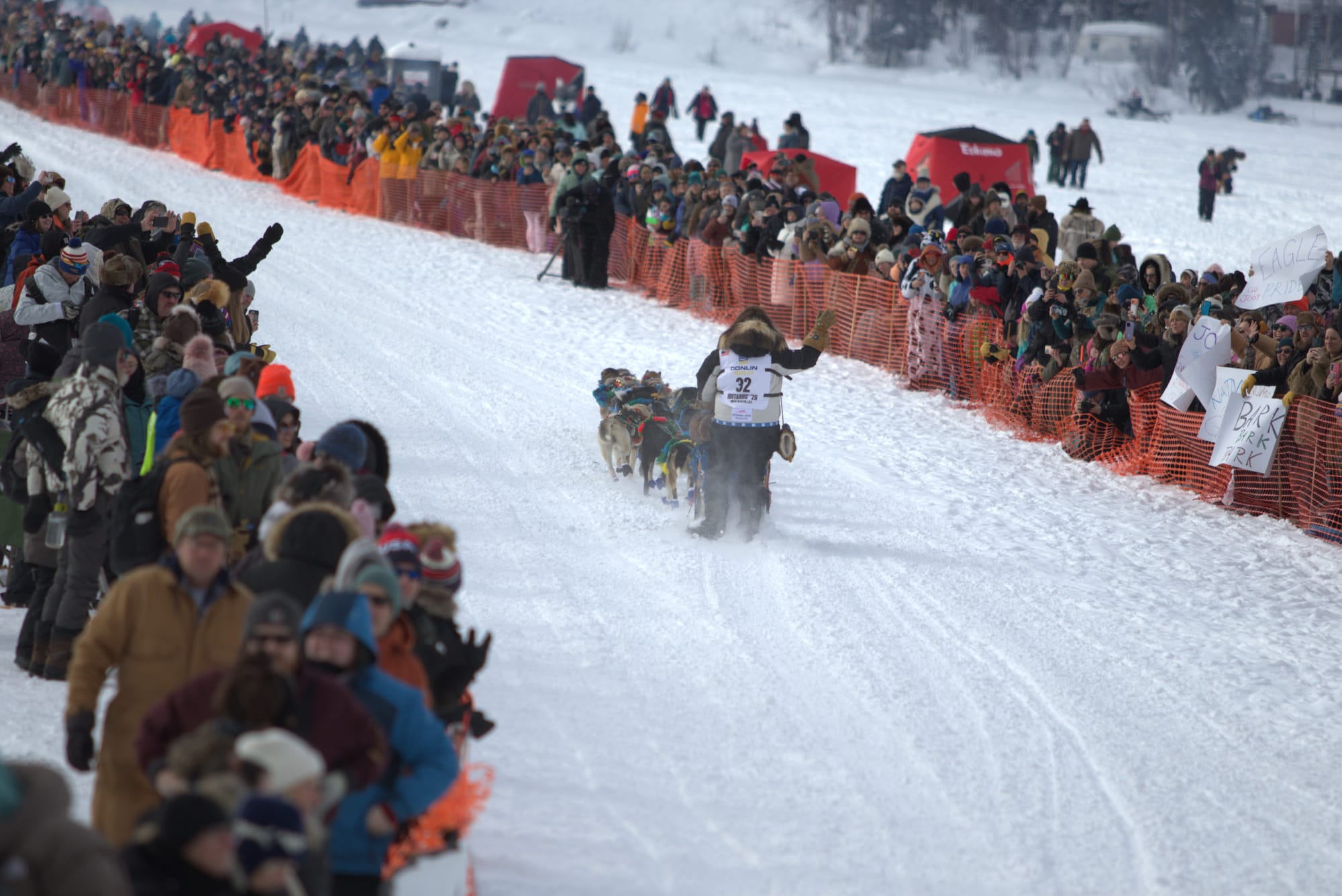
Potts-Joseph’s dog team donned the blankets at the ceremonial start of the race on March 7 in Anchorage, where crowds lined the city’s streets to cheer on the mushers. The official launch took place in Willow the following day, marking the beginning of a 975-mile journey. Along the way, mushers stopped at checkpoints in 22 Alaska Native villages to collect drop bags to refill their supplies that they sent ahead of time.
By the time competitors reached their first checkpoint, they were off the highway system and remained in remote locations for the duration of the race. For safety, mushers carry a GPS tracker equipped with an emergency button. It is also common for both rookies and veterans to “scratch”—or pull out—before the end of the race due to injuries, canine illnesses, or weather-related rescues. The Iditarod ends when the last musher, known as the “Red Lantern,” crosses the finish line.
The 34 mushers who participated in the nearly two-week journey this year encountered temperatures of 50 degrees below zero on the trail, with wind speeds up to 60 mph. In Rohn, 188 miles into the race, Potts-Joseph set out ahead of four other mushers, who were preparing their teams to leave the Rainy Pass checkpoint. About 3 miles later, Potts-Joseph and her team turned a corner and saw a bison coming toward them on the trail.
She set her snow hooks to stop the team and took out her pistol. The bison pawed at the ground, then charged. Potts-Joseph pulled the trigger of her gun.
“It just went ‘click,’” she said. “Which is, like, the worst feeling in that situation.”
The bison stopped inches from her dog team, and the dogs pulled back. Potts-Joseph tried to reload and fire four more times, but nothing happened. Knowing she needed to find a way to chase off the bison, she ducked behind a spruce tree and threw rocks and branches at it, but the animal stood its ground.
Running out of options, Potts-Joseph remembered a story her mother told her. When Potts-Joseph’s mom was a little girl, she and her four siblings were playing in the yard when an aggressive grizzly bear came toward them. Their father was out hunting with the family’s gun, so Potts-Joseph’s grandma got the kids inside and approached the bear. In her native language, she told it, “Go away. Have mercy on us. Leave us alone.” The bear turned and left.
While Potts-Joseph is not fluent in her native language, she always remembered the words her grandma told the bear, along with affirmation from her elders that animals understand their native language.
Not knowing what else to do, Potts-Joseph repeated her grandmother’s native words to the bison. The giant animal stopped, turned away, and left.
“I almost can’t believe it myself,” she said. “I was like, ‘Holy shit, it really worked.’”
Knowing the bison would likely stay on the trail and out of the deep snow, Potts-Joseph waited for the other teams who were behind her to catch up. They helped her untangle the dogs, who, in the chaos of the bison encounter, had become twisted up. She was also able to borrow a pistol from one of the other mushers.
When Potts-Joseph again encountered the bison later on the trail, she was actually able to fire warning shots to allow the animal to move a safe distance from the mushers.
The cost of preserving culture
Even with technological advancements such as snowmachines, dog-sled teams remain the safest way to cross through remote areas of Alaska. Quince Mountain, who ran the Iditarod in 2025, has traveled the Iditarod Trail both on a snowmachine and with a dog-sled team. He said the Alaska Range, which mushers cross on the Iditarod Trail, is littered with abandoned snowmachines.
When dogs become tired, the team can rest for a while, or a tired dog can relax in the sled basket while the rest of the team pulls ahead.
“A snowmachine quits, you now have like an 800-pound brick. It’s not going to get you anywhere. … [Dogs] are much more reliable,” he said. With the rough terrain, snowmachines aren’t necessarily faster than a dogsled team, which travels about 7 miles per hour on average.
But climate change has also altered the way that Alaska Natives access their traditional lands. Potts-Joseph said that when she was growing up, the rivers of the Interior, their “superhighways,” would freeze solid enough for travel at the end of October or early November. In 2023, the ice did not set until Christmas Day.
Potts-Joseph served as a Village Public Safety Officer (VPSO) sergeant in 2015 during an unseasonably warm winter, when three people died after getting lost under the ice in the villages of Huslia, McGrath, and Ruby. VPSOs serve multiple roles in villages, including emergency medical services, search and rescue, and community policing. Potts-Joseph was in a supervisory role as sergeant, overseeing multiple VPSOs, and she served as incident commander on the searches, responsible for overseeing the search efforts.
“I attribute those to climate deaths, because these people are using traditional trails that our people have always had a safe crossing in this place,” she explained. “One waited an extra two weeks to cross the Koyukuk River to go to the wood yard. They needed wood, and so he was crossing the river and thought it was thick enough and he broke through, went under.”
Their bodies were swept away by the swift currents, and the remains were never found.
“Gosh, it was just so hard on families,” she said.
When she was a child, Potts-Joseph’s family also used dogsled teams for transportation, and her family harvested nearly all of the team’s sustenance from the Yukon River, catching and drying chum salmon, often called “dog salmon.” But the salmon run has been decimated due to a confluence of climate change, federal and state policies, and commercial fishing.
Without the ability to harvest food for dog teams, feed costs $200 per week—or double for those living in rural areas.
Some support arrives from Alaska Native-led organizations. In the Yukon Kuskokwim River Delta, the Kuskokwim Racing Committee supports local mushers participating in races and negotiates lower prices for dog food.
Peter Kaiser, a Yup’ik and former Iditarod champion who ran in this year’s Iditarod, is from Bethel, a community located in the Yukon Kuskokwim River Delta. The area was the home of the “last of the village distance mushers,” said Iditarod historian Tom Huntington—that is until this year, when Hansen and Potts-Joseph joined the Iditarod ticket.
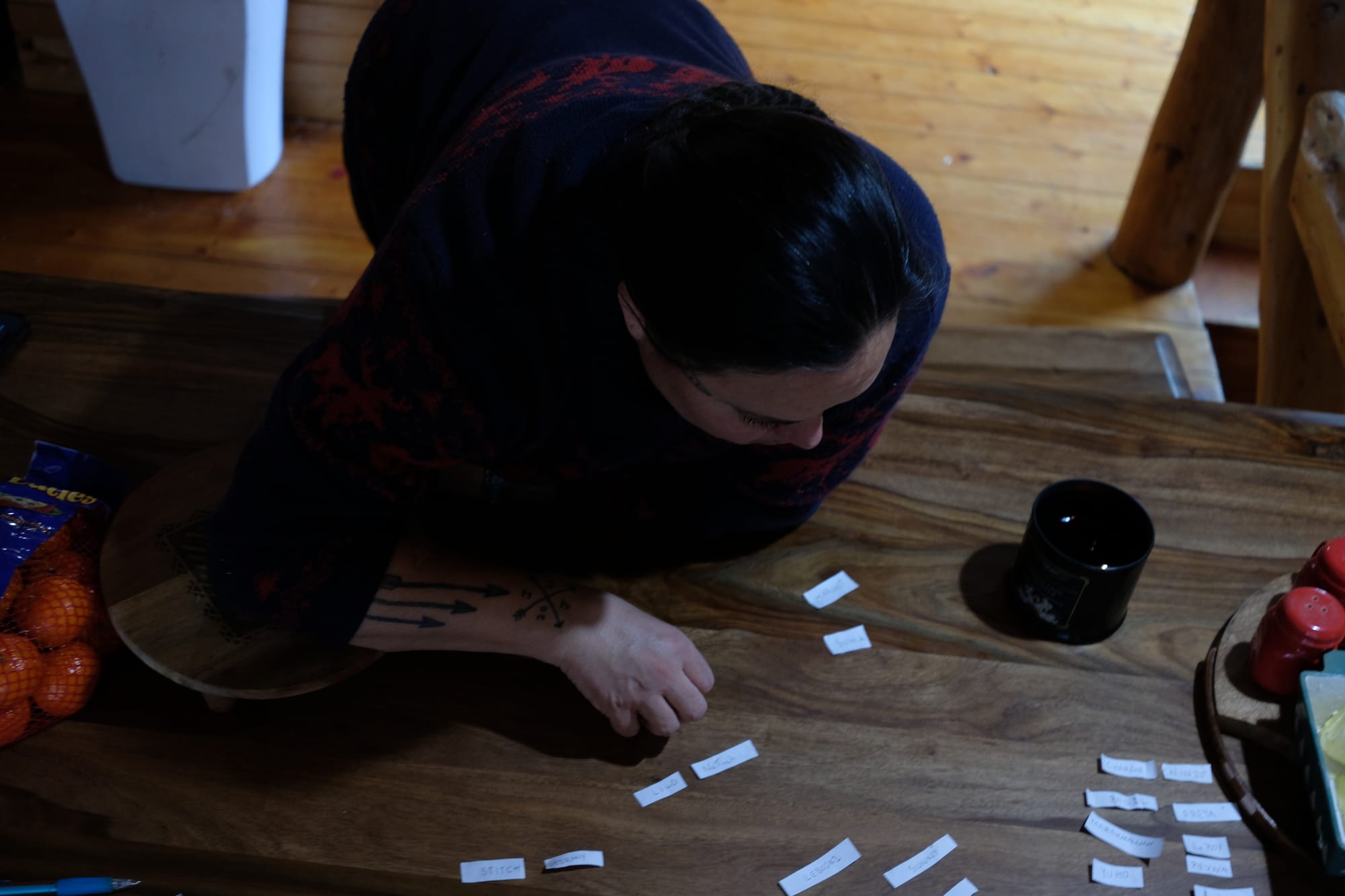
Like other Iditarod mushers, Potts-Joseph spent time at each checkpoint caring for her dogs and feeding them before she rested. While giving each of her canine team members a massage at the checkpoint in Rohn, she told Prism that her goals were to finish the race and to take good care of her dogs.
But after Potts-Joseph left Kaltag, 629 miles into the race, she realized something was wrong: Her dogs had developed kennel cough, a mild but highly contagious respiratory infection.
She pulled out of the race at the Tripod Flats Cabin, at mile marker 664, about 70% of the way through.
While a rookie in the race, her efforts didn’t go unnoticed.
“The Iditarod Trail Committee recognizes Potts-Joseph’s determination, dedication, and sportsmanship throughout this year’s race and looks forward to seeing her back on the Trail in the future,” the Iditarod said in a press release.
Indigenous victories
Jesse Terry, an Anishinaabe of Lac Seul First Nation in Canada, was named Rookie of the Year after becoming the first rookie to cross the finish line. He arrived in Nome in 14th place after 10 days, 13 hours, and 36 minutes. Kaiser placed ninth, and Redington placed 14th.
Three days later, on March 19, a few miles short of White Mountain and 77 miles from the finish line in Nome, rookie Adam Lindenmuth called for rescue in a severe storm. He dropped out of the race. Afterward, Hansen and eight other mushers decided to remain at the checkpoint for two days to wait out the storm.
On March 20, after 12 days on the trail, the Nome fire station siren blasted to announce a musher was approaching. A police escort led Hansen and his team through the streets of Nome to the Burled Arch, the Iditarod finish line, where Hansen’s family was waiting for him. He placed his 6-year-old son, Kade, on the sled, and they crossed the finish line together.
Hansen finished his first Iditarod in 21st place, winning $18,000 of a $650,000 purse.
Even though she had to end the race early, Potts-Joseph said she wants her race to remind Indigenous people of all they are capable of doing.
“I don’t identify with us being victimized all the time,” she said. “I want our people to see themselves in me, that anything’s possible. They can dream big and accomplish anything they want, and that we have the blood of our really tough ancestors running through us.”
Editorial Team:
ray levy uyeda, Lead Editor
Lara Witt, Top Editor
Stephanie Harris, Copy Editor