Filed Under:
Florida Senate race pits Angie Nixon’s grassroots organizing against Ashley Moody’s GOP coalition
Nixon is running on affordability, healthcare, and labor rights, while Moody touts public safety, economic growth, and backing from law enforcement, firefighter, and business groups
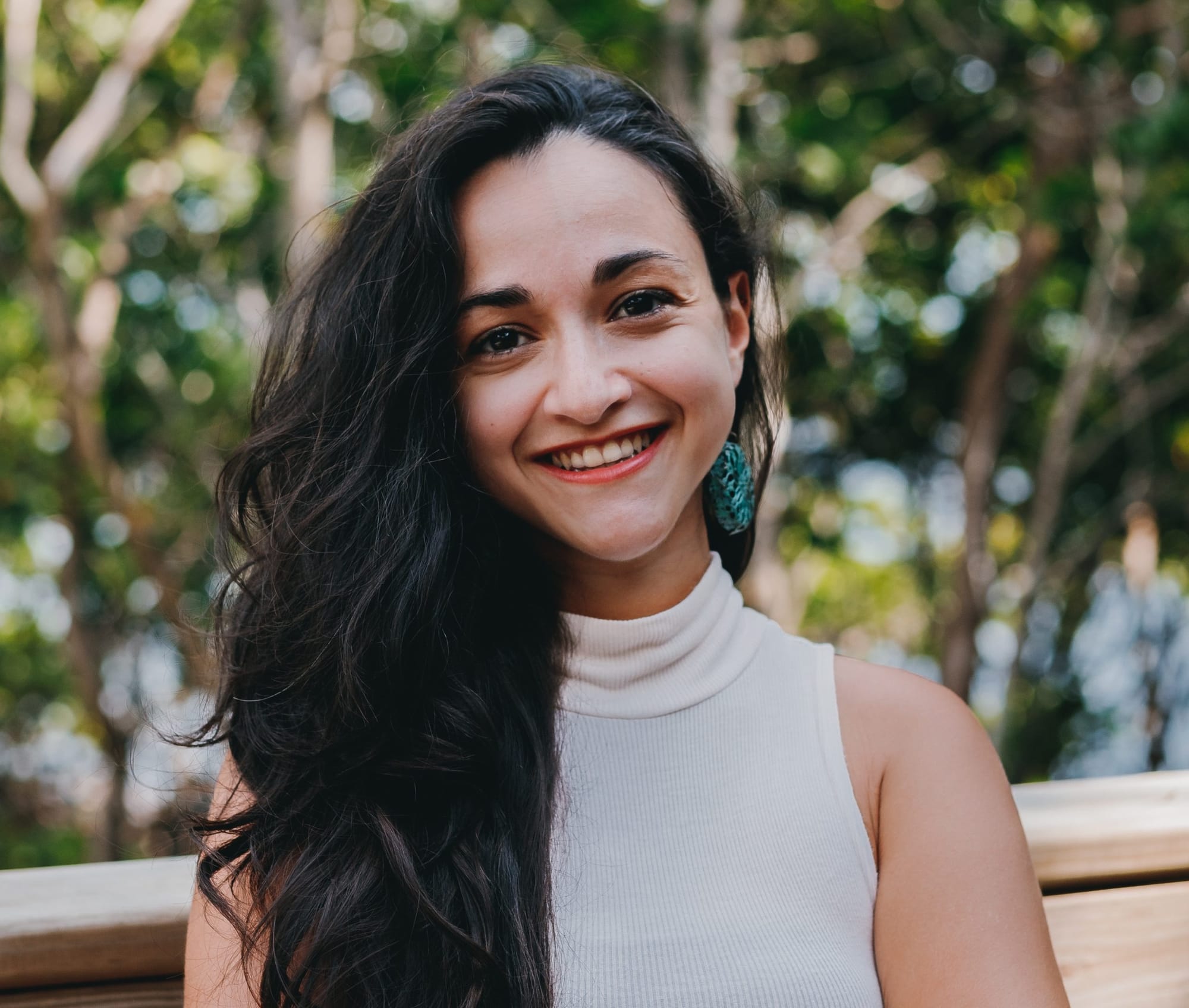
Alexandra Martinez
Real journalists wrote and edited this (not AI). Independent, community-driven journalism survives because you back it. Donate to sustain Prism’s mission and the humans behind it.
Real journalists wrote and edited this (not AI)—independent, community-driven journalism survives because you back it. Donate to sustain Prism’s mission and the humans behind it.
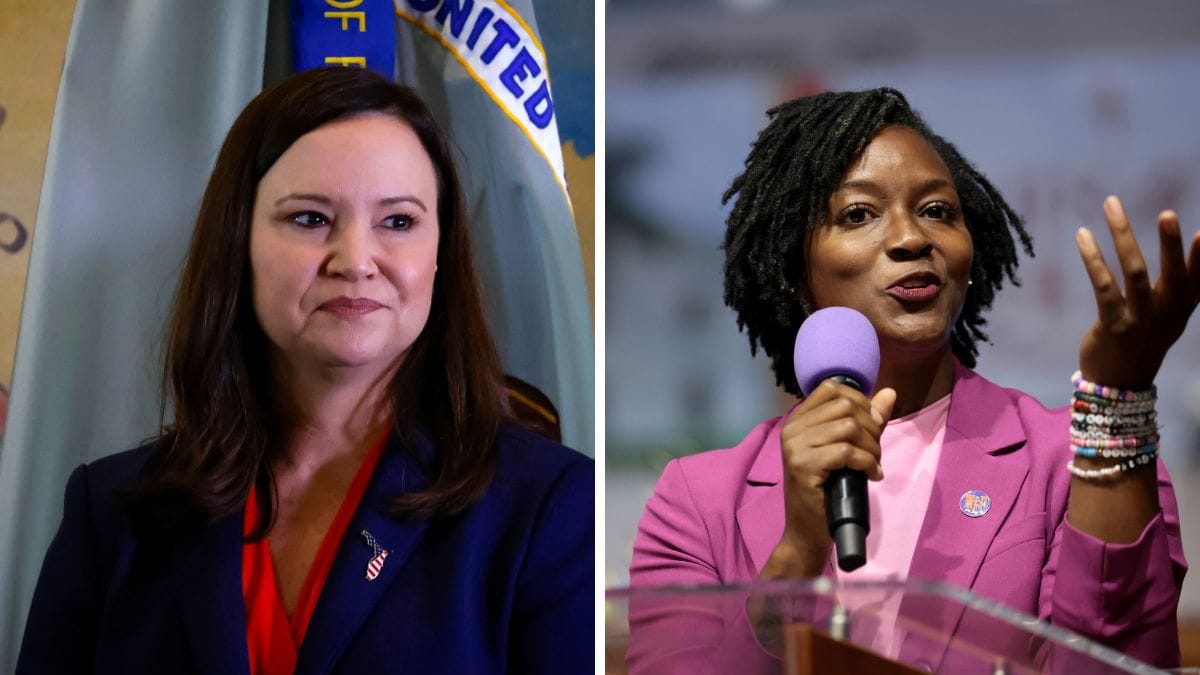
The U.S. Senate contest between Democratic state Rep. Angie Nixon and Republican Sen. Ashley Moody is shaping up as a clash between two very different political coalitions and competing theories about how to win deep-red Florida.
The winner of the Nov. 3 special election would complete the remaining two years of the term Marco Rubio won in 2022, before he resigned to serve as secretary of state under President Donald Trump’s second term.
Nixon, a progressive Democrat from Jacksonville, is running on an explicitly grassroots campaign centered on affordability, healthcare, labor rights, and expanded public investment. Vermont Sen. Bernie Sanders joined Nixon for multiple campaign rallies in Florida over the weekend, framing her potential win as “a spark that is going to ignite the entire country,” according to The Tallahassee Democrat.
Moody, the former state attorney general Florida Gov. Ron DeSantis appointed to the U.S. Senate to fill Rubio’s seat, is campaigning on public safety, economic growth, and a record backed by prominent law enforcement, firefighter, and business groups.
In an interview with Prism, Nixon argued that Florida voters are struggling with the cost of everyday life and need a senator willing to challenge powerful corporations and expand the social safety net.
“I just go have conversations with them, and I let them know that we deserve safety net programs,” Nixon said. “If people are working harder than ever and struggling to stay afloat, there needs to be some type of safety programs in case people lose their jobs.”
Her campaign is emphasizing a progressive approach to economic and social policy. Nixon has embraced Medicare for All, free childcare, and stronger labor protections, while calling for major changes to immigration enforcement and campaign finance.
Recent polling shows Moody in the lead. The latest Mason-Dixon poll has Moody at 50% and Nixon at 40%, while the RealClearPolitics average of recent polls puts Moody ahead by about 7 points. Other surveys have shown a much closer race, including one St. Pete Polls survey that found Moody at 47% and Nixon at 45%.
Moody did not respond to Prism’s request for an interview. She has received endorsements from law enforcement and firefighter organizations as well as major business interests. Florida State Fraternal Order (SFO) of Police President Shawn Dunlap called Moody “an ally to law enforcement officers” and praised her record of supporting criminal justice policy and defending the rule of law.
The Florida Professional Firefighters have similarly emphasized her support for first responders, while the Associated Industries of Florida (AIF) has backed her as a candidate who can promote economic growth. Florida Chamber of Commerce leaders have highlighted her support for tax cuts and reducing regulations.
“When Florida’s businesses succeed, Florida’s families succeed,” Moody said in AIF’s endorsement announcement.
Florida’s SFO, the FPF, and Florida Chamber of Commerce did not respond to Prism’s requests for an interview.
Meanwhile, Nixon’s campaign has focused on labor and healthcare issues. Dr. Maya McCoy, a regional vice president for the Committee of Interns and Residents, a local of the Service Employees International Union (CIR/SEIU) at Jackson Memorial Hospital in Miami, Florida, said Nixon’s campaign represents a significant departure from Florida’s recent political direction. McCoy said Nixon talked with the union, which represents about 2 million service and care workers, about policies that affect their members. These include the PRO Act, a federal proposal that would expand protections for workers seeking to organize and strengthen the rights of unions; ending right-to-work laws; and establishing paid family and medical leave.
“The things that we see in the hospital day to day, for the most part, are about coverage and affordability,” McCoy told Prism.
She pointed to Florida’s lack of Medicaid expansion and said hospital workers like herself regularly see patients who arrive with serious illnesses after delaying care because they lacked access to preventative care.
“Having someone from Florida who’s fighting not just for Medicaid expansion—which should have been a baseline move that Florida made a long time ago—but believes in Medicare for All would be a really, really powerful shift,” McCoy said.
She also connected healthcare to the state’s housing crisis.
“If they can’t afford rent or they can’t afford groceries, how far are our diagnoses and treatments actually going?” McCoy said.
Policy positions
Moody has focused on immigration and border security, including support for expanding expedited removal for some immigrants convicted of crimes. She has also focused on law enforcement and tougher criminal penalties, drawing on her record as Florida attorney general, where she started the “Back the Blue” initiative. On economic issues, Moody has promoted tax cuts and policies aimed at lowering costs, reducing regulations, and making homeownership more accessible. She has aligned herself with President Donald Trump’s agenda, describing her plans as focused on law and order, economic prosperity, and American sovereignty.
A major issue affecting Floridians is the high costs of housing and property insurance. Nixon rejected the argument that further deregulation is the solution.
“Everything’s been deregulated already, and we’re in this situation we’re in right now,” she said. “We need to make sure that there are, in fact, regulations to make sure there’s no price gouging.”
Nixon has described her campaign as an effort to rebuild political power from the ground up. She said her experience as a state lawmaker has taught her that voters need to see candidates in their communities, rather than simply hear from them through television advertising or social media.
“If you want people’s votes, you’ve got to go talk to them,” Nixon told Prism.
Keith, an artist born in Miami-Dade County who requested to withhold his last name out of privacy concerns, said he started volunteering for Nixon after hearing her speak during the Democratic primary. He said he was particularly impressed by Nixon’s opposition to the redistricting effort DeSantis has pushed and by what he described as her focus on working people.
“She was really fighting for the needs of the people,” Keith said.
He said Nixon’s positions on Medicare for All, childcare, climate investment, and campaign finance reform were among the issues that motivated him to volunteer.
Nixon’s appeal is rooted in a broader progressive movement, said Corey Hill, a lead organizer with Orlando 50501, a local chapter of the national pro-democracy movement. Hill said the organization was drawn to Nixon’s positions on issues including healthcare, immigration, and taxing billionaires. He also pointed to Nixon’s early support for Palestinians amid Israel’s genocide in Gaza, noting that she filed a resolution calling for a ceasefire and humanitarian assistance to the Strip in November 2023 and was one of only two Florida lawmakers to vote in support.
Nixon has continued to speak out on the issue since then, including appearing at a pro-Palestine protest in 2024. Her platform calls for a lasting peace for Palestinians and Israelis, an end to U.S. support for Israeli settlements in the West Bank, and adherence to the Gaza ceasefire agreement. But Hill said the race is ultimately about more than individual policies.
“People are really concerned that this group of people, that Trump and his fascist allies, will try and strip away our ability to keep them in check by attacking democracy,” Hill said, He also identified immigration enforcement and the cost of living as other major concerns among people he encounters.
Republican stronghold
Nixon’s challenge will be how to translate the enthusiasm among progressive organizers and labor activists into votes in a state where Republicans have built a formidable electoral advantage. As of Aug. 31, Florida had 5.65 million registered Republicans compared to 4.10 million Democrats—a Republican advantage of about 1.55 million voters. In 2024, Trump won by 13 points.
Conversations with residents in Miami’s Little Havana illustrate why that task may be difficult but also why Nixon’s emphasis on direct voter contact could matter.
Several people in the neighborhood, which is 57% Republican, according to a BestNeighborhoods analysis of voting records, told Prism that they were unfamiliar with the Senate race or did not have an opinion about either candidate.
Other residents focused less on the candidates than on the issues they consider important when voting. One person identified healthcare as a particular concern, saying that it becomes increasingly significant as people age and confront illness.
Alfredo, a 64-year-old Cuban American who requested to only use his first name out of safety concerns, said he won’t vote for a Republican.
“We need more Democrats in Congress and the Senate so that it can be balanced,” Alfredo said, “because when you have absolute power, you do whatever you want, and this is a country of laws. You can’t do whatever you want.”
Andy, a 19-year-old resident who requested to only use his first name out of safety concerns, said he plans to vote for all of the Democratic candidates, though he did not know about Nixon’s campaign.
“Republicans have done bad things with immigration, deporting families,” he said. “I know many people now who are struggling to live here in Florida. I want to vote for a change.”
“Build relationships”
Nixon said she is committed to meeting people where they are, even when the conversations are uncomfortable.
“Even if you don’t necessarily agree with people, you still should talk with them,” she said. “That is what causes people to trust you, to know that you’re listening to them.”
McCoy of CIR/SEIU said Nixon’s campaign demonstrates that a candidate can build support through direct engagement, rather than relying primarily on large donors. Nixon’s Democratic primary campaign, McCoy noted, raised roughly $1 million against opponent Alex Vindman’s $16 million.
“I’m going to do the same thing that I’ve done as a sitting lawmaker here,” Nixon said. “I am going to make sure that I build relationships with my caucus members, as well as relationships with members on the other side.”
And she said that strategy will extend beyond the Capitol.
“I’m going to utilize the people here in the state of Florida and all across the country to help pressure the lawmakers to do what it is that we need them to do,” Nixon said.
Editorial Team:
Sahar Fatima, Lead Editor
Carolyn Copeland, Top Editor
Rashmee Kumar, Copy Editor