Filed Under:
Wynwood Norte community in Miami raises affordability concerns over arts campus expansion
How the long-standing artist organization Bakehouse Art Complex is planning its future development amid local residents
Isabella Marie Garcia
Real journalists wrote and edited this (not AI). Independent, community-driven journalism survives because you back it. Donate to sustain Prism’s mission and the humans behind it.
Real journalists wrote and edited this (not AI)—independent, community-driven journalism survives because you back it. Donate to sustain Prism’s mission and the humans behind it.
A century-old bread factory that became one of Miami’s most important artist studio complexes may soon transform again. Bakehouse Art Complex, a nonprofit arts organization in Miami’s Wynwood Norte neighborhood, is planning a major campus expansion that would add affordable housing for artists, new artist studios, and mixed-use development. While leaders of the arts organization have said the project will strengthen the city’s cultural infrastructure, some artists and residents worry about how it could affect affordability and the surrounding community.
One associate artist, who requested anonymity because of fear of retaliation from arts leaders, said the changes have created anxiety about how the redevelopment and current opportunities offered by Bakehouse will affect local residents.
“So many of the opportunities they are currently offering to artists are deals with developers,” the artist said. “I don’t see myself compelled to apply to [these opportunities] because it feels like I’m fucking over my own community. As an artist, I see the different purposes as to why people become members of the Bakehouse because it is ultimately a social membership. As an associate artist compared to a resident artist, I don’t have a voice in any of this operation or any social capital.”
Development pressures in Wynwood Norte
Built in 1926, the building originally produced Merita Bread for the American Bakeries Company until closing in 1978. In 1985, a collective of artists acquired the property with support from the city of Miami and Miami-Dade County, converting it into a 33,000-square-foot studio complex in 1986. It offered affordable workspaces and shared facilities at a time when artists were increasingly moving to Miami.
Since then, Bakehouse has evolved alongside Miami’s expanding arts ecosystem, which grew rapidly after the arrival of Art Basel Miami Beach and the global attention surrounding Miami Art Week. (Disclosure: The reporter for this story is an associate artist at Bakehouse Artist Complex and a previous Summer Open 2025 resident.)
In 2018, Bakehouse Art Complex joined neighborhood stakeholders to form the Wynwood Community Enhancement Association (WCEA), responding to increasing development pressure from nearby Wynwood, Midtown, and the Design District. This effort led to the creation of the Wynwood Norte Neighborhood Revitalization District (NRD-2) in 2021, which established land-development regulations intended to preserve the neighborhood’s mixed-use character and residential population.
Bakehouse’s long-term plans are outlined in its Next Generation Strategic Plan, approved in August 2023. As the fifth-largest landowner in the Wynwood Norte, the organization identified redevelopment as a key priority.
Architectural renderings for a future campus were announced in June 2025, ahead of Bakehouse’s 40th anniversary celebration in November and the building’s 100th anniversary in 2026. The proposed campus, designed with Los Angeles-based firm Michael Maltzan Architecture, centers on gardens and public space. Plans include additional artist studios, creative business spaces, and a pedestrian paseo connecting 32nd and 33rd streets. An eight-story housing tower would include more than 60 affordable apartments, along with a daycare, grocery store, and parking.
According to the strategic plan, Bakehouse sought rezoning through NRD-2 to enable the expansion and is seeking development partners aligned with its vision of a “community-embedded, mixed-income live-work cultural campus.”
Property acquisition raises new questions
On Jan. 5, Bakehouse announced that it had purchased an adjacent property at 533 NW 32nd St. for $1.25 million. The building, which is currently in poor condition, is slated for demolition to make way for the next phase of development.
The acquisition expands Bakehouse’s footprint along the block, raising questions about how redevelopment will affect nearby residents, particularly those living in affordable housing on NW 33rd Street.
At a community meeting hosted by Bakehouse on Feb. 18, discussion around the redevelopment plan was limited beyond announcing individuals involved with the project, including Steven J. Wernick, a land-use attorney who is working on the rezoning process. Wernick did not respond to Prism’s request for comment.
Bakehouse Executive Director Cathy Leff, who has led the organization since 2018, said the redevelopment of the county-owned housing site remains uncertain. For now, Bakehouse has no ownership interest or rights to that site, but the group has “shared their hope to collaborate with [the county and city] should that parcel ever be reconsidered for future use,” Leff said in an email.
“The County has its own planning process and public engagement requirements before any action is taken on its land,” Leff said, adding that Bakehouse has shared its vision with stakeholders, including the county, and remains open to collaboration.
Still, renderings displayed at Bakehouse extend beyond its current property, depicting potential development on the county-owned site. At a public talk on Feb. 12, architect Michael Maltzan described this as a conceptual study to understand possible scale, not a finalized plan.
“It’s not a design … but we just wanted to understand what the scale might be like for 250 to 260 units,” Maltzan explained. “The ground floor of the street is very important because it could have uses for a grocery store, which doesn’t really exist in this neighborhood. This is a bit of a food desert for the community that lives here as a whole, and it would be an amenity for these residents and as more artists live here.”
Uncertainty for nearby residents
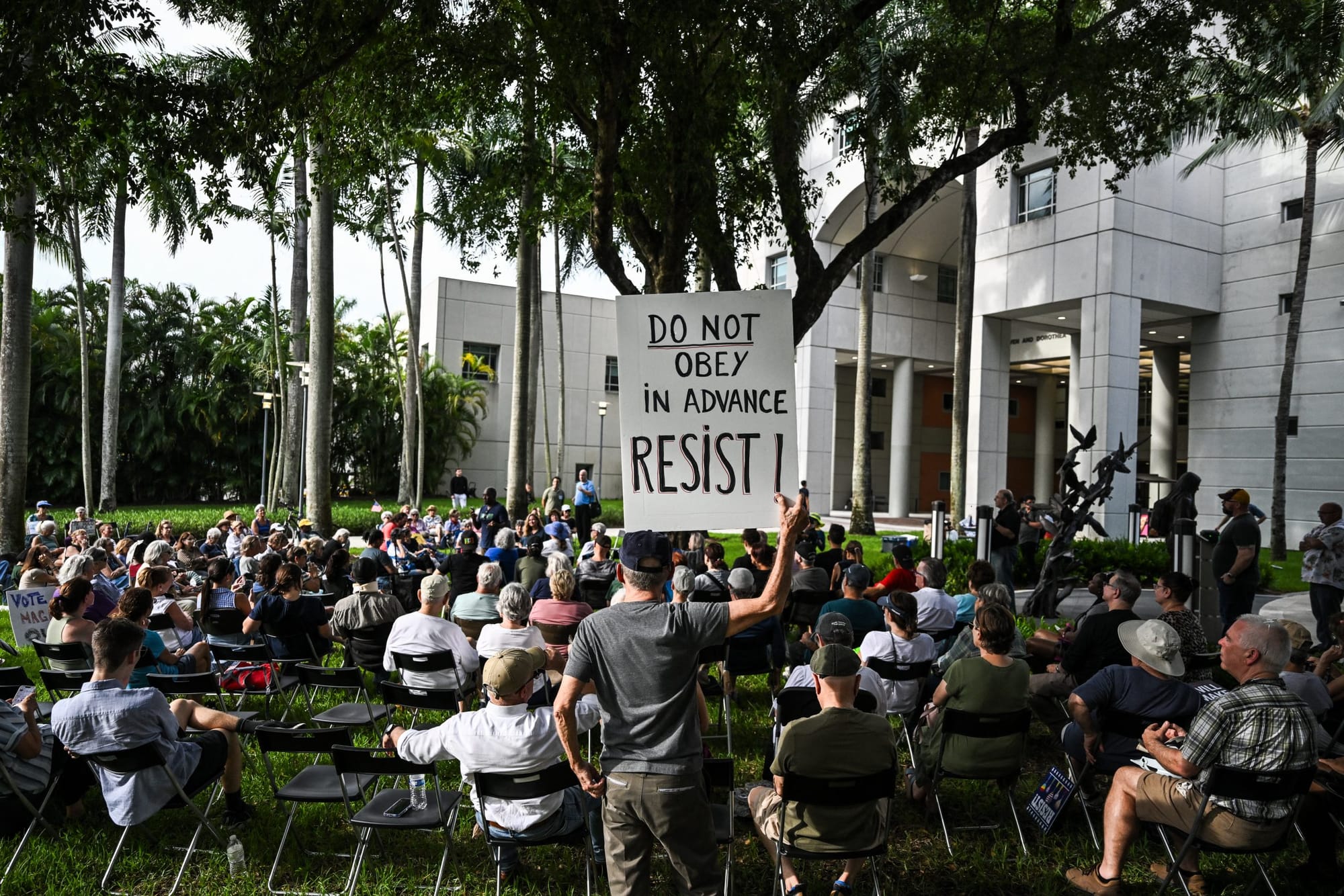
The predominantly Black and brown residents living in the Wynwood Homes-C affordable housing development said they were largely unaware of the proposed changes.
Shawn, an elderly man living with his wife who requested to use his first name out of fear of losing his housing, said he had not received information about the development.
“It’s tough to be aware of this if we’re not told explicitly, especially in between medical appointments we’re going through right now,” Shawn said.
While redevelopment of the county site remains speculative, the concept shown in the renderings would likely require displacement if pursued, raising questions about relocation and return rights for current residents.
When asked about these implications, Genevieve Pepin, the associate communications director from Maltzan’s architecture firm said, “All those parts of the project are being handled by Bakehouse.” Leff did not respond directly regarding the implications, instead stating, “Since all of our meetings and communications to date have been transparent, open, and community-engaged, we intend to proceed with that same ethos and sensitivity moving forward.”
Bakehouse’s board of directors includes members with backgrounds in architecture and real estate development. According to the Jan. 5 announcement from Bakehouse’s website, funding for the recent property acquisition at 533 NW 32nd St. includes support from the Knight Foundation, the Braman Family Foundation, and the Arison Arts Foundation.
Residents living closest to Bakehouse are likely to experience the most immediate impacts of construction. When asked about outreach regarding noise and disruptions, Pepin said Bakehouse is leading community engagement efforts, adding that the design has been developed with surrounding residents in mind.
“Our role in this project has been to design a campus that serves both Bakehouse and the broader Wynwood Norte neighborhood,” Pepin said. “We believe good architecture is inseparable from the communities it exists within, and that principle has shaped every decision in this project.”
Artists weigh the future
For residents and associate artists, the planned expansion has produced a mix of speculation, anxiety, and concern. Construction preparations have already begun on the property. Electrical work in the parking lot has periodically limited access, disrupting routines. Aside from the town hall meeting, Bakehouse staff organized an internal town hall meeting for artists in May. A recently accepted associate artist who wished to remain anonymous explained their experience after attending the meeting.
“There was a bit of a patronizing moment during that artist meeting: We were being yelled at for parking, and they kept reinforcing how they are responsible for 150 artists, but it’s a staff of five people,” the artist said. “I don’t think they have an infrastructural capacity for the amount of artists that they are bringing in.”
Artists also brought up issues they had during the town hall in February, where they said the staff took a defensive tone in response to feedback.
“Creating artist committees in order to communicate would be best, to speak amongst 150 artists of all different mediums and of different social castes, between associates and residents,” the artist said.
For those who have maintained studios for years, the changes feel significant.
“It was a truly intergenerational space,” said another studio resident who was granted anonymity out of fear of retaliation from arts leaders. “So many [long-term residents] are coming and going. It feels more limiting than it used to be. Everything requires levels of permission and check-in.”
An open call for studio residency applications was announced on April 7, initiating a two-year residency plan for Miami artists seeking to apply and bringing up questions about who is set to remain and who will be asked to leave.
“It is disheartening to see that support and investment seems to only increase with ‘growth,’” the artist added. “I’d love to see Bakehouse and other nonprofits be able to grow their resource pools just to do more of the same—to not have to pivot into other sectors in order to justify the ask.”
Robert Chambers, who has been a resident artist for eight years, had an optimistic outlook on the development.
“Any significant project brings challenges, but my hope is simply that the qualities that have made Bakehouse so successful remain at its core,” Chambers said. “Its affordability, diversity of artists, openness, and strong sense of community are what make it truly special. As long as those values continue to guide the development, I believe the project will strengthen Bakehouse’s role as one of Miami’s most important cultural institutions while preserving the creative spirit that has made it such a meaningful place for artists like myself.”
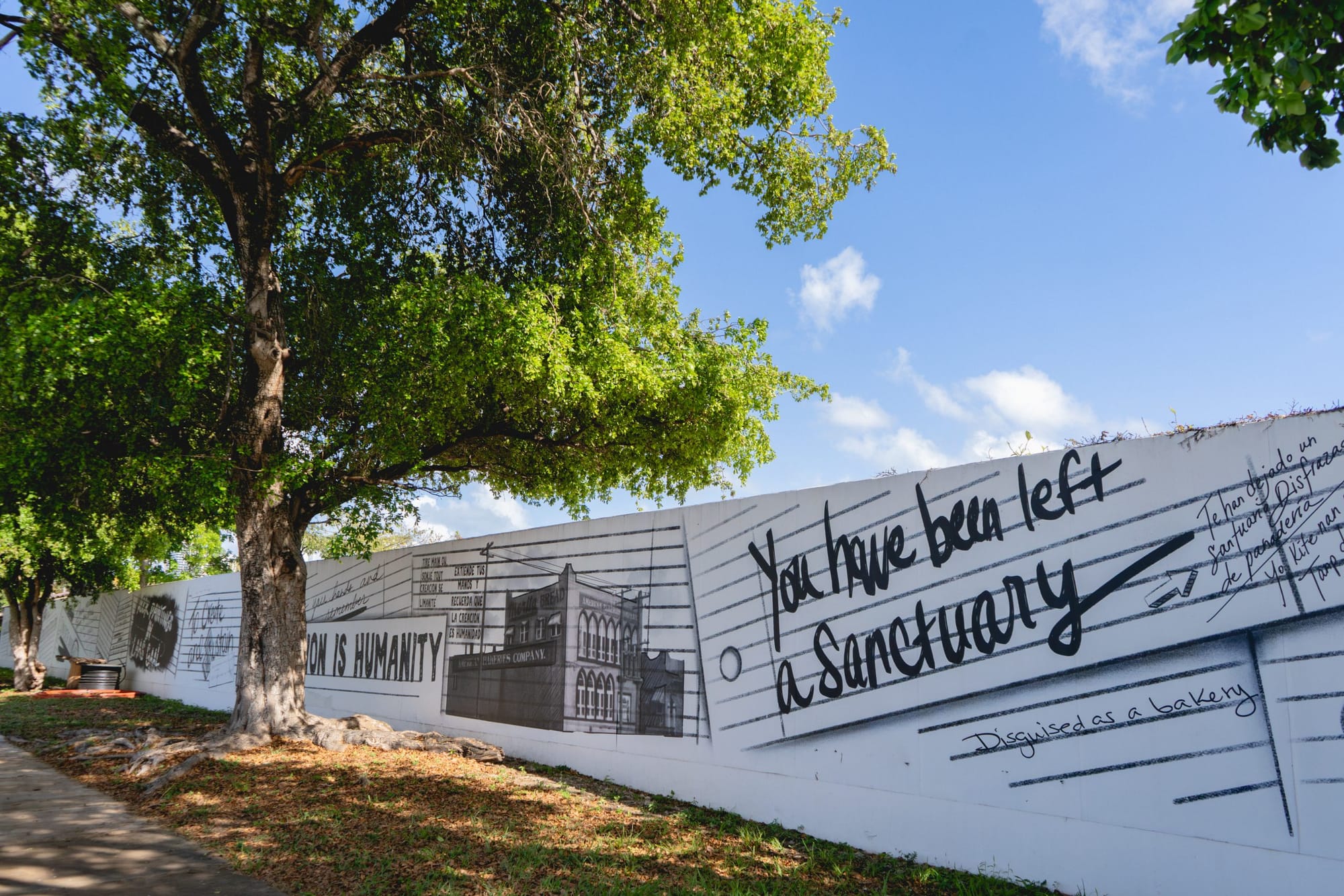
On the 33rd Street side of Bakehouse Art Complex’s perimeter wall is “Ode to Bakehouse” (2021), a mural by poet Arsimmer McCoy and visual artist Chris Friday, honoring the organization’s legacy in the community. Just around the corner on NW 6th Avenue, “Say Their Names: A Public Art Memorial Project” (2020) by Chire Regans (aka VantaBlack305) commemorates more than 250 lives lost to gun violence, police violence, hate crimes, gender-based violence, and domestic violence, functioning as a site of collective mourning and remembrance.
As Black artists inscribe the walls of Bakehouse with labor and tribute, the future of the Black community living just steps away remains uncertain—contingent on how the county and Bakehouse choose to pursue the campus’s expansion through both physical development and its professed “community-focused” strategic plan.
Editorial Team:
Alexandra Martinez, Lead Editor
Lara Witt, Top Editor
Stephanie Harris, Copy Editor