Puerto Rican veterans concerned care could be delayed due to federal layoffs
Puerto Ricans, who have served in the U.S. armed forces for more than a century, say they’re concerned they will continue to receive unequal treatment amid cuts
Soon after President Donald Trump took office for his second term in January, significant layoffs of federal workers began. The Department of Government Efficiency (DOGE), led by billionaire Elon Musk, has eliminated thousands of jobs in departments like education, health and human services, and veteran affairs. These personnel changes are affecting workers throughout the U.S. and its territories, including Puerto Rico, where at least 288 former federal workers have already sought out unemployment assistance.
In Puerto Rico, roughly 68,000 veterans are registered to receive services at the veterans hospital. El Nuevo Día reported in March that 25 employees from that hospital in San Juan, Puerto Rico’s capital, were laid off as a result of the DOGE cuts. Eighteen worked in the supplies area, and 12 of the 18 are veterans, according to the same newspaper, which also noted that most of those veterans have a disability tied to their service. The Department of Veterans Affairs (VA) told Prism that those employees have since been reinstated.
Puerto Rico has a complicated panorama regarding health services in general. For example, a recent study commissioned by Puerto Rico’s Fiscal Oversight Board about the health care workforce found that there is a significant shortage of specialized doctors—about 1,200 fewer than needed—and that the population’s overall health is deteriorating. It’s common to hear residents talk about long wait times to schedule doctor appointments and the high cost of medications, said Jose Ismael Irizarry Betancourt, a Vietnam War veteran and founder of Veteranos con Puerto Rico, a veteran care coordination company..
“When you have a system that is already slow, imagine now with less employees, it’s slower,” Irizarry Betancourt told Prism in an interview in Spanish.
In an email to Prism, the VA reported that wait times for primary care, mental health, general and specialty care, and surgery were down from January until April 2025.
VA press secretary Pete Kasperowicz provided wait time data for the VA in San Juan, Puerto Rico, showing that wait times for various types of care had decreased by several days in April 2025 compared to April 2024. For instance, primary care wait time was 14.7 days this year, compared to 19.8 days last year; general mental health care wait was 8.4 days versus 15 days last year; and specialty care wait time was 31.2 days in April 2025 versus 40.1 days last year.
It remains to be seen if more layoffs will affect veteran services in Puerto Rico, as the VA is slated to cut about 83,000 jobs by August.
Differences based on location
U.S. territories, such as Guam, Puerto Rico, and the U.S. Virgin Islands, and outlying areas and freely associated states, including the Marshall Islands, Palau, and the Federated States of Micronesia, all contribute enlistees to the U.S. military, “but are governed by a patchwork of laws that contribute to disparate treatment and benefits,” The War Horse reported last year.
About two-thirds of Puerto Rican veterans live in U.S. states. Irizarry Betancourt said many Puerto Rican veterans prefer to live in the states due to economic incentives and better benefits.
Irizarry Betancourt launched Veteranos con Puerto Rico about seven years ago after learning through his son of a housekeeping program available for veterans and their widows in Florida. This program had existed since 1960 and could have been operating in Puerto Rico as well, but the organization running the program in Florida needed a partner organization in Puerto Rico. Veteranos con Puerto Rico filled that void.
Communicating with veterans is one of the principal tasks that Veteranos con Puerto Rico carries out through radio; television; an in-person center at the Plaza del Mercado in Río Piedras, San Juan; and other initiatives. So far, the organization has helped more than 100 veterans, Irizarry Betancourt said.
“Not everyone qualifies, there are some requirements. Everything that has to do with veteran compensation and benefits is really slow, and a lot of times veterans feel disheartened.”
A long history of service
According to the Puerto Rican Institute of Statistics, in 2021, there were 64,295 veterans in Puerto Rico, or about 2.4% of the population aged 18 and over; more than 80% of the veterans were 55 and older. One percent of the veterans had served in World War II, 35.7% in the Vietnam War, 12% in the Korean War, 14.4% in the Gulf War from August 1990 to August 2001, and 15.7% from September 2001 and later.
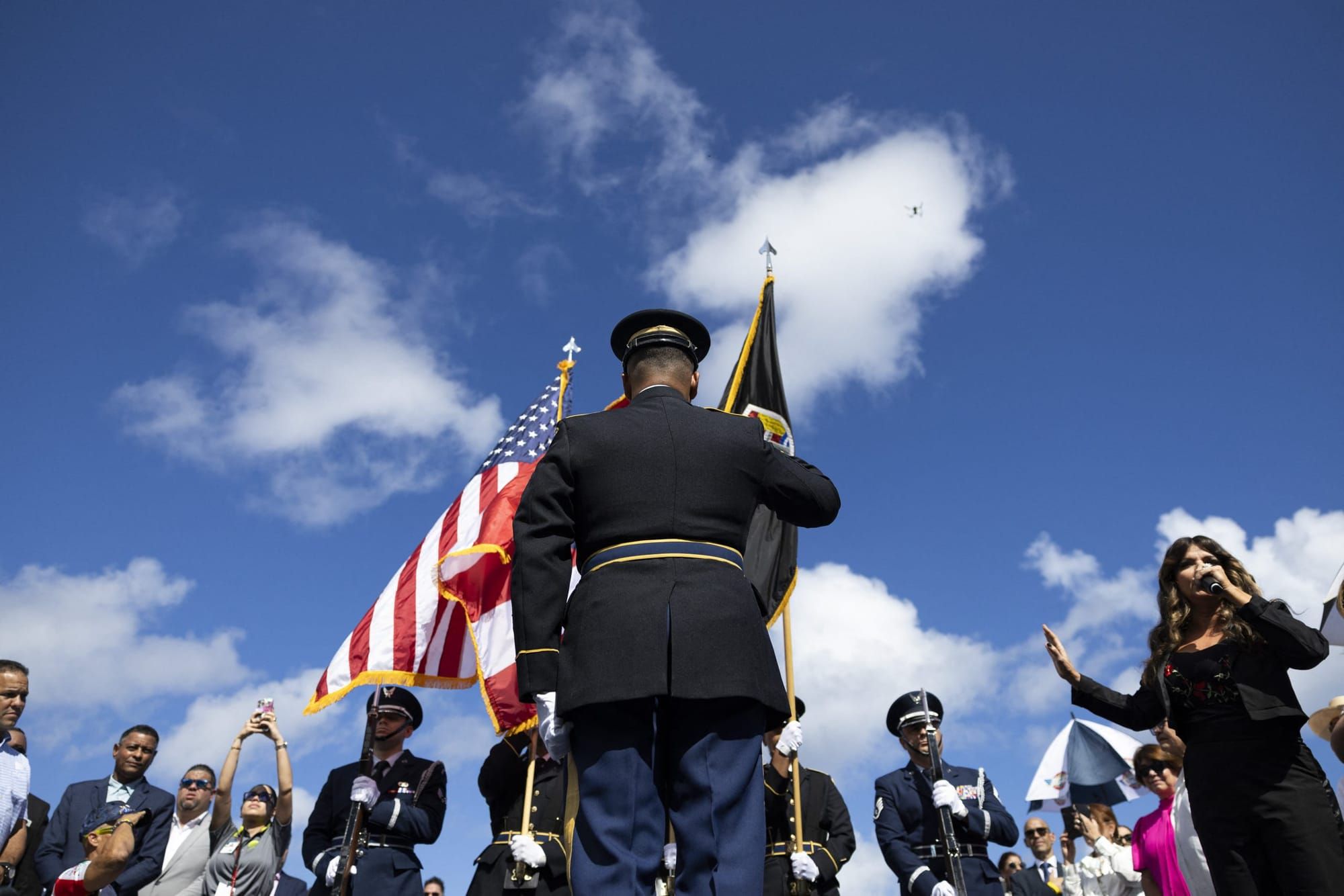
Puerto Rican service to the U.S. armed forces dates back to volunteers during the Spanish-American War, after which Puerto Rico and other then-Spanish colonies were ceded to the United States in 1898 with the signing of the Treaty of Paris, according to the National Museum of the United States Army. Puerto Ricans have served in every war the U.S. military has been involved in since then, through different units and in different branches, in some cases with distinction. One of the most well-known groups that fought during the Korean War and was mostly made up of Puerto Ricans is the 65th Infantry. Commonly called the “Borinqueneers,” they were awarded the Congressional Gold Medal by President Barack Obama in 2016, per the Department of Defense.
“It is the first Hispanic American unit to receive the award. It is also the first unit from the Korean War honored as well,” according to the National Museum. April 13 was designated as National Borinqueneers Day in 2021 by the U.S. Congress.
Despite a long history of service, Irizarry Betancourt said that veterans have been facing, and continue to face, stigma in Puerto Rico.
“When I left the army, they used to tell me ‘100%’ because everyone’s looking for 100% compensation,” he said.
“A perception existed that a lot of Vietnam veterans, for example, were only interested in obtaining total compensation and even faked mental health conditions to make it happen,” added Irizarry Betancourt. “With time, ‘100%’ became a type of nickname that was sometimes used in a joking tone or even a derogatory way, particularly by some civilians or VA employees.”
CORRECTION 5/19/25: This article’s headline has been updated to “Puerto Rican veterans concerned care could be delayed due to federal layoffs.” The initial headline was based on unverified information and did not accurately reflect the facts as they are currently known.
After publication, we retracted a statement from Mr. Irizarry Betacourt on the impact of layoffs that couldn’t be independently verified by Prism. Additionally, the Department of Veterans Affairs (VA) provided an update stating that wait times for care are down. The VA also clarified that 22 probationary employees in Puerto Rico were laid off but that all have since been reinstated, with most returning to their positions by March 2025.
Editorial Team:
Sahar Fatima, Lead Editor
Carolyn Copeland, Top Editor
Stephanie Harris, Copy Editor
Author

Mariela Santos-Muñiz is a freelance writer, mostly writing about topics relating to Latinx communities, whose work has appeared in NBC Latino, Nylon, The Open Notebook, and more. Bilingual in English
Sign up for Prism newsletters.
Stay up to date with curated collection of our top stories.