Trump’s move to dismantle Department of Education sparks concerns over impact on civil rights and student support services
Union leaders and education advocates warn that Trump’s executive order could hinder discrimination investigations, affect student loans, and put support services at risk
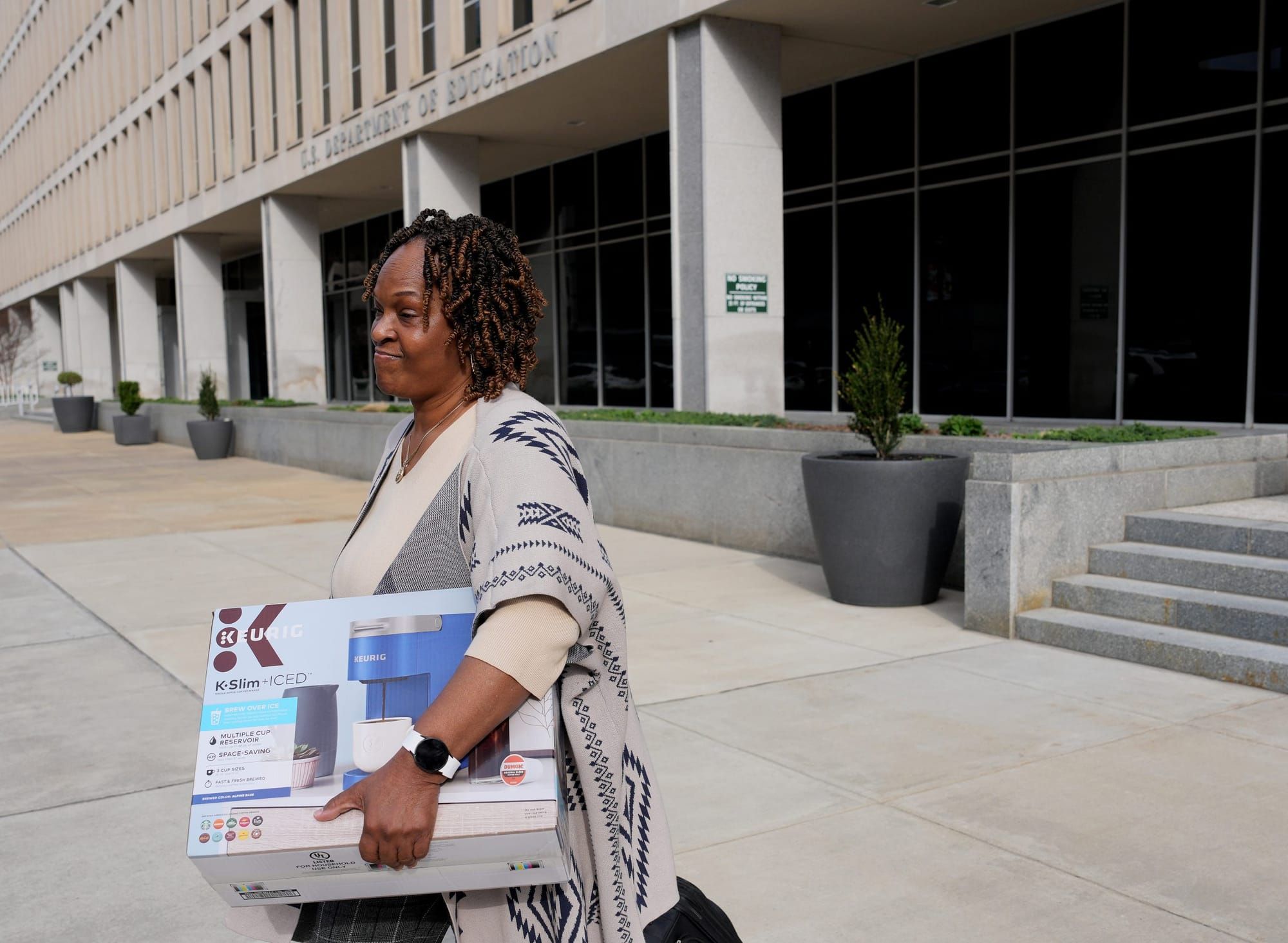
President Donald Trump’s announcement to dismantle the U.S. Department of Education has sparked alarm among educators, with experts and union leaders raising concerns over the potential long-term effects on civil rights protections and vital student support services.
The executive order, which Trump signed Thursday afternoon, directs Education Secretary Linda McMahon to begin dismantling the agency and shift control of education back to the states. The order comes after the Education Department announced earlier this month that about half of its workforce would be laid off.
In an emailed statement, Sheria Smith, president of American Federation of Government Employees (AFGE) Local 252, which represents more than 2,800 Education Department workers, expressed concern for the impacts the move will have on civil servants and students across the country.
“This executive order is nothing more than an illegal overreach of executive power designed to unemploy dedicated civil servants and decimate the critical services they provide to millions of Americans across this country,” wrote Smith. “The Administration clearly has no respect for the thousands of people who have dedicated their careers to serving this country. Now Americans throughout the country will bear the brunt of this reckless order.”
As the Department of Education is threatened, organizers argue that the cuts will disproportionately harm students, especially those with disabilities and those requiring specialized services.
Maha Ibrahim, a senior attorney at gender justice nonprofit Equal Rights Advocates, warned of a dangerous shift toward a resegregated and unequal educational system that could disproportionately harm vulnerable students, especially those from communities of color, students with disabilities, women, and LGBTQIA+ youth.
“This resegregation […] is turning education into a commodity for the rich, stripping students of their civil rights,” Ibrahim said in an interview. “And it’s despicable. It’s despicable that we’re attempting to dismantle 50 years of hard-won progress and creating an environment where certain students are actually hunted down, are targeted, are pursued relentlessly, harassed relentlessly, and excluded relentlessly.”
While Trump signed the executive order, the Education Department cannot be eliminated entirely without congressional approval.
“I think we’re going to see a lot of what we’ve already seen, which is lawsuits,” said Ibrahim. “Even with all of us knowing it takes Congress, that’s really on the law side. What really needs to happen is on the advocacy side. The public needs to be making quite a bit of noise to their representatives—regardless of who their representatives are—because this is really an attack on our structure of government and our checks and balances.”
The public needs to be making quite a bit of noise to their representatives … because this is really an attack on our structure of government and our checks and balances.
Maha Ibrahim, Equal Rights Advocates senior attorney
During a virtual press conference on March 12, Smith expressed deep concerns regarding the layoffs. Smith, who has worked in education as both a teacher and civil rights attorney, warned that the restructuring was more than just a reduction in the workforce—it was also an act of retaliation against those who had advocated for the rights of students and families.
“What we are eliminating now is the extra support that our agency provides states and local communities and students,” said Smith. “I think it is important to make clear what we do and what we do not do because there is rapid misinformation and really utter disrespect of the people who only work to serve their federal citizens.”
The layoffs have particularly affected regional offices in Dallas, New York, Chicago, Cleveland, and San Francisco. The Dallas office, which served Texas, Louisiana, and Mississippi, was hit hard, raising fears that civil rights investigations and complaints would be delayed, particularly those involving sexual assault or discrimination. With the elimination of several key divisions, including the Office of English Language Acquisition (OELA), which provides vital services to English language learners, union leaders warn that the department’s ability to protect vulnerable student populations is being severely undermined.
Brittany Coleman, chief steward at AFGE 252, voiced concern over the lasting consequences for students with disabilities, particularly those with 504 plans, which ensure accommodations for students with specific needs.
“The concern is that the chaos and confusion that we’re experiencing is now going to carry over to our students, especially if they’re waiting on results and relief from our agency,” Coleman said, noting that the loss of staff would exacerbate delays in resolving complaints related to educational accommodations. She added that without these essential services, students’ academic success and well-being are at risk.
The cuts are also expected to significantly affect federal student aid services. As the department slashes positions, delays in processing applications for financial aid are anticipated, potentially leaving students without the resources they need to attend college. Smith expressed concern that the reduced workforce could lead to longer wait times for students applying for financial aid, hindering their ability to make critical decisions about their education.
“Our agency does not interfere with anything curriculum-wise, but what we do is make sure that students who have special needs and who have a 504 plan, that they receive the resources they need,” said Smith. “What does it mean for these students if they don’t receive these services and their parents file complaints with our offices? What is it going to mean when you already had low staff anyway, you just cut that down by eliminating our office?”
Perhaps most troubling is the impact on the Office for Civil Rights (OCR), which plays a crucial role in investigating discrimination and ensuring that schools comply with federal laws protecting students’ rights. The OCR had already been understaffed prior to the layoffs, and with even fewer resources now available, union leaders fear that students who file complaints will face even longer delays in receiving justice. The backlog of unresolved cases is expected to grow, further complicating the department’s ability to provide oversight and protect students from discrimination.
The cuts have also raised questions about the future of educational data analysis, with the Institute of Education Sciences (IES) facing significant reductions. The IES tracks student performance and gathers data that informs education policy.
As one speaker at the press conference pointed out, “What does it mean for students with disabilities if this data no longer exists? What does it mean for the future of these students’ educational outcomes?”
The political implications of these cuts are also under scrutiny, particularly in Texas, where many affected workers were constituents of lawmakers who had previously supported efforts to reduce the Department of Education’s influence. Smith noted that despite efforts to explain the importance of the department’s role in leveling the educational playing field, the cuts proceeded, fueling suspicions that political motivations may be at play.
The press conference also touched on the inefficiencies within the Education Department itself. Many employees were terminated and then reinstated after errors in the termination process, wasting time and resources. The department had also insisted on bringing employees back to ill-equipped office spaces, resulting in confusion and disruption to the employees’ ability to do their work effectively. According to the speakers, this disorganization is a reflection of an administration that has not consulted with unions, leading to confusion and inefficiencies at every level.
Another pressing concern was eliminating essential research bodies, such as the National Center for Education Statistics (NCES), which has been reduced to a skeleton crew of one or two people. This raises doubts about the agency’s ability to fulfill its congressionally mandated role of reporting on the state of American education.
Finally, questions were raised about the possibility of retaliatory actions behind the terminations of union officials. Several union leaders and members from various departments, particularly the OCR, were laid off or placed on administrative leave. Despite attempts to obtain clarity, the department has failed to clearly explain these actions, raising suspicions of retaliation for union activities.
“To hear detractors of our agency talk about how test scores have not improved a lick in all the years that the U.S. Department of Education has been in existence is similar to someone saying my salary has not improved a lick in all the years that Burger King has been around,” Smith said. “It’s a non sequitur because no one in our agency is in the classroom or administering these standardized tests. That’s not what we do. So to blame an agency for something that isn’t within our scope of work is problematic, and it’s deeply troubling when those in positions of leadership are perpetuating this misinformation.”
As the Department of Education continues to scale back its operations, union leaders and former employees stress that the true impact of these layoffs will ultimately be felt by students who rely on the department for crucial services, protections, and financial support.
“We are simply educating people to make sure that all students are protected when they are in schools and that this administration has thought that is no longer a service that is needed,” said Smith.
With essential oversight functions being dismantled and no clear plan for maintaining services, the future of American education remains uncertain. Union representatives are calling for greater transparency and a commitment to preserving the services that help ensure all students, especially those with special needs, receive the support they need to succeed.
Both union members and education advocates warn that the cuts could lead to confusion, delays, and a breakdown in the services that have long been crucial to ensuring that educational institutions remain accountable to the needs of students across the nation.
“We cannot back down from this fight,” Smith wrote in her statement following the executive order. “The Department of Education’s critical work is at stake, and it is crucial for our future generations that we continue to defend the agency against this political regime.”
Editorial Team:
Sahar Fatima, Lead Editor
Carolyn Copeland, Top Editor
Rashmee Kumar, Copy Editor
Author

Alexandra is a Cuban-American writer based in Miami, with an interest in immigration, the economy, gender justice, and the environment. Her work has appeared in CNN, Vice, and Catapult Magazine, among
Sign up for Prism newsletters.
Stay up to date with curated collection of our top stories.