Students put education dreams on hold after Trump budget bill
The reconciliation bill limits federal student loans for graduate and professional education starting June 2026

Shawn Jiminez has long dreamed of going to law school to become an advocate for disadvantaged communities. The 19-year-old Bowdoin College junior is the first one in his family to attend college; without familial connections or insight into the legal or education systems, navigating his educational choices as a low-income student has been “a game of strategy.”
But Jiminez’s plans for his future have ground to a halt after President Donald Trump signed the reconciliation bill in July, severely limiting the amount of money students can borrow from the federal government for graduate and professional programs.
Jiminez is one of many students across the country who are now forced to reconsider their educational futures in the budget bill’s aftermath, as some professional paths may be pulled away from those who aren’t able to foot tuition bills upfront or take out private loans.
Starting June 2026, graduate and professional students will no longer be able to borrow more than $20,500 and $50,000, respectively, a year from the federal government. Professional programs will have a lifetime loan cap of $200,000, though data from the Educational Data Initiative shows that the cost of professional education often far exceeds that threshold.
The average cost of law school is $217,480 and medical school is $238,420. The average dental school graduate owes $296,500 in loans.
“Law is very elitist, and so there are positions within the legal sector that you can’t get unless you go to a top private school,” said Jiminez, adding that he may need to wait longer after graduation before he’s able to attend law school. “A lot of these schools have tuition rates that far exceed the loan cap.”
Maryflelona Wagner, a 20-year-old global studies student at Georgia State University, initially planned to go to law school after graduation. The stability of the career path was enticing, but her growing anxieties about the debt she’d have to take on have made her reconsider her next steps.
“Now I feel like I might be getting myself into a bigger mess if I just go to law school and then I’m in six-figure debt, and I don’t really have an easy way to pay it off,” she said, adding that she may instead pursue more creative routes that her degree offers.
It doesn’t come as a shock to researchers that some students are reconsidering their plans under the new federal loan limits. Mark Kantrowitz, a higher education financial researcher, told Prism that the new limits don’t make college more affordable; they only make it more inaccessible for students from certain backgrounds.
Private loans have been criticized for being risky due to their less forgiving repayment options, potentially higher interest rates, and their reliance on credit scores for eligibility.
“There is concern about ever-increasing borrowing,” Kantrowitz said. “If [the bill] just shifts the borrowing to private student loans, then that isn’t going to reduce the borrowing. It may lock out low-income students from getting a higher education.”
Students of color leave school saddled with thousands more in debt than their white counterparts, and low-income graduates are disproportionately burdened by their higher education costs. These changes may only worsen the gap and impede strides toward higher education accessibility.
“The whole point of higher education is to ensure that students … are able to have the opportunity and ability to live their own personal American dream, whatever that may be,” said Emmanual A. Guillory, senior director of government relations for the higher education advocacy group American Council on Education.
Not only will students have trouble accessing loans large enough to cover tuition, but they may also have trouble even reaching the Department of Education’s federal student aid offices at all. Recent surveys found that department firings and financial cuts have sparked concerns among university leaders.
The National Association of Student Financial Aid Administrators (NASFAA) found that 47% of institutions confirmed that their Federal Student Aid regional office had closed, and more than 33% reported experiencing support gaps previously filled by federal regional contacts.
At least 42% of colleges and universities surveyed reported that students have been experiencing issues with federal loan servicing, including “delays, misinformation, or unresolved inquiries,” according to the NASFAA.
Trump’s reconciliation bill is just one of the administration’s latest attacks on higher education. In his first few months in office, universities saw federal funding cut, research programs slashed, administration-backed lawsuits pile up, some international students barred, and a rise in rhetoric criticizing campus curriculum.
The so-called culture wars have made higher education a battleground, with Republican leaders increasingly restricting curriculum and administrative offices that addressed diversity, equity, and inclusion on college campuses in the years following the 2020 George Floyd protests. It made higher education an easy target for Trump, who, in his campaign list of promises, criticized institutions for alleged “indoctrination” and vowed to reclaim America’s elite institutions.
The bombardment of presidential actions has left higher education institutions in disarray. U.S. universities rank highly across the globe, including in math and science, but the increased financial and social pressures facing schools today are putting some institutions and their high-impact work at a breaking point.
“There’s concern about the potential for harm to legitimate science research in the U.S. and that this is going to have an impact on our dominance in science and mathematics research and education worldwide,” said Kantrowitz.
Educational leaders across the country are worried about how these restrictions might reshape university campuses in the coming years.
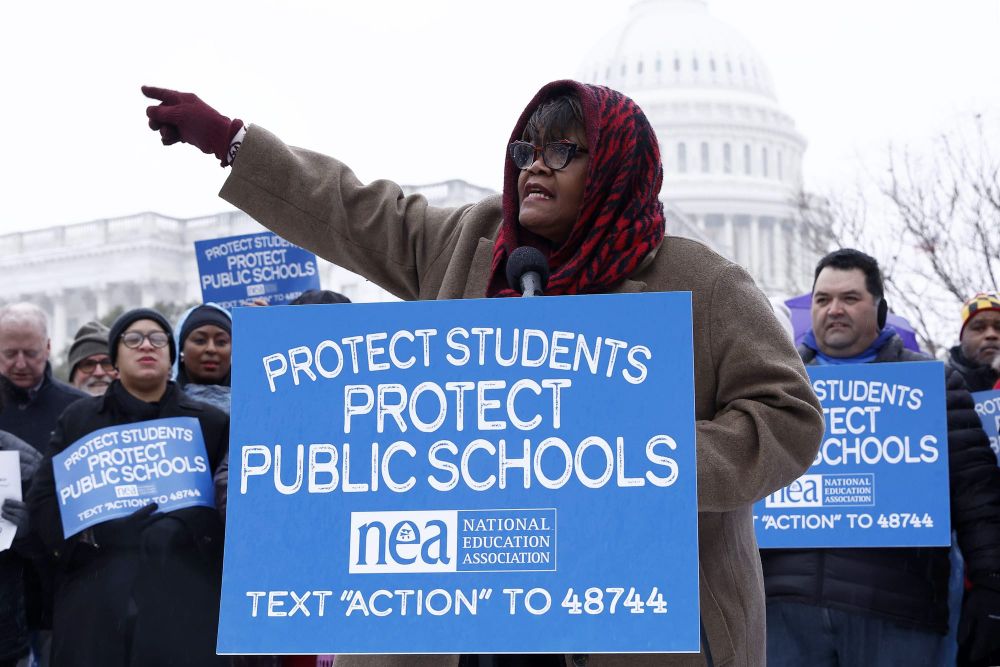
Ronny Lau, associate director of government relations at the National Education Association, told Prism that these changes could not just impact the access students have to vital education, but they could also severely exacerbate shortages of educators who need graduate degrees.
“Our students and the younger generation are the future of this country, and so we really want to make sure we uplift them the best way possible. And I’m not sure we might be able to do that,” Lau said. “We want students to feel limitless; we want them to have the ability to succeed and to achieve any goals that they want to reach.”
Kantrowitz urged students seeking new avenues to consider public universities or universities that have tuition-free offerings, and to limit their total student loan debt at graduation to be no more than their annual starting salary. “You may want to buy a Lexus,” he said, “but all you can afford is a [Toyota] Yaris, a Yaris will still get you from point A to point B.”
Jiminez said his experiences in legal and criminal justice internships have made him realize that “creating equitable structures of justice really relies on representation.” It’s the reason he hasn’t completely given up on his dreams of law school, even if it could take him more time to get there.
“We’re not going anywhere as first-generation, low-income students, because our voices are valuable and our work is valuable to the legal sector and to all professional sectors,” Jiminez said.
Editorial Team:
Sahar Fatima, Lead Editor
Lara Witt, Top Editor
Rashmee Kumar, Copy Editor
Author
Kiara Alfonseca is a New York City-based independent reporter and producer, covering race, identity, and equity. Her work has been featured in ABC News, HuffPost, NBC News Digital, ProPublica, palabra
Sign up for Prism newsletters.
Stay up to date with curated collection of our top stories.