How many must die before Gaza’s famine is called a crime?
More than 260 people—nearly half of them children—have recently died of severe hunger in Gaza, with each day bringing more deaths due to starvation and Israel’s attacks on aid sites

Before Oct. 7, 2023, Gaza was filled with traffic congestion due to the number of students attending United Nations Relief and Works Agency universities and schools. These training companies and language learning centers were filled with ambitious young people striving for a better future despite Israel’s siege. Gaza’s youth studied in the morning and worked in the afternoon to cover their educational fees.
Despite the decadeslong occupation and blockade, Gaza had one of the highest literacy rates in the world, reaching 97%, according to Al Jazeera. The enrollment rate in secondary education was 90% and higher education was 45%.
But young people like myself now live a very different life in Gaza.
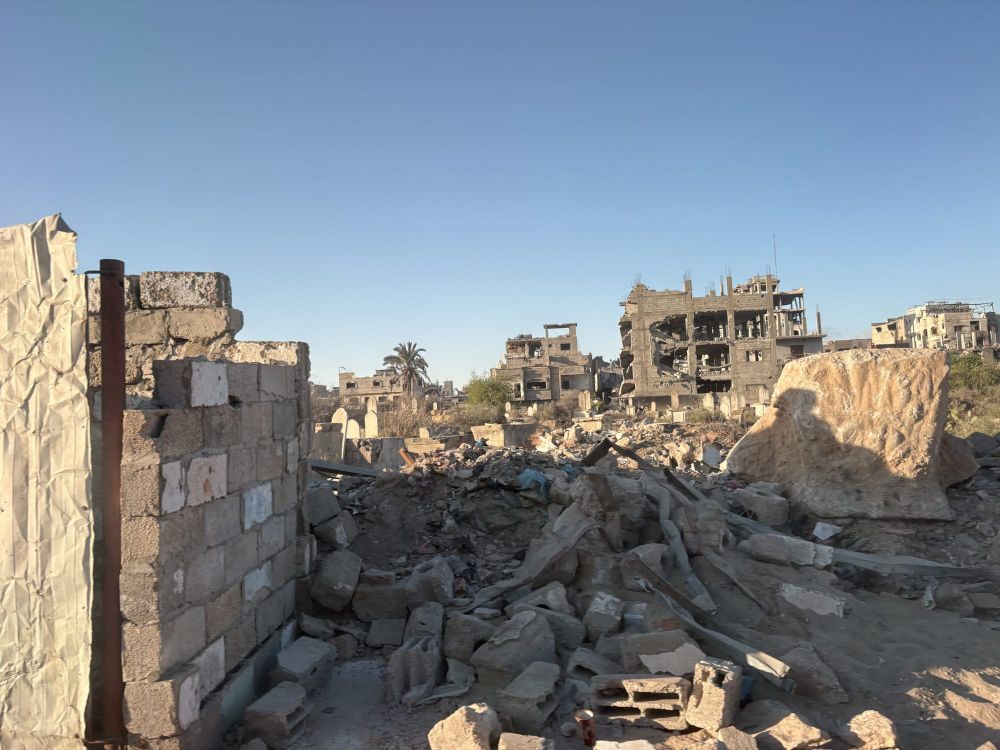
Former students are now displaced, spending their days trying to secure a tent or walking long distances under the scorching sun to fill a bucket of water. Over the last 22 months, the occupation has destroyed our neighborhoods and blown up our homes, delivering evacuation orders in the middle of the night when the bombing is already underway.
During evacuations, men like my uncle and cousins were detained, interrogated, beaten, or worse. My uncle said that after a week of beatings and being held captive naked and cold, Israeli soldiers released them and told them to go south. My cousin, Adel, was not captured with my uncle and the others, but he has not been seen since Dec. 8, 2023. Is Adel still alive in prison, or was he killed by torture? We have absolutely no idea. My aunt told me that, as Israeli soldiers had taken members of the family, she wished she hadn’t had boys. How many young men like Adel are missing or dead?
The youth who have thus far escaped death and imprisonment from the occupation army have not been spared from starvation, which Israel now uses as a tool for slow death. Young people who should be pursuing their education now have two choices: die of extreme hunger with their families, or get shot to death by soldiers while trying to get a bag of flour to feed their families. In recent weeks, more than 260 people have died of severe hunger in Gaza. Almost half of them are children.
Every day, people in Gaza are killed, either by Israel’s gunfire or famine. While Israeli officials continue to deny the existence of mass starvation in Gaza, the world is now watching and condemning Israel’s manufactured famine.
Dying to live
Since Oct. 7, there have been multiple famines in Gaza. They are not a symptom of Israel’s war on us, but rather a starvation policy implemented amid occupation. In the months since, there have been multiple bloody massacres over flour in which the military forces corral people seeking aid and shoot them. Hundreds of martyrs covered in flour have returned to their murdered families, while hundreds more have been injured, some suffering amputations, loss of eyesight, and other serious injuries. Members of my own family have been killed at aid sites.
What happened near Zikim when Israeli forces slaughtered people seeking food last month was like a scene out of a horror film. My uncle, who was present, told me that any young man who stood in order to reach the flour was shot. My uncle said he crawled to an aid truck to grab a bag of flour for his children while the other trucks sped by, and soldiers instructed drivers to run over young men who got in their way. My cousin, Rizq Abu Aisha, was able to climb atop a flour truck, but he fell and was run over. Tire marks branded his chest. My cousin gave his life to feed his brothers, yet to the world he is another anonymous death in Gaza. So is Tamer Abu Karsh, my friend’s brother who owned one of Gaza’s most famous shawarma restaurants. Who could have predicted that a beloved local cook would be forced into a death trap for a bag of flour he could have bought for less than $10 two years ago? Who will tell his two daughters that their father was killed trying to feed them?
There is also my neighbor, Fadi Al-Jojo, who was trampled at an overcrowded aid site while trying to get a bag of rice. His mother hoped he could be saved, but the doctor took one look at him and decided to turn his attention to another patient who had a better chance of survival. That person lived, and Fadi died, in part due to Israel’s total destruction of Gaza’s health care system. There are many stories of young men like Rizq, Tamer, and Fadi who have been killed, but will the world ever know their names?
Sometime during this genocide, the entire world agreed it was OK for us to die for food.
Sometime during this genocide, the entire world agreed it was OK for us to die for food.
For many of us, the famine is a slow, painful death. I will always remember the sound of hunger eating away at my stomach and my 3-year-old nephew Kenan yelling, “I want bread, I want rice!” when there is only chickpeas, starch, sugar, and milk. Every morning, my mother prepares a plate of sweetened milk, or mehlabi in Arabic. Traditionally a dessert, it is nothing more than sweetened milk thickened with starch. She tells us this is breakfast. We won’t know until evening if we will be able to find something for dinner.
At times, the markets have only sold smelly animal food to people, but my father refused to let us eat animal grain, and he forbade my brothers from seeking “humanitarian aid,” afraid they would be killed in the process. My father tells us, “Don’t worry, we will find a way.” And so far, we have. Sometimes, by grinding qadama—similar to chickpeas—into something my mother can knead like bread. While desperate for food after fasting all day for Ramadan last year, we went to the market and found only lentils and wild grass, which poisoned us when we ate it.
“The most painful feeling”
We had a small sliver of hope in January when a ceasefire was declared. For the first time in months, life felt safer. Young people like me felt like we could breathe again after constantly running to survive and meet basic needs. We could once again purchase chicken and fresh vegetables. Displaced Palestinians returned to southern Gaza for the first time in months. We tried to rebuild our homes and get used to living among the rubble. But the crossings soon closed, and on May 18, Israel violated the ceasefire. I burst into tears after midnight when I heard bombs and warplanes overhead. It felt like I was living a nightmare about returning to a genocide from which I miraculously survived.
But the nightmare continues.
Who could have known that in Gaza, flour would be as valuable as gold? Just like gold, the price of flour fluctuates on a daily basis, similar to the stock exchange, and it is used as a negotiating tool. Flour, once a humble ingredient, is now a political commodity. Flour is now the ultimate pressure card, and Gazans always seem to be the ones who fall victim to its power. A kilo of flour now costs at least $12, a price almost no one can afford due to a lack of money, the cash crisis, and many other reasons.
In Gaza, away from the media, we live many wars inside the one you hear about. Merchants in Gaza sometimes make life difficult for all of us. Their high prices are linked to the entry of aid from Zikim: When Israel cancels aid coordination, most goods disappear from the markets, and their prices double overnight. Israel has also blocked new money from entering Gaza, and merchants now deny our battered banknotes. Last month, Palestinians revolted against merchants in the Gaza Strip. We bought nothing from them and ate “soup” made of water and salt.
Over the last 22 months, I have learned that hunger, combined with fear, is the most painful feeling a person can experience. When my nephew Kenan hears the sound of warplanes, he screams and cries and asks his mother, “Why is Israel bombing us?” We do not know how to respond. How could this child comprehend the truth? How can we make him understand the world has decided this is OK?
The starvation of a civilian population is a war crime, prohibited under several international agreements and laws. In Gaza, starvation is yet another tactic Israel uses to slowly kill us. Now that the Israeli security cabinet has approved a plan this month to fully occupy the Gaza Strip and remove residents from the north to the south, they will permanently displace us. There is no safe place in Gaza. We are all vulnerable to death at any time.
The bigger question is: Why do international laws and agreements stop mattering when the people experiencing war crimes are Palestinian? Is Israel above the law? Our lives as civilians in Gaza are being drained. Our existence wiped out. The international silence regarding our rights can never be forgotten, and at times it feels more painful than the torture we are now experiencing. Like you, we want peace and to live with dignity. Each day, I wonder: Why us? Why are Palestinians forced to die in search of food? Now ask yourself why you have relegated us to burning, bombing, hunger, and oppression.
Editorial Team:
Tina Vasquez, Lead Editor
Carolyn Copeland, Top Editor
Rashmee Kumar, Copy Editor
Author
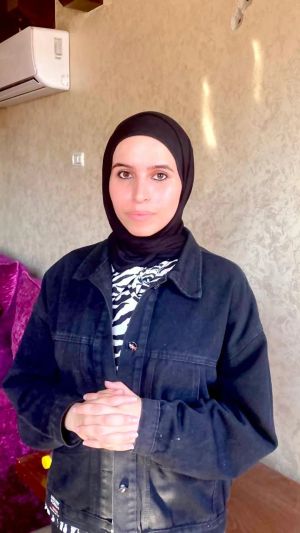
I am Nour Abo Aisha, a journalist and writer based in northern Gaza. My works have been published by The Guardian, al Jazeera net, Mondoweiss, We Are Not Numbers, Chronique de Palestine, and Baladi Ma
Sign up for Prism newsletters.
Stay up to date with curated collection of our top stories.