Disabled students face rights violations in the fallout from Department of Education shutdown, advocates warn
Funding for crucial classroom supports is threatened by the gutting of the department that enforces the civil rights law that protects students
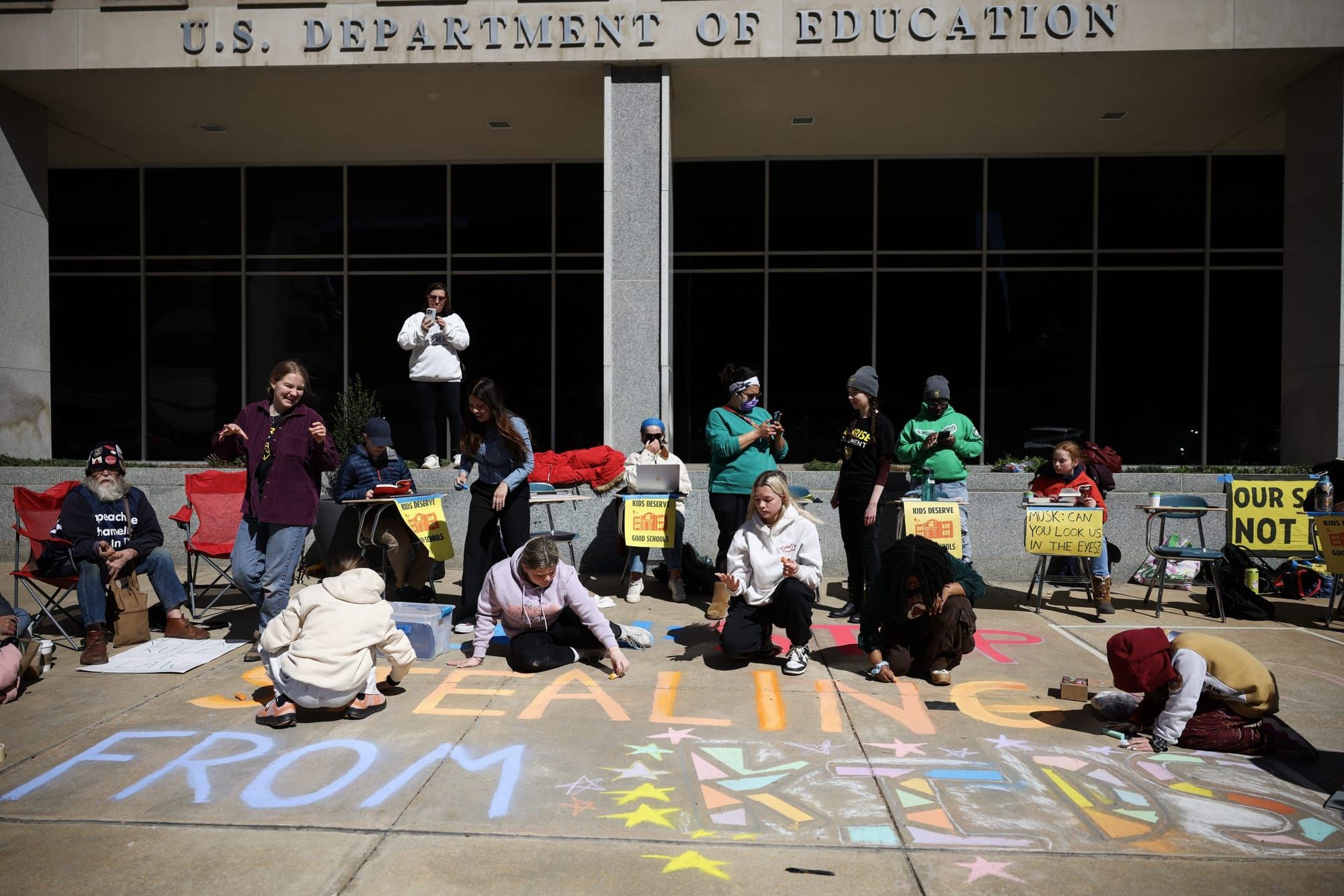
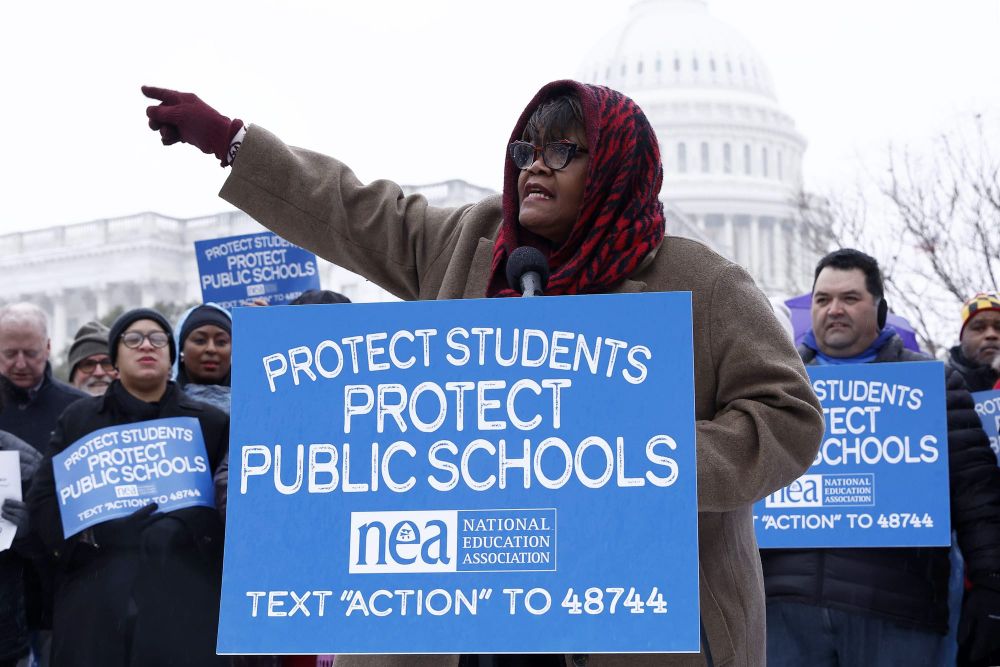
Since President Donald Trump’s inauguration, federal agencies across sectors have been thrust into chaos. Most of the contracts through the U.S. Agency for International Development have been canceled, leaving USAID effectively shuttered. The Defense Department, Veterans Affairs, and the Social Security Administration are planning personnel cuts in the tens of thousands. Other agencies, think tanks, and funds are also set to be affected. But one of the most dramatic proposals is the president’s executive order gutting the Department of Education, a decision poised to inflict severe harm on parents, students, and educators, especially those with disabilities. Disability rights advocates say that this action risks undermining critical protections, supports, and access that ensure equitable access to education for millions of vulnerable students.
Founded in 1979, the Department of Education is responsible for funding public schools, administering student loans and grants, and running programs for low-income and disabled students. The Trump administration and its proponents have long accused the department of indoctrinating students with diversity-focused curricula, though state or local governments are responsible for devising curricula. The Education Department does, however, enforce civil rights law that protects students from race- or sex-based discrimination. The executive order to close the department will affect the management of funds to make education more equitable: $18.8 billion in Title I funding, $120.8 billion in Federal Student Aid funding, and $15.5 billion in the Individuals with Disabilities Education Act (IDEA) funding. The department has already laid off nearly 50% of its staff, with those still employed unsure of their futures there.
The threat of losing any of the protections and funding provided through the Department of Education is terrifying for marginalized students who would be most affected by the absence of IDEA funding. The act guarantees that students with disabilities can access Free Appropriate Public Education (FAPE), which currently benefits more than 7 million students with “necessary accommodations, specialized instruction, and assistive technology,” according to the American Civil Liberties Union (ACLU). Without its enforcement, disabled students across the country will be denied their civil right to FAPE, rights groups warn.
Mia Ives Rublee, the senior director of the Disability Justice Initiative at the Center for American Progress and a wheelchair user, told Prism in an email that the Trump administration’s changes to the Department of Education are intended to “create inefficiencies, less cohesion, and the greater ability for states and localities to be able to decide who gets resources for schools.” This has been a long-term goal for proponents of the voucher system and Project 2025, a lengthy conservative book of policy proposals, Rublee said. But she warned that eliminating the department and all regulations and oversight would lead to vulnerable students living in “education deserts,” where “many students would not be able to attend school in integrated settings or receive the services they have every right to.”
This is exactly the outcome that educators and other staff have predicted. Karah McKay, a high school social studies teacher, typically works with about four or five students per class period who have individualized education programs (IEPs), through which they receive the accommodations they need to succeed.
She pointed out that through the IDEA’s enforcement, her students are able to benefit from the “least restrictive environment,” meaning that they are integrated into general education classes whenever they can, while also receiving the special education (SPED) classes that they need. Without the IDEA functioning as it should, students who qualify “for parts of SPED but not others could be put in a single SPED classroom and not benefit at all from being able to receive [general education] when they can,” McKay told Prism in an email. And though she is passionate about providing an equitable environment for the children she works with, she knows that “many teachers (in my school and at any school) would jump at the chance to not have to provide accommodations for students” if they weren’t required to do so.
Madeeha Ahmed is a middle school special education administrator who told Prism in an email that her school site provides many different types of services to students with disabilities, including, “academic, language and speech (LAS), occupational therapy (OT), counseling, deaf or hard of hearing, visually impaired services, assistive technology services, adapted P.E., physical therapy, behavior intervention implementation services, etc.” Her school employs personnel in-house for most of these services, from psychologists to nurses to administrators. If the funding were cut in her school system, Ahmed told Prism that it could eliminate this type of personnel and affect the school’s ability to provide services and support to about 2,000 students.
Some states may be able to maintain their service provision, but underfunded and rural school systems are likely to be the hardest hit. Allison Boone, a public school speech and language pathologist, said she has hope that working in California—where much of her school’s funding is through the state—will keep her and her colleagues employed and the students she works with receiving the services they need.
Without IDEA enforcement, “none of the students on my 55+ caseload would have access to the necessary services they need to succeed academically, and I would not have a job,” Boone said in an email. Still, her largest worry is for smaller, rural communities where schools may rely heavily on federal funding and whose SPED services are often “a family’s only option for services for their disabled children.”
“My IEP leveled the playing field”
Parents and former students who benefitted from SPED services told Prism about the crucial impact such resources had on their ability to succeed in school.
Activist and writer Cara Liebowitz, who has cerebral palsy, told Prism in an email that her IEP allowed her to receive accommodations in public school, such as extra time on tests, the ability to type her notes, door-to-door transportation to and from school, and in-school physical therapy.
“With these accommodations in place, I was able to learn alongside my peers and prove myself academically,” she said. “My IEP leveled the playing field. I was able to take advanced and AP classes and prove that I was just as capable as anyone else. That, in turn, set me up for college and beyond.”
Though the system wasn’t perfect, she said she couldn’t imagine success in education without the IDEA. “At best, I would have been … taught basic concepts, if anything at all. At worst, I would have been stuck at home or institutionalized.”
Lachrista Greco, writer and librarian, had a similar experience. In public school in the Midwest, she was diagnosed with two learning disabilities and placed in SPED with an IEP. Without them, she told Prism in an email, she would not have graduated high school and gone to college.
This funding is integral and necessary for disabled students to survive and thrive in mostly abled, neurotypical systems.
Lachrista Greco, writer and librarian
“This funding is integral and necessary for disabled students to survive and thrive in mostly abled, neurotypical systems,” Greco said.
Krista Westfall is a pastor with two children who have IEPs, both of whom greatly benefit from free public school services. Her son was able to receive early-life training to work on motor skills and language, without which she believes he’d be much further behind. Instead, he and his sister integrate successfully alongside their peers while receiving extra SPED resources and tools. Without these options, Westfall said she would be unable to send her children to public school. She doesn’t have the financial resources to afford private school, a situation many low- and middle-income families would face without IDEA funding.
“It all comes down to … money, and people that are poor are going to suffer, and the people that are wealthy don’t care,” Westfall told Prism. “They’re going to do fine because they’ll figure out other ways to get those needs met, whether they’re going out of pocket and paying for private [speech language pathologists] or whether they’re just better-funded to meet the needs of their kids and the resources that are needed.”
Cascading impact
These changes will ultimately have widespread effects on disabled students in school and beyond. As an example, Rublee of the Center for American Progress, pointed to a little-known program called the Rehabilitation Services Administration (RSA) that was once part of the Department of Health, Education, and Welfare before the Education Department was created. The RSA will likely be affected by the changes at the Department of Education.
“The program was moved over to [the Education Department] because more coordination was needed to help students transition from school to employment,” Rublee said. “Many students fall through the cracks after high school, leading them to fall into guardianships or become reliant on social benefits. Disabled students have significantly higher rates of drop out from higher education and often have difficulty adjusting to the workplace because they lose all of their supports when they leave high school. RSA is intended to help bridge those worlds.”
The loss of IDEA funding, Rublee said, would therefore “likely lead to higher dropout rates, lower employment rates, homelessness, incarceration, or other types of institutionalization.”
These are nonnegotiable services, and the truth is that disabled students need more, not less, support, Rublee and other advocates said. The Trump administration’s choice to gut the Department of Education, they said, is just another example of the federal government’s willingness to ignore the law and violate the rights of the most marginalized in the U.S.
Still, like many of her peers, Ahmed, the special education administrator, isn’t cowed. “It is definitely a challenging time to navigate through the unknowns of the fate of special education,” she said. “What am I sure of is that, if IDEA is challenged, there will definitely be a fight back.”
Editorial Team:
Sahar Fatima, Lead Editor
Carolyn Copeland, Top Editor
Rashmee Kumar, Copy Editor
Author

Reina Sultan is a Lebanese Muslim movement journalist and one of the co-creators of 8 to Abolition. You may have seen her work in Vogue, VICE, ELLE, Business Insider, SELF, Prism, Yes! Magazine, and m
Sign up for Prism newsletters.
Stay up to date with curated collection of our top stories.