Youth climate lawsuits gain momentum: A look at recent victories and ongoing battles
Four groundbreaking youth-led lawsuits have snaked their way through the courts in recent months, changing the legal landscape for the future of climate litigation
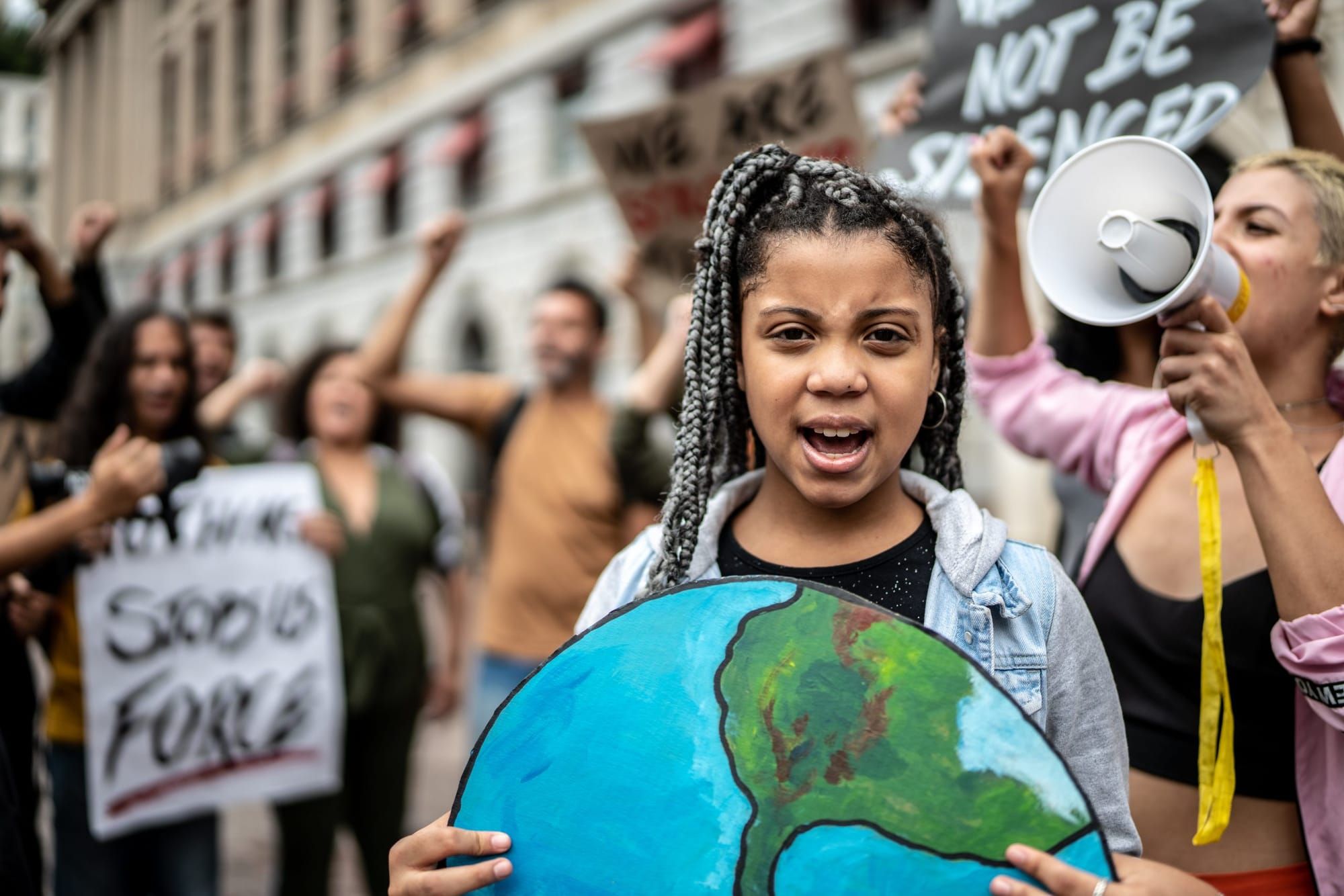
In a bold move to combat climate change, young activists are turning to the courts, filing lawsuits against the government to secure a livable future—even though they’re too young to vote.
Since 2016, young people have taken federal, state, and local governments to court for what they allege is a willful denial of inalienable rights and support of a fossil fuel industry, no matter the costs.
Addressing the climate crisis, by most measures, has never been more urgent. Scientists say that we have until 2030 to limit warming to 1.5 degrees Celsius or else face a cascading set of ecological consequences from which we may never recover. The work is two-fold: repairing the harm of extraction of fossil fuels made possible by colonial expansion, and mitigating the symptoms of a warming planet–more destructive storms and wildfires, depletion of topsoil, and ever-expanding drought conditions, to name a few.
Yes, fossil fuel corporations hold much of the responsibility for peddling a product that they knew would poison the planet (at least 28 states and municipalities are taking these corporations to court), but youth plaintiffs say it was the federal government that allowed these companies to operate, rake in windfall profits, and escape culpability. In doing so, plaintiffs allege that the government permitted a violation of their constitutional rights, all while the climate crisis wages on.
This has been a big summer for youth climate cases. So, where do they stand? Here’s a rundown to help simplify things:
Juliana v. United States – paused
In 2015, 21 youth brought a landmark lawsuit against the U.S. for denying their rights to due process and for violating the public trust doctrine. This was the first time that young people took the federal government to court for supporting the fossil fuel industry, seeking a declaration from the court that their rights were violated as well as a court order preventing the government from continuing those harms by producing a plan to reduce carbon dioxide emissions. While the science illustrating the cause and effect of burning fossil fuels and rapidly changing the planet’s climate system has been available since the 1960s, and proof of this dynamic has been available since the 1980s, no one previously attempted to hold the government accountable in this way. Even the presiding judge acknowledged the case’s extraordinary nature, writing, “This is no ordinary lawsuit.”
But the case has never made it to trial. The Obama, Trump, and Biden administrations hampered the case at every turn, preventing it from reaching the trial phase that was initially scheduled for February 2018 and then bumped to October 2018. After years of legal back and forth, the Biden administration’s Department of Justice attempted a rare legal move on May 1 called a writ of mandamus, allowing a higher court to throw the case out without a trial. Even more surprising, the writ contradicted a lower court’s decision for the case to proceed “on the merits” or based on the evidence outlined in filings. The plaintiffs asked for the judges on the 9th Circuit Court of Appeals to reconsider their ruling. In late June, dozens of members of Congress filed an amicus brief with an Appeals court supporting the youths’ request for review, saying that allowing the case to proceed is tantamount to fulfilling the promise of the Constitution, separation of powers, and the court’s central role as a “neutral arbiter.” In July, the Appeals court denied the petition for review.
According to Julia Olson, one of the case’s lead attorneys, the repeated attempts to thwart Juliana v. United States illustrated the unique harms suffered by the plaintiffs simply because of their age. “Adults continue to discriminate against young people in profoundly harmful ways, and this ruling greenlights these harms,” Olson said in a press release. In other words, there is no way for a young person experiencing climate change to object to the forces that protract it.
Held v. State of Montana – awaiting ruling from state Supreme Court
On July 10, counsel for the 16 plaintiffs in the historic youth-led constitutional climate case, Held v. State of Montana, presented oral arguments before the Montana Supreme Court defending the 2023 decision from District Court Judge Kathy Seeley in favor of the plaintiffs. Judge Seeley’s ruling declared that Montana’s laws, which had previously required the state to turn a blind eye to young people’s climate injuries while promoting fossil fuel activities, were unconstitutional.
During oral arguments to the Supreme Court, a lawyer for the youth plaintiffs reiterated much of the testimony from expert witnesses from the previous summer’s seven-day trial: that the state’s permitting system did not allow the government to consider climate impacts, that climate impacts denied the youth’s state constitutional rights, and that the court system was the appropriate place to adjudicate the violation. In response, the state doubled down on previous arguments made in Juliana and other youth climate cases, asserting that it’s the legislative branch rather than the courts that should handle what they describe as a “policy issue.” The state lawyers also argued that plaintiffs’ claims were too broad regarding the changes requested and the type of relief from climate pollution.
Rehashing the case illustrated how complex it can be for young plaintiffs to go to court. On the one hand, the state’s lawyers argued that climate change is a global issue resulting from policy decisions from multiple actors. Most of the oil and gas that’s produced in Montana exit the state, and much of the state’s transportation sector emissions result from operations that pass through its borders. So, not only is it not up to one court in one state to institute a plan to reduce greenhouse gas pollution, but how would a court decide what those emissions targets should be based on Montana’s pollution contribution? As in Juliana, lawyers in Held v. State of Montana assert that questions regarding contribution to emissions, facilitation of business productivity, and emissions impacts don’t preclude the court system from putting a stake in the ground. Instead, the impact of emissions-related activities are of constitutional concern because the status quo harms the rights of children.
Now, plaintiffs await a ruling from the state Supreme Court.
Navahine v. Hawaiʻi Department of Transportation – settlement agreement reached
A settlement agreement was reached on June 20 in the case of Navahine v. Hawaiʻi Department of Transportation, the first youth climate case to challenge emissions from a state transportation department. The case filed two years prior argued that the state agency jeopardized the youth’s constitutional rights by supporting a fossil -fuel-based transportation system, with the transportation sector contributing to 60% of Hawaiʻi’s total emissions. Moreover, while the state committed to reaching net-negative carbon emissions by 2045, there weren’t substantive details about how the target would be achieved.
Without intervention, the plaintiffs argued, the most fossil fuel-dependent state in the country would continue to greenlight a transportation system that violated their rights to a clean and healthful environment while “endangering public trust resources that depend upon a stable climate system.”
In the settlement agreement, the Department of Transportation committed to creating a comprehensive, substantive, and measurable plan to reduce emissions. This includes creating a unit within the transportation department to carry out the plan, establishing a youth advisory council, revising the transportation budgeting process, and accelerating the development of electric infrastructure, among other commitments.
Genesis v. Environmental Protection Agency – preparing for oral arguments
In December, 18 youth plaintiffs in California filed an equal protection constitutional lawsuit against the U.S. Environmental Protection Agency (EPA) for failing to act on climate change. They allege that the failure to account for the ways that climate change affects them is a form of discrimination against young people. Lawyers for the plaintiffs argued that youth are particularly susceptible to injury from climate change-driven catastrophes, such as wildfires, because their bodies and brains are still developing.
Not only are young people discriminated against in this way, they are also disenfranchised, lawyers argued. “They are politically and economically powerless in our constitutional democracy and cannot meaningfully participate in and influence the policy decisions that cause the climate crisis, discriminate against them, and irreversibly harm them for the remainder of their lives on Earth,” the filing read.
Twice, once in March and then in May, the presiding District Court judge granted a motion to dismiss based on defendants’ claims that the courts did not have the authority to grant relief or remedy for the claims of constitutional violation in the case. After filing an amended complaint in late May, lawyers for the youth plaintiffs are now preparing for oral arguments that the judge will hear on Sept. 30. After that, the judge will determine the defendants’ third motion to dismiss.
Looking forward
Regarding youth climate lawsuits, the jury is still out on what a government owes to its people and what legal demands the people are entitled to make of its government. The science of climate change has been available since as early as the 1960s—which means it’s older than most of the youth plaintiff’s parents. But it’s only recently that the consequences of this science—declining soil health, decreasing pollinator populations, drought, wildfire, and hurricanes—have become an undeniable reality. In addition to lawsuits challenging the government’s role in supporting a fossil fuel-based economy, attribution science allows plaintiffs to take Big Oil to court. At least nine states and 18 other cities, counties, and Tribes have ongoing cases against companies like ExxonMobil or industry groups like the American Petroleum Institute for climate damages. Of the 2,002 global climate cases, 1,426 have been filed in U.S. courts.
Author

ray levy uyeda is a staff reporter at Prism, focusing on environmental and climate justice.
Sign up for Prism newsletters.
Stay up to date with curated collection of our top stories.