You can find America’s future in El Salvador
In right-wing Washington circles, Nayib Bukele is the hip, youngish, minority mask donned by Republicans in an effort to modernize and expand their movement

The Presidency of El Salvador is chronically online, documenting every move taken—and every press conference given—by Nayib Bukele, who intends to rule for life.
One widely shared video is of his visit to El Salvador’s new National Library. The tour takes place at night, with a drone capturing the emptied downtown streets around the impressive structure. Everything is in perfect order: San Salvador, the capital, is cleared of people, animals, and traffic.
Bukele is received by carefully scripted guides (there are no librarians), who take him and his TV crew on a tour of the iPad room, the game room, and the virtual reality room. Near the end of the hourlong video, the head of state plays with a robot dog.
In the largest, most modern library in the Western Hemisphere, there are hardly any books. In the entirety of the propaganda piece, literature is never discussed. Not a single author is mentioned, and you don’t see a single adult or child reading. The illuminated floors and nearby office buildings shine. There are no visitors, and not a speck of dust.
Much like the American president—Bukele’s biggest fan and benefactor—the Salvadoran president isn’t a reader. He is a man of clips: the instantaneous, the ephemeral, the sound bite. And he doesn’t need to be in touch with the literary world. Unlike libraries, he is insanely popular. The most famous man in Central America, he is one of the few Latinos ever discussed by legacy U.S. media outlets.
In a July 2023 interview with the Spanish daily newspaper El País, the Chilean American novelist Isabel Allende—an avowed leftist feted by both President Barack Obama and Joe Biden—conceded that, indeed, Bukele lives up to the hype. “My friend has just returned from El Salvador, and she told me that this is the first time that she can take a taxi without thinking that she’s going to be kidnapped. She dares to go out at night for the first time in decades. She says that people are very happy.”
Worriedly, Allende added: “I’m very afraid that [Salvadorans] will exchange security for democracy.”
Bukele’s social media savvy, his obsession with fashion, his laid-back way of speaking, and his fondness for being photographed in the company of uniformed men and automatic weapons are all ingredients. The resulting appeal is easily digestible for a violence-crazed, heavily male, Tik-Tok-scrolling, English-language audience. His mismanagement of the economy and violations of the Constitution are unimportant, topics that only concern killjoys who are living in the past. Bukele is the future: HD, paid in bitcoin, battery-powered, unworried about the details (or the Earth).
Among the Salvadoran population—at home or in the diaspora—his approval ratings are actually lower than what he racks up in other Latin American countries. Across Central and South America, presidential candidates race to compare themselves to the 43-year-old. They, too, are promising huge prisons, sprawling labor camps, and mass deportations of migrants.
And, within the U.S. conservative movement, he’s a beloved figure, frequently invited to address the Conservative Political Action Conference and sit down for exclusives with Fox News. He flatters the American president whenever he can, whether by embracing him publicly in Washington, D.C., or hosting the Miss Universe pageant—an old Trump asset—in San Salvador.
The Salvadoran president has turned his little country into a veritable black site, giving the Trump administration a loophole through which to push whatever the feeble American court system wags its finger at.
In right-wing Washington circles, Bukele is the hip, youngish, minority mask donned by the Republicans in an effort to modernize and expand their movement. He offers them demographic cover as they persecute Arabs, Black people, Latinos, and Indigenous peoples. He even provides them with the infrastructure required to exile and imprison enemies of the American state. The Salvadoran president has turned his little country into a veritable black site, giving the Trump administration a loophole through which to push whatever the feeble American court system wags its finger at.
As a bonus, Bukele—beyond his accented English and Latin passport—is racially Palestinian. His father, Armando Bukele Kattán—the son of Palestinian Christians from Bethlehem—was a convert to Islam, an imam, and the founder of five mosques. Until his death in 2015, he was a staunch and vocal defender of the Palestinian cause. But this impressive legacy has been erased; the past annihilated. Now an ally of Zionists and a defender of Zionism, Bukele Jr. has no more identity, heritage, or memories. He’s the model minority for the American right: a racially ambiguous brand, like Google—which now controls the entirety of El Salvador’s digital infrastructure—or crypto, the unofficial currency of the garrison state.
As recently as 2012, when he was the center-left mayor of Nuevo Cuscatlán, the younger Bukele—already a social media addict—repeatedly tweeted against Israel. He once even noted that “seeing Jews asking for an end to the attacks on Gaza reminds me that governments don’t always represent their people.” While he conflated Judaism with Zionism—a common mistake, given the Israeli regime’s decades of propaganda—his heart was in the right place. One wonders: Where is it now, all these years later?
In a world that has accelerated, compressing itself into megabytes, we cannot remember history, let alone ourselves, who we once were. We are in the age of forgetting.
For the Bukele-Trump presidency, nothing lasts. The action program is 24/7, twisting and turning to keep millions—billions—of eyeballs watching. There are new enemies around every corner, precisely timed posts, televised raids and airstrikes, military parades, photo-ops in front of rockets and lasers. The eternal press conference, the endless livestream. There will be no transcripts; they’ve all been deleted. There will be no record.
“There are no longer any societies in which the best people are attracted to civic duties,” Mario Vargas Llosa once mused. The recently deceased Peruvian novelist penned this observation in “Notes on the Death of Culture: Essays on Spectacle and Society,” which he wrote while lecturing at Princeton. As the American university system drew its last breaths before succumbing to Zionist donors, White House directives, and AI laboratories, the 2010 Nobel laureate for literature warned that jokers would soon reign as kings. He lamented the fact that we no longer wish to remind ourselves that life “is not just entertainment, but also drama, pain, mystery, and frustration.”
“In many aspects, things are much better than in the past,” Vargas Llosa acknowledged. Certainly, in most countries—especially for those living with special needs—screens have offered respite, educational tools, entertainment, escape. However, when we strictly examine the dynamics of power, the novelist was adamant that “if images replace ideas—represented by books in society—the powers of this world will very easily be able to manipulate society.”
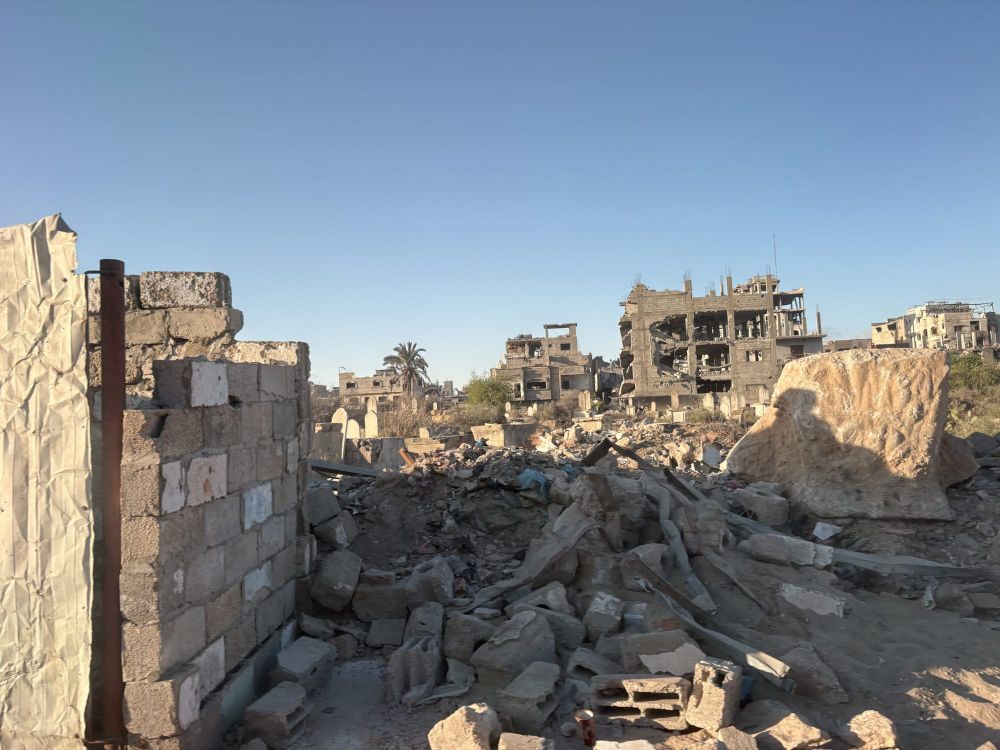
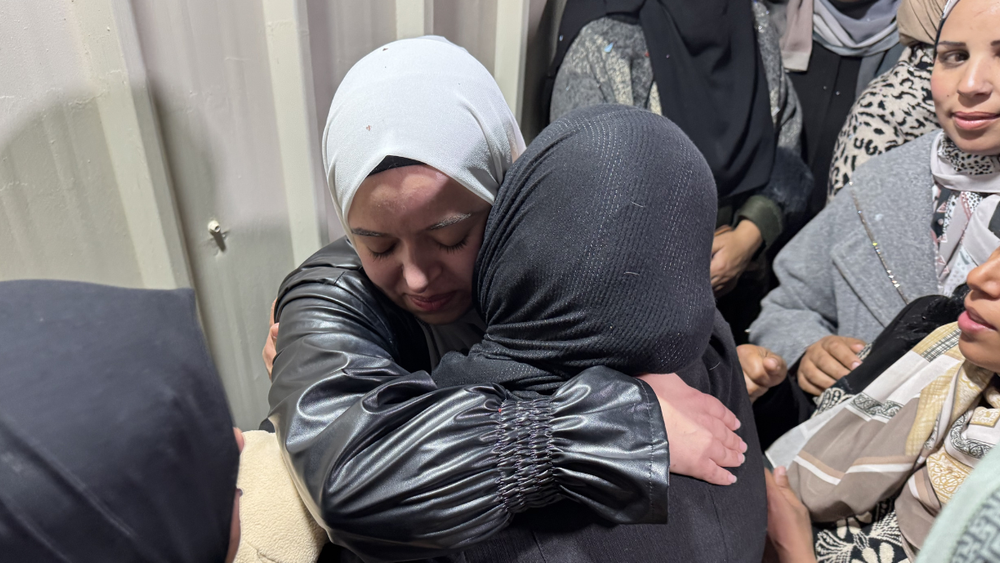
The images from Gaza, on the other hand, have certainly obliterated the Western myth, or whatever was left of it. They have overridden the global texts and treaties that enshrined the victimhood of Jewish and white supremacists, while dismissing the ongoing nightmare that colonized victims cannot wake from. But these unbearable images are captured by those suffering in a man-made hell, and circulated by handfuls of outlets and journalists who struggle to get past censors and information blackouts. It is, rather, the official images—the things that we are meant to see, encouraged to look at—that are dominant, ubiquitous. They’re the real dangers that Vargas Llosa warned about, pushed out of the Oval Office, out of the Reichstag, out of the glass-and-steel palaces in San Salvador and Riyadh.
You are not supposed to look at bombed, burned children, wailing and starving on dirty hospital floors. You are supposed to watch and listen to heavy-set men in suits, comfortable in their power, reductive and joking in their language, surrounded by microphones and cameras. This is another kind of hell entirely, luxurious and made of gold.
Back in reality, Salvadorans who suffered under the carnage of MS-13—trapped inside for years, subjected to extortion, massacres, rapes, and kidnappings—and for those who languished under the post-civil war two-party system—which did little for the country except loot its coffers—Bukele’s strong hand is warmly received. If innocents are swept up in his raids, if children are sodomized in his prisons, if everyone slowly becomes too afraid to say that they don’t approve, so be it. This is progress, this is the end of the war. This is peace; there’s no need for protest. For those abroad, in the worlds of tech, digital currencies, online cultural battles, and AI, he is an embodiment of new governance: apolitical, hyperefficient, privatized, trendified.
The model he is applying in the middle of Latin America—in the middle of old countries, with creaking, Frenchified systems of bureaucracy—may be novel in an archaic region, but it’s nothing unusual in the Gulf. Look at Trump’s first trip abroad to Saudi Arabia, a kingdom he greatly admires. There, crime is simply not allowed. Rights are gifts. Malls and stadiums are full. Millions of precarious, temporary workers from South Asia toil and die to keep massive air-conditioned structures rising higher and higher. Libraries with robots and no books, prisons with cameras and no counselors, beauty pageants with women’s rights activists locked away in dungeons, schools with screens and no teachers. The dream of the faithless American president, with the Israeli base nearby, Christ under the rubble in Palestine, seven-star hotels overlooking Mecca. It’s a dream that’s becoming universal: From San Salvador to Guantánamo to Hebron, children are collateral, prisoners are terrorists, labor is importable and dispensable. You can see it all on your phone as you scroll and scroll and scroll; you’ll see the coolest dictators in the world, in white robes, Armani suits, power ties. This is our future, it’s already here.
Editorial Team:
Tina Vasquez, Lead Editor
Carolyn Copeland, Top Editor
Stephanie Harris, Copy Editor
Author
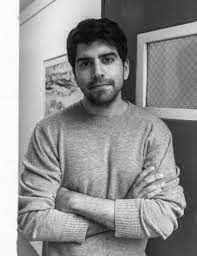
A historian by training, Avik Jain Chatlani is the author of This Country is No Longer Yours. He has taught in schools and prisons in Latin America and the United States.
Sign up for Prism newsletters.
Stay up to date with curated collection of our top stories.