Protest outside Texas Gov. Greg Abbott’s mansion calls for better treatment of Chicano political prisoner Xinachtli
Xinachtli, a Chicano Indigenous activist imprisoned for over two decades, did not receive proper health care after a bad fall in the shower, activists say
Real journalists wrote and edited this (not AI)—independent, community-driven journalism survives because you back it. Donate to sustain Prism’s mission and the humans behind it.
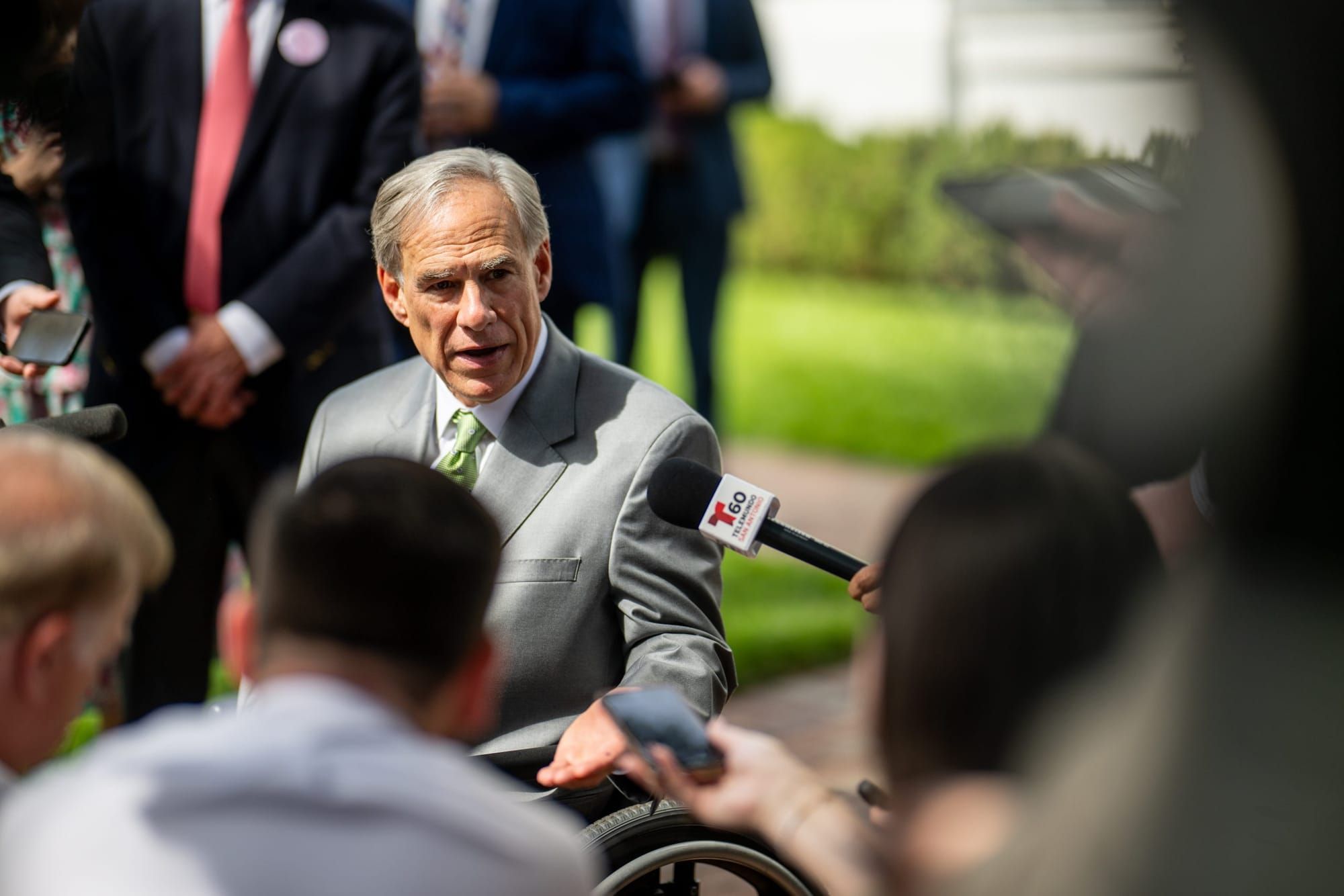
Protesters gathered outside of Texas Gov. Greg Abbott’s mansion on Dec. 13, calling for better access to health care for incarcerated Chicano activist Xinachtli and other political prisoners.
Xinachtli, whose legal name is Alvaro Luna Hernandez, spent 23 years in solitary confinement at the William G. McConnell Unit state prison in Beeville, Texas, for disarming a sheriff during an attempted arrest in 1996. On Nov. 17, he experienced a severe fall in the shower, causing his health to decline.
Xinachtli’s supporters said he received no immediate medical aid, a common problem for imprisoned political activists, they said. After sustained pressure from the Xinachtli Freedom Campaign, he was transferred to the Texas Department of Criminal Justice’s Galveston Hospital on Dec. 10. Currently, he is experiencing sensory loss in his hands and feet, gait instability, inconsistent bowel movements, and needs wheelchair assistance, advocates with the campaign said.
“This isn’t just about Xinachtli; it’s about the real enemy, Greg Abbott, and how they treat political prisoners,” said Jazz Montgomery, an organizer for the campaign, at the protest of about 20 people.
The 73-year-old’s treatment highlights the core of prisons’ treatment of political activists, organizers said: Ensure the cause they fought for dies with them. The recent protest showcased the resilience of Southern grassroots movements and how unjust treatment is never forgotten, even decades later.
Abbott’s office and Galveston Hospital did not respond to Prism’s requests for comment.
The protest
On Dec. 13, chants of “Free our prisoners, free them all” filled the streets of downtown Austin. The march began at the steps of Austin City Hall and ended at the Governor’s Mansion on the Texas Capitol grounds, 10 blocks away.
“The state wants us to forget our revolutionaries, our history,” Montgomery said to the crowd of protesters at City Hall.
The Xinachtli Freedom Campaign hopes all its demands are met, including to make Xinachtli’s transfer to Galveston Hospital permanent, ensure he never returns to the McConnell Unit, and release him under Medical Recommended Intensive Supervision.
Protesters began their march on the Congress Avenue sidewalk, a straight shot to the state capitol. The boom of their speakers caught the attention of pedestrians, who were handed zines and one-pagers made by the Xinachtli Freedom Campaign. In the zine, Xinachtli left a message for his readers: “The key is working to organize and unite marginalized communities.”
Eventually, they entered the street, trailed by drivers honking their horns. By the time the group reached the mansion, they were joined by the Austin chapter of the Brown Berets and the Party for Socialism and Liberation (PSL).
“I’m not super informed on him, but I wanted to come out and support,” said Alex, a friend of the campaign organizers from Houston who identified themselves only by first name.
At the mansion, protesters from the Xinachtli Freedom Campaign, Brown Berets, and PSL gave speeches explaining their reasons to take to the streets. The coalition of advocates believes they are a part of a larger movement to protect political prisoners.
Xinachtli’s medical condition
Before Xinachtli’s transfer, board-certified neurologist Dr. Dona Murphey examined him on Dec. 2 and provided a recommended treatment days later.
“He was in bad shape,” Murphey said in an interview. “He has been complaining about his health for quite some time.”
In a Dec. 9 report obtained by Prism, Murphey recommended that the prison provide Xinachtli extensive physical therapy, an MRI, a psychiatric evaluation, and a general physical. However, Murphy told Prism, the hospital is under no obligation to follow her recommended treatment.
She added that performing the evaluation wasn’t an easy task because the only medical records Xinachtli had were from 2021 through 2025 and were “grotesquely incomplete.” Murphey said this is common practice for the Texas Department of Criminal Justice. Every time she has requested documents for inmate evaluations, Murphey said the data has been in disarray, with documents out of order and even some documents missing.
Xinachtli’s activism
Xinachtli began his advocacy at 16 years old after seeing his friend, Evray Ramos, shot and killed by a police officer in 1968.
Before his imprisonment, Xinachtli’s work as the national coordinator of the Ricardo Aldape Guerra Defense Committee was recognized in various European countries for helping to free Guerra from death row in Texas. Xinachtli has since been an advocate from within prison for Chicanos, immigrants, and other marginalized people in the U.S. and Mexico.
In 1996, Brewster County Sheriff Jack McDaniel attempted to arrest Xinachtli for aggravated robbery, charges that would later be dropped. After McDaniel questioned Xinachtli, the sheriff drew his weapon, and Xinachtli disarmed him and fled. A manhunt ensued, leading to his surrender.
The last time he was up for parole was July 17, 2021. But because he maintained his strong political views after his arrest, parole was denied.
“He won’t renounce his political views,” Montgomery said. “He won’t admit guilt.”
Editorial Team:
Sahar Fatima, Lead Editor
Carolyn Copeland, Top Editor
Rashmee Kumar, Copy Editor
Author
David Cervantes is a journalist based in Austin, Texas, who grounds his reporting on centering people first over those in power. He cares about the people in his community and wants to write about the
Sign up for Prism newsletters.
Stay up to date with curated collection of our top stories.