Xenophobia isn’t rational, but it is very reassuring
For people untouched by the incoming administration’s policies, the shift to authoritarianism will mostly feel aesthetic
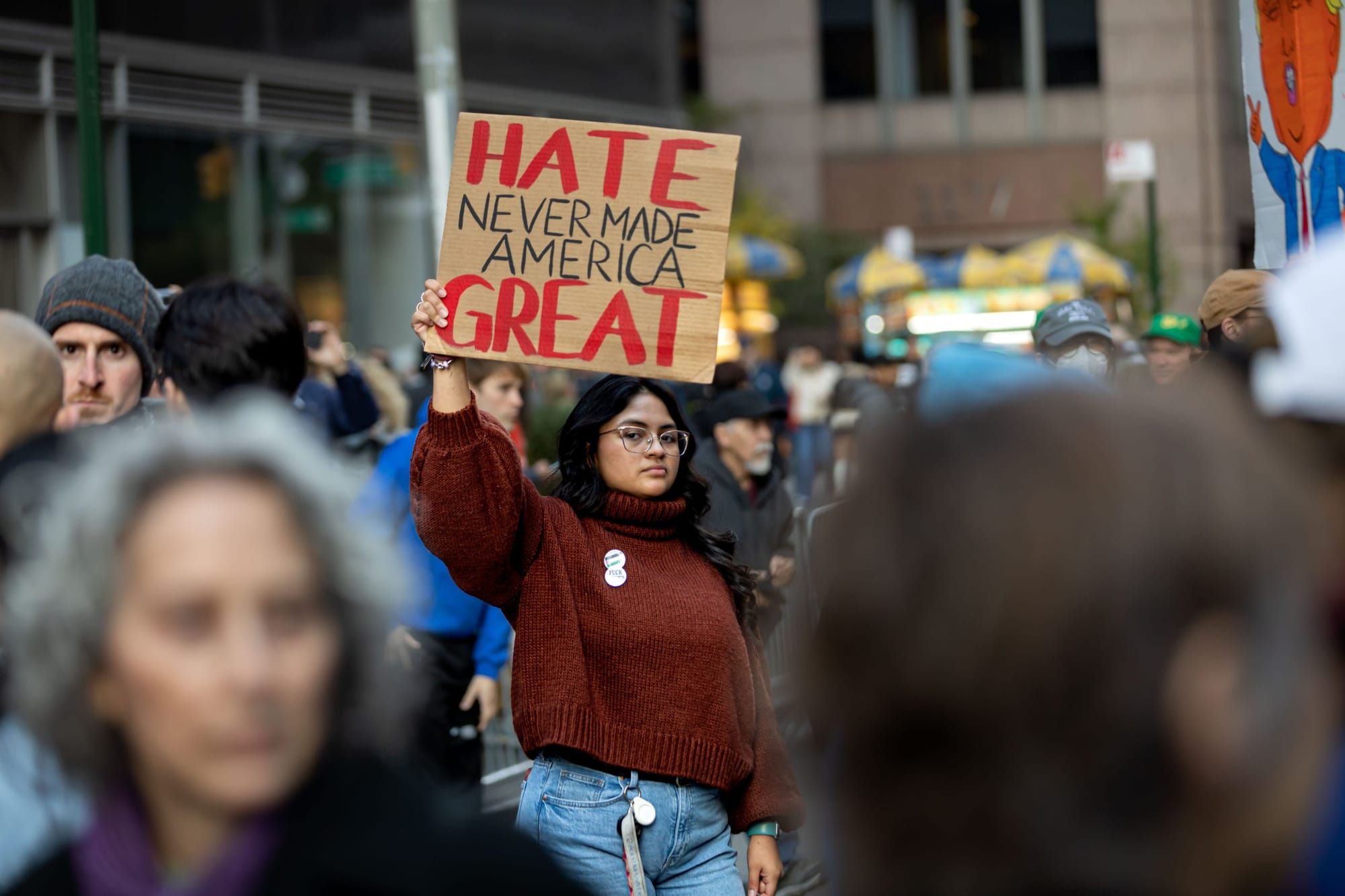
Human beings are generally terrible, but immigrants are no more or less terrible than the rest. We just make easy scapegoats. The presidential ticket that won America’s heart held as its defining platform the mass deportation of the country’s immigrants. Election postmortems that do not address xenophobia do not get to the heart of the 2024 election; they merely provide padding to that ugly feeling in the form of political logic. It’s clear that immigrants inspire and horrify, stoking a fire that cannot be lit otherwise.
It’s time to talk about feelings.
Xenophobia isn’t rational. It cannot be explained in a politic way because it is not a politic feeling. Xenophobia is visceral. It comes from a place of fear, disgust, and a deep disdain for the poor. Immigrants ruin the fantasy of America as a country magically inoculated against the ills that befall the so-called Third World: poverty, dictatorship, widespread extrajudicial violence, femicide, corruption at the highest levels, and the humiliation of being persecuted by a cartoon character. Immigrants remind Americans that it could happen here, too, and it’s tragic that the desire to punish us led to that very place.
It is a one-sided war. Immigrants have no political representation and no avenue for participation in the fierce debates that determine every aspect of their lives. They have no collective social, cultural, or economic capital. Oftentimes, they are not even interviewed, hidden behind words like caravan, influx, crisis. Beyond a historically flattening celebration of “a nation of immigrants,” the left has difficulty incorporating immigrants into their movements. We have no real claim to rights, nor to history. Unlike minority groups that were born into their social condition, immigrants chose the cross we carry. People are incensed by the gumption. They don’t like the nerve. It is true. Rejecting the shitty hand you’ve been dealt takes more than a little bit of nerve.
Immigrants reassure American citizens that no matter where they are in the social caste system, they don’t have it as bad as we do. The citizenry has overwhelmingly voted against their own best interests to guarantee it. It’s difficult to overemphasize this little scrap of glamor. Latinx citizens who may not have been made to feel included in the body politic can take solace in their confirmed Americanness and the delusion that when the Republican party says illegals, they just mean migrants from Latin America and not all Latinx people, a distinction the right does not care about in the slightest.
It is easier to blame immigrants for the economy and eroding social fabric than it is the CEOs and politicians who supported the trade deals that moved well-paying manufacturing jobs outside the country because we identify with those CEOs and politicians. Why else would we hate-watch millionaire families in matching pajamas document their Christmas hauls? We believe that could be us, should be us, would be us. Identifying with immigrants let down by their own government would be intolerable, as a matter of pride. But if we sat with that shared vulnerability—the fact that the lives and livelihoods of millions of people are in the hands of multinational corporations that, above all, do not want to pay taxes—would the answer to our problems still be detention centers?
When did this nation of cowboys stop valorizing audaciousness?
Democracy is, at least in part, a literary creation. American democracy is an act of constant creation, fable, myth, and propaganda. The first immigrant I encountered in literature was Jay Gatsby, from “The Great Gatsby.” As an undocumented girl deeply acclimated to clandestine economies, I sympathized with how Gatsby made his money, or at least didn’t think much of it. I also related to the longing—there was so much longing. As a child, everything was impossible; therefore, I grew up believing nothing was. If everything was a shot in the dark, why not take that shot? There was no reason not to. When did this nation of cowboys stop valorizing audaciousness?
For people untouched by the incoming administration’s policies, the shift to authoritarianism will mostly feel aesthetic. The America that loves true crime, the America that centers its favorite conspiracy theories around depraved acts involving children, the America addicted to doom-scrolling war—I imagine that America might be a little curious about authoritarianism. It must seem so Italian.
For many others, the news will feel distressing. Withdrawing will feel like self-care. Beware: It might also feel quite cleansing. The rhetoric about disease and infection and the language about vermin and viruses is designed to have that effect. When immigrants are taken from our communities, it will feel like order.
Immigrants and their children are an important part of the American story, whether we like it or not. Maya Lin, Jean-Michel Basquiat, Cesar Chavez. Rihanna. In the cases of Barack Obama and Kamala Harris, their immigrant parents sent a child to the White House within one generation. But it’s not only latte-drinking liberals. The America most loved by the people who hate me would not exist without Henry Kissinger, an immigrant who grew up in New York, went to Harvard, and was naturalized as an adult— like me. George Tenet, former CIA director, an architect of the war in Iraq, and no friend of mine, was the son of Greek immigrants, also from Queens. I can talk trash about the brutal myth of the American Dream for hours—I’ve seen how much of it is sheer dumb luck—but the truth is that their stories could not have happened anywhere else in the world. Neither could mine. And that’s part of why we like and subscribe to the story.
America’s immigrants are a vast and varied group of people from countries all over the world. There are legal immigrants and undocumented immigrants, but these are bureaucratic categories, not evaluative ones, since a legal immigrant one day can become undocumented the next. There are newly arrived refugees from Haiti and Venezuela. There are long-term immigrants who have been here for many decades, American in all but the name. There are the Dreamers, immigrants who were brought here as children and did not self-deport. It’s hard to make generalizations about immigrants as a group other than to say—who the hell do we think we are? It’s hard to love a country that doesn’t love you back, but there’s something romantic in the tension. Americans can love America, but they cannot long for it. Longing is a different kind of labor. America’s immigrants are renowned around the world for their ingenuity, hustle, and work ethic. Imagine what it could be like if America didn’t spend billions of dollars terrorizing them.
Author
Karla Cornejo Villavicencio is the author of The Undocumented Americans (2020) and Catalina (2024). She lives in Connecticut.
Sign up for Prism newsletters.
Stay up to date with curated collection of our top stories.