Why does ‘the first climate president’ fear a group of kids pushing for climate justice?
President Biden and preceding administrations have stopped Juliana v. United States of America from going to court because the evidence in the climate case could upend our reliance on oil and gas
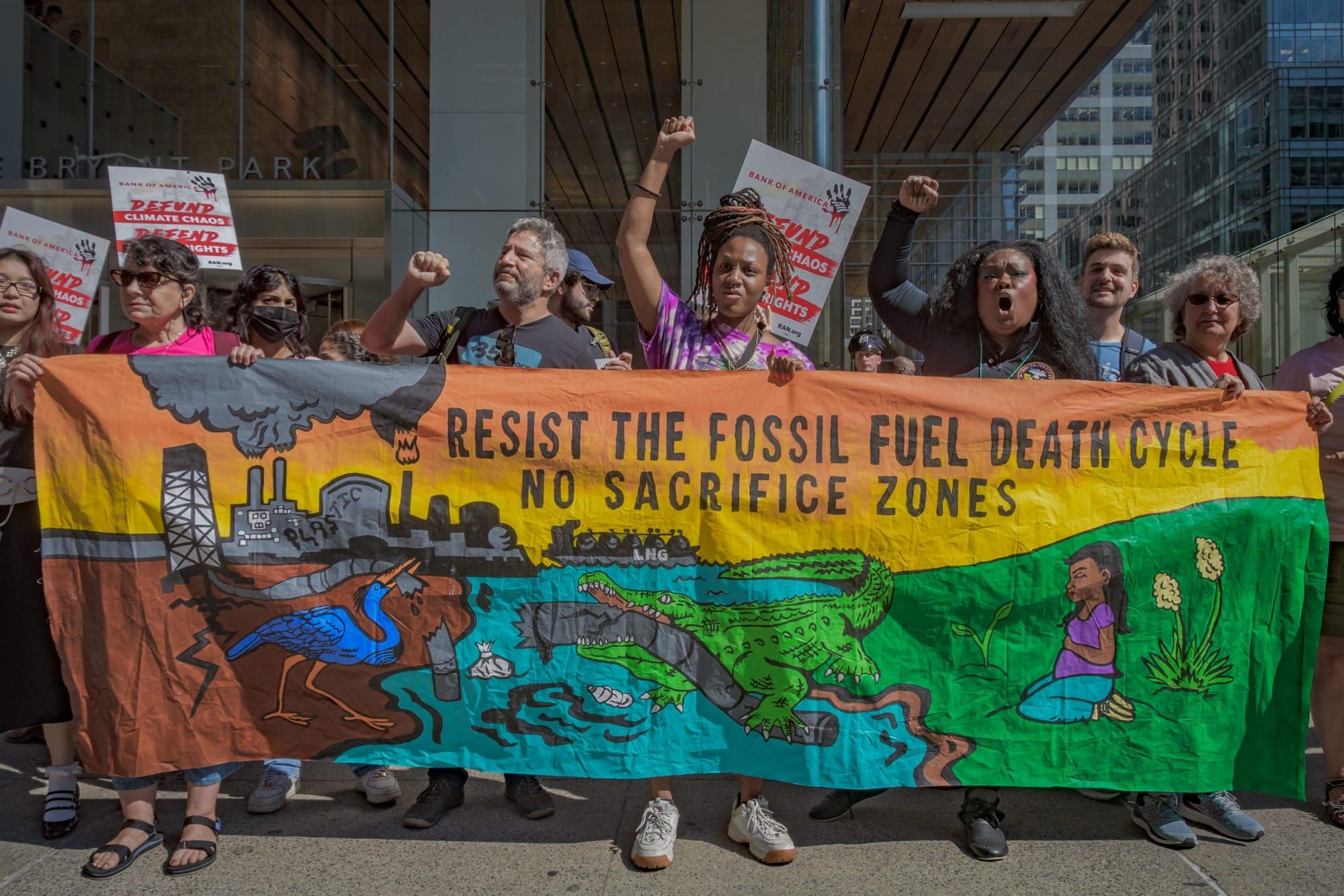
With increasing criminalization of climate change-related protests and growing doubt that Congress will pass comprehensive climate change legislation, the courts have become a beacon of hope for meaningful action. This is why Juliana v. United States of America captured the public’s attention unlike any other climate case in the last decade. The landmark lawsuit was filed in 2015 on behalf of 21 youth plaintiffs who demanded that the U.S. end its unscrupulous support of the fossil fuel-based economy, which they argued denied young people inalienable rights as children and destroyed public resources like air and water.
But the case has never made it to trial.
Rather than let Juliana be decided “on the merits”—meaning the facts and evidence of the case—the Department of Justice (DOJ) has blocked the case with an unending series of pretrial moves. The derailing of the lawsuit first began under the Obama Administration, continued with the Trump presidency, and now, under President Joe Biden’s leadership, the DOJ continues to task its lawyers with ensuring that Juliana’s claims never see the light of day. So much time has passed that the plaintiffs in the case, who were ages 8-19 at the time of filing, are now young adults.
Presiding Judge Ann Aiken denied the government’s latest attempt to dismiss the case in December of last year. Weeks after her ruling, the Biden-appointed solicitor general authorized the DOJ on Feb. 2 to file a petition to indefinitely suspend the case and move forward with a legal last resort: an obscure move called a writ of mandamus. This removes the case from Aiken’s desk and brings it to judges in a higher court, the 9th Circuit Court of Appeals. This is the seventh time the government has attempted to prevent Aiken from considering Juliana. On Feb. 12, lawyers for the youth filed a motion to strike the DOJ’s attempt to move the lawsuit.
Biden Administration lawyers have many excuses for their push to make the case disappear: the courts aren’t a place to develop climate policy, there are no explicit protections from climate change in the U.S. Constitution, the government will be “irreparably harmed” from a trial, etc. For the past eight years, the lawyers at the legal nonprofit Our Children’s Trust, which constitutes the Juliana team, have pushed back against each of these assertions.
In 2020, the team dropped the part of the Juliana lawsuit where it asked the court to develop and oversee a remedial plan for the impacts of climate change. Now, what the plaintiffs seek is declaratory relief: that the judge finds the country’s fossil fuel-based energy system unconstitutional. According to some legal analysis, the Juliana youth are asking for the same kind of judicial ruling that resulted from the 1954 Brown v. Board of Education case, which found that segregation was unconstitutional.
Why would a president who has “practically” declared a “climate emergency” and dubbed climate change as the “number one issue facing humanity” be afraid of a bunch of kids who believe the same?
It’s likely because Biden knows that when the facts are presented in a court of law, this kind of climate case is likely to win. In a 2016 order, Aiken signaled her agreement with the premise of the plaintiff’s claims, writing, “I have no doubt that the right to a climate system capable of sustaining human life is fundamental to a free and ordered society.” And now, there’s even precedent for a win for the plaintiffs. Just look at what happened in the 2023 case of Held v. State of Montana, a youth-led constitutional climate case (also filed by Our Children’s Trust) that argued the state violated its denizens’ constitutional right to a healthful and clean environment. The judge in the trial found attribution science, youth testimony, and explanations of child physiology to be compelling enough evidence to rule in favor of the youth.
Even Judge Aiken’s December ruling that Juliana should proceed acknowledged that, “By and large, defendants have not disputed the factual premises of plaintiffs’ claims.”
By blocking this case from moving forward, the Biden Administration is not only stifling the voices of a young bloc of voters he’ll need to win reelection in November, he is also preventing critical evidence of fossil fuel misdeeds from making its way to the public. Namely, that corporations knew their oil and gas products would alter the global climate system and that the government was aware of these outcomes. Despite its knowledge of the outcomes, the government continued to hand out billions in subsidies to fossil fuel companies. This is the evidence that each administration, including Biden’s, is afraid of. This is the evidence that a judge might find compelling. This is the evidence that could disrupt the nation’s oil and gas status quo.
The government’s role in upholding our reliance on oil and gas cannot be overstated. This year will mark a record in oil and gas production, facilitated in part by the Biden Administration’s approvals of new export terminals, refineries, and calls to fossil fuel companies to flood the market with oil to lower purchasing costs for consumers. But consumers are already paying for oil and gas at the pump and everywhere else—and have for decades.
The federal government operates its own loan agency, the Export-Import Bank, to fund privately owned fossil fuel and energy projects for which the public takes on the financial risk. The Department of Energy funds oil and gas research and development with taxpayer money. Direct subsidies to the industry top $20 billion annually, according to the Environmental and Energy Study Institute. When accounting for the cost of mitigating the public health outcomes, including environmental impacts, that dollar amount is more like $640 billion in public money.
Let’s also not forget that the U.S. has produced 25% of all greenhouse gas emissions on earth since 1751. Attribution science, an emerging field that allows researchers to trace pollution and climate impacts to their sources, has helped prove that at least a 0.15 degrees C increase in the earth’s temperature is due to the U.S.
Climate change is a matter of life and death. Juliana plaintiffs know this, and much of the country is in agreement: 70% of the public believes that climate change will harm future generations, and 54% believe that the president should do more to address climate change.
While government lawyers push to delay, climate change continues to stratify differences. Though most greenhouse gas emissions can be attributed to the top-earning households in the U.S., the climate change impacts of those emissions befall the poorest U.S. residents. Corporations like ExxonMobil have found ways to capitalize on the transition to wind, water, and electric energy generation by greenwashing their corporate image, all while Black and brown families take on more debt to finance recovery from increasingly severe storms, hurricanes, and flooding. Those born into the youngest generation will experience two-to-seven more extreme weather events attributable to climate change than generations prior. And a climate change-related mental health crisis is already brewing among young people.
One of the political refrains you’ll hear a lot is that we have to “fight” climate change. The word is an effective tool in positioning climate change as the battlefield of a war. This position keeps us from looking at climate change from a perspective that might actually help us survive impending climate catastrophe.
It can be hard to be hopeful when processing what corporations and our government are doing to our world. But there is still time to fix things. Climate change is a set of interlocking symptoms of a deeper problem. Some experts have compared the greenhouse gas pollution that traps heat in the atmosphere and raises the earth’s temperature to a fever. You don’t fight a fever by refusing to drink fluids, get sleep, or take medicine. You heal your body. We can’t fight melting glaciers, ocean acidification, or soil depletion. We must address what leads to those harms.
Climate change is not inevitable. Climate change is created, financed, and supported by a few powerful, wealthy, white, and landowning elite. The word “fight” attempts to inflict some rhetorical misdirection. But never forget: The culprits of climate change will never be on our side in the fight they created against climate change.
Author

ray levy uyeda is a staff reporter at Prism, focusing on environmental and climate justice.
Sign up for Prism newsletters.
Stay up to date with curated collection of our top stories.