Native and antinuclear activists demand shutdown of the last uranium mill in the U.S.
The Southwest is quickly becoming the center of the nationwide push to increase the nuclear fuel supply chain, once again relegating Indigenous communities to sacrifice zones
In the rolling red rock deserts of southeastern Utah, two large mesas rise out of a landscape spotted with juniper forests. The Bears Ears National Monument’s soft-edged plateaus curve to shelter the existing thousand-year-old ancestral sites of Indigenous tribes.
Sacred to the Hopi Tribe, Navajo Nation, Pueblo of Zuni, Ute Indian Tribe, and Ute Mountain Ute Tribe, the land’s dwellings, kivas, granaries, and rock art continue to hold deep cultural and religious importance.
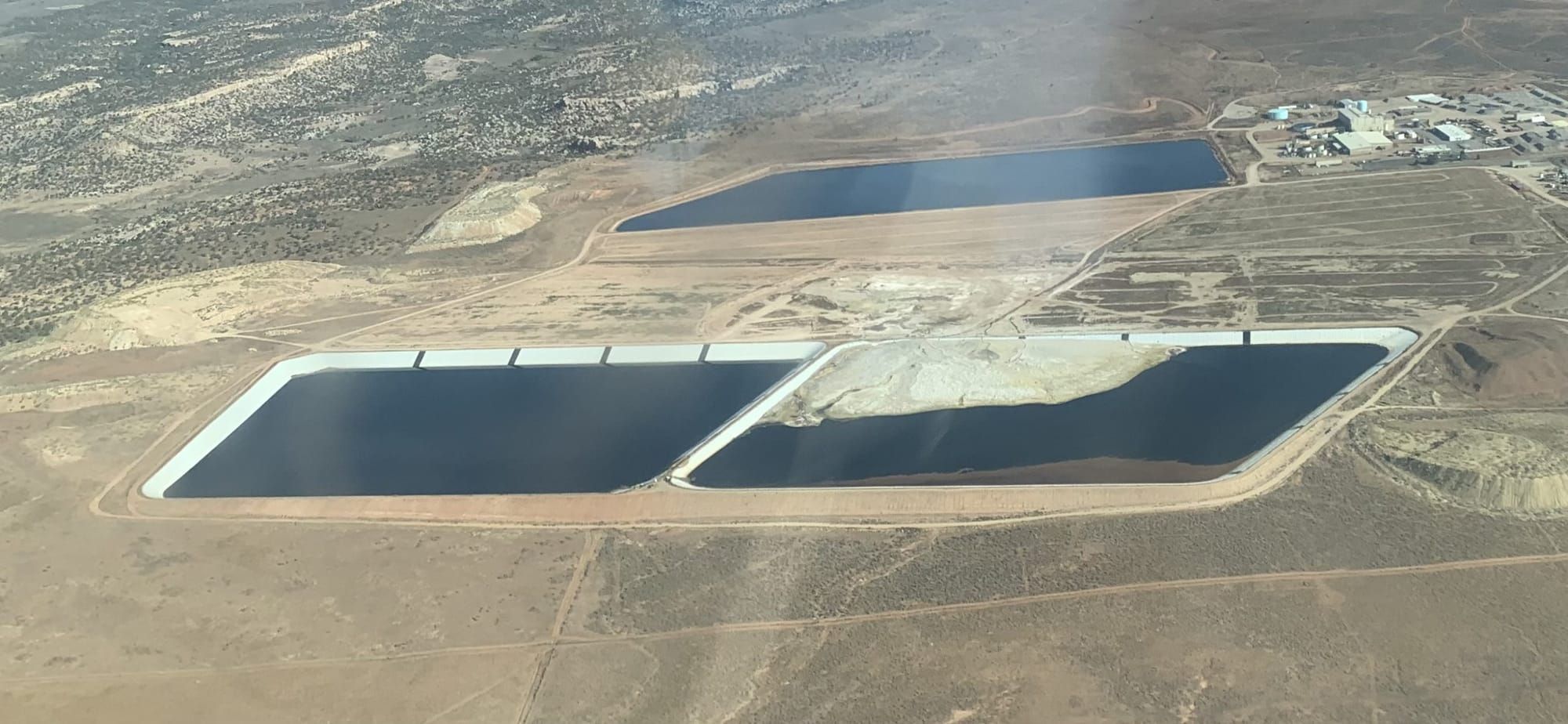
These lands also border the only functioning uranium mill in the United States, the White Mesa Uranium Mill. The mill was originally built in 1979 to process raw uranium ore, but as the price of uranium dropped, the mill also began to process alternate feeds: radioactive waste imported from facilities around the world. The resulting toxic liquid and solid waste, called tailings, are then stored in pits known as impoundments.
The residents of White Mesa, Utah, where members of the Ute Mountain Ute Tribe reside, soundly reject the mill, operated by mineral company Energy Fuels.
A broad coalition of Indigenous and antinuclear activist groups co-signed a letter to Utah lawmakers on Aug. 13, demanding closure of the mill, citing significant threats to Indigenous health, sacred lands, water, cultural heritage, and public health. They also encouraged others to join the fight.
“White Mesa is not a dumping ground for the nuclear industry,” the letter states. “We reject the treatment of Indigenous lands and communities as sacrifice zones and call for an end to the harmful legacy of uranium contamination.”
The signers included people fighting the Pinyon Plain uranium mine near the Grand Canyon and communities opposed to the transport of radioactive materials across the world and through tribal lands and the unremediated abandoned uranium mines across tribal territories.
“We are the strongest allies for each other, in the sense of affected communities impacted by nuclear. Some people call [themselves] radiation victims, radiation survivors, downwinders. … They’re nuclear workers, the descendants of these victims, these survivors,” said Diné (Navajo) antinuclear activist Leona Morgan, who co-founded Haul No!, the organization protesting Pinyon Plain’s operations and uranium ore transports.
Since the 1940s, Indigenous communities’ territories in the Southwest have been contaminated due to uranium mining, transport, and processing. In fact, Energy Fuels’ White Mesa Mill was originally built on an ancestral site of the Ute Mountain Ute Tribe. The coalition’s effort to close the mill is just the latest iteration of a longstanding fight, and part of a larger protest against the current national push for nuclear energy.
Solidarity against the sacrifice zone
The coalition organizing against Energy Fuels’ uranium mill near White Mesa was gathered with help from the environmental nonprofit HEAL Utah, which releasd a public petition this month to demand the closure of the mill. On Oct. 12, the grassroots group, White Mesa Concerned Community, led by members of the Ute Mountain Ute Tribe, will hold a spirit walk and rally to demand the protection of the environment and Indigenous sacred lands.
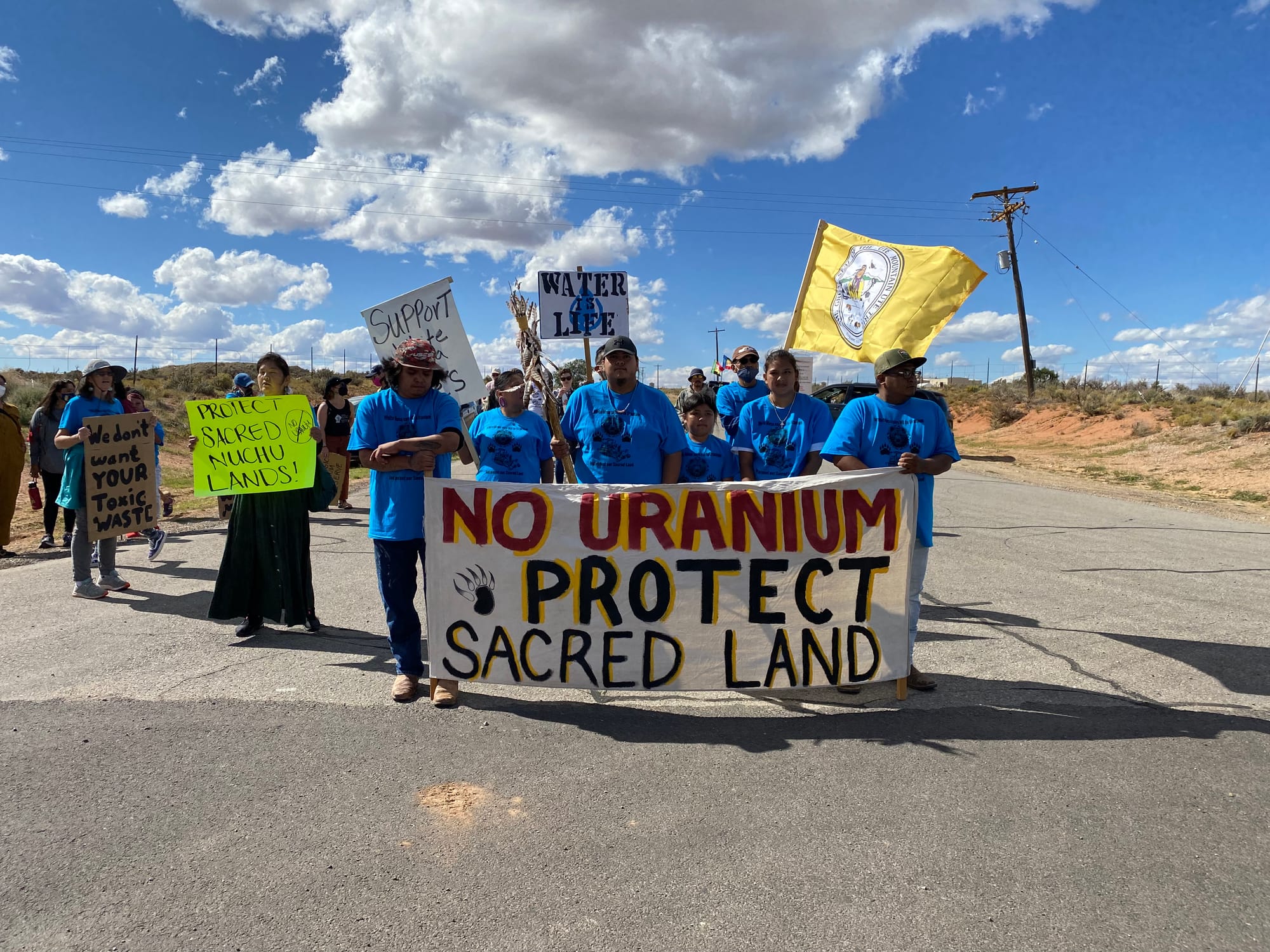
“We start at the community center on the reservation, and we walk the 5 miles on the highway to the front gates of the Energy Fuels’ Uranium Mill. That’s a really good way to see how close people are living, what it’s like to experience [daily life], and to connect [with community leaders],” said HEAL Utah’s Senior Policy Associate Carmen Valdez.
Valdez characterized the continued cycle of business, industry, mining, and extraction on Indigenous lands as colonialism, and it continues to endanger the lives and health of tribal communities.
Despite the buffer zone between the mill and the nearest households, odorous winds carrying radioactive and other harmful particulates and gases still reach communities, according to antinuclear advocate Sarah Fields of the Utah nonprofit Uranium Watch.
“[The communities] hate the smell,” Fields told Prism. “They don’t like their kids to play outside when the mill is operating. They have concerns with the kids going back and forth on the buses from White Mesa to Blanding because that’s where the schools are. They’re concerned about the impacts to the native plants.”
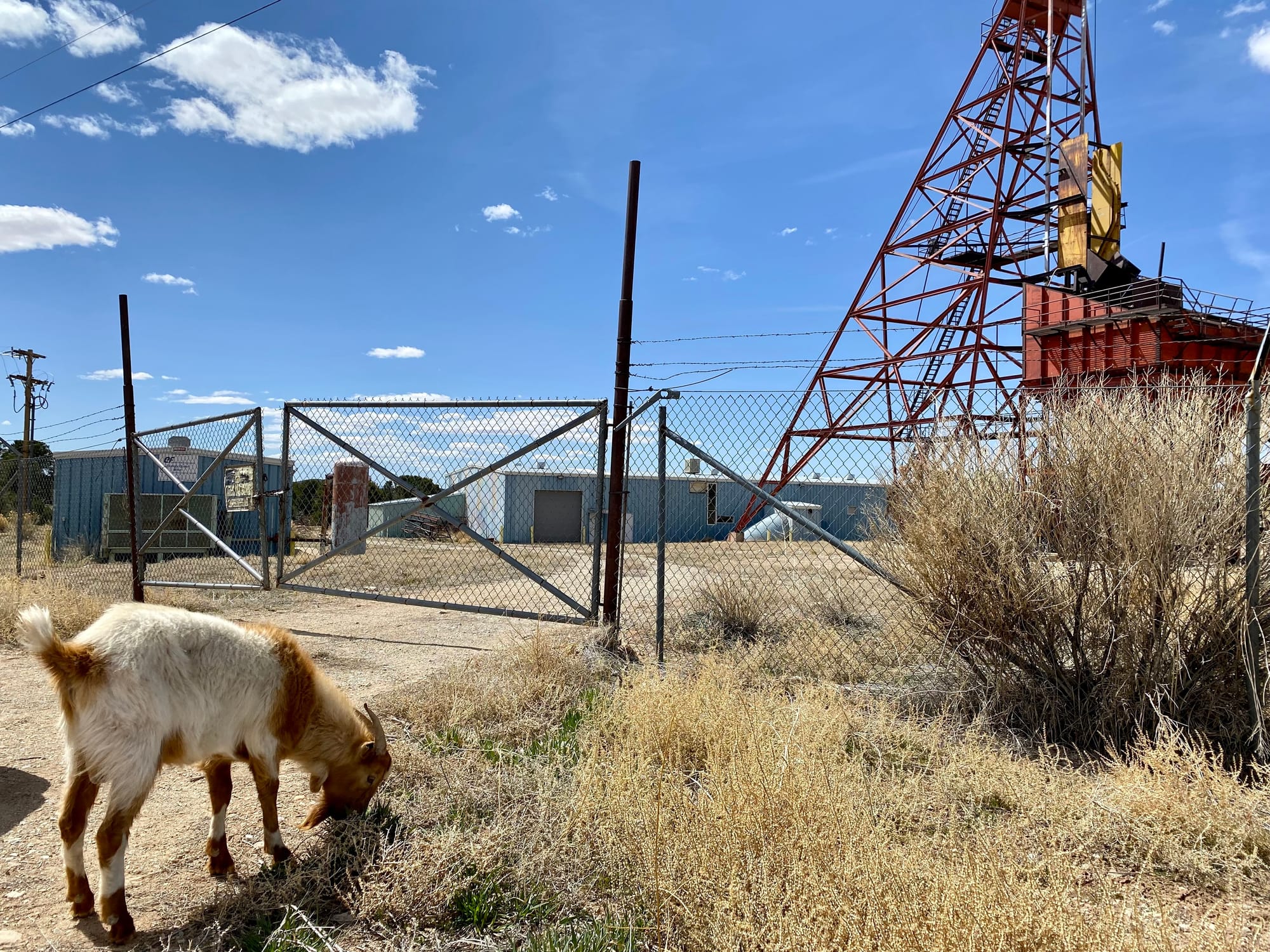
The toxic liquid and solid waste stored in the mill’s impoundments pose a grave danger to local residents because, as the plastic linings of the impoundments disintegrate over time, Fields speculated that these tailings will further contaminate the Navajo Sandstone aquifer that supplies drinking water to White Mesa. She also keeps a close eye on any potential amendments to the mill’s license that may allow Energy Fuels to process other potentially harmful rare earth elements, though there isn’t much locals can challenge until the company officially submits an application.
“It’s hard to count on there being a federal agency that would actually look over these mill sites forever and protect the groundwater, protect the air quality,” Fields said.
The politics behind the push
On Jan. 20, the first day of President Donald Trump’s second term, he issued an executive order that declared an “energy emergency,” citing uranium and other energy sources as critical for U.S. energy independence and national security.
In April and May, the administration added “critical mineral” projects—including uranium, copper, and lithium mines—to the FAST-41 list, a legislatively established process that allows for the rapid permitting of infrastructure projects.
On May 23, Trump passed four more executive orders focused on revitalizing the domestic nuclear fuel supply chain, deregulating the Nuclear Regulatory Commission (NRC), deploying nuclear reactor technologies for national security, and reforming nuclear reactor testing at the Department of Energy.
More broadly, Trump’s Supreme Court picks have ensured broader environmental regulations are rolled back by gutting the Clean Water Act and limiting the authority of the Environmental Protection Agency (EPA) to regulate carbon emissions, while also scrapping bedrock environmental legal precedents and regulations. Massive federal funding cuts by the Trump administration have also stymied Indigenous-led efforts to address legacy pollution on tribal lands.
When it comes to power plants, nuclear energy advocates tout them as a solution to climate change. But Morgan disagrees, telling Prism that these advocates are “cherry picking” data and then manipulating it, a practice Morgan referred to as “green colonialism.”
“Nuclear is not clean,” Morgan said, noting that nuclear’s impacts “should be measured from cradle to grave.”
The United Nations’ Intergovernmental Panel on Climate Change (IPCC) provides governments with scientific information intended to help steer the development of climate policies. The IPCC maintains that limiting global warming necessitates massive increases in nuclear power generation.
But according to Morgan, those advocating for the use of nuclear power often miscalculate nuclear energy’s actual carbon footprint, which tends to be measured only by a nuclear power plant’s emissions. Morgan told Prism that nuclear advocates often fail to account for the fossil fuels emitted from uranium mining, extraction, processing, fuel fabrication, and transport, in addition to managing the forever-radioactive waste.
The IPCC did not respond to Prism’s request for comment.
The price of uranium is around $76 a pound, as of publishing. Tech companies such as Amazon, Google, and Meta are currently striking deals to power their data centers with nuclear energy, while the state of Utah receives tax incentives to expand uranium processing. But this still isn’t enough for the White Mesa Uranium Mill to turn a profit at the expense of the Ute Mountain Ute Tribe—and the company has easily found a workaround.
According to Valdez, the Energy Fuels mill isn’t making money by mining or milling, but rather through investors. The company did not respond to Prism’s request for comment regarding its recent profits.
Fast-tracked mines
In April, the Department of the Interior announced that it would use emergency permitting procedures to “accelerate the development of domestic energy resources and critical minerals, capping environmental reviews at 28 days.” This process used to take at least two years.
On May 23, these new procedures fast-tracking environmental reviews led to the quick approval of Canada-based company Anfield Energy’s proposal of a Velvet-Wood uranium mine in southern Utah.
After submitting their environmental assessment application to the Bureau of Land Management (BLM), the mine was approved in a record-breaking 11 days. But according to Fields, the application was rushed and incomplete, missing important steps in key air quality and water treatment plans.
Fields said that BLM didn’t bother to check the veracity of the statements made by Anfield in its environmental assessment, including the assertion that the Utah Division of Water Quality (UDWQ) was reviewing Anfield’s plans for mine water treatment. As it turns out, Anfield still had not submitted their plans to UDWQ as of July 31.
“It would take them five minutes to call up the division and check on that. They didn’t even do that,” Fields said.
“We thoroughly analyzed water and air quality, through a review of the Plan of Operations, in our environmental analysis,” BLM spokesperson Sarah Bennett told Prism in an email. “The BLM approved the project, consistent with applicable law and regulation, including Executive Order 14156, which declared a National Energy Emergency.”
In 2004, lawmakers in Utah decided to enforce stricter uranium mill regulations than the NRC’s standards, ultimately taking over regulatory enforcement. Fields said this makes it more likely that Utah agencies will take much longer to approve plans. In the meantime, she said she would continue pressuring state and federal departments to create regulations for uranium mining that mirror existing regulations for hard rock mining, which require sampling and monitoring the ground for contaminants in the vicinity of the mine. She also encouraged local residents to write letters and participate in public comments regarding Anfield’s various permitting plans.
“My hope is through the attention that has been brought to the Velvet-Wood Mine, more people will get involved,” Fields said.
In New Mexico, another historic hotspot for uranium mining, new projects require extensive review by the New Mexico Mining Minerals Division, a process that takes years. Grants, New Mexico’s Roca Honda and La Jara Mesa uranium mines on Mount Taylor are two of the mines on the Fast-41 list.
Susan Gordon, a coordinator with the New Mexico-based Multicultural Alliance for a Safe Environment (MASE), has personally advocated for uranium-impacted communities since 2007. According to Gordon, to construct the Roca Honda Mine, Energy Fuels would drill a main shaft through three separate aquifers to reach the mining zone, where horizontal shafts would then be added.
In order to maintain an environment dry enough for workers to extract the uranium, Energy Fuels would continuously pump billions of gallons of water—water that has been in contact with uranium ore—out of the mine and discharge it into various areas.
“Even their documents from 2014 show that they’re going to permanently impact the local aquifers and leave lasting dangers,” according to Gordon, who also told Prism that this water could not be used unless it was treated—something the mine doesn’t intend to do.
“It would ultimately impact Indigenous communities that use the mountain for pilgrimages, for ceremony, for collecting medicine,” Gordon said.
The New Mexico Supreme Court designated Mount Taylor as a Traditional Cultural Property in 2014, a designation that is internationally recognized as a sacred place by local tribes. While this designation requires consultation with local tribes during any project review process, it doesn’t explicitly prohibit mining.
Last year, MASE filed a request for a public hearing for the other uranium mine at La Jara Mesa, owned by Laramide Resources. Once the state of New Mexico moves forward in the permitting process, MASE will have legal standing to request a hearing and challenge the permit on legal and technical issues.
“Even the federal government’s fast track shows it’s going to take a number of years to get through the federal permitting and then our New Mexico agencies,” Gordon explained.
Fueling the mill
Two Energy Fuels mines are currently sending uranium ore to the White Mesa Mill: the La Sal Complex in Southeastern Utah and the Pinyon Plain Mine in Northern Arizona.
Concerned with ore trucks shedding contaminated dust as they pass through the tiny town of La Sal—only 1 mile from the complex—Fields is pressuring Utah and BLM to implement requirements to monitor radioactivity in the mine’s vicinity during operations.
“The Pinyon Plain Mine is not right next to where people live and go to school and work and play, but the La Sal mine is. I’ve been with people who’ve had monitoring devices, and there is radioactivity off site from those mines,” said Fields.
The Pinyon Plain Mine was originally licensed in 1986 and left on standby until 2007, when the price of uranium jumped to $139 a pound. This is around the same time Morgan began her advocacy, later co-founding Haul No! in 2016 to urge the Navajo Nation’s government to safeguard the reservation from uranium transports and update its nuclear energy-related policies.
“The tribe has no regulations, personnel, staffing, education, technical tools, all of the stuff that it needs to regulate radioactive transports,” Morgan explained, which is why she said it’s so important to fight for the creation of new laws.
The La Sal Complex is 60 miles north of the uranium mill, while Pinyon Plain is 300 miles southwest, requiring the uranium ore on its way to the Energy Fuels Mill to travel through long stretches that pass through tribal lands, local communities, and even near protected parks.
Pinyon Plain began mining in December 2023, and when transports began trucking radioactive material through Navajo Nation in July 2024, Navajo Nation President Buu Nygren issued an executive order to halt the transports after Energy Fuels failed to give prior notice to tribal authorities. Nygren even marched alongside residents at a protest that First Lady Jasmine Blackwater-Nygren organized just east of the Grand Canyon in Cameron, Arizona.
But within months, the tribe’s negotiations with Energy Fuels resulted in legal uranium ore transport. The new agreement, signed in January 2025 by Energy Fuels, the Navajo Nation Department of Justice, and the Navajo Nation Environmental Protection Agency, allows Energy Fuels to transport ore in exchange for taking 10,000 tons of mine waste for free.
Morgan told Prism that 10,000 tons is a “tiny amount,” considering that one abandoned mine site may have over 100,000 tons of mine waste. What this agreement really allows, according to Morgan, is for Energy Fuels to transport ore across the Navajo Nation and process mine waste in Utah at the continued expense of the Ute Mountain Ute Tribe.
“So now my tribe is in business with the company,” Morgan said. “[We’re] trying to bring all of that knowledge and resources accumulated over the years, trying to plant a seed with Dine people who are fighting transport, that there’s a bigger fight. It’s the legacy of past mining, the contaminated groundwater under our feet.”
Living ghosts of uranium mines past
Even as the Pinyon Plain uranium ore hauls rumble through Navajo Nation toward White Mesa, the remnants of Cold War-era uranium mining operations still linger.
The largest radioactive spill in the U.S. was on Navajo land: the Church Rock Uranium Mill Spill in 1979. In the 1980s and 90s, citizen allies began community well testing in Navajo Nation to shut down contaminated water wells. In 2008, federal and tribal agencies found 29 unregulated water sources exceeding the EPA’s drinking water standards for uranium.
The EPA reports that over 500 abandoned uranium mine claims from the 1940s to 1980s remain on the Navajo Nation today. At the former Church Rock mine site, approximately 17 miles northeast of Gallup, New Mexico, contaminated mine waste bakes under the sun—ore that didn’t have enough uranium to be useful to companies.
According to Gordon, people in the community live with contamination levels every day, which includes waste rocks behind their homes and higher levels of radiation and radon exposure.
“There’s plenty of people that have been displaced from their homes; either they’ve chosen to move or the EPA has forced them to move,” Gordon said.
Some mine remediations fall under the EPA’s responsibility, while others are the responsibility of the corporations that operated the mines, but cleanup remains slow and incomplete. Stephen Etsitty, the executive director of the Navajo Nation EPA (NNEPA), is proposing a project that would allow the Navajo Nation’s government to use a high water-pressure process—called ablation—to treat the mine waste with the help of cutting-edge ablation technology from the company Disa Technologies.
As ablation extracts uranium and other heavy metals from the radioactive rock and dirt, the waste is classified as “fines.” The only place that the fines can then be processed is at the Energy Fuels mill, but the mill can only legally accept uranium ore.
Since the Navajo Nation prohibits uranium mining on Navajo land, Gordon believes the ablation process, which the Nuclear Regulatory Commission once identified as a milling operation, should also be prohibited.
It’s the Navajo Nation and Disa that stand to profit. “I view it as another example of corporations and misguided leadership willing to provide the Navajo Nation as a guinea pig for new technology,” Gordon told Prism.
Morgan is also suspicious of how Navajo Nation leadership frames radioactive site remediation as “job development” for Navajo citizens. She worried about how radiation could affect young people, especially women, who experience higher rates of cancer and pregnancy complications as a result of exposure.
“The United States government still hasn’t cleaned up the old stuff and is pushing cleanup plans on the tribe. So to me, that’s oppression,” Morgan said. “Don’t contaminate our people. Don’t make money off of it. If anything, get the government to pay for good cleanup that we supervise. But don’t send young Navajo people there to clean up.”
But according to Etsitty, the USEPA and NNEPA are committed to providing a safe work environment for jobs tied to cleaning up Navajo abandoned uranium mines (AUM), this includes NNEPA-provided health and safety training and medical monitoring for program personnel in hazardous work environments.
“Our concern for health and safety is very high,” Etsbitty wrote in an email to Prism. “USEPA recently completed an On the Job Training Initiative to help interested community members prepare for upcoming work opportunities at AUM sites. For any local hiring associated with the implementation of Ablation technology, there will be specific Health and Safety Plans developed and implemented for those project sites.”
Working toward a just transition
In 2020, MASE secured funding from Albuquerque’s Bureau of Business and Economic Research for a study on the potential impacts if New Mexico focused on the uranium cleanup industry. The study interviewed 75 professionals in mine remediation and found that developing a model for bringing New Mexico’s resources together to address uranium mine cleanup could immediately benefit residents and businesses. This work could also lead to a significant new business sector in the region.
As a result, the New Mexico Energy Department established three new positions to kickstart the industry. One of the program’s core components is connecting New Mexico college graduates with in-state mine remediation jobs, according to Gordon.
“Uranium mining hasn’t been happening in the Southwest for decades,” Gordon said. “At this point, we don’t really have skilled miners, particularly younger miners, in place. Uranium and nuclear and radiation … it’s death. It is not life.
Compensation for the workers and communities would be helpful getting the cleanups done in a way that’s actually protective of communities and for future generations, she said.
MASE also lobbied for the national expansion of the Radiation Exposure Compensation Act (RECA), which, up until 1971, compensated some uranium workers and communities downwind from the nuclear tests at the Nevada Test Site.
The original RECA legislation was sunset in 2024, but under the budget reconciliation bill—known as Trump’s “Big Beautiful Bill”—RECA expanded coverage to 1990 to include uranium industry workers and “downwinders” in all of New Mexico, Idaho, and Utah, as well as parts of Missouri, Arizona, Tennessee, and Kentucky.
“So for the first time, the majority of our constituency will be eligible to apply for compensation for their health impacts,” Gordon said. “Of course, not every uranium miner got sick—and sometimes the uranium miners were coming home wearing contaminated clothing, and their wives, washing the clothing, were also exposed. So it’s not a community-based compensation, and it’s still very targeted on the uranium miners.”
Proper compensation for past damages is the first step in what environmental organizers call a Just Transition, a framework for shifting to a sustainable, climate-neutral economy while ensuring decent jobs, social protection, and economic opportunities for communities.
Antinuclear advocates believe the first order would be to shut down, recall, and reclaim all active mines that are on standby. Remediation would realistically take decades.
According to Valdez, remediation will be a long process—one that should start with consulting the tribes.
“The bare minimum is: Don’t expand the Energy Fuels Mill, then close the mill, and then remediate it,” the attorney said.
The signers of the letter to Utah lawmakers understand that nuclear energy is only increasing in demand, especially as it’s used to power the increase of artificial intelligence and other technology. But they are still determined to stall operations, push for tighter regulations, and educate the broader public to join the fight—whether that means contacting industry members or leading direct actions.
Utah’s tribes are in a bad situation, according to Morgan, but she hopes it inspires people to fight.
“Hopefully, people will fight for the love of our communities,” Morgan said. “Is it everybody’s job to fight everything? Yeah, and the only way you can fight it is if you know about it.”
Correction/Update, Sept. 17: The photo credits in this story have been updated as well as the name of the mine in the third image, which is Energy Queen Mine, not White Mesa Uranium Mill. The link to HEAL Utah’s petition to close the mill has also been added. A previous reference to Sept. 27 meetings with Utah officials, followed by a rally, was removed. These events were canceled due to safety concerns in the state.
Editorial Team:
Tina Vasquez, Lead Editor
Carolyn Copeland, Top Editor
Stephanie Harris, Copy Editor
Author

Lorena Bally is a freelance writer and communications activist who focuses on Indigenous rights, campesino perspectives, and community-based solutions for environmental justice. As a Swiss-Mexican-Ame
Sign up for Prism newsletters.
Stay up to date with curated collection of our top stories.