The free and the departed: When Gaza’s hostages return to a changed homeland
My uncle was one of the Palestinian hostages Israel released in the ceasefire deal. He returned to a broken land, carrying unspeakable scars
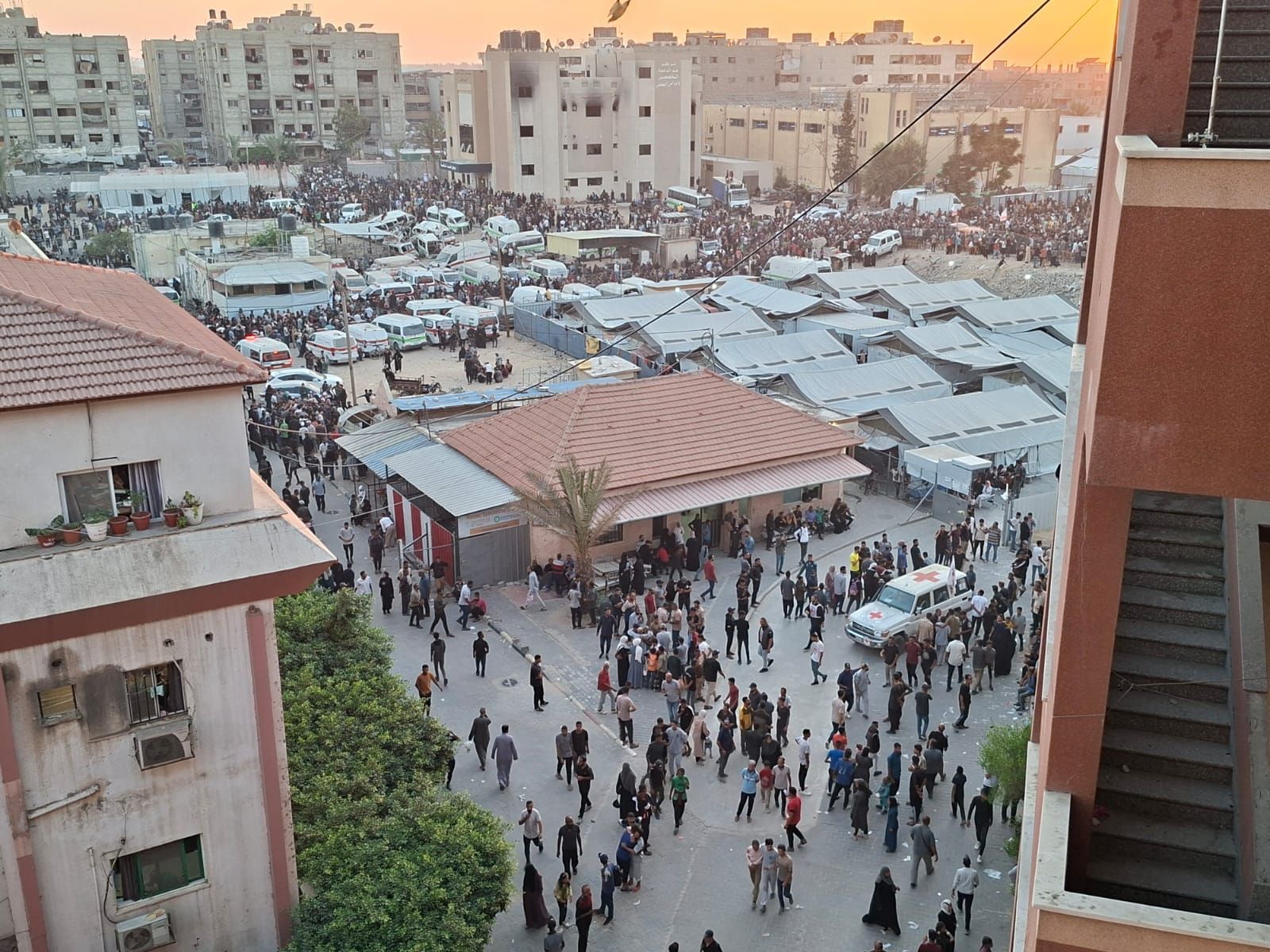
At Nasser Hospital in Khan Younis in the southern Gaza Strip, hundreds of people began gathering in the square outside as early as 8 a.m., preparing to welcome the Palestinian hostages released by the Israeli occupation under the ceasefire deal brokered by President Donald Trump. Although Israel has repeatedly violated the ceasefire, including with airstrikes on Oct. 28 and 29 that killed more than 100 people, the deal did see Israel release about 2,000 Palestinian hostages in exchange for 20 living Israeli detainees.
My family and I were among the crowd, traveling from the Nuseirat camp south to Khan Younis, where my aunt Dalia and her four children—Dana, 12; Yousef, 10; Asil, 7; and Adham, who just turned 1—have lived since March. The family was forced to flee after the Israeli occupation army stormed Tel al-Sultan in western Rafah in an attack that turned the area into rubble and saw dozens of Palestinian men arrested without charge, including Dalia’s husband, Mohammad Daabas.
Since that day, Dalia has lived between grief and patience. Every night, she reassured her children that their father would return soon; she told Yousef that his father would take over the exhausting task of filling the heavy water gallon, and promised Dana and Asil that their father would return to buy them whatever they wished. But as days passed, the word “return” slowly began to fade from her speech.
On the morning of Oct. 13, the lists of released hostages circulated outside the hospital, and people scanned them with trembling hearts, searching for a familiar name. We, too, searched for Mohammad’s name among the lists until we finally found it: hostage number 1392, among 1,966 Palestinians released. We screamed with joy and called Dalia to share the news. Her voice quivered with tears of happiness as she told us she had seen the name herself, and that she and the children were on their way to the hospital with Mohammad’s family, his parents and five siblings.
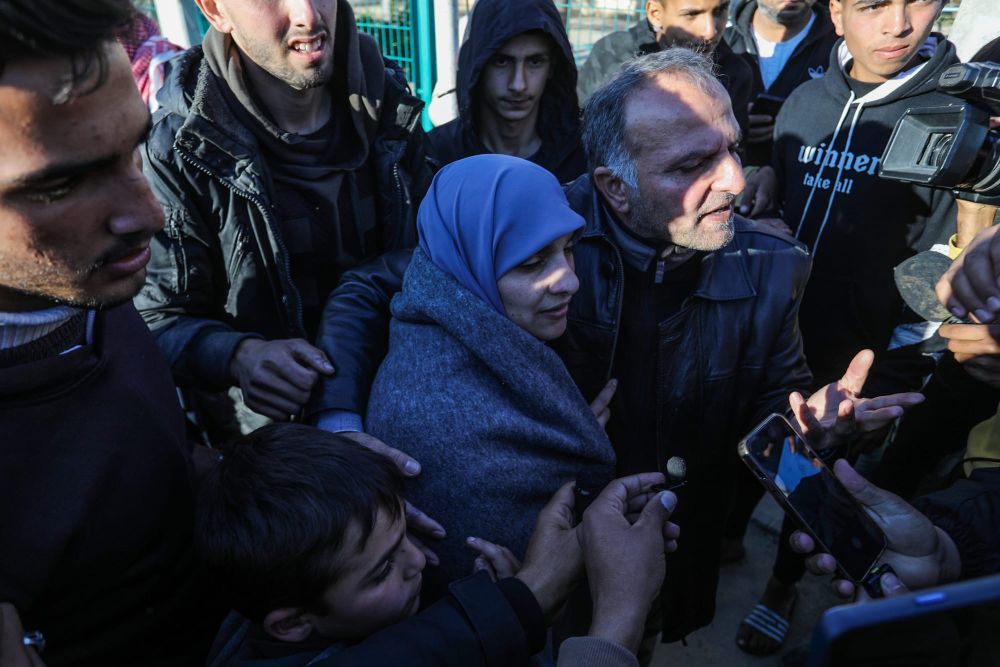
At the hospital, the sun was nearing sunset when the first bus carrying the hostages appeared on the horizon. People surged toward it, shouting names and watching the men standing behind the bus windows. Mothers, wives, and children lifted their eyes in anticipation, each searching for a familiar face among pale faces, sunken eyes, unkempt beards, and disheveled hair.
We moved forward, our hearts pounding, trying to get closer to search for Mohammad.
The buses entered one by one into Nasser Hospital, where the hostages underwent medical checks before being allowed to leave to meet their families. I stayed outside while Mohammad’s older brother, Eyad, went in to search for him.
Minutes later, he returned, eyes shining, saying in a broken voice, “I saw him … I saw Mohammad! I kissed him, but I wasn’t allowed to stay.”
A full hour passed before a thin man with slumped shoulders emerged through the hospital gate, his wrists swollen with the marks of ropes that had bound his hands. His eyes were sunken. He stopped at the door, scanning the crowd. We barely recognized him; he had lost about 20 kilograms. Dalia froze for a moment, then shouted his name loudly.
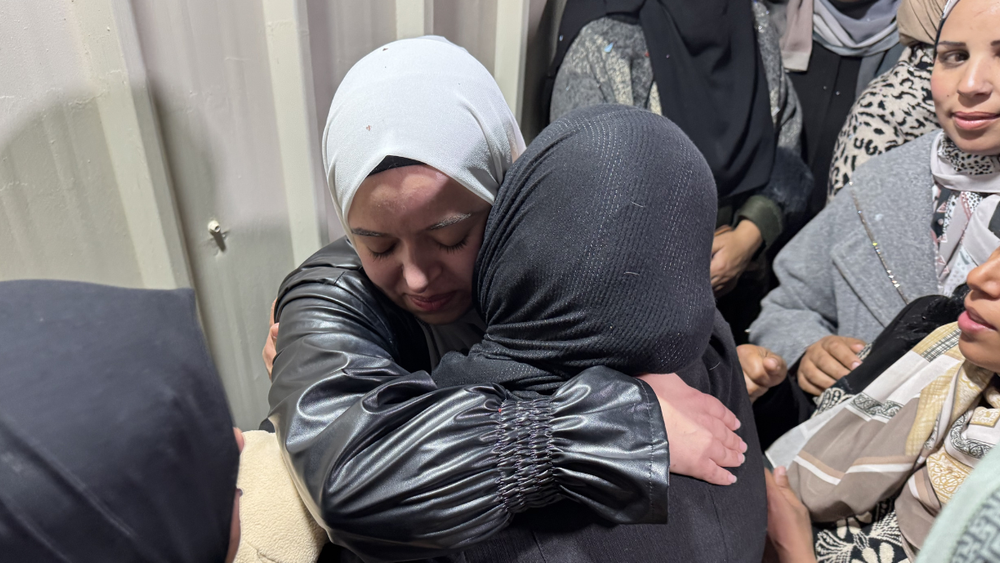
She and the children ran toward him, tears leading the way. Dana cried bitterly as she hugged him, and Dalia kept repeating, “Alhamdulillah … thank God he is still alive, that he is OK!”
I watched silently, not wanting to interrupt the long-awaited reunion. I was holding Adham and stepped closer once the emotions had calmed slightly. I hugged Mohammad and handed him his son, whom he had not witnessed grow quickly over the past several months. Mohammad held him tightly to his chest. Adham reached out with his tiny hand to touch his father’s face, then erupted in tears, scared and unable to remember features lost to him since his first months of life.
Around them, chaos reigned—shouting, crying, ambulance sirens, camera lenses—yet within that small circle of reunion, time froze. Everyone cried and embraced Mohammad: As a father, as a brother, as a husband, as a son, he returned from death.
A bittersweet reunion
On the way back to Dalia’s tent in Al-Mawasi along the coast, Mohammad began recounting some of what he endured during those long months. He said he was moved between Israeli military detention centers without any real trial. Before interrogations, he was held in a room called the “disco room,” forced to listen to loud Hebrew music for three consecutive days, without sleep or rest. Then, he would be summoned directly for interrogation, and if he did not answer quickly or hesitated, he was severely beaten.
He spoke of the types of torture he endured: flogging on the back, food limited just enough to prevent death, kneeling for long hours with hands bound until his wrists became inflamed. He described overcrowded cells filled with fear, men forced to stay awake for weeks, prohibited from sleeping. One hostage, he said, was tortured three or four times a day in different ways.
Then he fell silent, staring at his family’s faces, as if to confirm that what he saw now was not a dream. That the nightmare had truly ended.
But as Mohammad looked around, he noticed his closest brother was missing. He asked slowly, “Where is Ayoub?”
A heavy silence fell; everyone exchanged glances, hesitant to answer. Finally, Dalia softly broke the news.
“Mohammad, there’s something you need to know,” she said. “He was killed.”
During the famine in Rafah, Ayoub was searching for food for his and Mohammad’s families at one of the notorious Gaza Humanitarian Foundation aid distribution sites, Dalia said, when he was shot in the head.
Silence settled over our group. Mohammad sat, tears frozen in his eyes, not knowing whether to rejoice in his survival or grieve a brother who would never return.
In the days following his return, Mohammad sat for hours outside his tent, watching his children play and receiving visitors from all over. He recounted the horrors of prison while they told him of the famines and the continuing horrors of the genocide after the earlier truce ended in March.
Here, freedom is not the end of a struggle but a new beginning, weighed down by loss, shock, and the struggle to rebuild what was shattered.
Mohammad looked at Adham, who was attempting unsteady steps, and smiled faintly.
“When they took me, he was only crawling, and now he walks before me. I dreamed of this moment,” he said. “Now, despite all the destruction around me, I’ve lost my home and everything, but I am content and kind of satisfied because I know what freedom means.”
Mohammad’s words carried more than a father’s longing for his child; they bore a pain only Palestinians know. Here, freedom is not the end of a struggle but a new beginning, weighed down by loss, shock, and the struggle to rebuild what was shattered. It is an attempt to reclaim the small moments that will never return, like Adham’s first steps, which Mohammad did not witness, and which remind us of those we have lost—the deceased, the hostages, and the loved ones taken from us in a two-year genocide.
Returning to a broken land
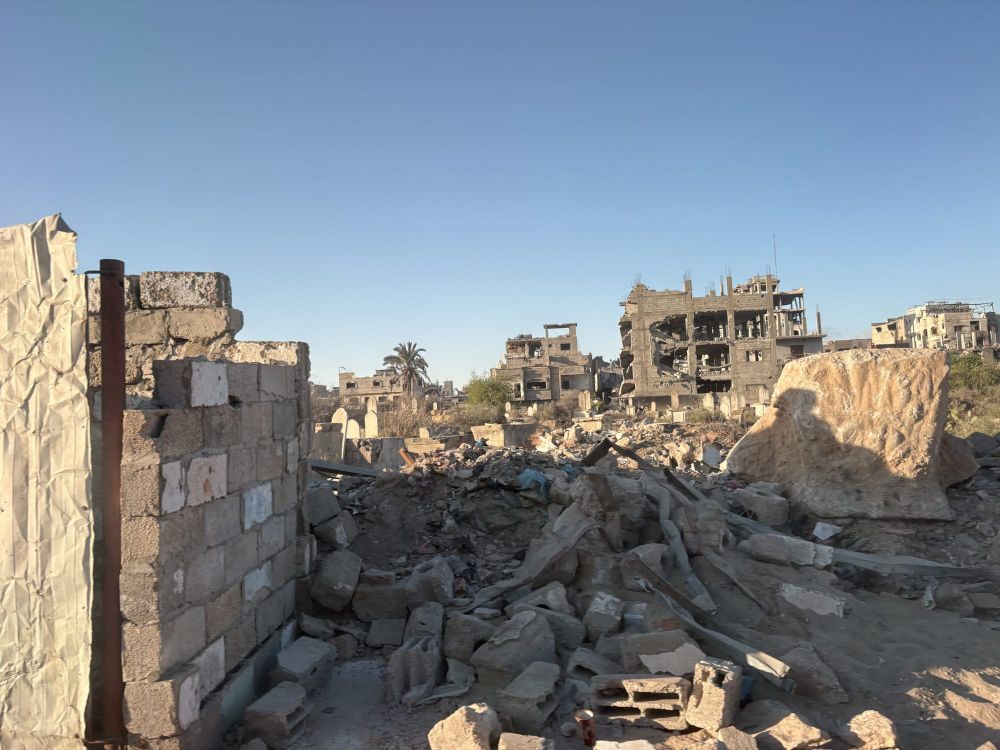
Mohammad is one of hundreds of Palestinians recently released by Israel, returning with scars on their bodies that words cannot describe. The bodies of deceased Palestinian prisoners returned by the occupation also bear clear signs of torture, blindfolded eyes, and evidence of field executions.
Dr. Ahmed al-Farra, the head of Nasser hospital’s pediatric department, told The Guardian that the bodies were handed over by Israeli authorities without identification, and the hospitals in Gaza—heavily bombed over two years of war—had no means to perform DNA analysis.
“They know the identity of these bodies, but they want the families to suffer even more,” he said. Relatives of missing Palestinian men were being asked to help identify the remains.
But Gaza’s tragedy is not limited to tortured hostages or the returned corpses. Men and women have been kidnapped from their homes or workplaces during the war. Many were arrested during army incursions in Rafah and northern Gaza, while others were taken at checkpoints on Al-Rashid Street and Salah al-Din Road. Most detainees faced no charges, never appeared before a judge, and had never heard the word “court.” Some were engineers, doctors, or volunteers, most holding degrees and professional expertise; others were simple fathers with their families, displaced under relentless bombing.
Israel’s “administrative detention” system allows Palestinians to be held indefinitely without trial, based on “secret evidence” their lawyers cannot access.
And then there are the invisible hostages, whom the Israeli occupation does not acknowledge—those excluded from exchange deals, missing from release lists, forgotten in global speeches about “stability in the Middle East” and the celebration of Israeli soldiers returning home, rather than justice or Palestinian rights.
Among the missing to this day is Dr. Hussam Abu Safiya, director of Kamal Adwan Hospital in Gaza, abducted while performing humanitarian work, along with many others. According to Palestinian rights organizations, over 9,100 Palestinians remain imprisoned in Israeli jails from Gaza and the West Bank, including 400 minors and 52 women; most of their families are unaware of their location or condition. In this way, the prisons extend far beyond the walls: Every home in Palestine that waits for a glimmer of hope about a loved one becomes a prison itself.
Editorial Team:
Sahar Fatima, Lead Editor
Carolyn Copeland, Top Editor
Stephanie Harris, Copy Editor
Author
Hassan Abo Qamar is a Palestinian writer, programmer, and entrepreneur from Gaza, focusing on documenting the humanitarian situation in Gaza, as distinct from traditional political narratives. He writ
Sign up for Prism newsletters.
Stay up to date with curated collection of our top stories.