‘We’re not dumb Mexicans’: In the Central Valley, residents fight against California policies that incentivize pollution marketed as renewable energy
California is actively building more infrastructure to support the transport and sale of methane, further entrenching fossil fuel’s predominance in the U.S.
This reporting was produced with support from Renaissance Journalism’s 2025 LaunchPad Fellowship for NextGen Journalists.
When Cathy Moreno first moved to Planada, California, with her parents in 1988, she thought to herself, where on Earth am I? The town of 3,000 just ten miles east of her hometown of Merced felt like a world away. Moreno’s mom told her to take a walk around the neighborhood to clear her head and get acquainted with her new surroundings.
Moreno went for a jog. “All of a sudden I smell homemade tortillas cooking on someone’s stove,” she said. The undeniable, ancient smell of ground masa. As she continued, she saw neighbors working in their front yard and children playing in the street. She remembers thinking, this is pretty amazing. Planada was and remains a close-knit community, one that Moreno never wants to leave.
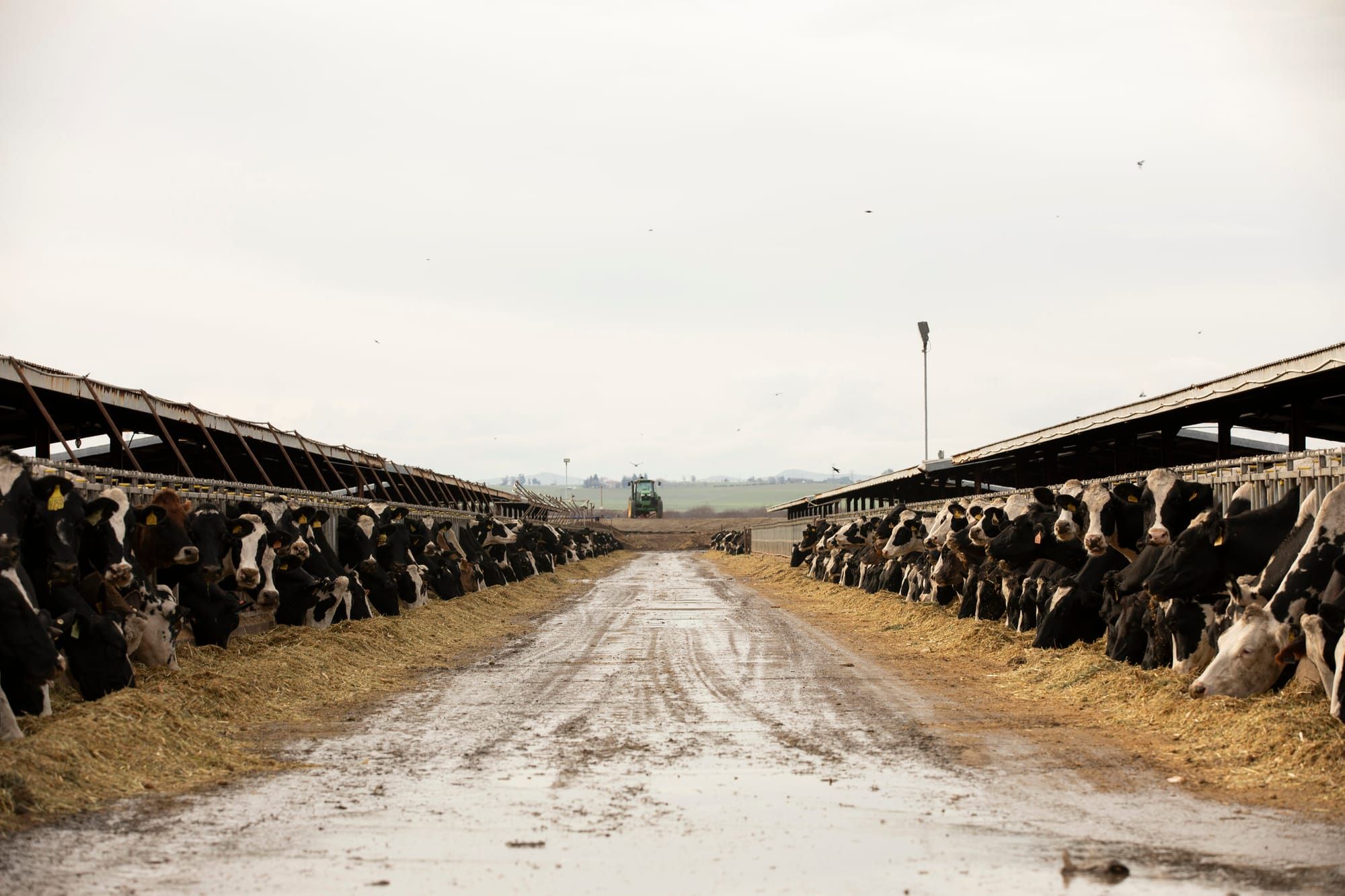
But leave is what the dairy industry and those with close ties to agriculture have suggested to Moreno in response to rampant, unabated pollution from nearby dairies. One of the dairies just outside of town has applied for state funding to construct what’s known as a digester, an industrial contraption that traps, cleans, and pumps methane created from cow waste.
Digesters are linked with increased ammonia, nitrate, and particulate matter pollution. And while the state’s funding of digesters is predicated on a policy that aims to lower statewide fossil fuel use, residents like Moreno worry that building more infrastructure to support the transport and sale of methane—a pollutant 28 times more potent than carbon dioxide—will further entrench fossil fuel’s predominance in the U.S.
Digesters first took root in the U.S. in the 1970s—an energy crisis spurred the federal government to explore alternative sources of fuel. This coincided with the creation of industrial farming and a loss of small farms across the country. Since the 1950s, the number of farms had decreased by more than 60%. Consolidation of farms and overall growth of individual operations contributed to the 71% rise in emissions between 1990-2020. Beginning around 2010, the Obama administration threw its weight behind digesters as a method of methane control. This was around the same time the state of California was establishing the first iteration of pollution controls.
Digester construction is following a well-worn road. Digesters require a massive amount of cow waste in order to operate and are best suited for dairies with around 2,000 milking cows. Throughout the 20th century, as federal and state water projects turned the vast acreages of central California’s wetlands, rivers, and streams into arable farmland—and as urbanization in the Bay Area and Los Angeles County drove up the price of land—the Central and San Joaquin Valleys became major hubs of agricultural and dairy production.
The small towns surrounding these sites of food production are where immigrants and disenfranchised people could live and find work nearby in fields or dairies . It’s an open secret that agriculture, with its intense workloads, low pay, and lax oversight, runs on the labor of undocumented people; as much as 41% of Planada’s residents are undocumented. As is the case with most heavily polluting industries, locations for factories, facilities, and refineries are chosen as much based on history as potential for future profit. Land that has already been zoned for industrial use is chosen over and over again for future industrial use, which can force communities to contend with generations of multiple and compounding harms. Legacy pollution is some of the most challenging to regulate or litigate, and it often leads communities to feel that they have no choice but to accept the continued immiseration of their public resources. Sacrifice zones are named as such because communities are submitted into an impossible demand: to sacrifice themselves for the greater good, or leave.
Planada is a community of farm and dairy workers. At least 92% of farm workers in California are Latino. Across the country, air pollution is significantly worse in Latino neighborhoods than white neighborhoods, with 1.78 million Latinos living in areas where toxic air due to oil and gas operations is above Environmental Protection Agency (EPA) recommended levels. For Moreno, it feels as if the legacy decisions that led to such stark racial divides in housing, neighborhood planning, and employment are being reified in modern policy decisions about where dairies and their digester appendages should go.
“I feel like they go into Mexican communities thinking that we don’t know better,” Moreno told Prism. “We’re not dumb Mexicans.”
A policy needs to be economically viable and environmentally sound
In December 2024, the advocacy organizations Defensores del Valle Central para el Aire y Agua Límpio, Food & Water Watch, and the Animal Legal Defense Fund sued the California Air Resources Board (CARB) for what they see as its erroneous approval of the Low Carbon Fuel Standard (LCFS), the statutory mechanism that creates a market for cow-waste-generated methane that is dubbed by the industry and state government as “renewable natural gas” or “renewable biofuel.”
The lawsuit claims that CARB, the state agency tasked with making sure Californians have clean air to breathe, didn’t fully consider the impacts of incentivizing industrial dairy operations or digester construction, which plaintiffs allege will cause dairies to expand. CARB previously said that it is not obligated to consider the lifecycle impact of emissions from methane generated at industrial dairies, nor does it believe that there’s evidence supporting the claim that digester construction leads to dairy expansion.
Residents like Moreno are particularly concerned about ammonia pollution from digestate, the cow waste left over from the digester process that’s applied to fields as a supposed nutrient-rich manure. The problem is that this waste is too concentrated in microbes and bacteria, actually leading to soil and groundwater contamination.
Rather than evaluating potential impacts, mitigation measures, and climate change consequences as required by the California Environmental Quality Act, the lawsuit argues that CARB cleared the way for industry to capitalize as much as possible on a short-sighted methane crediting program with questionable climate benefits.
“The law requires that they analyze the impacts of their decisions and analyze mitigation measures and alternatives, and they did not meet their obligation,” said Jamie Katz, staff attorney at the Leadership Counsel for Justice & Accountability, which is party to the suit.
Katz objects to the regulatory framework predicated on profit motivations. She views the LCFS as yet another way the state has carved out an income stream for the dairy and agriculture industry, “which is to pay you to capture this methane, rather than require you to reduce this methane in a way that does not adversely impact your neighbors,” she said. There are alternatives that Leadership Counsel and the residents of Planada advocate for, such as strict regulations on herd size, limitations on dairy consolidation, and substantive funding for nondigester manure management practices. Only one proposal was considered by CARB at the November 2024 meeting—and it did not include these alternatives.
“This is just another way in which oil and gas companies are looking to continue the status quo and to dodge their obligations to meet greenhouse climate obligations,” Katz added.
The CARB proposal approved in November 2024 presupposes levels of localized pollution and generalized greenhouse gas emissions. By signing off on the latest LCFS amendments, CARB board members naturalize the industrial dairy production practices that are environmentally taxing, Katz said.
Yet the air resources board maintains that by capturing methane from lagoons that would otherwise dissipate into the atmosphere, digesters have a positive impact on emissions-reductions goals. The LCFS is predicated on a crediting system that assigns a numerical value to the “carbon intensity,” or heating potential, of a greenhouse gas. Critics say that the LCFS doesn’t actually reduce net greenhouse gas emissions because its purpose is to reduce the average carbon intensity of transportation fuel—it’s simply replacing one polluting fuel with another.
The crediting apparatus is simply too generous to digester-produced methane, some argue. Other sources of methane pollution, such as landfills, can also benefit from the LCFS, but it’s only the methane processed by digesters that receives an additional credit—essentially a subsidy—for what’s termed “avoided” methane emissions.
Aaron Smith, a professor of agriculture and resource economics at University of California Berkeley, hypothesizes that the credit prices are artificially inflated because CARB fears that a tougher approach would push the dairy industry to leave the state. The effect is a policy with uncertain outcomes.
There’s the question of economic value. “The cost of building [and] operating an anaerobic digester is nine or ten times the market value of the gas they produce,” Smith said. Then there’s the question of environmental value. “Over time, I’ve become more negative of this policy because of its complexity [and] because it’s not really obvious the state is actually getting any greenhouse gas emissions reduction from it,” Smith said.
CARB refused to answer questions regarding the influence lobbying groups and corporations had on the generation of the LCFS rule and said it was the California Department of Food and Agriculture that had jurisdiction over the digester program.
Can you pay your way out of climate change?
Big Oil is getting in on digester technologies that market themselves as environmentally friendly. Companies like Shell, Chevron, and BP now incorporate digester methane into their portfolios, while fossil fuel corporations like TC Energy, Kinder Morgan, Energy Transfer Partners, and Enbridge are all helping to fund construction of pipeline infrastructure from digesters to markets. Digesters offer corporations like Chevron a guaranteed market for digester methane: Chevron and state subsidies front the funds to build the digesters, and Chevron then sells the gas to California consumers.
Oil and gas industry investments in digester technologies are also predicated on the massive size of dairy herds and view their growth as beneficial to business, even if CARB claims there’s no reason to believe in a correlation between the two. A 2020 report by the investment banking firm RBC Capital Markets acknowledged that “as you add more cows, the costs scale and further improve economics.” Still, experts note that years of falling milk prices have encouraged the consolidation of dairy operations, and it’s unclear if methane digesters will encourage growth in herd size.
“Any time you build this new infrastructure, you’re entrenching us even further into the fossil fuel economy,” said J. Mijin Cha, an assistant professor in the environmental studies department at the University of California Santa Cruz.
Production of renewable energy like solar, wind, and hydropower is important, Cha said, but it’s nothing if we don’t sharply decline our consumption and burning of fossil fuels. Not to mention that dairy cow feed is extremely fossil intensive; of the total energy required by dairy operations, two-thirds of that goes to the production of feed. In this way, the burning and consumption of fossil fuels is at work in every stage of the dairy operation’s life cycle. Even though a portion of that life cycle includes emission from what’s heralded as a natural source, methane burned in an internal combustion engine pollutes like methane that results from hydraulic fracturing. It’s not enough to invest in potentially emissions-reducing technologies, Cha said.
“We’re not going to capitalism our way out of this,” said the assistant professor.
CARB disagrees. The investment in digesters serves a purpose, as CARB’s analysis claims that over the next two decades, digester implementation will cut nitrogen oxide pollution by 25,586 tons and greenhouse gas emissions by 560 million metric tons. CARB also claims that digesters will result in a public health savings cost of $5 billion.
However, in order to meet the methane reduction targets approved by the state legislature, more than 200 digesters are needed, costing the state around $4 billion annually for construction, maintenance, and upkeep. Still, cow burps, otherwise known as enteric emissions, are responsible for just as much methane production as lagoons.
CARB did not respond to Prism’s questions about the role of enteric emissions in generating atmosphere-warming methane.
Patrick Serfass, the executive director of the American Biogas Council, told Prism that enteric emissions aren’t the concern of biogas digester technology—burps have to do with the cows. “The world of the biogas system doesn’t even start until the manure leaves the cow,” he said.
But that takes residents and advocates back to the beginning, with a central complaint that the public agency greenlighting the funding of digesters and sale of digester methane back to the public isn’t considering the full life cycle of emissions that result from industrial dairies—dairies which are essential to the operation of digesters. Still, enteric emissions are not addressed by CARB in its analysis of digester efficacy and impacts.
“The larger problem with dairy digesters is that they’re not really economically viable,” said Benjamin Goren, a livestock analyst at the environmental research center, The Breakthrough Institute. “That’s why you see these large subsidies for not just their construction, but also for the fuel that comes out of them.”
On average, Goren said, digesters operate at a loss of about $200 per metric ton of carbon dioxide per year, and they need a CARB subsidy of about the same. “Maybe it helps to achieve [CARB’s] methane emission reduction goals, but it’s an expensive way to,” Goren told Prism.
California is not on track to meet its methane emissions reduction goals by 2030, and experts say that it’s dubious whether the state could achieve its goals through digester implementation alone. The problem, they say, is that the state is incentivizing pollution controls rather than regulating emissions directly, as communities demand. The pollution incentives are paid for by the California driver, potentially raising the price of retail gasoline as much as $1.50 per gallon by 2035.
The market apparatus sustained by the LCFS is somewhat out of balance: Experts say the credits related to digester methane are underpriced for the volume of digester methane actually available, which may mean that the LCFS appears more environmentally sound than it is. One study by Friends of the Earth found that “paying dairy farmers to reduce their herd sizes would be nearly three times more cost-effective than subsidizing anaerobic digesters.”
In 2022, CARB’s draft proposal of policies needed to achieve state climate goals were scrutinized for what communities sounded the alarm on for years: that air pollution controls parroted industry preferences and talking points around replacing fossil fuels with different sources of methane. That may have something to do with the revolving door that seems to swing back and forth between the agency and industry, as reported by nonprofit newsroom, Capital and Main.
In an open letter to Air Resources Board Chair Liane Randolph, former CARB employee James Duffy eviscerated the agency for an emissions scheme that ultimately allows a polluting industry to diversify its portfolio. The original LCFS adopted in 2009 did not include generous provisions that were later added in 2016.
“Many of us have witnessed this transition from an innovative regulation into a swag bag for venture capitalists, big oil, big agriculture, and big gas, increasingly coming at the expense of low- and moderate-income Californians,” Duffy wrote. In fact, Duffy, who helped to draft the original text of the LCFS, hypothesized that changes to the rulemaking were made “not with the best interest of the California consumer and California’s long-term transportation goals in mind, but rather with the intent to placate these powerful special interests and to achieve policy outcomes outside of transportation decarbonization.”
Residents like Moreno in Planada and Maria Arevalo in Pixley don’t have a key to that revolving door, nor do they have a seat at the table. Their concerns are not deemed special interests.
Lynn Henning, the water ranger director at the Socially Responsible Agriculture Project and a 2010 recipient of the Goldman Prize, told Prism that rural communities often face an uphill battle precisely because they have “much much less money and political power.” There’s an additional challenge presented by rural life: These regions are intentionally chosen by industry, places where the “harmful impacts of CAFOs are largely invisible to most Americans,” said Henning, referring to industrial scale Concentrated Animal Feeding Operations. She said rural areas are also written off by politicians.
Henning, who operates a 300-acre farm with her husband in rural Michigan, knows firsthand about taking polluting agriculture operations to task. Henning’s seminal environmental work in Michigan helped shed light on how industrial dairies and hog facilities engage in practices that pollute soil and water without scrutiny or oversight. There’s a digester at a dairy about five miles from Henning’s farm. Impaired water quality, bad odor, and pollution from flaring are just some of the daily problems she lives with.
While nearly 2,400 miles from Planada, Henning has her eye on what’s happening in California. One provision of the LCFS is that any dairy with a digester and access to a methane pipeline can benefit from the tax credit. Planada isn’t just a cautionary tale, it’s a canary in the coalmine.
Editorial team:
Tina Vasquez, Lead Editor
Carolyn Copeland, Top Editor
Stephanie Harris, Copy Editor
Author

ray levy uyeda is a staff reporter at Prism, focusing on environmental and climate justice.
Sign up for Prism newsletters.
Stay up to date with curated collection of our top stories.