Washingtonians rally around refugees as Trump administration tears migrant communities apart
Local organizations such as Homes Not Borders and Migrant Solidarity Mutual Aid help asylum-seekers and other immigrants settle in the area, even as federal agents flood the region to carry out raids
“Are you hiring?” Amal Abuldood asks a manager at a grocery store. She’s used to asking this question. Often when she goes out, she looks for work. Not for herself or for her husband, but for their neighbors.
Abuldood lives in Parkview, an affordable housing community in Maryland, approximately an hour away from the center of Washington, D.C. For years now, Parkview has served as the first permanent home in the United States for many refugees and asylum-seekers. Many of the resettlement agencies that supported refugees in Maryland had offices nearby, easily accessible via D.C.’s public transit system. Walking through Parkview, it’s not unusual to catch whiffs of dishes from many continents wafting through open windows or to hear Spanish, Arabic, or Dari, among other languages. Kids chase each other through the parking lots. Adults wait together at the bus stop.
Abuldood and her husband, Atheer, arrived in the U.S. as Special Immigrant Visa (SIV) recipients from Iraq in 2016, just as President Donald Trump, during his first term, worked to make citizenship requirements more challenging. Abuldood still recalls the fear and frustration she felt when she learned that the State Department had made the civics and American history test longer and more difficult. After leaving everything to flee to the U.S., she worried that she and Atheer would never succeed in settling here.
When President Joe Biden was elected, the citizenship test was reverted to the form Abuldood had studied for. She became a full citizen in 2021, but Abuldood knows many people in her community are still as scared as she was. Along with nationwide immigration raids, the Trump administration has terminated Temporary Protected Status (TPS) and other immigration statuses for hundreds of thousands of immigrants, and recently announced that it was again imposing a far more difficult citizenship test. As community members’ dreams of permanent safety and stability in the U.S. slip away day by day, Abuldood helps in any way she can. She checks in with neighbors, asks around for jobs, and shares her Wi-Fi network. During Ramadan, she brings iftar leftovers back from her mosque for families she knows are going hungry. “This is Amal,” she said. “I make myself busy every day. Every day.”
As the Trump administration devises new ways to make the U.S. inhospitable for noncitizens, migrants and their allies support one another and sustain their hopes by finding new forms of solidarity.
Planning for the worst
On the first day of his second term, Trump suspended the U.S. Refugee Admissions Program, the interagency program that allowed refugees to enter the U.S. The Trump administration’s decision left 12,000 refugees, who completed the arduous application, stuck and unable to travel to the U.S. On Jan. 24, Trump halted federal funding for refugee resettlement agencies, nonprofits around the country that receive government money to assist refugees during their first months in the U.S. With as much as 90% of the agencies’ budgets tied to federal contracts, their operations were decimated practically overnight. Entire departments of caseworkers were laid off, cutting the only lifeline resettled families might have had in the U.S., leaving them in the dark. Without money for rent and without caseworkers to intercede with landlords, some resettled families in the Washington, D.C., suburbs were evicted.
During Trump’s first term, he cut refugee admissions to their lowest level in decades, but there were still refugees being admitted. His actions shook resettlement infrastructure, but the system survived. However, during his first week in office in 2025, he carried out something closer to total demolition.
In the months since the administration terminated refugee programs, people such as Abuldood have played even more critical roles in communities of newly arrived migrants. While Abuldood may seem to operate as a one-woman mutual aid network for her neighbors, she has help.
Abuldood works for Homes Not Borders (HNB), a small nonprofit that primarily assists refugees and asylum-seekers resettled in the Maryland and Virginia suburbs of D.C. HNB began in 2017, with a few volunteers collecting donated furniture and redistributing it to local refugee families. In the years since, it has steadily grown to enlist an extensive network of volunteers and a small staff, most of whom also arrived as refugees over the last 50 years.
From its founding until this January, HNB went from setting up homes for several dozen families each year to 20 or more each month—and as many as 40 per month between last November’s presidential election and the abrupt halt to resettlement on Jan. 20. The organization has generally benefited from its proximity to the federal government, but especially from D.C.’s broader, diverse, and left-leaning community. As administrations change, many white-collar workers in the District leave the region, leading to numerous well-furnished homes that are not long-inhabited—a godsend for organizations seeking furniture donations.
While many refugee-aid organizations across the U.S. were capsized by Trump’s initial assault on refugee resettlement, the same cannot be said of HNB.
“Yes, we did plan for the Trump administration,” HNB Development Director Amy Wrona told Prism. “No, we had no idea it was going to be so bad.”
When the week-one policy changes hit, Wrona attributed HNB’s ability to ride out the chaos to an adaptable structure and a well-developed foundation of grassroots support. Channeling the rancor of HNB’s incensed donor base, the organization raised nearly $100,000 for rent relief between February and May, keeping around 60 families in their homes. HNB also hired several resettlement agency caseworkers who’d lost their jobs due to Trump cuts, allowing the organization to offer comprehensive support to some families stuck in complicated situations.
Some of those families were Abuldood’s Afghan neighbors in Parkview, many of whom gained admission to the U.S. through the SIV Program for Iraqis and Afghans who worked closely with the U.S. military or government in their home countries for at least one year and were at risk of persecution because of this service. SIV recipients— often referred to as SIVs—can immigrate to the U.S. and receive the same support as people who arrive as officially designated refugees. The D.C. suburbs became a destination of choice for many Afghan SIVs, who joined the existing Afghan diaspora in northern Virginia.
Though Trump has shut the door for refugee resettlement, a small number of SIVs are still being allowed in. In the last three months of 2024, more than 10,000 SIVs were admitted to the U.S. In the first five months of 2025, only around 500 were admitted.
This limited, though ongoing, support for SIVs is partially due to support in Congress from Democrats and some moderate Republicans. The SIVs’ background—aiding the U.S. military, opposing the Taliban’s Islamic fundamentalism—makes them archetypal “good immigrants” in the eyes of some lawmakers. In a letter beseeching Trump to reconsider his restrictions on Afghan admissions, three Republican representatives created a distinction between SIVs, “the most vetted immigrants in U.S. history” and “random applicants and illegal immigrants who’ve crossed the Southern border.”
“Random applicants” and people who’ve crossed the southern border include many people with TPS and humanitarian parole: immigration statuses that do not offer a path to permanent residency, though they are supposed to protect individuals from deportation. Both statuses are granted at the discretion of the president.
Trump wasted no time undoing the protected status and parole Biden offered to more than 1 million Cubans, Haitians, Nicaraguans, and Venezuelans, among others. In March, Trump invoked the Alien Enemies Act, the source of an ongoing legal battle, to attempt to deport thousands of Venezuelans. Later that same month, parole was terminated for Cubans, Haitians, and Nicaraguans, all of whom were encouraged to “self-deport immediately.” Though a federal judge blocked the termination of TPS for Venezuelans and Haitians on Sept. 5, people from other countries have still lost the legal right to remain in the U.S. This includes more than 8,000 Afghans, who lost parole in May because, according to the U.S. government, the Taliban is a “specially designated terrorist group,” though one that “improved the security situation” in Afghanistan, making the country safe to return to. At the same time, the U.S. still has a travel ban in place for nearly all Afghans, due to the Taliban’s rule.
Undeterred
In the early months of 2022 under the Biden administration, U.S. Customs and Border Protection recorded nearly 500,000 “encounters” around the country’s borders, a rough indicator of the number of people actually attempting to cross into the U.S.
The crossings were a flashpoint for Republican immigration hawks. Texas Gov. Greg Abbott instituted a scheme to bus migrants directly from the border to Democratic sanctuary cities. According to Texas officials, at least 12,500 people were bused to D.C.
“Abbott was trying to tell this story: ‘We’ll send these people to you so that you can see them as a burden,’” explained Amy Fischer, an organizer with D.C.’s Migrant Solidarity Mutual Aid (MSMA), a coalition of local mutual aid organizations, faith groups, and hundreds of volunteers. “Instead, all of those buses were greeted by people that care, that wanted to welcome them with dignity.”
When migrants—regardless of where they came from or why—stepped off the bus from Texas, they were greeted by MSMA in D.C. Formed in 2022, MSMA responds to the most pressing needs of newly arrived migrant communities. Coordinating their efforts and resources as the buses arrived, MSMA offered a respite center where people could get a warm meal after their long trips from Texas. The organization also opened a free store where people could donate and pick up clothes, diapers, and other goods. Volunteers found housing for families that decided to stay in D.C., and sourced furniture for their new homes. They even organized community gatherings, including baseball games.
“So much of what we do is really based on being in community with people, knowing what kind of support they’re needing and trying to be responsive to that,” Fischer said.
Though Abbott’s border busing operation ended in June 2024, MSMA continues to be in community with the people they met at the bus stop. Now they also offer prenatal and pro se clinics and food assistance programs. The free store is also still open.
Despite the community support, conditions for migrant communities in D.C. remain tenuous. Trump continues to drive forward enforcement actions aimed at members of the community MSMA helped cultivate.
But this hasn’t deterred MSMA’s organizing efforts.
From the first flurry of Trump’s executive orders, MSMA has helped muster outrage among D.C. residents, channeling locals’ energy into solidarity efforts. The organization now has an Immigration and Customs Enforcement (ICE) reporting hotline and holds know-your-rights trainings for migrants as well as allies who want to know how to stand up to law enforcement aiding in immigration enforcement. Volunteers now also accompany migrants to immigration court, raise money to pay bonds, and sponsor detained immigrants to secure their release. Others help families plan for the worst: If one or both parents are deported, leaving a child deserted in the U.S., where can they go? Who can they trust? How will the family keep in touch if phones are lost or taken during the deportation?
An agonizing limbo
While the efforts of local organizations certainly make a difference, solidarity has its limits.
Deportations are tearing apart families in Washington, D.C., and around the country. MSMA can help a family plan for that disaster, but when it happens, there is nothing the organization can do to stop the family’s separation.
Trump’s “Big Beautiful Bill” funnels some $122 billion toward ICE, detention facilities, and further border militarization. A chunk of those expenses will come from social services once earmarked for the nation’s most vulnerable people, including SIVs and humanitarian parolees without green cards, who will no longer qualify for the Supplemental Nutrition Assistance Program (SNAP), Medicaid, or other benefits. As green cards are also essential to obtain many jobs, the Trump administration’s actions leave more families desperate, forcing migrants to rely on under-the-table work that makes them more susceptible to exploitation by American employers and scammers. Even immigrants in the U.S. with statuses that are not currently targeted, such as SIVs, have no guarantee that they won’t be next on the Trump administration’s list of targets.
“I want to be very clear when we’re talking about this, everybody who is not a U.S. citizen is on the list,” said Noah Klose, the community outreach director for Homes Not Borders.
Gone are the days when I’d tell people they’d be all right because we’re in D.C.
Noah Klose, Homes Not Borders community outreach director
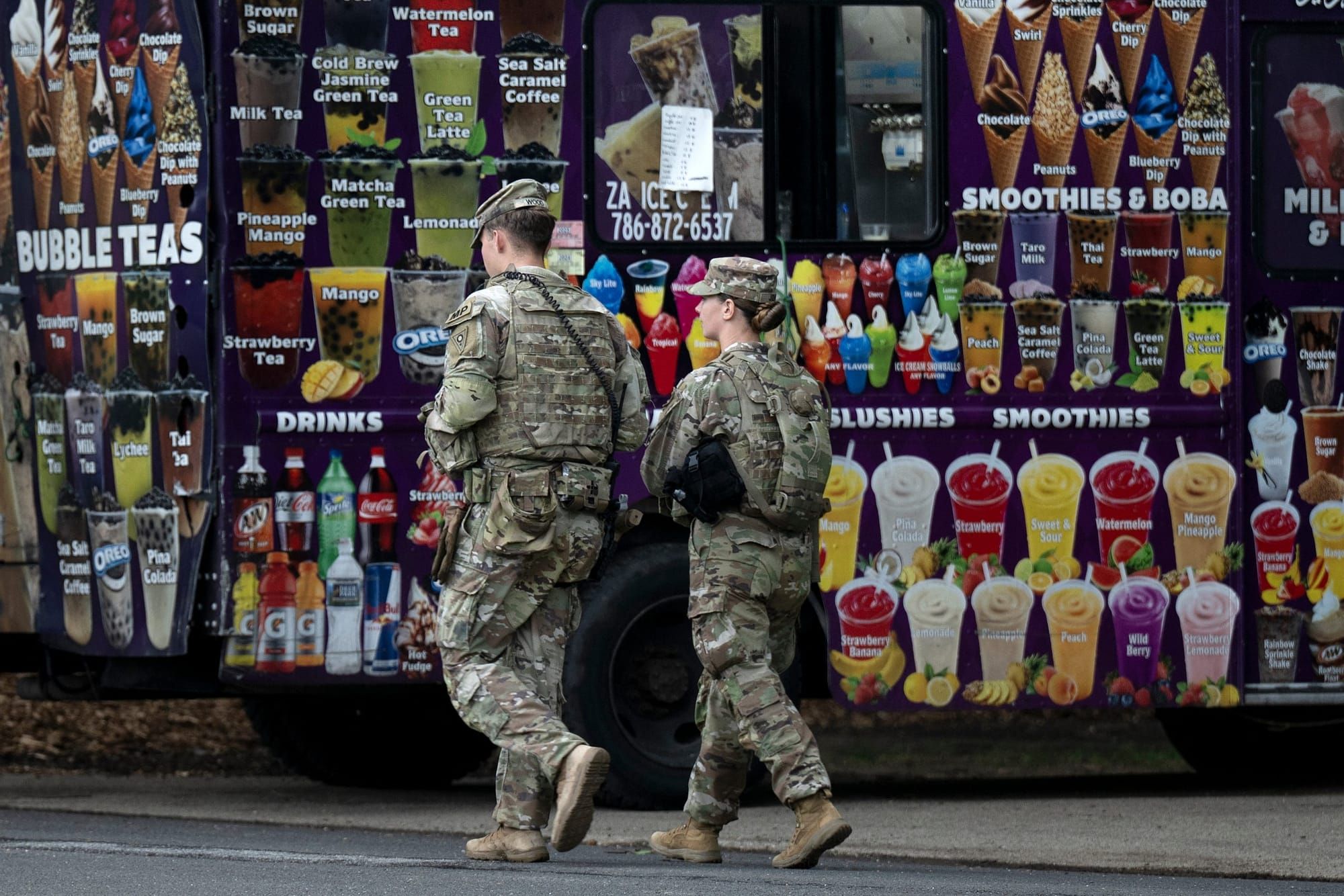
In practice, this looks like the Trump administration’s recent large-scale enforcement actions in cities like Los Angeles and, more recently, Washington, D.C., where more than 1,000 officers from various federal agencies were sent to patrol D.C. on Aug. 12, to suppress what the Trump administration alleged was a surge in crime. (Violent crime in D.C. is at a 30-year low.) That same week, Trump invoked a presidential power to take direct control of the D.C. police for 30 days and to bring in hundreds of national guardsmen. D.C.’s Metropolitan Police Department collaborated closely with ICE to make as many as 1,000 immigration arrests. With ICE agents empowered to racially profile local residents, being brown or Black or speaking Spanish on city streets is now grounds for arrest. While the 30-day limit has passed, ICE remains ever-present in D.C. and LA.
“Gone are the days when I’d tell people they’d be all right because we’re in D.C.,” said Klose.
As Trump pulls the immigration system apart, more migrants are caught in an agonizing limbo, both unable to return to the countries they fled and stymied from building lives in the U.S.
Emaan, an asylum-seeker from Afghanistan who is using a pseudonym out of concern for his and his family’s safety, successfully applied for asylum in 2023. His green card interview was shortly after Trump took office, but he’s heard nothing from U.S. Citizenship and Immigration Services since.
“They don’t tell me anything,” he said in July. “The only thing they’re telling me is that you just wait. That it’s a normal process. But it’s not like a normal process.”
Emaan doesn’t know anyone in the Afghan community who’s gotten a green card since Jan. 20, no matter when their interviews took place. According to the 29-year-old, what he’s experiencing doesn’t seem normal. For example, a friend of Emaan’s had his green card interview on Jan. 10, and he received his green card on Jan. 15.
Without a green card, Emaan has been unable to find a steady job. Though he has a degree and years of experience working as a journalist, a web developer, and for civil society organizations in Afghanistan, the best-paying work he’s currently able to find is driving for Uber. The last two years of his life have been spent behind the wheel, making endless trips from the suburbs to the airport and around the city. Meanwhile, his wife is trapped in Afghanistan, unable to work, leave the house without a male guardian, continue her education, or travel to the U.S. due to the travel ban. She cannot even flee to a neighboring country. Iran and Pakistan previously took in millions of Afghan refugees, but both countries have shut their borders and forced hundreds of thousands to return to Afghanistan. She cries on the phone with Emaan every day, and though still in his 20s, the hair in Emaan’s beard is going gray from stress.
Emaan dreams of being reunited with his wife, returning to school, and finding work in the fields where he was once employed, such as advocacy, education, or community development. None of his dreams place a burden on American citizens, though none can be realized without policies that make the United States more welcoming and hospitable to immigrants.
Instead, Trump launched a law-enforcement invasion of D.C., under the guise of fighting crime. ICE agents have set up checkpoints around D.C.’s nightlife neighborhoods, where they stop drivers for not wearing seatbelts and other minor traffic offenses, one of the easiest ways to funnel immigrants into deportation proceedings.
It is not hard to imagine Emaan, or any other immigrant driver, picking up a rider from a busy bar on 14th Street. Perhaps one of their brake light bulbs is out, and they didn’t realize it. The driver could be stopped by local law enforcement or a federal agent, who could file a report and jeopardize their pending application for legal permanent residency. They may not be detained and deported immediately, but who can say?
Greater abuses of power are happening every day.
(Disclosure: Otto Frey volunteered with Homes Not Borders in August 2022. He later had a yearlong internship and a part-time position with the organization until February 2025.)
Editorial Team:
Tina Vasquez, Lead Editor
Carolyn Copeland, Top Editor
Stephanie Harris, Copy Editor
Author

Otto Frey volunteered with refugee aid groups in Greece and the Balkans in 2019, and studied international migration at the City University of New York Graduate Center during the COVID-19 pandemic. He
Sign up for Prism newsletters.
Stay up to date with curated collection of our top stories.