Never eat the candy on your pillow: A conversation with the incarcerated about voting rights
Many incarcerated people feel disillusioned by the American political system, but you have to understand it’s not that we don’t care. We have been told we don’t have the right to care
Dear Reader,
What does voting mean to you? This may seem like an easy enough question to answer, but for some of us, it’s not so simple.
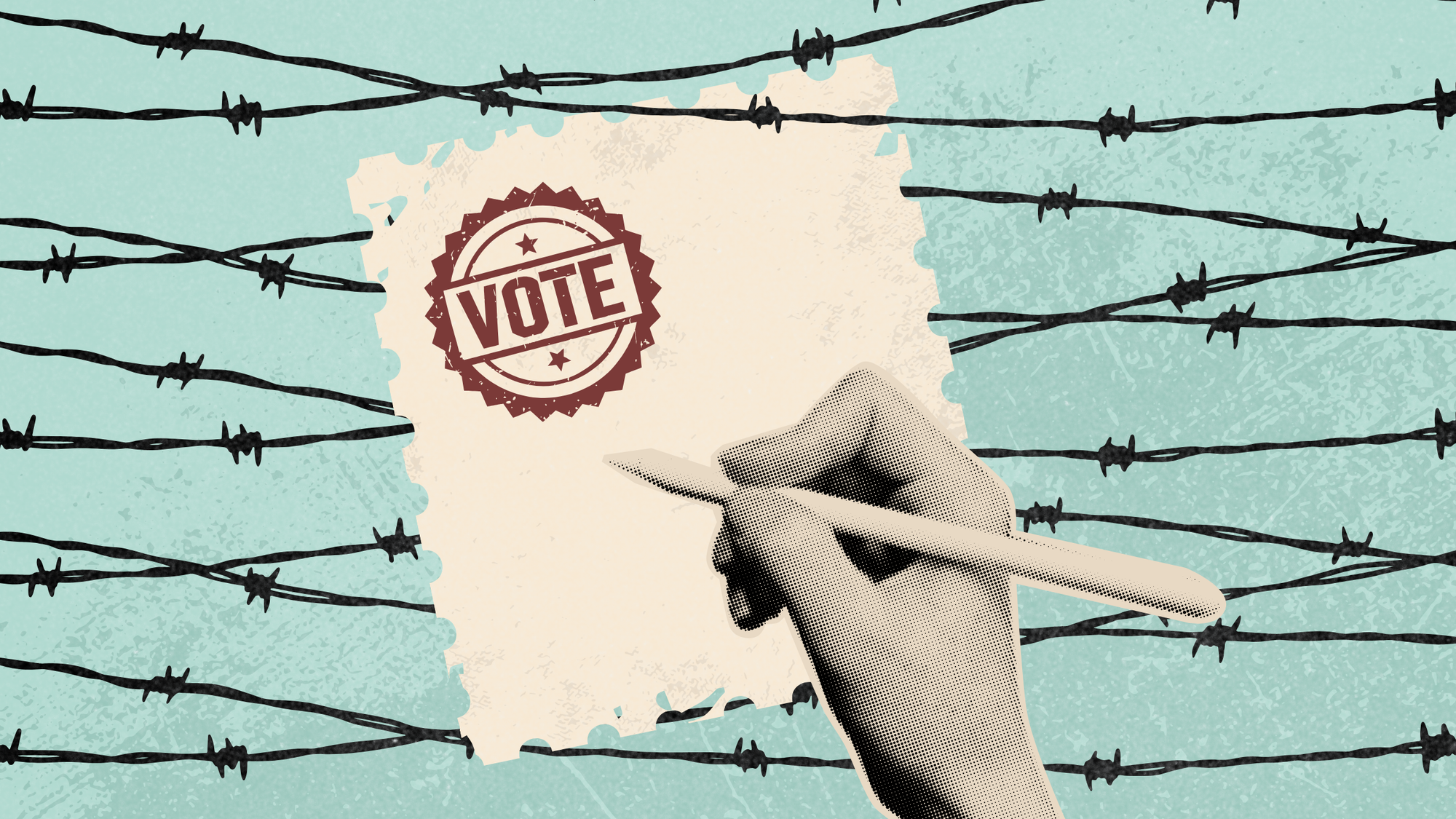
It goes without saying that felony disenfranchisement laws make many Americans ineligible to vote, but across the U.S., there’s also a hodgepodge of laws dictating whether incarcerated people can cast a ballot—and this includes more than 400,000 “legally innocent” people held in jails who are eligible to vote but effectively barred from exercising the right.
Many of us in prison feel that even if we could cast a ballot, our votes wouldn’t mean anything. This isn’t everyone’s sentiment, of course. Some incarcerated people want nothing more than to have their own personal experiences brought to light through the power of casting their vote.
This column is a little different from my usual. I wanted to get to the heart of how incarcerated people are feeling about the upcoming presidential election, so I asked the men imprisoned alongside me at Burgin, Kentucky’s Northpoint Training Center a seemingly simple question: What does this election mean to you?
My good friend William has been in prison for more than 30 years. He told me that the ability to vote would grant him something he’s never known while incarcerated.
“I’d be given the status of an actual recognized citizen,” William said. “That I lost and forfeited the right to vote all those years ago never really registered to me when I was younger. Now that I’m older, more mature, and in real need of representation, I’m shocked to discover I’m voiceless. There are very few people outside of prison advocating for the changes people like myself know the prison sector needs.”
Fred is Mexican American and was born and raised in Cincinnati, Ohio. He told me that he never voted when he was on the outside because he never felt like his vote would matter. In prison, voting continues to mean little to nothing—not because Fred doesn’t care about the process or the outcome, but because he’s a felon.
Prior to prison, he said he didn’t believe “one person could be the change or make a difference” and that “everyone would just go with the masses anyway.” None of this means that Fred doesn’t have a preference, of course. Like many imprisoned people I spoke to, Fred would prefer to have a Democrat in the Oval Office. “Trump is too unpredictable and erratic,” Fred said. “If he gets a second term, it would not be good for the country as a whole.”
But, of course, we are not a monolith here in prison. Ball, a veteran and former Army medic, is on the other end of the political spectrum. He’d vote for Donald Trump and J.D. Vance.
“I have more confidence in their economic policies, and I believe that abortion should be a state choice,” Ball told me. “I believe in global peace through strength and in protecting Second Amendment rights. I see the continuation of Biden/Harris policies as detrimental to this country.”
Doug, a 70-year-old U.S. Army veteran, didn’t weigh in on who he’d vote for, but he has strong opinions on incarcerated people being denied the right to vote. Doug said it’s the right of every American citizen to have a voice in the election because getting a say in who governs the country is “paramount to being an actual citizen.” According to Doug, voting is a right we should all take seriously, and it pains him that he is denied the right to vote in one of our country’s most consequential elections.
“We are facing the most existential threat to our Democracy since the Civil War,” Doug said. “This election will decide if we move forward as one nation with liberty and justice for all or move closer to an autocratic government where power is centralized in the executive branch.”
William told me he also feels the weight of this denial, perhaps more than other elections, because this could be the first time the U.S. elects a woman president. The fact that she is also Black is monumental, according to William, and he wants the ability to vote for the country’s first Black woman president.
Chase, also a veteran, is in his late 20s, making him much younger than the rest of us. But he’s equally disillusioned by the American electoral system. You have to understand: It’s not that we do not care; it’s that we have been told we don’t have the right to care. Chase told me that he understands the great importance of voting in local and state elections because those elections have the most impact on our day-to-day lives. But at the end of the day, what does his opinion matter if he’s denied the right to vote?
“As a felon, voting means nothing to me now because I can no longer vote,” Chase explained. “In the grand scheme of things, nothing much of what I have to say will ever mean a thing again. I’m labeled for the rest of my life. And as a felon, there is zero representation for me. Those running [for elected office] don’t care for felons unless they’re making laws to further politicize criminals.”
For those who are up for parole soon or otherwise know they won’t be incarcerated for much longer, thinking about life outside as a convicted felon can sometimes feel bleak. Will there ever actually be a restoration of rights for the formerly incarcerated?
Ball has looked into the data. There are thousands of laws that disenfranchise felons, he told me. From prohibitions on public housing to the denial of voting rights, Ball said felons are “significantly discriminated against” and face a series of bans that make life on the outside impossible—even though felons are “newly returning citizens” to society. We did our time; how long can they strip us of our rights?
“Without the ability to fully access government programs, ex-felons become further at risk. This is why we need voting rights,” Ball said.
At 70 years old, Doug said he’s seen a lot of change in America and felt strongly about playing a role in shaping it. Prior to being incarcerated, he voted in every presidential election from 1972 until he was convicted in 2014. Doug said he thinks a lot about the diversity of today’s electorate and how American voters today would not have been able to cast their ballot when the country’s founders established the right.
“Even before I was old enough to vote, I was witness to the struggle for equal representation under the Constitution and the changes brought about by voting,” Doug said, noting that he saw the Civil Rights movement, the feminist movement, and other social movements that changed how people saw their right to vote. “Even more changes are on the way, I hope. Felons should have rights, too. Whatever happened to this country being one of second chances?”
William said when he’s released from prison, he wants to feel like “a citizen again” and that regaining his right to vote would be “a good start.”
There are ways that American incarceration politicizes people. Take Fred, for example. He watches the news and sees how immigration and the border are discussed. He pays attention to the increasing number of undocumented immigrants that are being funneled into prisons like ours. With news of the importance of this presidential election ramping up, Fred circled back with me to say he’s beginning to feel like his inability to vote is “bad, very bad.” It’s the framing of immigration that’s weighing heavily on him.
“What if I hadn’t been born here? I’d be deported just like [undocumented immigrants] will be,” Fred said. The immigrants he sees in prison are “every bit” his people, he said. They remind him of his family in Ohio, but he knows that as noncitizens, their fates will be different.
“If I could vote, maybe I could change that,” Fred said.
William argues that no one understands the inhumanity of American policing and prisons better than the incarcerated.
“Who understands the obstacles of incarceration better than us? Who understands recidivism better? And yet my voice doesn’t count,” William said. “Nothing can be changed if all America does is deprive us of our fundamental rights.”
What do I think? I understand that as members of the criminal class, we lose and forfeit many Constitutional rights upon conviction. But we are still U.S. citizens, after all. Most of society seems to forget this point. Being denied the right to vote—a core, fundamental right of the U.S. citizenry—says much about how the country thinks of us. We are second-class citizens, at best.
But our voices matter just as much as any other citizen. You will never convince me otherwise.
The Right to Write (R2W) project is an editorial initiative where Prism works with incarcerated writers to share their reporting and perspectives across our verticals and coverage areas. Learn more about R2W and how to pitch here.
Author
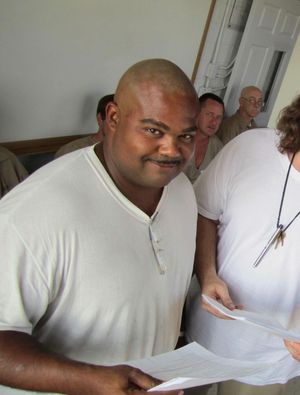
Derek R. Trumbo, Sr., a multiple-time PEN Prison Writing Award winner, is an essayist, playwright, and author whose writing has been featured in "The Sentences That Create Us: Crafting A Writer's Life
Sign up for Prism newsletters.
Stay up to date with curated collection of our top stories.