From service to studio: How veterans are finding freedom in art
With key programs suspended and jobs lost, veterans face mounting instability. Yet through painting, photography, and installation, they’re crafting new pathways toward healing—and accountability

Real journalists wrote and edited this (not AI)—independent, community-driven journalism survives because you back it. Donate to sustain Prism’s mission and the humans behind it.
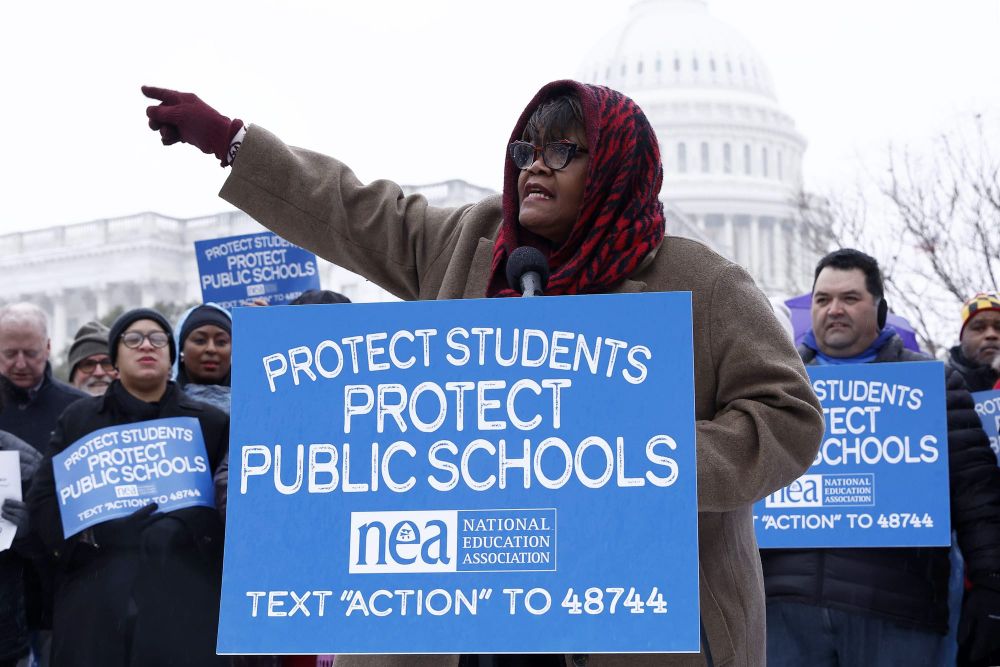
As the longest federal government shutdown in U.S. history comes to a close, veterans across the country are facing increasing uncertainty. While the Department of Veterans Affairs (VA) remains partially insulated from the cuts, essential services like career counseling, GI Bill hotlines, and public outreach have been paused. Though an estimated 97% of VA staff continued working during the shutdown, suspended transition assistance programs triggered concerns among veterans about the future of long-term support. Amid these systemic failures, a quieter narrative of resilience persists. Across the country, veterans and active service members are turning to the arts.
The shutdown follows a year already marked by significant budget cuts. As PBS reported in March, veterans have been especially hard-hit by federal reductions in services and staffing. Nearly 30% of federal workers are veterans—half of whom are disabled—due to hiring protections under the 1944 Veterans Preference Act. But when the second Trump administration laid off an estimated 38,000 federal workers in its first five weeks, 6,000 of them were veterans. Veterans, who make up only 6.1 percent of the U.S. population, are facing disproportionate losses in federal employment, as well as tightening access to the very resources promised to them.
Veterans’ creative work becomes a conduit for working through trauma, regaining agency, and constructing new identities beyond the ranks. Three Miami-based artists—two veterans and one active-duty Coast Guard member—are navigating the tension between military structure and artistic liberation. Their practices highlight a complex paradox: that even within systems built on obedience and discipline, a deep need for self-expression can—and does—persist.
National efforts to support military veterans in the arts exist, such as the United States Veterans’ Artists Alliance, the Patriot Art Foundation, and the Veteran Art Institute, but access remains uneven due to limited visibility.
Jordyn Dooley, a licensed art therapist and founder of Mosaic Therapy Miami, explained that trauma is often stored in the brain’s right hemisphere as sensory fragments—images, sounds, emotions—rather than in language.
“Art is a right side activity, it allows expression, and it can consolidate these experiences that are nonverbal through the expression of the images that are created through various media,” said Dooley. “And it then provides a platform that a person can talk about.”
According to Dooley, trauma doesn’t always stem from combat. For many veterans, the transition to civilian life can itself be disorienting and overwhelming.
“I think it can be very overstimulating for a lot of veterans transitioning back into civilian life,” Dooley notes, “because there’s not the system that they can depend on.”
In contrast to the structured routines and hierarchies of military service, civilian life can feel chaotic and unmoored—an environment where creative practice may offer grounding, reflection, and a sense of control.
Mark Herrera is a mixed-media artist, a first-generation American born in Queens, New York, to Colombian parents, and an active member of the U.S. Coast Guard. Raised in Hialeah, Florida, his multifaceted identity and history of working blue-collar jobs—such as landscaping, construction, disaster relief, and as a pastor—informs a practice grounded in everyday materials and human dignity. His work blends painting, sculpture, and installation to tell stories of struggle, migration, and perseverance.
In August 2024, Herrera presented “Haitian Father and Son” as part of the “Magic City” group exhibition at the Doral Contemporary Art Museum. The installation was partially created with found objects he collected while stationed in Key West, including materials retrieved during Coast Guard migrant rescue missions at sea. One of the central elements was a life vest—an object he recreated using foam—that came to symbolize a deeper contradiction.
“When people are rescued by the Coast Guard and given a vest, their lives might be saved,” Herrera explained. “But it also often means they’ll be sent back home, to where their journey started, or where their lives might still be in danger.”
That tension between protection and harm runs throughout Herrera’s work. His materials reflect not only his service, but also his lived experience as a child of immigrants—each piece a meditation on survival, labor, and belonging.
“I want to highlight the beauty and hope in the human spirit,” Herrera said. “Even in struggle, there’s always something to redeem.”
Roscoè B. Thické III and Matthew Forehand are two Miami-based artists who, beyond their shared passion for art, are both military veterans.
Thické, a U.S. Army veteran, uses visual art—especially photography—to preserve overlooked narratives of Black life in Miami. Forehand, a former U.S. Marine and an art professor at the Miami Arts Charter School, incorporates painting, drawing, and printmaking into his practice, combining personal images from memories to create narrative collages that often have a third meaning.
Both artists were featured in “To Meditate on the Warmest Dream,” an exhibition at Homework Gallery in Miami that ran from January to March. While Thické’s practice centers on photography and sculptural framing, Forehand’s focuses on lush oil paintings of dense, colorful, and layered landscapes. Still, there was a clear dialogue between them, whether through curation or shared experience as veterans. Photography was not part of Thické’s childhood in Liberty City and Miami Gardens. It wasn’t until he was stationed in South Korea with the U.S. Army in 2001 that a photography class transformed the way he understood expression.
“I was always fascinated by the potential to make something out of nothing,” Thické said. “But that class unlocked something deeper, the ability to take thoughts, feelings, and memories from my mind and transform them into physical objects.”
His lens-based work now uses film photography, archival materials, and installation to explore memory, place, and inheritance. He takes the diamond-shaped metal grates that once protected every window in his grandmother’s Liberty Square home as inspiration for an experimental framing technique. He casts them in aluminum and mounts them as a frame on top of the photographs, forcing the viewer to look through the same windows the artist once looked through.
“At its core, my work is about preservation: of people, of place, of perspective,” said Thické. “Dreaming itself, for many, is a privilege.”
Forehand’s story also begins in displacement, but of a different kind. As the child of two Air Force parents—his mother Colombian, his father American—he grew up on military bases around the world. He struggled in school due to dyslexia and dropped out of high school before later completing an adult education program. Art was the one consistent through-line.
“I just remember being in school and getting in trouble a lot of the time for not paying attention because I was drawing,” Forehand said. “School was always a struggle for me, but drawing was always that one consistent thing. My parents actually pushed me into the arts. They recognized my talent before I did.”
It wasn’t until after serving four years in the U.S. Marine Corps, where he was enlisted in 2008, and studying at the School of the Art Institute of Chicago through GI Bill benefits that Forehand realized where his strength lied.
“I realized, like a lot of people, the language I was very comfortable with was visual language,” Forehand said. “I was like, well, this is where my intelligence is, not so much written language or math. I always thought I was just bad at school, so it is what it is.”
Now based in Miami, Forehand creates vivid paintings that blend his Colombian roots with his Florida upbringing. His compositions often depict imagined landscapes that sit somewhere between memory and fiction, home and homeland. Many were completed while balancing full-time teaching jobs and freelance gigs, before he ultimately took over the printmaking residency at Miami’s Oolite Arts in June 2022.
But the residual imprint of military structure never fully left.
“I definitely know that the military changed me,” Forehand said. “My attention to detail, my commitment to finishing a piece, even when I have a short deadline and it sucks, I still say, yeah, let’s get it done. That’s a military thing.”
All three artists spoke openly about the tension between being an artist and being in, or coming from, the military. For Forehand, the contradiction was especially sharp during his service.
“I didn’t really do any art at all in the military. It’s not the greatest environment for creativity,” Forehand said. “You do have to think outside the box sometimes, but it’s not conducive to developing that muscle that you build in art school.”
He reflected, too, on the complex transition from military life to civilian life, something not often visible from the outside.
One of the biggest things that’s not talked about enough is the transition. It’s really tough. You lived this life, you had this identity, and then you leave, and it’s just like, OK, now what?
Matthew Forehand, artist and veteran in miami
“One of the biggest things that’s not talked about enough is the transition. It’s really tough,” Forehand said. “You lived this life, you had this identity, and then you leave, and it’s just like, OK, now what?”
Forehand compared it with incarceration: “I’ve often said, and I’ve never been to prison, but I would say the closest thing to going to prison is joining the military. When you sign that contract, you’re giving up a lot of freedoms.”
For Thické, the military unlocked a new set of tools but didn’t erase the questions of who gets to dream, and how.
“Through my work, I’m asking why certain visions of Black futures often feel limited or narrowly imagined,” Thické said. “Art allows me to push those dreams into new dimensions.”
And for Herrera, his art and service overlap, sometimes even sharing materials, but he’s deeply aware of the stakes of what he depicts.
“I’m not making human statues, but my sculptures personify the human condition,” Herrera said. “I’m not claiming to save anything or anyone; maybe I’m just saving myself from my own shame or the conflict.”
Editorial Team:
Alexandra Martinez, Lead Editor
Carolyn Copeland, Top Editor
Stephanie Harris, Copy Editor
Author
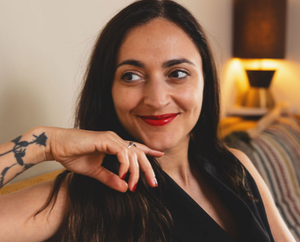
Florencia Franceschetti, known professionally as Flor Frances, is a journalist and radio host based in Miami. With a career spanning over 15 years, she has contributed to various publications includin
Sign up for Prism newsletters.
Stay up to date with curated collection of our top stories.