‘It was a night of shared fear’: Venezuelans left reeling from deadly and destructive U.S. attack
Locals in Venezuela described the terror of the airstrikes as they start to rebuild their homes and neighborhoods
Real journalists wrote and edited this (not AI)—independent, community-driven journalism survives because you back it. Donate to sustain Prism’s mission and the humans behind it.
Cacica Honta was in the neighborhood of Los Chaguaramos, near a military zone in Caracas, Venezuela, when the explosions from U.S. airstrikes on Jan. 3 began.
“The city shook with thunderous blasts that felt like they were splitting the earth,” Honta said in an interview with Prism, describing flashes lighting up the sky, the roar of aircraft overhead, and families scrambling for safety.
“It was a night of shared fear,” she said. “Where every family searched for shelter without knowing whether it was safer inside or outside their homes.”
Nearly two weeks after the early-morning U.S. military operation to abduct President Nicolás Maduro, residents of northern Venezuela are still reeling. The attack killed at least 100 people, according to the Venezuelan interior minister, and tore through residential areas, leaving multiple families without safe housing.
In Caracas, an explosion detonated just meters from the home of Elena Berti Cupello, a 77-year-old retired cook and baker who has lived in the same house for more than 50 years. Her grandson, Juan Imery III, wrote on a GoFundMe campaign page for Berti Cupello that the blast occurred in her backyard.
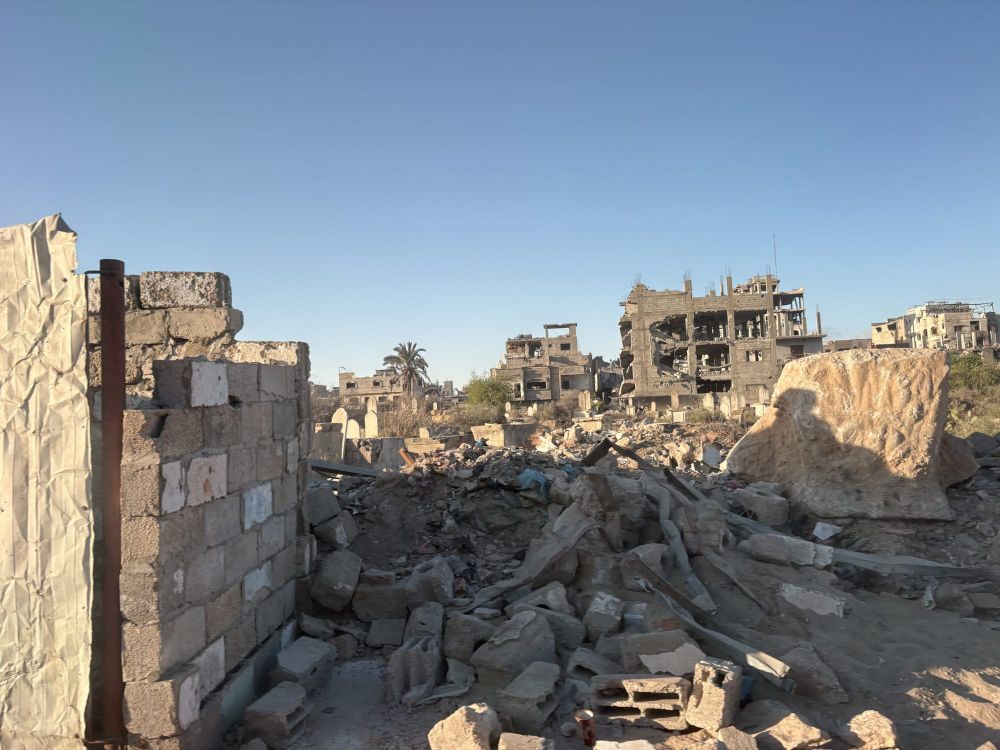
Berti Cupello survived, but her home did not. All of the windows were shattered, furniture destroyed, and both the main house and a small annex attached to the property were left uninhabitable, Imery said. Initial inspections indicated significant structural damage, with a full assessment pending due to safety constraints.
With no pension and ongoing health issues, including high blood pressure, Berti Cupello had relied on renting out the annex as her sole means of financial independence. That income disappeared overnight.
“Elena is an innocent civilian, caught in circumstances completely beyond her control,” Imery wrote in the GoFundMe he launched to help cover her repairs and basic needs.
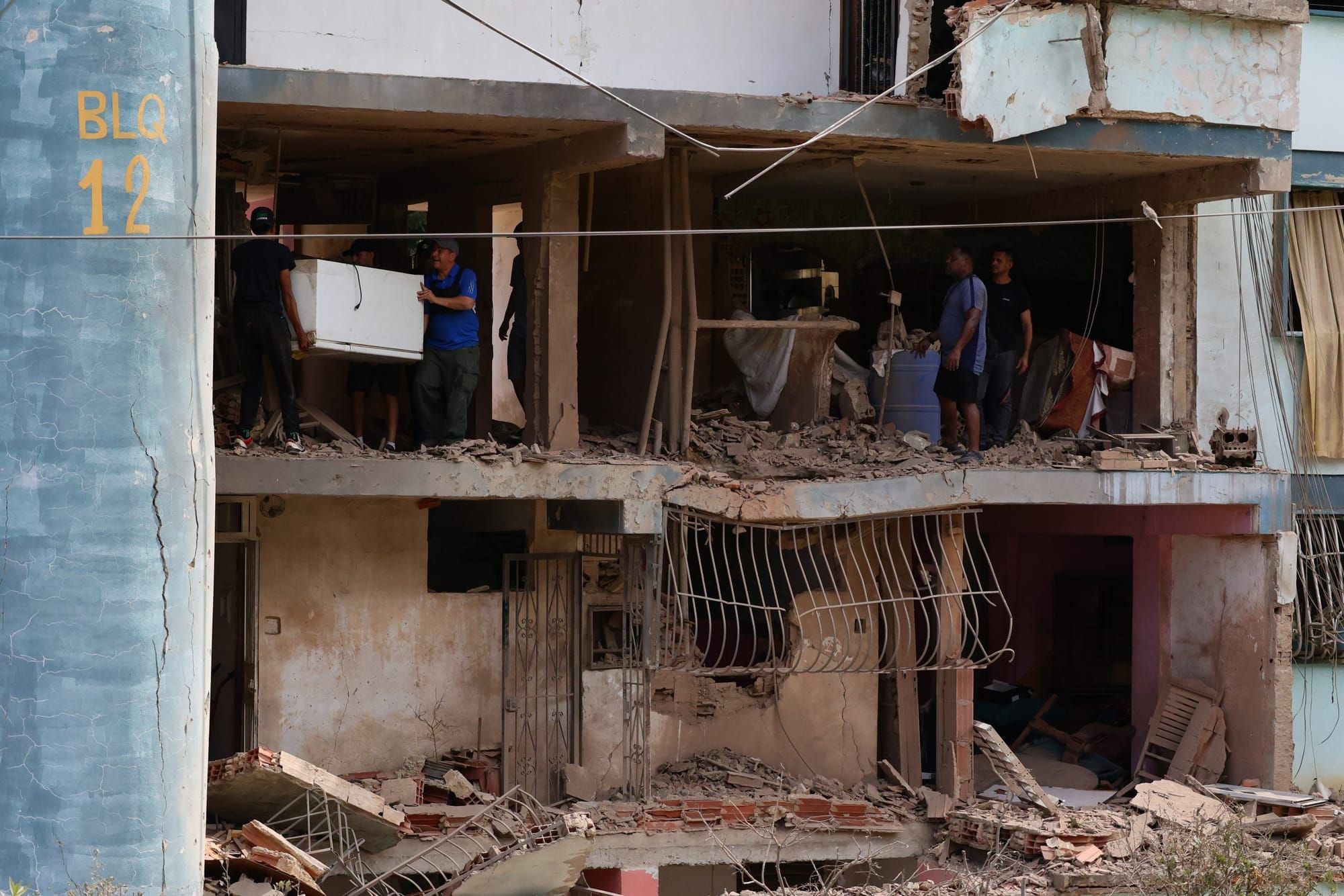
Roughly 20 miles north, in the coastal city of Catia La Mar in the municipality of La Guaira, the effects were even deadlier. According to a separate GoFundMe campaign organized by Maricarmen Monasterio, a residential building in the Rómulo Gallegos housing complex in the La Soublette neighborhood partially collapsed following overnight bombardments.
The affected building, known as Block 12, contained 16 apartments. One elderly woman who lived in the building was killed, Monasterio wrote, and another resident, Tibizay Suárez, was hospitalized with injuries. Monasterio wrote that residents believe the collapse was caused by shockwaves from explosives launched toward the nearby naval school.
Beyond the physical destruction, many civilians describe lasting psychological harm.
“In my immediate surroundings, there were no deaths or destroyed houses,” Honta told Prism. “The damage was different, more invisible: neighbors suffering nervous breakdowns, children crying, adults unable to sleep.”
“The community was left marked by the trauma of feeling war so close,” Honta said, “as if life itself could shatter at any moment.” Since that night, she added, loud noises trigger panic for her and make rest impossible.
Monasterio said she wanted to set up her online fundraiser to help the 16 families affected in the damaged building, and that no one asked her to set it up.
Her grandparents lived for decades in the Rómulo Gallegos complex. Monasterio said misinformation and fraud accusations have circulated online amid the chaos, prompting her to publicly affirm the legitimacy of the campaign and the scale of the damage.
In both cases, fundraiser organizers stressed that their efforts are aimed not at rebuilding luxury homes, but restoring basic safety and dignity for civilians caught in violence they neither caused nor could escape. Imery said that if funds remain after his grandmother’s home is repaired, he will use them to support neighbors whose properties were also damaged by the blast.
Across affected areas, residents say official information has been scarce.
“What prevails is opacity,” Honta said. She described increased police and armed presence in neighborhoods, alongside silence from authorities that has deepened fear and uncertainty. Meanwhile, the cost of living remains difficult, as citizens are caught between two oppressive powers. The country has been under U.S. sanctions since 2005, which escalated in 2017 and 2020.
“Runaway inflation makes food increasingly inaccessible,” Honta said, describing life in Venezuela. “The fear of speaking, because any word can be used against you. It is like living trapped between two forces: a repressive regime and a foreign intervention that turns us into disputed territory. The people are caught in the middle, paying the cost of oil and mineral wealth that others covet.”
Ultimately, Honta said, the U.S. invasion is a “violation of sovereignty” and “not humanitarian aid” but rather “an operation to control energy resources and reshape the regional political map.”
“This is not about ideology—it is about survival: being able to eat, having water, receiving medical care, letting children go to school,” Honta said. “The people want dignity, not empty speeches or invasions disguised as aid. They are not looking for armed heroes; they want to live in peace.”
She said she dreams of a country where dignity is possible, which includes fair wages, guaranteed basic services, real justice, and the freedom to speak without fear.
“Hope lies in community resistance, in not being erased or turned into a sacrifice zone,” Honta said. “We want the world to see us as a people, not as spoils.”
Editorial Team:
Sahar Fatima, Lead Editor
Carolyn Copeland, Top Editor
Rashmee Kumar, Copy Editor
Author
Alexandra is a Cuban-American writer based in Miami, with an interest in immigration, the economy, gender justice, and the environment. Her work has appeared in CNN, Vice, and Catapult Magazine, among
Sign up for Prism newsletters.
Stay up to date with curated collection of our top stories.