Every morning across the U.S., families start their day with a pee and a shower, coffee made with water from the kitchen tap, and a diaper change if there’s a baby in the house. Most Americans take for granted the easy ritual of these quotidian tasks as they do the continuous existence of a roof over their head.
A morning in the life of an unhoused family unfolds very differently. In the Skid Row region of Los Angeles, Aria Cataño encounters surging numbers of families living in their cars or in tents. Some are migrants who’ve spent many weeks trekking from South and Central America. Others are locals who’ve been evicted. All of them face months-long waits for shelter. If they have food, they might begin a day preparing their meal on the street with bottled water, followed by a bucket bath or fire hydrant “shower” and a long trek to a public toilet.
“A lot of undocumented kids walked here all the way from Venezuela or Colombia … and for them, unfortunately, they’ve seen worse,” said Cataño, co-founder of the homeless outreach nonprofit Water Drop LA. “But for American kids who grew up here who are now homeless, they’re completely traumatized. We get questions all the time: ‘When can we go back inside?’”
For unhoused people, finding water for drinking, sanitation, and hygiene purposes—known collectively as WaSH—is anything but a given. And the number of people who struggle to access it is growing.
According to the latest annual count conducted by the U.S. Department of Housing and Urban Development (HUD), some 58,000 families nationwide, a majority of whom were Black and brown and headed by single mothers, experienced homelessness in 2023. That’s a 16% increase from 2022. New York State scored the highest rate of family homelessness. Similar to other states with high rates of homelessness, including California, Washington, and Oregon, New York aims to tackle the crisis by increasing affordable housing over the next decade. Critical as housing is, homelessness experts are quick to point out that 10 years is a long time to wait for immediate bodily needs to be met. To their frustration, water and sanitation are often afterthoughts for many housing advocates.
The bulk of homelessness occurs in urban places. For example, last year, New York City saw a 53% increase in families with children experiencing homelessness—rising to a total of 19,400 families. The arrival of asylum-seekers and other migrants is only part of the story. There’s also been an uptick in evictions with COVID moratoria ending, with Black children under the age of 5 accounting “for a disproportionate share of those threatened with eviction,” according to The New York Times.
Dearths of living wages and social safety nets—like housing vouchers high enough to cover full rents, or SNAP benefits ample enough to purchase a month’s groceries—converge to create a perfect storm of instability for struggling families. Cataño works with a mother living in her car with her two kids. Her case highlights the dreadful absurdity many families find themselves navigating.
“She makes a salary of $60,000 or $70,000, but between the cost of child care, the cost of rent, and other miscellaneous expenses like buying gas, she hasn’t been able to find an apartment that she can afford,” Cataño said. “At the same time, she’s boxed out of shelters because she is above the income limit.”
Whoever they are and wherever they find themselves, unhoused families contend with the massive added burden of pursuing WaSH—finding potable water for drinking, cooking, and washing dishes; figuring out where to bathe and wash hands and clothes; and navigating menstruation without period products or the ability to clean up. This consumes hours of each day, leaving parents with less time to look for work and permanent housing and kids with a decreased ability to excel in school and form friendships.
When Ashley Ball moved from Texas to Kansas City, Missouri, with her four kids to escape domestic violence, she was only scheduled for five hours per week as a Subway manager. The hotel room she temporarily rented for $375 a week—she calls it “barely housing”—had a broken shower and a strong smell that lingered on her family’s clothes.
“Imagine if the plumbing is messed up and you’re trying to get five people in the shower to start the day,” she said. “It’s been hard days, especially for my younger boys … [K]ids are really mean if you are unclean.”
There are also numerous health issues related to poor WaSH access, especially when it comes to dehydration.
“Even if there are public fountains, the quality … is disgusting,” said Lourdes Johanna Avelar Portillo, a homelessness scholar at the University of California, San Francisco. With dehydration come urinary tract infections, lethargy, and lower cognitive functioning in children.
Infections of all kinds are also common.
“The tricky thing about families who are unhoused is that they have to move about the world differently because of things like Child Protective Services, as well as violence,” said April Ballard, an environmental health scientist at Georgia State University. Adding to the fear factor, the Supreme Court recently ruled that it was legal to ban unhoused people from camping on public property.
“Because of that, they often are spending time in more hidden places—maybe you’re in a more remote area where there isn’t a gas station or a restaurant that will let you use the bathroom and get water,” Ballard said.
Without easy access to drinking water, families might scoop it from a stream or creek, which run a high probability of containing enteric pathogens.
“When you’re living on the street or living in a tent where you’re maybe defecating near where your living area is, you can contaminate water or even just ingest feces that’s on your hand or in the environment,” explained Ballard. A recent study in San Francisco identified unhoused people who had contracted E. coli, Helicobacter pylori, and Acanthamoeba. These infections can lead to severe bloody diarrhea in the case of E. coli and a deadly strain of encephalitis in the case of Acanthamoeba.
A 2023 study published in the Journal of the American Medical Association found that 18,970 U.S. hospital deliveries between 2016 and 2020 occurred to unhoused mothers.
“If you’re pregnant, you’re vulnerable from an immunological point of view, so pregnant women are at greater risk of being infected with a lot of WaSH-related diseases—everything from viral infections to bacterial infections,” said University of North Carolina environmental engineer Joe Brown. When it comes to very small children, “think about potty training a child without having a potty. It’s a grim situation to just try and stay clean.” On top of all that, lack of WaSH increases already high levels of stress, depression, and anxiety.
“The more services you’re lacking, there’s an incremental risk for your mental health deterioration,” Portillo said.
Advocates say shame is the defining emotion surrounding the experience of relieving oneself in less-then-private places, meeting the world with soiled clothes and unclean bodies, and having few places to change scant menstrual products—with some people having to use rags instead of tampons or sanitary napkins. The psychological and physical ramifications, especially for children, can last a lifetime.
Brown says that among wealthy countries, the U.S. has one of the largest populations without safe access to WaSH. Homeless numbers account for a good part of this dubious distinction. But even folks who count as “housed” might turn on the tap and find nothing coming out.
Fran Marion, a McDonald’s manager and mother of two in Kansas City, Missouri, once rented an apartment with dry taps. She had to fill gallon jugs at her landlord’s apartment to cook with and use his hose to fill her tub for baths and clothes-washing. She describes the situation as not much better than when she was fully unhoused and living in her van, showering at a friend’s apartment.
“I think we’ve told ourselves for so long that this really doesn’t exist in any kind of scale in the U.S.,” Brown said. However, the less than 1% of Americans with poor WaSH access still adds up to millions of people—and the lack of data in the U.S. makes it harder to fix the problems. We know from studies in low- and middle-income countries that children who experience repeated infections due to hygiene are at risk for negative impacts on growth and cognitive development.
But “I don’t know of any long-term studies that have looked at those things in populations in the U.S.,” Brown said. “We don’t value these people.”
The word “homeless” often conjures stereotypes of adults with mental health and substance abuse challenges. Many unhoused families are seldom seen. Contributing to the confusion: 75% of students who’ve lost their housing double up with other households. HUD doesn’t recognize doubled-up families as unhoused, but the U.S. Department of Education (DOE) does—offering a more accurate accounting of how many families are struggling. Where HUD counted 582,462 unhoused adults and kids in 2022, DOE counted 1,205,292 unhoused kids alone in the 2021-22 school year. Four percent of these children were completely unsheltered.
Larry Seamans, CEO of nonprofit FamilyAid Boston, calls HUD’s oversight a “blindsided disconnect” and “war on unhoused children,” since an uncounted kid loses out on any potential aid. “If you cannot see the child, you cannot solve the issue,” he said.
Doubling up does provide a temporary roof over a family’s head. But studies show the practice, frequently born of desperation, creates often tenuous, crowded, chaotic living conditions with deleterious effects on children’s physical and mental health.
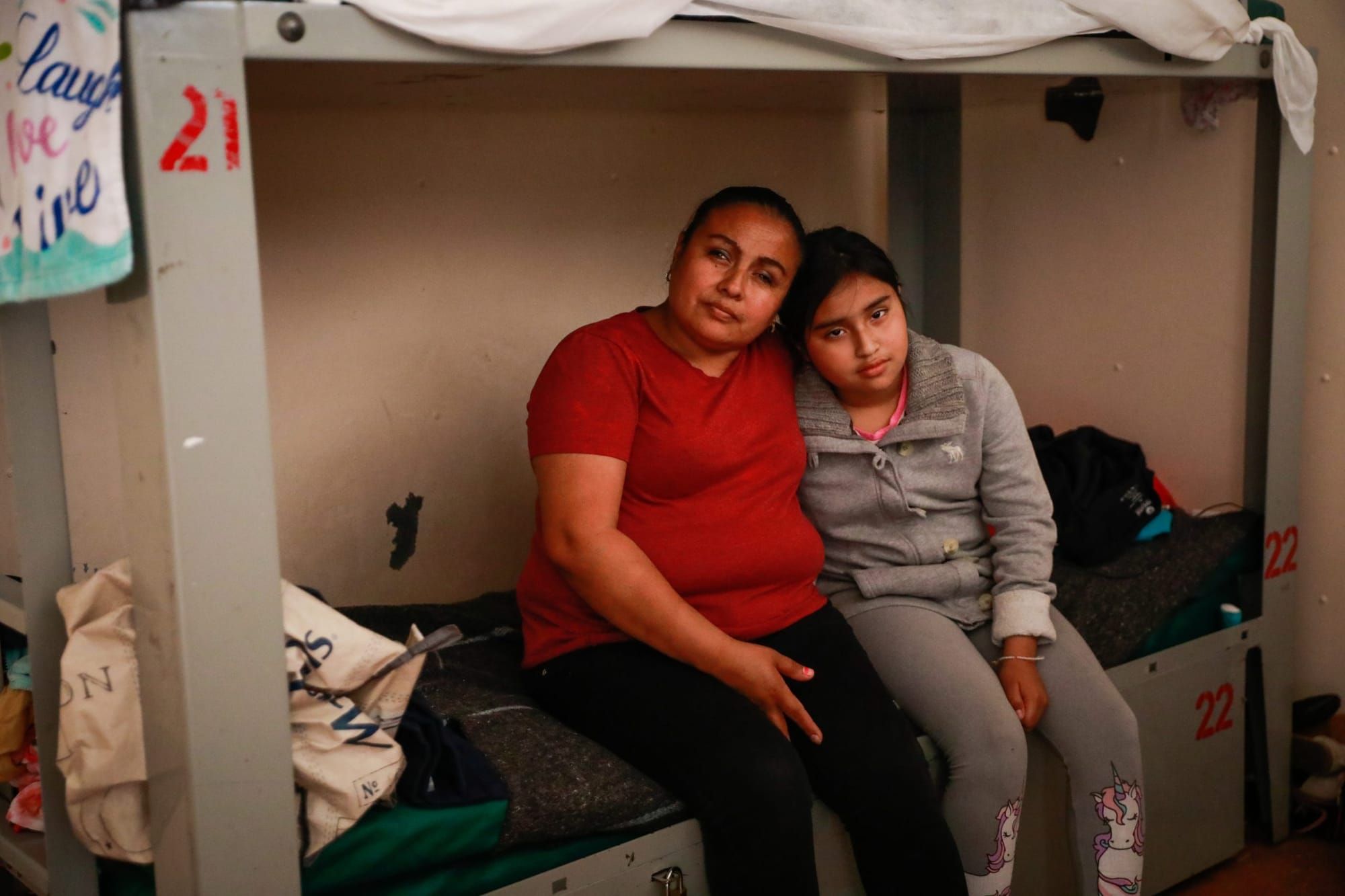
Doubled-up moms and kids often report being locked out of relatives’ houses during the day, with no access to kitchens or bathrooms. Many are also forced to share one bathroom among many household members, with showering and toilet use fraught and lacking privacy. These families also have little control over when they can accomplish tasks like laundry.
Graham Pruss is the director of the National Vehicle Residency Collective, which advocates for the rights of people taking shelter in their various modes of transportation. He says families living in their cars or RVs fall victim to specific regulations affecting their WaSH access. Cities’ laws often mandate that oversized vehicles park overnight in industrial zones, where it can be “near impossible to find legal open access to water,” he said, making it difficult for families to “maintain healthy foodways,” among other challenges.
Pruss says discrimination against folks living in their vehicles belies a fundamental misunderstanding about the importance of these “assets” to a family’s survival. A vehicle is likely “the most important thing they own … left over from when the [family] is evicted,” he said. In addition to providing shelter, it may also hold all a family’s documents and personal possessions. Fear of theft and vandalism, or of having their vehicle impounded by the authorities, means families are loath to strike out to access “vital amenities” as well as social services, medical care, and housing and employment assistance.
The shelter system hardly offers WaSH salvation—if a family can navigate the sometimes lengthy and onerous intake process. Eleven percent of unhoused families somehow managed last year in New York City, where about 56% of these families were Black and 32% were Latinx. A paper co-authored by Drew Capone, a public health assistant professor at Indiana University, found that emergency shelters and transitional housing provided sanitation facilities that were often shared, inadequately maintained, or not consistently available. Families contend with no doors on toilet stalls, no toilet paper, too much demand for too few showers, tap water they don’t trust for drinking, and a lack of kitchens coupled with unpalatable shelter-provided food.
Additionally, according to UNC’s Brown, crowded communal shelters have less-than-optimal hygiene. This can prove particularly dangerous for children who may not receive rotavirus and other common vaccines without health insurance.
“Enteric diseases and respiratory diseases are much more frequently in play in high-occupancy settings like shelters because you have people in such close proximity,” Capone said. A 2018 scoping review also found incidence of scabies and lice in shelters, as well wheelchair inaccessible (and sometimes broken) showers and toilets.
What would dignified WaSH access look like for families desperately awaiting permanent affordable housing solutions? Small examples are everywhere.
LA’s Skid Row has a 24-hour ReFresh Spot, which offers seven restrooms, six showers, 24 washer-dryer units, and other wrap-around services. Cataño says it’s heavily used by unhoused parents and kids, with five families camped outside its doors as of this past June for easier access to its facilities. ReFresh Director Stephany Campos calls the facility’s impact on families “life-changing.” Each of its toilets currently serves about 100 people, though Campos would like to see it expand to the United Nations minimum refugee standards of one toilet for every 20 people. Brown calls San Francisco’s Pit Stop public toilet program “exemplary”; it has 31 24-hour locations around the city that have been shown to reduce open defecation.
Some advocates deliver water kits and hygiene products—reusable cups, sanitary pads, diapers, wipes—to unhoused families both on the street and in shelters. Twenty-eight states and Washington, D.C., mandate schools provide free period products to students.
Portable shower trailers, run by nonprofits like Washington state’s Dignity for Divas can “be really, really helpful for families … [whose] primary wage earners need to be able to go to work [or find a job] and not get in trouble for smelling,” Pruss said. When it comes to vehicular homelessness, he’d like to see infrastructure developed around mobile home parks, where a family “can park their vehicle and get medical care if they need it, or go off to their job, or have their children picked up to go to school from a single, constant stable location.”
San José, California, recently developed a supportive-parking program for RVs. Pruss said it allows for WaSH needs to be met and for advocates to maintain connections with families to assist them with housing navigation, case management, and other services.
The federal government mandates one school homeless education liaison per school district across the country. Boston pays extra to have one in every public school. When a struggling family is identified, the liaison contacts FamilyAid, which sends a social worker to negotiate with a landlord to keep the family housed. Should that fail, there is some solace in the fact that Massachusetts—the only state with a right-to-shelter law—requires working WaSH services in all family housing facilities.
As of June 2024, FamilyAid Boston had 5,444 children and parents in its care, including 715 in emergency shelters. “And they’re all units with bathrooms, access to laundry, and everything else,” Seamans said. In Kansas City, Ball credits a liaison with helping her pay her hotel bill when she ran out of money and finding her a permanent place to live. She and her children moved in May.
Kids experiencing homelessness rank high on trauma scales, and the more obstacles they encounter, the higher the trauma. But for unhoused children and adults alike, Ballard said the indignity of the experience, made so much worse by WaSH challenges, takes a huge toll on feelings of self-worth.
“When you can’t even have the most basic things like water for drinking and cleaning your clothes and cleaning your body,” Ballard said, “that is devastating.”
Reporting for this piece was supported by a media fellowship from the Nova Institute for Health.
Author
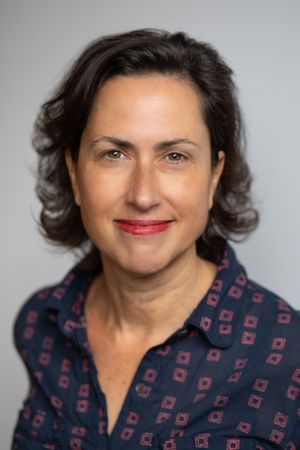
Lela Nargi is a Brooklyn, NY-based freelance journalist covering the intersection of food and ag systems, social justice issues, and climate science for The New York Times, The Guardian, the Food and
Sign up for Prism newsletters.
Stay up to date with curated collection of our top stories.