Trump signals intention to defund essential lifelines for unaccompanied migrant children
On March 29, the Trump administration will decide whether to renew the legal services contract for unaccompanied children, after rescinding a stop-work order that abruptly paused the program last month
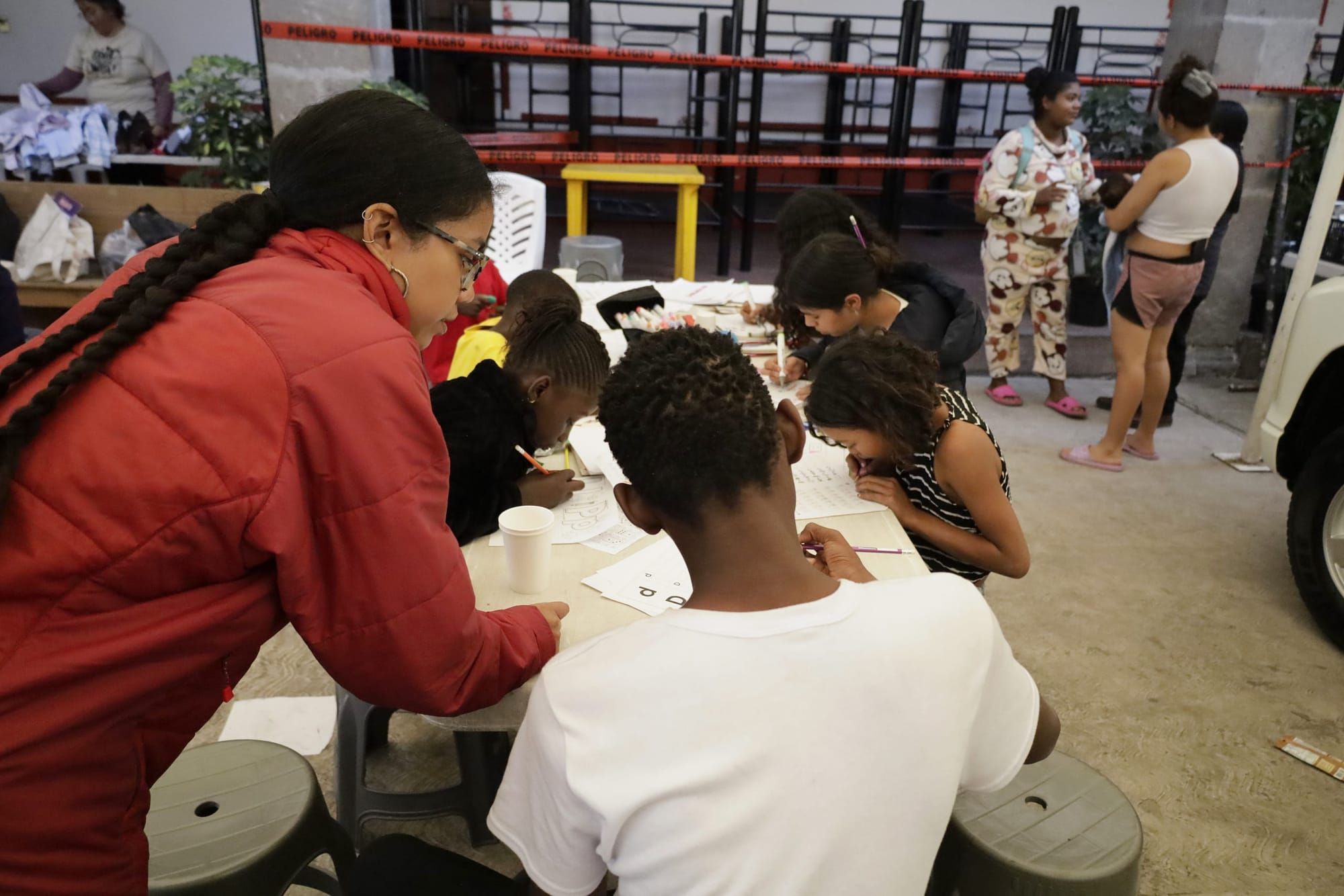
The Trump administration seems intent on defunding essential legal lifelines for 26,000 unaccompanied migrant children, some only a few months old, who would have to attend immigration court hearings without an attorney—dramatically reducing their chances of avoiding deportation.
On Feb. 18, the Trump administration issued a stop-work order that abruptly paused legal services for unaccompanied migrant children. After a public backlash and more than 15,000 letters to Congress demanding the funding’s restoration, the order was rescinded three days later without explanation.
Close to 100 nonprofit organizations depend on federal funds to provide legal services to immigrant children. The stop-work order left them rattled, uncertain about their future. On March 29, the administration will decide if it will continue until 2026 with the four-year contract for legal services for children who crossed the border without a legal guardian.
It’s going to be “a big disaster” if the contract is not renewed, said Jennifer Podkul, chief of global advocacy of Kids in Need of Defense (KIND), the preeminent international organization protecting unaccompanied and separated children, with 5,000 open cases across the U.S. “It’ll be a disaster for the children, and it’ll be a disaster for the courts.”
A 2021 study found that a child who had legal representation at some point during their case was more than seven times more likely to be allowed to remain in the U.S. Without an attorney, Podkul said, “kids are going to be left not knowing what the next step is, how they finish their applications, and how they tell their story.”
For a non-English speaker, navigating the adversarial immigration legal system is a steep challenge. Take the case of 6-year-old Juliana, who is blind, and her 4-year-old brother Juan, separated from their mother at the U.S.-Mexico border. Represented by the Florence Project, a nonprofit in Arizona, Juliana needed help to move around in the courtroom and understand the proceedings. Without assistance, the siblings would have faced a federal prosecutor actively advocating for their return to the dangers they had fled in Guatemala.
Children seek refuge in the U.S. to escape war, gangs, or violence, to flee abuse or environmental disasters, or to reunite with family. Others are smuggled involuntarily as labor or sex trafficking victims.
The $815 million federal contract for legal services from 2022 to 2026 also invests in counseling for minors to understand the court process, the immigration system, and their rights, and in screenings and follow-up assistance. Given the connection with their clients, legal staff are often in the best position to detect signs of labor and sexual trafficking, said Susan Reed, director of the Michigan Immigrant Rights Center, with 800 open cases of unaccompanied minors.
“These kids are really vulnerable, totally lost and separated from their families and cultures, perhaps forever,” said Reed.
No due process for children
On Feb. 23, a leaked Immigration and Customs Enforcement (ICE) memo reportedly outlined a plan to arrest and deport children with no legal guardian. The focus would be minors with removal orders, including tens of thousands targeted solely for missing a court date, which likely meant that they didn’t have an attorney. The plan also called for introducing removal charges against children in immigration court.
From fiscal years 2021 to 2024, more than 466,000 immigrant children have been placed under the custody of the Office of Refugee Resettlement (ORR), the agency in the Department of Health and Human Services that cares for children who entered the country without a parent or legal guardian. Nonprofits estimate that some 150,000 unaccompanied children are yet to be processed by immigration courts. Thousands are babies and toddlers; 24% of the minors in ORR’s custody are younger than 12 years old.
“This is only one piece of a broader effort to dismantle protections for migrant children,” according to a Substack post by Immigration Hub, a national advocacy organization. The administration has also curtailed interpreters’ services and barred volunteers who explain legal procedures to minors in immigration courts.
These policies point to a future in which immigrant children—specifically, those not considered white—are stripped of their rights and deported without due process, said Carlos Guevara, senior director of policy at Immigration Hub.
Of the unaccompanied minors, 72% come from Mexico, Honduras, and Guatemala, which itself accounts for 32% of the total, ORR data shows. For these levels of child migration, the U.S. carries responsibility.
Mexico has been ravaged by the violence of the so-called war on drugs that the U.S. has imposed on it. Honduras is still recovering from the 2009 coup supported by then-Secretary of State Hillary Clinton, while Guatemala’s 1954 coup instigated by the U.S. resulted in the genocide of Mayan people in Quiché and a civil war that lasted until 1996, leaving the country in shambles.
Up until 2022, there was bipartisan consensus to provide legal representation to unaccompanied children. The Trafficking Victims Protection Act (TVPA), approved in 2000, was reauthorized five times with Republican support. This time might be different.
Led by Massachusetts Sen. Edward Markey, only Democrats signed a letter dated Feb. 25 urging the Trump administration to renew the contract for unaccompanied minors. “Expecting a child to navigate complex legal proceedings unaided is not only patently unjust but also a flagrant violation of their fundamental rights,” the letter read.
If the funding is eliminated, nonprofits would continue to represent minors in immigration courts, organizations say, until the resources run out. States, municipalities, and private philanthropies could temporarily finance the effort, but it wouldn’t be sustainable, stressed Podkul.
Most unaccompanied children are eligible for permanent status in the U.S., often by obtaining T visas for child survivors of trafficking or U visas for victims of sexual exploitation and other crimes. However, without federal resources for legal services, most of them would be deported.
“There might be some pro bono attorneys or some folks who would be able to hire counsel, but overwhelmingly,” Reed said, “these kids just wouldn’t have lawyers anymore.”
Editorial Team:
Sahar Fatima, Lead Editor
Lara Witt, Top Editor
Rashmee Kumar, Copy Editor
Author

Maurizio Guerrero is a journalist based in New York City who covers immigration, social justice issues, Latin America, and the United Nations. Follow him on Bluesky at @mauriziogro.bsky.social and on
Sign up for Prism newsletters.
Stay up to date with curated collection of our top stories.