Violence deconstructed: Trump’s actions during his first 100 days mimic the tactics of domestic abusers
The president and those enforcing his fascist agenda are hyperfocused on weaponizing irrelevant aspects of their victims’ pasts to frame them as imperfect victims and undeserving immigrants

As the Trump administration aggressively pushed its propagandistic agenda in April to justify the unlawful transfer of Kilmar Abrego Garcia, the administration had a main talking point: Abrego Garcia is an imperfect immigrant, so he deserved to serve a life sentence in CECOT, a maximum security prison and notoriously brutal labor camp in El Salvador.
In many ways, the shameless cruelty of Abrego Garcia’s case is a microcosm for the administration’s approach to everything.
Just over 100 days into the second Trump administration, we watch daily as the administration wields the tactics of domestic abusers to enact its authoritarian agenda. At the heart of Trump 2.0’s brazen fascism are the same gendered, patriarchal behaviors weaponized by abusers.
Donald Trump’s mass deportation operation is perhaps the most stark and heinous example of these tactics in action. Many are tempted to cite how, of the 238 Venezuelan men the administration has so far shipped to CECOT without any legal proceedings, just 32 have “faced serious criminal accusations or convictions,” according to reporting from the New York Times. Many discuss how Abrego Garcia appears to have had no gang affiliation, contrary to the Trump administration’s racist lies, or how he had a court order explicitly protecting him from deportation. These points certainly demonstrate how shameless this administration is in its quest to plow through our most basic rights. But squabbling over the particulars of these men’s pasts, or their supposed violations within an innately unjust legal system, only validates the administration’s mission to frame human rights as conditional—the same way that abusers defend themselves by framing their victims’ rights to safety from violence as conditional.
At the heart of Trump 2.0’s brazen fascism are the same gendered, patriarchal behaviors weaponized by abusers.
Predictably, since facing an outpouring of backlash over the administration’s unlawful actions against Abrego Garcia, Trump officials have zeroed in on past allegations of domestic abuse against him. Abrego Garcia’s wife once sought a protective order against him, prompting Attorney General Pam Bondi to declare last month, “Maryland is safer because he is gone. And that woman that he is married to and that child he had with her? They are safer tonight because he is out of the country.”
Bondi didn’t even name Abrego Garcia’s wife, Jennifer Stefania Vasquez Sura, who is publicly pleading for his return. “We were able to work through this situation privately as a family, including by going to counseling,” Vasquez Sura said in a statement shared by her lawyer with news outlets. “Kilmar has always been a loving partner and father, and I will continue to stand by him and demand justice for him.”
The specifics of Abrego Garcia and Vasquez Sura’s marriage are ultimately immaterial to the simple fact that U.S. residents unconditionally deserve due process under the law, and no human being should be separated from their family, removed from their community, and certainly not sentenced to serve a life sentence in a foreign labor camp. The Trump administration is also quite unabashedly the most openly pro-abuser administration in modern history.
The Trump administration is helmed by a legally recognized sexual abuser and serially accused rapist, with a cabinet rife with men who have no shortage of their own abuse allegations. For months now, the Trump administration has either defunded or threatened to defund a range of life-saving resources for domestic violence victims; the administration’s confusing, inconsistent directives alone have plunged the work of already stretched-thin organizations into chaos, significantly impeding their ability to help save victims’ lives. And all of this, of course, is unfolding while the administration continues to target college rape victims and threaten incarcerated trans women with state-sanctioned rape by trying to send them to men’s prisons so that Trump can posture as the great protector of incarcerated women—women who are living in cages as a result of policies he supports.
The president and those helping to enforce his fascist agenda are hyperfocused on weaponizing irrelevant aspects of their victims’ pasts to frame them as imperfect victims and undeserving immigrants, worthy of deportation, dehumanization, state violence, and abuse. This is how the administration has treated everyone who is ensnared into its horrific, mass deportation operation.
This Trump administration’s strategy runs parallel to how our culture treats rape victims. That is, instead of condemning those who hold and abuse power to violate, brutalize, and oppress, our patriarchal culture condemns victims for what they wore or how much they drank. But no one aspect of a person’s life—and certainly not allegations and racist smears—is grounds to remove them from their home, separate them from their families, and deport and cage them in a foreign country for the rest of their lives.
The Trump administration and the right’s approach to immigration has long relied on a core tactic of abusers known as DARVO, or deny, attack, reverse victim and offender. As I’ve previously written, when Congress passed the Trump-backed Laken Riley Act—introduced as the heinously named Preventing Violence Against Women by Illegal Aliens Act—it emboldened the fascist, bipartisan attacks on immigrants, which are justified by racist, dehumanizing lies that misrepresent immigrants as abusers rather than victims whose rights are being trampled.
In recent years, Republicans and Democrats alike have coalesced to frame immigrants as rapists and abusers, as dehumanizing tropes of innately violent men of color who are predisposed to victimize and attack white women. The reality, of course, is that this is pure, unfiltered racism. It’s also a projection.
The Trump administration is also quite unabashedly the most openly pro-abuser administration in modern history.
Citizens are far more likely to commit violent crime than noncitizens. Yet, even as I invoke that statistic, I can’t stress enough that none of this should matter. Even if the opposite were true, neither the Trump administration nor any presidential administration, Republican or Democratic, should round up and remove immigrants from society or frame them as scary, abusive caricatures to manufacture support for doing so.
The anti-immigrant agenda that is escalating is rendering actual abuse victims—specifically, immigrant abuse victims—exponentially more vulnerable. When they face greater risk of deportation and family separation for seeking protection from abuse, immigrant abuse victims are far less likely to seek help. Under the first Trump administration, Immigration and Customs Enforcement harassed and arrested a trans woman as she left domestic violence court in Texas. In January, a Michigan woman was detained by ICE shortly after reporting her sexual assault to local police. This is the effect of DARVO: Almost a quarter of survivors say that when they called 911 on their abusive partner, they were the ones arrested or threatened with arrest because police officers perceived them as the abuser. Consequently, many may never seek help again.
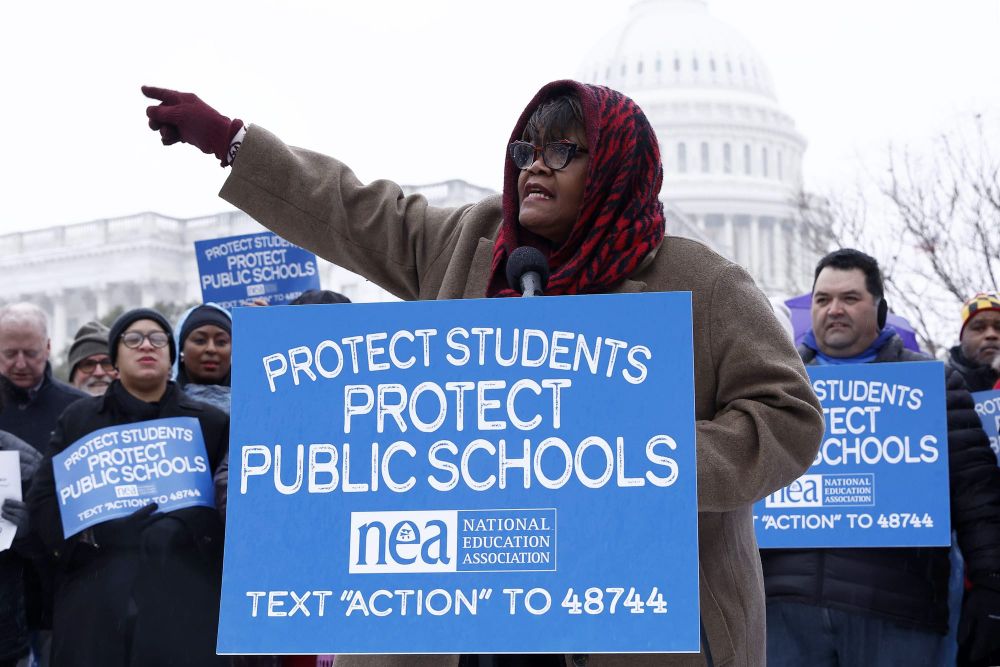
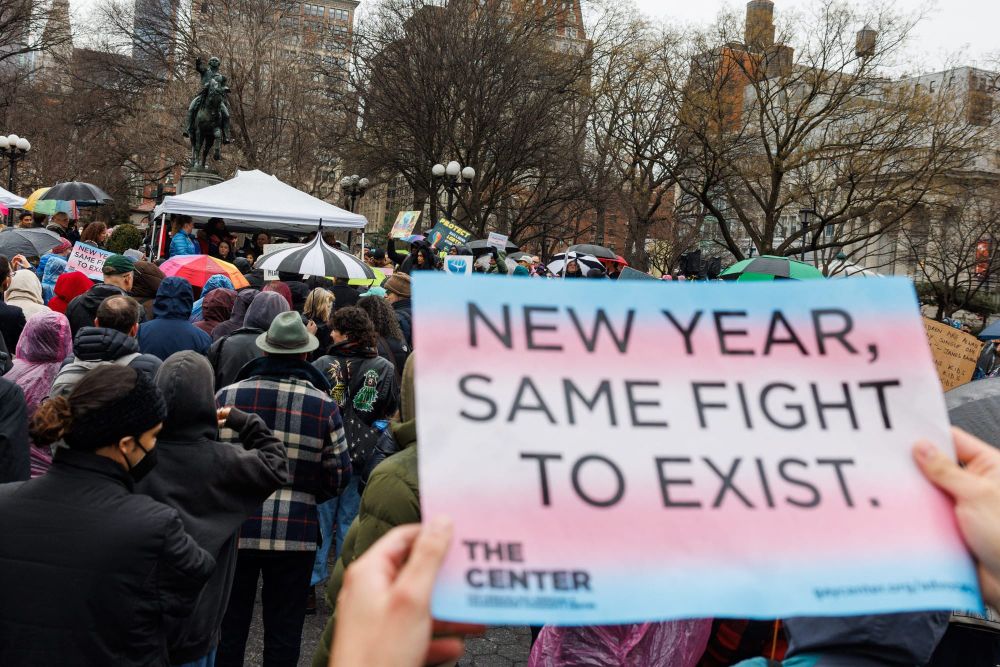
We see the same reversal of victim and offender with this administration’s horrific attacks on LGBTQIA+ people, and trans people in particular. Trump officials pretend they are protecting children from trusted adults helping them access gender-affirming care. In reality, the Trump administration aims to write trans children and adults entirely out of existence. The administration also pretends to protect women and girls in sports from imagined trans assailants.
In April, the researchers who pioneered the term DARVO wrote an op-ed directly accusing the Trump administration of DARVO. Sarah Harsey and Jennifer Joy Freyd cited Trump’s tariff agenda as an example. During the first 100 days of his administration, Trump has repeatedly threatened or implemented and removed massive, senseless tariffs on imported goods from all countries, primarily punishing his own supporters with massive price hikes on daily goods. After facing backlash, Trump has repeatedly backed down, but, as Harsey and Freyd point out, not before gaslighting the nation by pretending the economic destruction he was single-handedly inflicting was neither serious nor his fault. Trump also quickly went on the offense, publicly and viciously attacking the credibility of anyone who questioned his obviously moronic plan. Even with Trump’s policies that aren’t as clearly gendered or as clearly rooted in patriarchal, white supremacist oppressions, we can see that DARVO and the playbook of abusers define this administration’s approach to every aspect of governing.
It should come as no surprise that an administration full of accused abusers would prioritize policies that enact state violence that carries disparate, targeted harm for victims and survivors. This includes defunding family planning programs, gutting a federal agency tasked with preventing intimate partner violence, and enacting a range of anti-survivor Title IX measures. Trump’s rhetoric to justify these actions relies on self-victimization and distortion, framing the most marginalized as the abusive figures—just like abusers. Consequently, we must turn to key tenets of survivor justice and victim advocacy to guide our resistance. That means unconditional advocacy for victims of abuse and state violence and oppression—regardless of their past or the circumstances leading up to the abuse they face from the state. That means abandoning innately gendered, white supremacist notions of what makes someone a perfect or deserving victim. That means questioning who those in power frame as abusers and questioning power imbalances. It also requires recognizing that marginalized people are often treated as threats to the state for simply existing, and that we can’t free anyone by merely appealing to notions of traditional respectability.
Fascism is inextricably linked to gender-based violence and the playbook of abusers. In response, we must rely on the compassionate, unflinching playbook of survivor justice to fight back and build toward something better.
Editorial Team:
Tina Vasquez, Lead Editor
Lara Witt, Top Editor
Rashmee Kumar, Copy Editor
Author

Kylie Cheung is a freelance writer reporting on politics and culture. She is the author of Survivor Injustice: State-Sanctioned Abuse, Domestic Violence, and the Fight for Bodily Autonomy.
Sign up for Prism newsletters.
Stay up to date with curated collection of our top stories.