More than 210,000 trans voters could face voting barriers due to ID laws, report says
An estimated 43% of transgender voters in states with primarily in-person voting lack identity documents that correctly reflect their name or gender, a new UCLA report finds

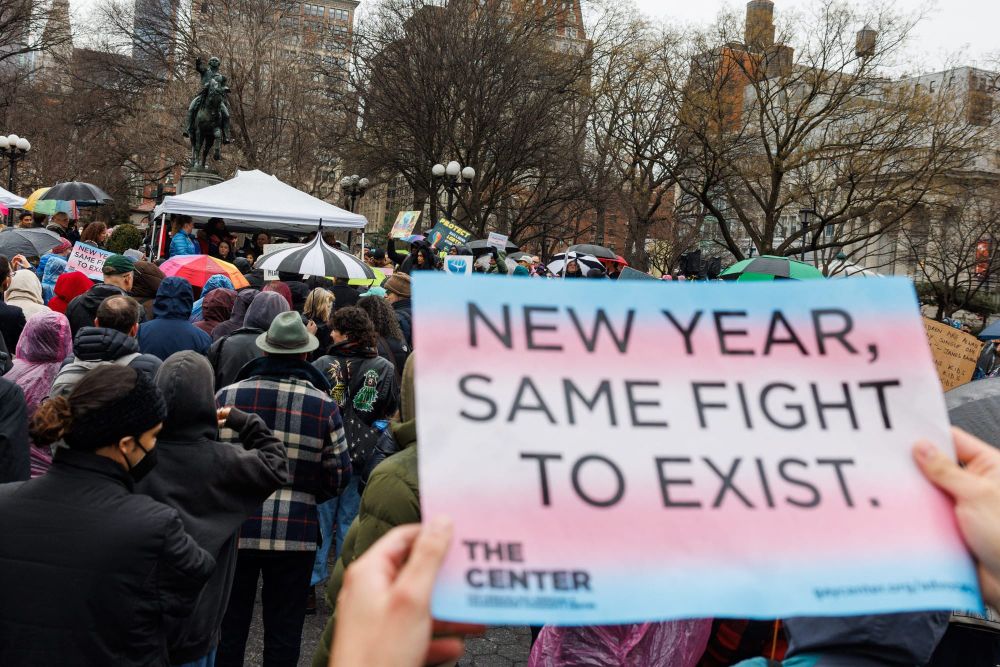
A new report from the Williams Institute at the UCLA School of Law warns that 210,800 transgender people in the U.S. could face barriers to casting their ballots because of voter ID laws—an all-time high in the 12 years the institute has been researching the issue. The study authors, as well as transgender rights advocates, say they are not surprised that potential disenfranchisement is on the rise as voter ID laws become more common and more strict while transgender voters are less likely to have accurate IDs or IDs at all.
“Multiple states, including Texas and Florida, have acted to make it more difficult for transgender residents to update their IDs,” said Williams Institute Research Data Analyst Lindsay Mahowald, one of the authors of the report. “If this trend continues, the number of transgender voting-eligible people who experience barriers to voting because they do not have updated IDs may increase.”
Mahowald also said that the laws are being enforced by poll workers who should be trained in better assisting transgender voters.
“Different poll workers may treat trans people differently, so trans people’s experiences may vary depending on the poll workers they encounter,” Mahowald said.
The study states that about 825,100 transgender adult citizens in the U.S. will be eligible to vote in the November 2024 general election, and 647,700 of them live in states that conduct their elections primarily in-person at polling places as opposed to by mail only. “An estimated 43% of these individuals (276,500) lack identity documents that correctly reflect their name or gender,” the report states.
B.C. is a voter in Wisconsin, one of the 13 states with the strictest voter ID laws identified in the Williams Institute report. He presents as male and has an “F” on his IDs, and while he hasn’t had a poll worker harass him or deny him his voting rights, voting can still be an uncomfortable experience.
“By handing this stranger my ID, I’m essentially coming out to them as trans, and they can do with that information whatever they want. It’s a moment of not having control,” he said. “I’m generally pretty open about my trans identity, but I don’t often go around telling strangers that I’m trans, and so having that moment where I don’t get to choose if they know that I’m trans, is unnerving, and it does produce some extra anxiety.”
Transgender Law Center Senior Policy Attorney Andrew A. Ortiz said he was concerned that issues such as the anxiety B.C. described could prevent some transgender people from attempting to vote at all, even if they would be allowed to. TLC’s Legal Information Helpdesk has only received a handful of inquiries related to voter suppression tactics, mostly related to pre-voting questions.
“It’s not surprising that strict voter ID laws and laws that create barriers to accessing accurate ID disproportionately harm Black, brown, and poor transgender people,” Ortiz said. “These impacts aren’t an accident, they aren’t a coincidence.”
Ortiz said the U.S. has a long history of disenfranchisement based on race, sex, and class.
“These laws must be assessed in that context,” he said. “Too many politicians fear transgender people’s power, fear Black and brown people’s power, and fear poor and working-class people’s power, so they support discriminatory restrictions on voting in an attempt to limit our participation in the political process.”
A separate study published last month in The Journal of Politics showed that transgender voters encounter more problems when attempting to vote than cisgender voters, but a large part of the problem may happen before they even show up to a polling location. Some transgender voters may not go at all due to a lack of ID or discomfort with showing an ID that doesn’t reflect their accurate name, photo, or gender marker. At least 1 in 10 nonregistered citizens doesn’t have an ID at all, with that number being much higher for people of color, disabled people, people with fewer academic credentials, and people with lower income.
About half of transgender people have no ID that lists their accurate name or gender marker, according to the 2022 U.S. Transgender Survey, which also showed they are much more likely not to have an accurate ID if they are young adults, people of color, students, living in poverty, or have disabilities. Obtaining an ID costs money, takes time, and requires interaction with discriminatory institutions—updating IDs requires all of that a second time. In some states, transgender people cannot update their IDs because the state prohibits the change of a gender marker on a birth certificate or requires proof of gender-affirming surgery to make a change. Transgender people living in states with such policies are less likely to have accurate IDs. In the 2022 U.S. Transgender Survey, 20% of registered voters reported not having a driver’s license, 76% didn’t have a state ID, and 53% didn’t have a U.S. passport.
Ortiz recommended that transgender voters proactively check the information their state has on file associated with their voter registration record against the identification documents they have, and check what documents their state requires to vote. If possible, voters should take advantage of early voting so they can troubleshoot any obstacles ahead of Election Day. In states that restrict transgender people’s ability to update their state-issued identity documents, they may want to consider whether using a valid passport is possible. He said passports are currently easier to update than ever before and permit applicants to select an “X” gender marker.
“There are several states where electoral votes are decided by small margins, even ten or twenty thousand votes,” Mahowald said. “The number of trans people impacted by these laws could have a meaningful impact on the outcome, which is an important consideration given the general election coming in November.”
Author

Sarah Prager’s writing has appeared in the New York Times, National Geographic, The Atlantic, NBC News, and other national outlets. She is the author of four books on LGBTQ+ history for youth: Queer,
Sign up for Prism newsletters.
Stay up to date with curated collection of our top stories.