Never eat the candy on your pillow: Time confines us all
I’m losing my mother. What can be done? Nothing. All I can do is be here for her from behind bars
Dear Reader,
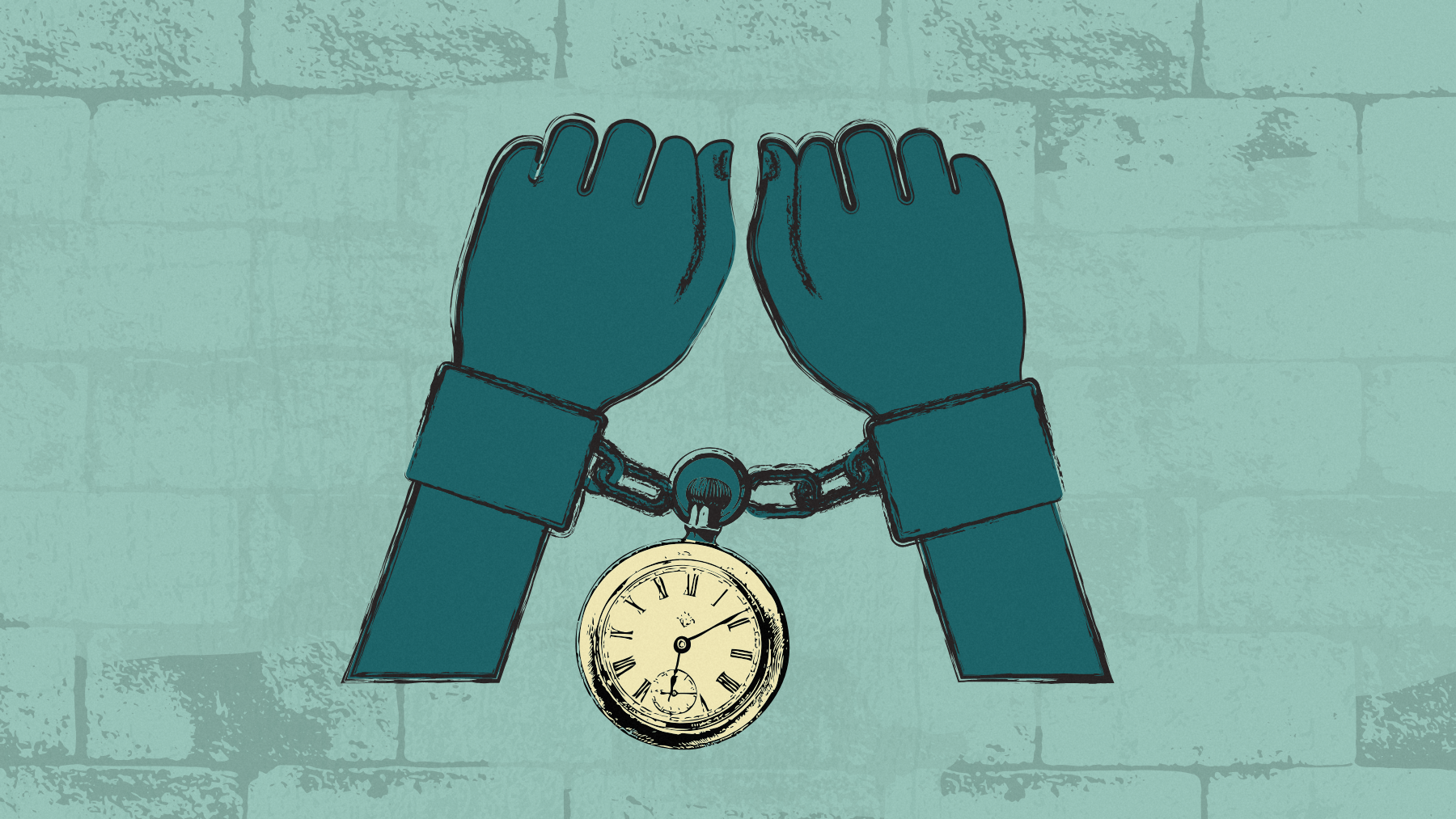
This column is about—wait for it, drum roll please—time. What is time? What amounts to a waste of time? How much time do any of us have left?
As I write this, I’m listening to the soundtrack for the Broadway musical “Rent.”
Five hundred twenty-five thousand six hundred minutes,
Five hundred twenty-five thousand moments so dear.
Five hundred twenty-five thousand six hundred minutes,
How do you measure, measure a year?
This piece is dedicated to those who donate their time to help someone in need. Thank you.
“Do the time, don’t let the time do you” is something a lot of us hear when we first come to prison. We’re often instructed to make the most of the time we’ve been sentenced to. Little did I know when I first came to this place just how much damage time can do.
My father passed away in 2010 when I was in my fourth year of incarceration. The Kentucky Department of Corrections didn’t allow me to attend his funeral. Many years have since passed, and I still don’t have closure. Now, it’s 2024, and I must face the fact that my mother is nearing the end of her journey. She says she’s at peace. My parole date is less than a year away, and I could potentially be free then.
My mother says she’ll wait for me, but I know that time waits for no one.
My mother often asks me if the officers are being nice to me. I recently answered her question by telling her about a conversation I overheard.
“It’s getting to the point where I’m only showing up for a paycheck,” one officer said to another. “I used to think I could help these guys.”
“What can be done?” the other officer asked.
The first officer glanced at his watch, then up to the surveillance camera mounted on the wall.
“We’ve got to get a move on. The eye in the sky is always watching.”
The two officers went about their day, but what one of them said stuck with me. What can be done? Neither officer works here anymore, and they most likely wouldn’t even recall having this conversation, but their words remain. When did the first officer lose hope? What day did he come to believe he couldn’t help? When did he decide just to show up for a check? What did he think he could do?
What can be done?
That’s the problem with time. Did either officer know their compassion was being shown whenever they turned their blaring radios down as they passed through the wing while we slept? Did they know that each time they eased the gates and doors open rather than slam, bang, and kick at them—like so many others do—that they were showing kindness? In their absence, less compassionate individuals took their place. The previous officers might not have noticed the good deeds they were doing, but we most certainly did. It might have felt like they were just here for the paycheck, but many of us appreciated their presence.
“There are so few people who realize how very special they are,” my mother said. “By the time they do, they’re often beyond caring anymore. Time has a way of distorting the way we look at things.”
“Mom,” I said, my voice straining to remain calm. “Are you really at peace with all of this?”
“As at peace as I’ll ever be,” she told me. “How are you dealing with it?”
“I’m at peace,” I lied, trying to be like her and master putting on a brave face. “I’m just glad to be speaking to you.”
“I miss you so much.”
I hadn’t seen my mother since before the pandemic began. Thanks to this column, I could finally afford to call her. Each call, each moment spent listening to her voice, was something I could never measure or ever hope to repay.
I am writing this with tears in my eyes, and my fellow imprisoned people are stopping by to ask if I’m alright. I smile. I may not have my mother’s brave face, but I do have her tenacity.
I must get through this.
“I miss you too,” I said to her. “I’ll be home soon. All you have to do is hang on a little longer.”
“Like a hair in a biscuit,” she laughed. “I’ll hang on as long as I can.”
My mother and I didn’t have a close relationship when I was a child. I idolized her because she was my mom, but she had three other children to tend to. I couldn’t expect to be her favorite or have all of her attention. In fact, I was always the unruly child whose behavioral issues evoked more anguish than affection. Now, every time we speak, she apologizes for not caring more when I was younger, for not being there for me when I needed her most, and for not being a better parent.
“I love you, Mom,” I tell her. “You did your best.”
I’m losing my mother. What can be done? Nothing. All I can do is be here for her from behind bars and do my best to remember her every word. Once she’s gone, her words will be all that I have to guide me as I reenter a society that doesn’t know or feel her absence the way I know and feel it. A world where others mourn as I mourn, yet likely rarely consider another’s loss. A society wearing its best brave face.
“I wish I could be in there with you,” my mother said. “I miss cuddling you. You’d always snuggle up against me when you were a baby. You’re still my baby. You do know that, don’t you?”
“Yes, Mom.”
I don’t recall ever cuddling or snuggling with my mother. If I had, I must have been really young. However, my mother has said a lot of things lately that don’t quite fit. Sometimes, she calls me by my brothers’ names. Sometimes, she’ll talk about trips we’ve never taken or ask me if I recall things I know nothing of. Just last week, she asked me if I knew when Derek was coming home.
“Soon, Mother,” I said. “He’ll be home soon.”
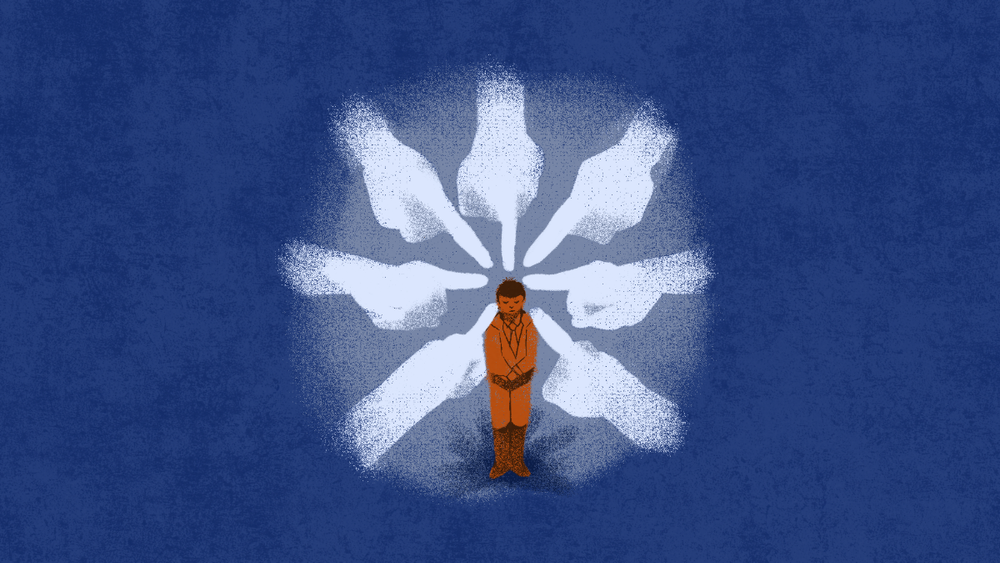
I’m at a unique time in my life. I am achieving my goals and building my life; I am starting to realize everything that I’ve gained from the work that I’ve put in as a writer and a student. At the same time, I’m forced to remember everything I’ve lost—and all that I stand to lose—in the merciless grasp of time. I have no choice but to feel conflicted. I know the future awaits. But in the end, I also know that just like prison, time confines us all. We’re all just waiting for our release date.
Editor’s note: Derek Trumbo’s mother died in April 2024. To honor her memory, he chose to publish this column as he originally wrote it prior to her death.
The Right to Write (R2W) project is an editorial initiative where Prism works with incarcerated writers to share their reporting and perspectives across our verticals and coverage areas. Learn more about R2W and how to pitch here.
Author
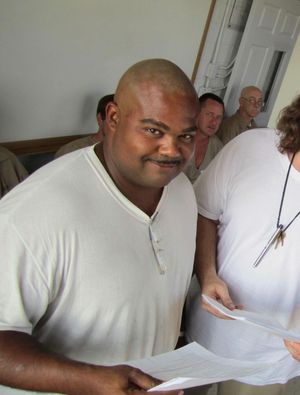
Derek R. Trumbo, Sr., a multiple-time PEN Prison Writing Award winner, is an essayist, playwright, and author whose writing has been featured in "The Sentences That Create Us: Crafting A Writer's Life
Sign up for Prism newsletters.
Stay up to date with curated collection of our top stories.