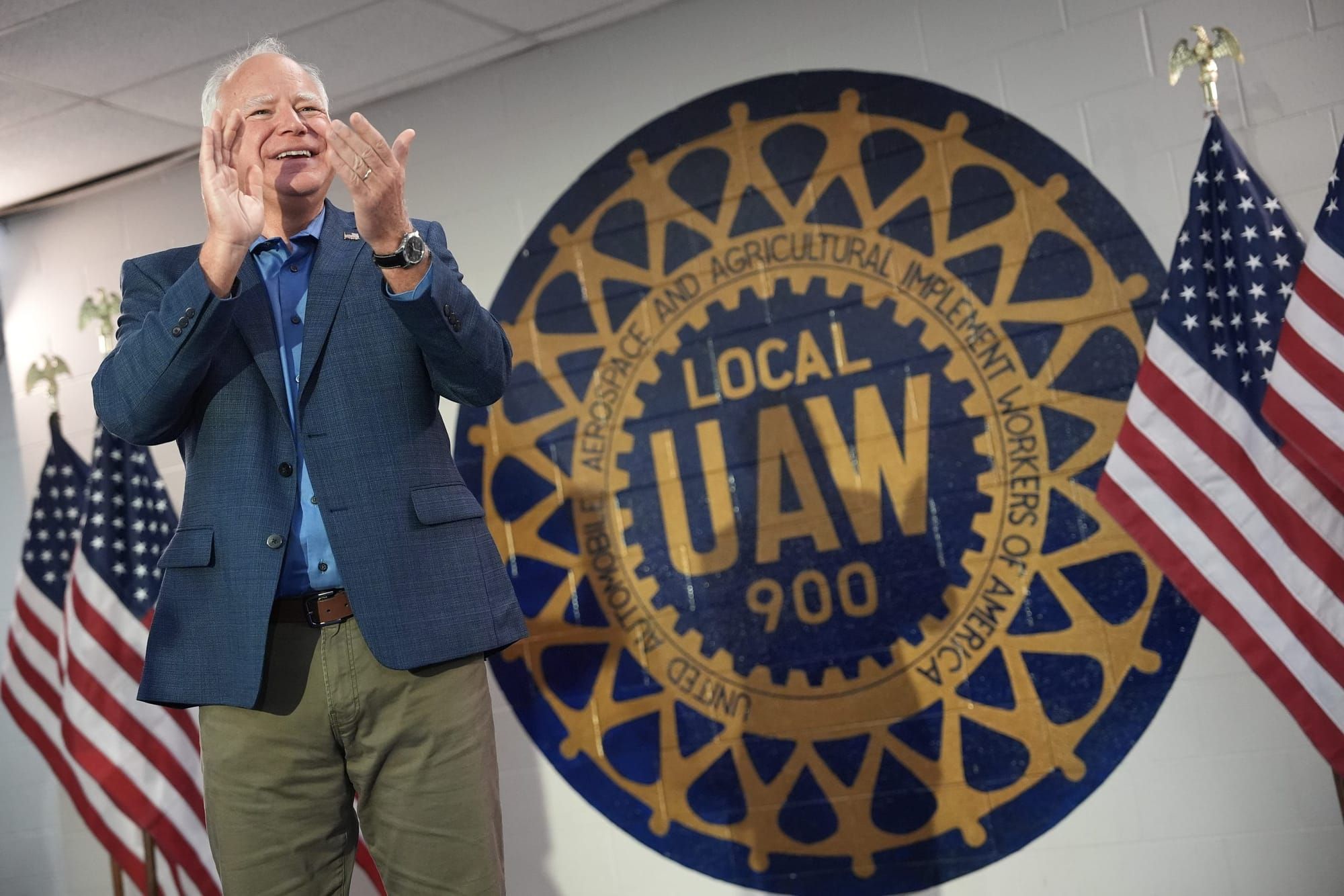
Kamala Harris officially named Minnesota Gov. Tim Walz as her running mate on Aug. 6, opting for a more progressive choice out of a pool of potential candidates. Walz was quickly embraced by Democratic voters and the internet, being lauded as an “REI hire” and a “Midwest Princess” for his endearing social media posts bolstered by progressive and populist policies that cemented his legacy as one of Minnesota’s most impactful governors. Here is where the governor stands on a few key issues.
Health care
During his inaugural speech as governor in 2019, Walz called health care “a basic human right.” Walz has said he supports expanding access to health care and has been a proponent of increasing funding for health care services in Minnesota. While in Congress, he backed efforts to strengthen the Affordable Care Act, and in 2017, he helped kill former President Donald Trump’s bill to repeal it. In 2022, as governor, Walz also signed a $92.7 million mental health budget bill into law that expands access to incarcerated patients and increases hospital bed capacity and mobile crisis units. Walz also enacted a law in 2020 that lowered insulin prices for eligible Minnesotans and has proposed a public buy-in option for insurance.
Abortion: Protecting reproductive rights
Walz has been a vocal supporter of protecting abortion rights and access to IVF. In January 2023, he signed the Protect Reproductive Options (PRO) Act, which says everyone has a “fundamental right to make autonomous decisions about the individual’s own reproductive health,” including abortion care, fertility treatments, contraception, sterilization, and other care. In April 2023, he also signed the Reproductive Freedom Defense Act, which protects patients who travel to Minnesota to seek abortion care—as well as abortion providers—from legal action in other states. Walz has also spoken about protecting access to IVF after his own fertility journey, which led to the birth of his daughter, Hope.
Education
Walz, a former high school teacher, signed into law free school lunches for every student in the state. He also raised the state education budget by $2.2 billion, a 10% increase. As an educator, Walz also started his school’s first Gay-Straight Alliance. Walz also introduced a college financial aid program for households making less than $80,000 that covers school expenses for in-state institutions.
Climate change and environment
Of all the potential running mates on her shortlist, Vice President Harris chose the candidate with the most climate accomplishments. Walz has advocated for stronger environmental protections and action on climate change. He has said he supports transitioning to clean energy, reducing greenhouse gas emissions, and investing in renewable energy sources. Last year, Walz signed a law requiring all Minnesota power plants to use 100% climate-friendly energy, such as wind and solar, by 2040. In 2019, Walz signed an executive order to create a new subcabinet focused on reducing emissions and addressing climate change. Walz also signed legislation that accelerated the permitting process for building renewable energy sites, increased training for clean energy workers, and expanded electric and hybrid vehicle adoption.
Economy and labor
Walz says his administration is working on initiatives to support small businesses, enhance workforce development, and modernize the state’s infrastructure. Key components of his economic policy include investments in infrastructure projects and strategies intended to bolster the state’s job market. Walz says his approach aims to ensure that Minnesota remains a competitive and attractive environment for business and employment. In 2020, he enacted the $1.9 billion Local Jobs and Projects Plan, which invested in construction and renovation projects to restore employment after the onset of the COVID-19 pandemic. Last year, Minnesota established paid sick and medical leave, banned non-compete agreements, and expanded protections for Amazon and other warehouse workers. In May, Minnesota enacted a measure providing a raise for Uber and Lyft drivers while averting a threat made by those companies to stop doing business in the state.
Criminal justice reform
Walz has supported reforms aimed at improving the criminal justice system, including addressing racial disparities, enhancing police accountability, and reducing recidivism. In 2023, Walz signed into law a major criminal justice reform bill aimed at drastically cutting the number of people unnecessarily under probation and parole supervision, reducing the number of people who land back in prison after release, and clearing some of the obstacles for people returning home, among other provisions. However, Walz has also faced some criticism from criminal justice advocates, including for calling in the National Guard against those protesting the police murder of George Floyd in 2020; conservatives, on the other hand, slammed him for not calling in the troops fast enough. Walz also faced scrutiny for reassigning a case to the state’s attorney general when a reform-minded county prosecutor refused to charge two teenagers accused of murder as adults.
Palestine
Walz has praised the 19% of Minnesotans who voted “uncommitted” in protest of Biden’s support for the ongoing genocide in Gaza for being “engaged.” In a March interview with Minnesota Public Radio, Walz said, “You can hold competing things: That Israel has the right to defend itself, and the atrocities of Oct. 7 are unacceptable, but Palestinian civilians being caught in this … has got to end.” As a congressman, Walz voted in 2017 to condemn a United Nations resolution that Israeli settlements in the West Bank were illegal. Walz has not commented on divestment campaigns but has faced calls for Minnesota to divest from Israel for months.
Author

Alexandra is a Cuban-American writer based in Miami, with an interest in immigration, the economy, gender justice, and the environment. Her work has appeared in CNN, Vice, and Catapult Magazine, among
Sign up for Prism newsletters.
Stay up to date with curated collection of our top stories.