‘This Ramadan, we are missing so many things’: Holy nights still don’t look the same in Gaza
Some Palestinians still in tents grieve their treasured Ramadan memories from before the genocide, while others look forward to the return of some normalcy amid the ceasefire
Real journalists wrote and edited this (not AI)—independent, community-driven journalism survives because you back it. Donate to sustain Prism’s mission and the humans behind it.
For the past two years, Palestinians in Gaza have welcomed Ramadan under a genocidal war. This year, the holy month arrives during a ceasefire. The airstrikes are no longer constant, and neither is the immediate fear of death, but both persist.
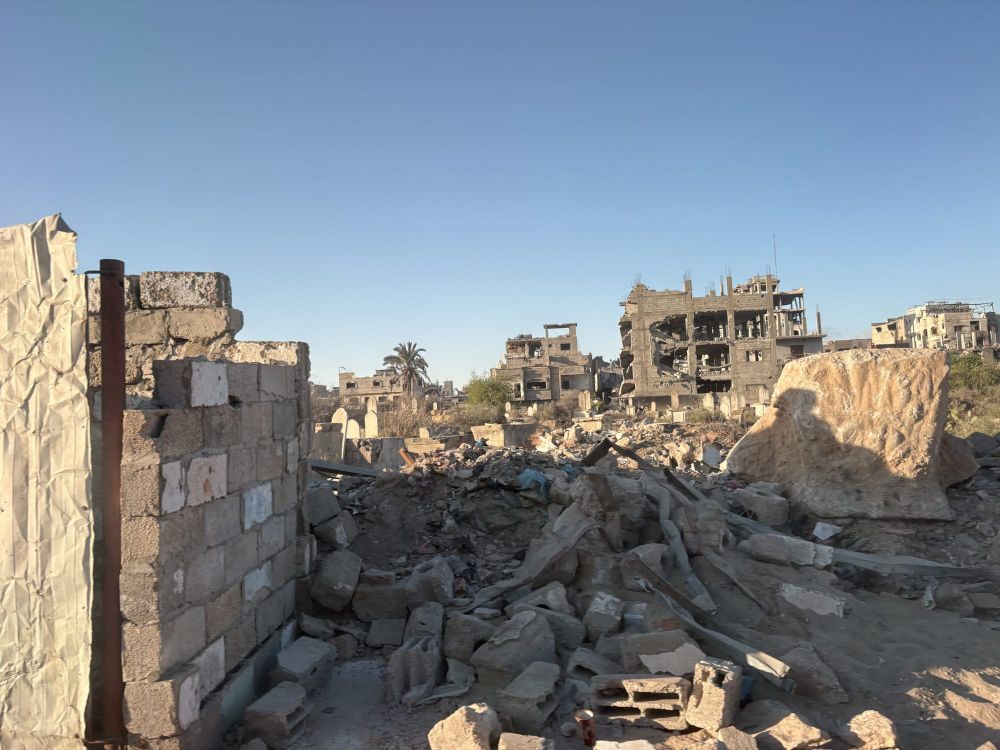
Many of the things that give Ramadan its meaning are still missing. Homes are gone. Families are scattered. The sense of warmth and comfort that defines the month is replaced by grief and the burdens of a life that doesn’t look like what it used to be. There is always an empty chair at our tables, a voice of a loved one missing, and a scent of home gone.
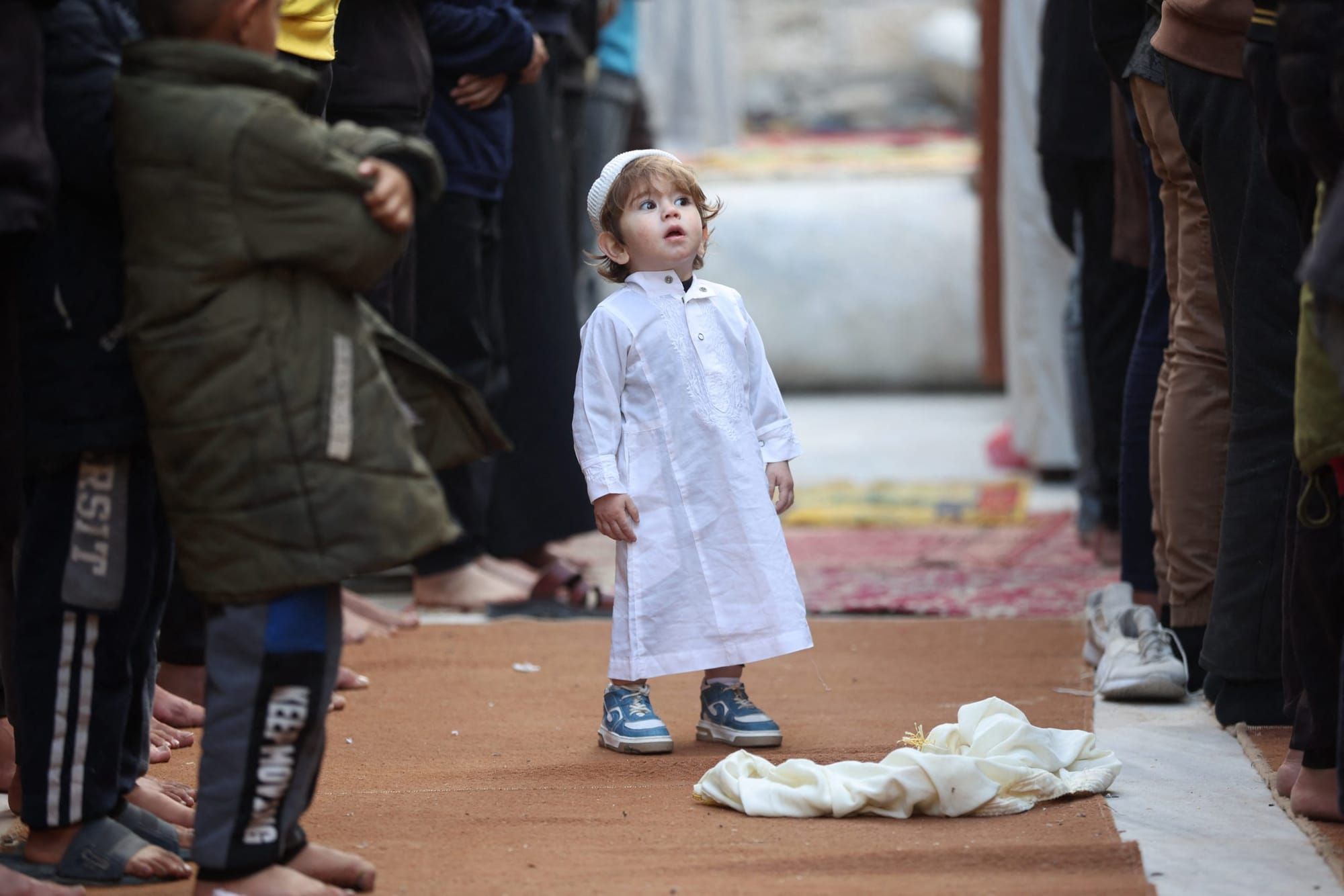
Ramadan, expected to begin around Feb. 17 depending on the moon cycle, is not only about fasting and prayer. For many, it is about home, about gathering around one table, sharing simple meals, and feeling safe within the walls of their home. This year, thousands of people are welcoming Ramadan in tents, and without a home, the spirit of the month feels incomplete.
“How am I supposed to bear another Ramadan without my home?” said Dalia Da’bas, a mother of four young children from Gaza who is displaced and living in a tent. “They say there is a ceasefire, but I don’t feel it at all. I still hear shelling, and I am still constantly afraid for my children.”
Now, she longs deeply for the ordinary moments she used to take for granted.
Treasured holy nights
Da’bas recalled how Ramadan would arrive in Gaza long before the crescent moon appeared in the evening sky.
“Weeks before it began, we would start preparing,” she said. “We bought special decorations, Ramadan lanterns, lights with the shape of crescents and stars. We changed the house fabrics. We put new covers on the furniture with phrases like ‘Ramadan Kareem,’ colors, and shapes that expressed the spirit of the month.”
Sometimes they even bought new dinnerware just for iftar meals, Da’bas said.
These details were how her children felt the spirit of the holy month.
“They loved decorating the house, and each one of them was happiest when we bought them their own lantern,” Da’bas said.
The first day of Ramadan was always special, centered around a delicious variety of food and gathering. Da’bas said she always made Palestinian musakhan on the first day, a dish brimming with olive oil, onions, and chicken, along with soup, salads, and sambousek.
Her children, she said, would wait impatiently for Maghrib adhan, the evening call to prayer that marked the end of each day of fasting.
“They were so excited about the food and the moment of adhan. We would all gather around the table, eat together, and then enjoy Ramadan desserts like qatayef and kunafa,” Da’bas said.
The night did not end at iftar. Upon hearing the Isha adhan, Da’bas and her children would walk to offer nighttime taraweeh prayers at the mosque.
“On our way back, we would walk through Gaza’s streets, buy them ice cream, then go home to sleep so we could wake up for suhoor,” Da’bas said, referencing the early morning meal before the start of the fast.
These cherished moments represented the traditions of every Ramadan. But for Da’bas, Ramadan has been stripped of much of its meaning for the third year in a row.
“I want to stand in my kitchen again for hours, preparing Ramadan food. I want to decorate my home the way I used to. I want to gather with my family and my husband’s family like we did every year,” Da’bas said. Now, even the grandparents’ houses are destroyed, and a tent is no place to host family gatherings.
Da’bas used to prepare a specific corner of her house to spend part of the month praying and reading the Quran in peace.
“I used to have that corner to be alone and ask Allah what I want in my prayers. But even that solitude with God is not possible where all I have to live in, along with my four children, is a small tent,” she said.
“This Ramadan, we are missing so many things.”
Um Mohammed Al-Sharief lost two of her sons, Ahmad and Ibrahim, after an Israeli airstrike targeted her home in August 2024. Ahmed died soon after the strike, while Ibrahim succumbed to his injuries last year.
This Ramadan, my sons will not sit at the table, nor tell me how delicious the food was. Their chairs will always remain empty.
Um Mohammed Al-Sharief
Not only was Um Mohammed’s house gone, but so were two of the hearts that made it a home.
“My son Ibrahim and I were planning that by this Ramadan, the genocide would have ended, and the border crossing would likely have opened,” she said. They had dreamed of going to perform Umrah, a religious pilgrimage in Saudi Arabia, together during the holy month.
“We had so many plans and hopes, but the occupation stole them from us,” Um Mohammed said.
“This Ramadan, my sons will not sit at the table, nor tell me how delicious the food was,” she said. “Their chairs will always remain empty.”
Ramadan in exile
Palestinian suffering does not end at Gaza’s borders. For many, it follows them wherever they go, reshaping even the most sacred moments. Ramadan, in particular, carries its weight far beyond the war zone.
Malak Al-Hajj, 21, left Gaza for the U.K. in September after two years of relentless attempts to secure a scholarship abroad and continue the education that she believed no longer had a future in Gaza.
Her departure came at one of the hardest times in Gaza. In September, the Strip was suffering from severe famine. When Al-Hajj was given the chance to leave, to continue her studies and survive, she took it. But she left alone.
Al-Hajj put significant distance between herself and the people she loved in order to hold on to her future. Although she now lives under better conditions, she said the absence of her family has made Ramadan the hardest month.
“Who will wake me up before dawn for suhoor? Who will prepare the iftar table for me, where I’d find all kinds of food waiting?” she said.
Back in Gaza, she said, Ramadan meant comfort.
“Even when I was fasting, studying, and exhausted, I went home feeling calm. I knew my mother had prepared everything I loved,” Al-Hajj said. “After a long day of effort and stress, sitting with my family at the Ramadan table was enough to comfort me.”
In Britain, that comfort is absent.
“Here, I don’t even hear the adhan,” she said. “I check my phone every day to know when it’s time to pray and break my fast. I eat alone.”
Rays of light
Despite all the suffering Palestinians endure, the loss they have experienced, and the destruction surrounding them, Ramadan remains special for many. Its spirituality persists no matter the circumstances. It is a month of goodness, sustenance, blessing, prayer, and new hope, the time for wishes to be made.
“After two years of genocidal war and the destruction of many mosques, this Ramadan I will pray at the mosque and spend the whole night there, just like I have since my youth,” said Hajj Abu Hussein, a 58-year-old resident of Al Nusierat camp in central Gaza.
His wife, Um Hussein, shared what she was most excited about this Ramadan: Food is back on the table.
“Over the past two years, Ramadan came with famine and hunger,” Um Hussein said. “We broke our fast on crumbs after a full day of fasting. We suffered while lighting a fire to cook the small amounts of food we had.”
This year, she is thrilled to have access to chicken, meat, vegetables, and even a small supply of cooking gas.
“There is nothing more precious to a mother than preparing the most delicious meals for her sons during this month,” Um Hussein said.
For both her and her husband, these small but essential elements—the adhan, the mosque, the ability to cook and share a proper iftar—bring back a sense of Ramadan’s spirit that had been absent for too long.
Editorial Team:
Sahar Fatima, Lead Editor
Carolyn Copeland, Top Editor
Stephanie Harris, Copy Editor
Author
Esraa Abo Qamar is a writer and English Literature student from Gaza.
Sign up for Prism newsletters.
Stay up to date with curated collection of our top stories.