The state of Missouri lynched Marcellus “Khaliifah” Williams
Gov. Mike Parson’s racist and hypocritical pardon history reflects the U.S. criminal justice system’s insidious bedrock of white supremacy and Black dehumanization
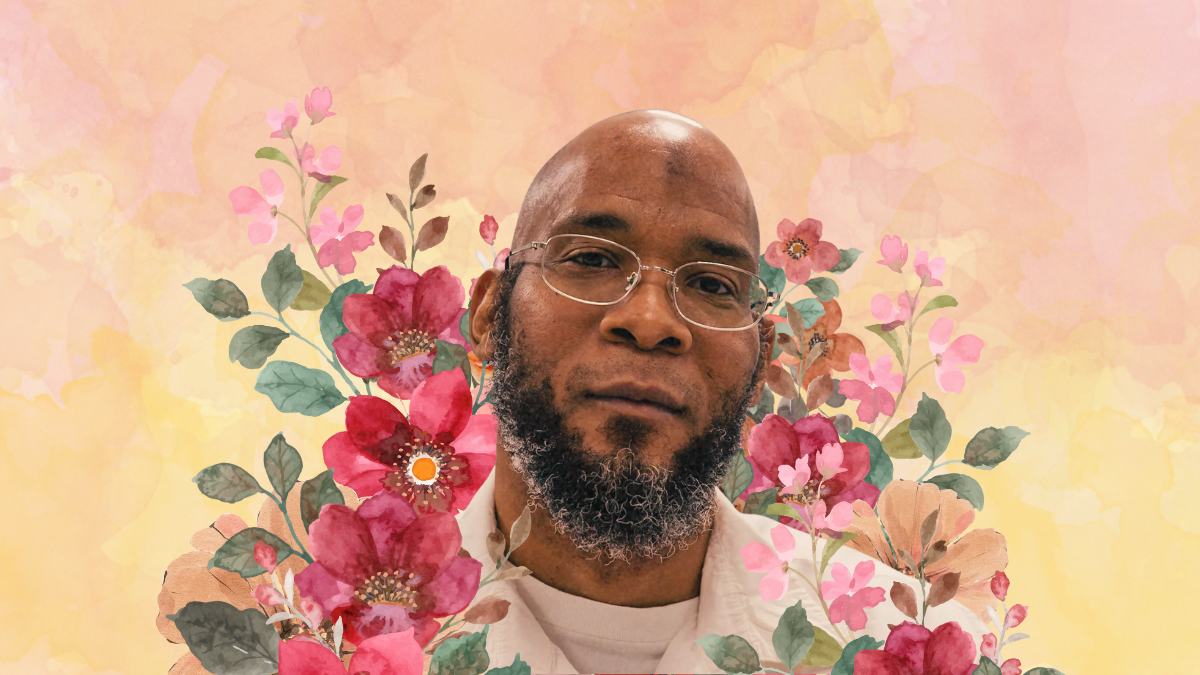
The state of Missouri lynched Marcellus “Khaliifah” Williams. Williams was murdered not by virtue of the charges levied against him but by his Blackness, which rendered his innocence unintelligible—namely, to Gov. Mike Parson. Despite millions of advocates sending letters, calling his office until the voicemail box was full, and even demanding a pardon in person, Parson refused to change his decision. A deeper look into his history with law enforcement and clemency reveals a more insidious pattern that isn’t just an indictment on him as an individual but the entire criminal “justice” system.
The dissonance in Gov. Parson’s clemency history is head-splitting. A 2023 AP article lauded Parson for granting over 600 pardons and 20 commutations during his governorship, calling him “the face of mercy” after years of being “the face of justice” as a former sheriff. Some of Parson’s most notorious pardons included Mark and Patricia McCloskey and Britt Reid. The McCloskeys were a couple that went viral after brandishing an AR-15 and semiautomatic pistol at Black Lives Matter protesters in 2020. They pleaded guilty without a modicum of regret, boasting that they would do it again. Britt Reid, the son of an ex-Chief’s assistant coach, injured six people when he drunkenly crashed into their vehicles on an exit ramp. Among the victims was 5-year-old Ariel Young, who sustained permanent injuries from the crash. Parson did not even have the decency to notify Young’s family or the prosecutor before deciding Reid could finish out his sentence on house arrest.
Then there’s Eric DeValkenaere, the first white cop ever to be convicted for killing a Black man in Missouri. On Dec. 3, 2019, As Cameron Lamb returned home and was backing into his garage, DeValkenaere emerged from his backyard and shot Lamb within nine seconds of his return. It’s still unclear why police were at his house. DeValkenaere stood trial and was convicted of second-degree involuntary manslaughter and armed criminal action and sentenced to six years in prison.
While Parson has yet to pardon DeValkenaere, many believe he is waiting to strike post-election. The governor went on “Mundo in the Morning”—the only conservative radio show in the region—and, when asked about a potential pardon or commutation, blatantly said, “…We’re going to see what happens here before long. But you know I don’t like where he’s at. I’ll just say that.”
Parson operates in a framework that can only find redeeming grace in whiteness. His hypocrisy is one of the bedrocks of the criminal justice system that has relied on the dehumanization of Black communities since the slave patrols were born. The divergence in language and treatment is applied across racial lines, and Parson weaponizes pardons and sentence commutations to reinforce his notions of Black criminality and deviance.
Twenty-seven years ago, Felicia Gayle, a white woman, was tragically murdered in her home after a burglary. Marcellus Williams was charged with the crime after two incentivized witnesses came forward. The case against Williams had numerous flaws, including racial bias in jury selection, no forensic link to the crime scene, and unreliable eyewitness testimony. In 2017, Williams was granted a stay of execution just hours before he was set to die. Then-governor Eric Greitens gathered a Board of Inquiry to investigate, recognizing Williams’ presumed guilt could not be proven beyond a shadow of a doubt. In June 2023, Parson dissolved this board, and the Attorney General scheduled the lynching promptly after.
“We hope this gives finality to a case that’s languished for decades, re-victimizing Ms. Gayle’s family for decades,” expressed Parson. In his attempt to speak for Gayle’s family, he callously contradicted their wishes for a stay of execution.
If the family, prosecutor, and millions of advocates called for Williams’ life to continue, why was Parson so steadfast in extinguishing it? The answer lies in his decades-long tenure in law enforcement and the lynching tradition our country is steeped in.
During its height, the lynching era was most prominent in Southern states. However, Missouri had the second most lynchings in a non-Southern state. In their report, “Lynching in America,” the Equal Justice Initiative (EJI) identifies six features that characterized lynchings, “(1) lynchings that resulted from a wildly distorted fear of interracial sex; (2) lynchings in response to casual social transgressions; (3) lynchings based on allegations of serious violent crime; (4) public spectacle lynchings; (5) lynchings that escalated into large-scale violence targeting the entire African American community; and (6) lynchings of sharecroppers, ministers, and community leaders.”
Williams’ death, like many lynchings, has more than one of these features, namely (3) and (4); however, it could be argued that (1) was a factor as well.
Gayle’s murder, the prosecution of Williams, and the state’s refusal to acknowledge his innocence highlight the construction of Black male criminality and the criminal legal system. The protection of white womanhood became a key component of white supremacy and extrajudicial justice. In the cruel imagination of the state, Williams was reduced to the Black brute caricature, preying on helpless white women—nothing but a threat to be destroyed. Perceptions of Black manhood are often so divorced from reality that they’re viewed as larger and more violent, just by nature of existing. Even in the face of evidence to the contrary, Parson and Missouri appointed themselves arbiters of life and death, keeping consistent with the customs of lynching.
From 1993-2004, Parson served as the sheriff of Polk County, Missouri. Unsurprisingly, he now wields his power to determine who is worthy of forgiveness and empathy. Our modern-day police force is simply an evolution of slave patrols, which were key perpetrators in lynchings. As stated by the EJI, “participation in collective violence leaves perpetrators with their own dangerous and persistent damage.” Parson is mimicking the soulless violence his predecessors employed to exert control over Black communities. Just as Black folks have been epigenetically affected by apartheid and slavery, what can be said of the generational effect of white depravity?
Despite being a staunch advocate for law and order, Parson claims to believe in redemption. He once stated that missteps “don’t mean they’re a criminal for all their life.” He’s proudly pardoned those found guilty before, even offenders who admitted culpability with no remorse. But when faced with millions of voices proclaiming Williams’ innocence, Parson put his blinders on, unable to discern the truth from the scripts playing out in his imagination.
It’s not about innocence at all. It’s about reinforcing the racial caste system that propels mass criminalization forward. Parson’s actions reflect the systems that were first built on Black control and subjugation, with no consideration for the facts of the case or the stark racial disparities that define the system as a whole. As of 2016, 14% of the U.S. population is Black while 41% of those on death row are Black. Since 1976, 34% of executions were Black. Studies have demonstrated that when a white victim is involved, the odds of a death sentence can be 97% higher than when a black victim is involved.
Capital punishment evolved alongside lynching to quell the hounds thirsty for Black lives. In a 1976 ruling in Gregg v. Georgia, “the Supreme Court upheld Georgia’s new death penalty statute and reinstated the American death penalty, capitulating to the claim that legal executions were needed to prevent vigilante violence.” Marcellus Williams was lynched because he was a Black man. In a system where state-sanctioned violence has consistently stripped innocent Black people of their lives, it didn’t matter if Williams’ innocence could be proven. Someone had to be charged with Gayle’s murder to maintain the illusion that the criminal legal system works. The machine does not care if the blood spilled is innocent or guilty; it’s pleased regardless. A system that aims to remedy death with death is untenable.
Author

Hannah Greene is a New Haven-raised and based Yale College graduate. With a B.A. in African American Studies, Greene is no stranger to questions about her degree's utility. As a young Black woman, she
Sign up for Prism newsletters.
Stay up to date with curated collection of our top stories.