The day Rafah became rubble, survival became resistance
Bombardment, famine, and loss defined life after a ceasefire. Survivors find that bread, family, and memories are the only things left to cling to

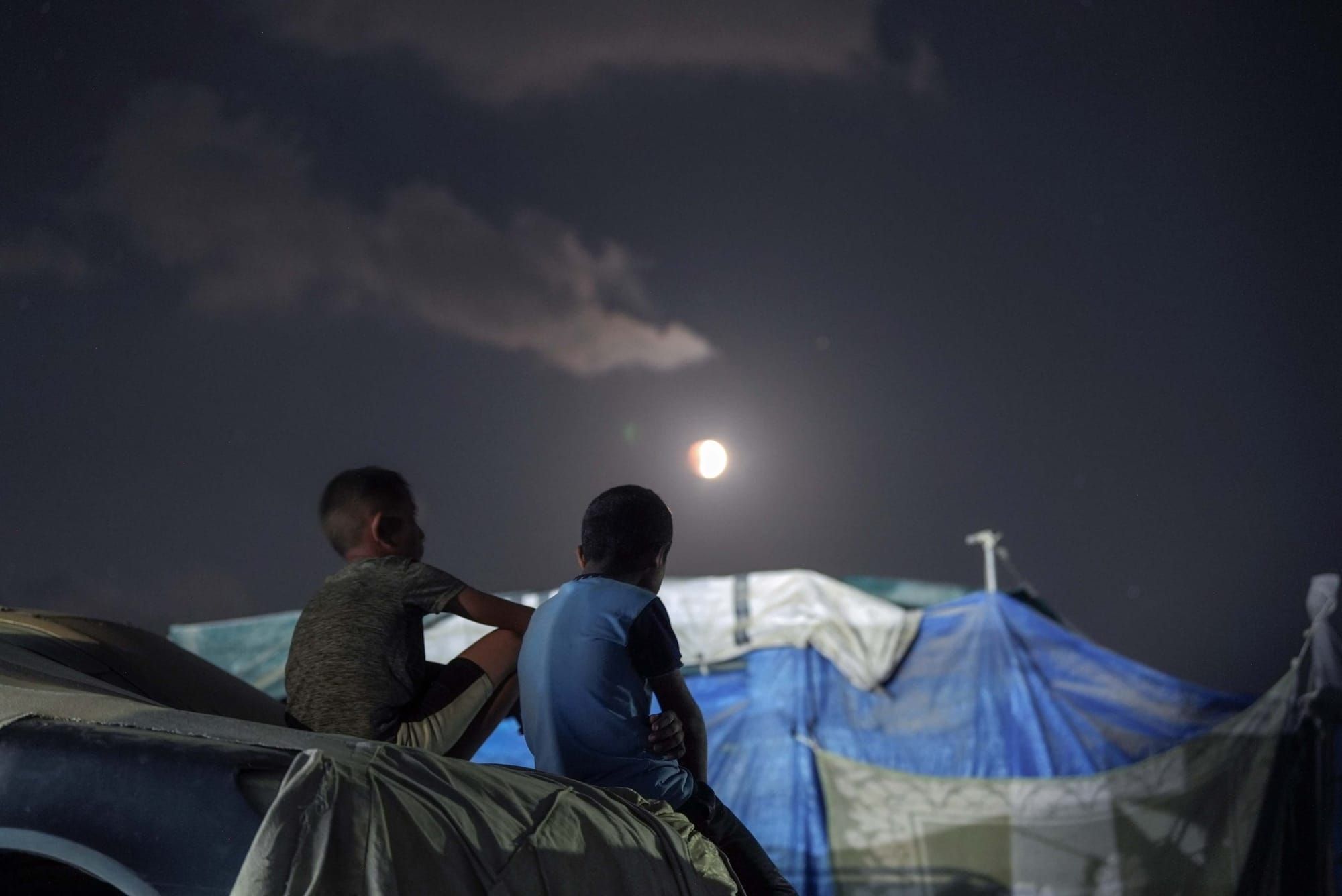
It was going to be my first day returning to Rafah after the ceasefire was set to begin on Jan. 18 at 8:30 a.m. My family had been displaced to a tent in Al-Mawasi, Khan Younis, for over nine months. My cousins Hamoud and Mahmoud were with me, and we knew our homes were likely destroyed, but we held on to hope.
We hadn’t slept the night before, ready to return. At 8:30 a.m., I saw thousands heading back to Rafah. My mother called on the phone, shouting over the crowd, “Hassan, please, come back safely! The ceasefire that was supposed to start at 8:30 a.m. has been postponed to 11.” I didn’t take her words seriously: “I’m not coming back. The streets are full, and we’re all returning to Rafah,” I told her.
I was determined to see my neighborhood, my room, my books. Gripping the rusty key, I almost felt the memories calling me back.
Less than an hour later, we heard a helicopter—a sound strangely out of place. People stopped singing; the helicopter hovered nearby, sending chills through everyone. My mother called again, repeating her warning. Fear gripped me. My cousins said we wouldn’t turn back until we saw our homes. Suddenly, the call ended.
Right in front of us, the helicopter struck a few hundred meters away. People scattered, running back or into the open lands, leaving us unsure of what to do. Bombing erupted, and I felt my mother’s voice in my ears, as if saying goodbye.
We decided to turn back—it seemed the safest option. Bombing continued, and we were trapped with hundreds of people. We ran without stopping until a car took us to a house to hide until the ceasefire took effect. I tried calling my mother, but there was no signal; I needed to let her know I was safe.
After an hour and a half, the ceasefire came into effect. We left the place, and I breathed the air of Rafah for the first time in months. I sent my mother a message: I was safe, now in Rafah.
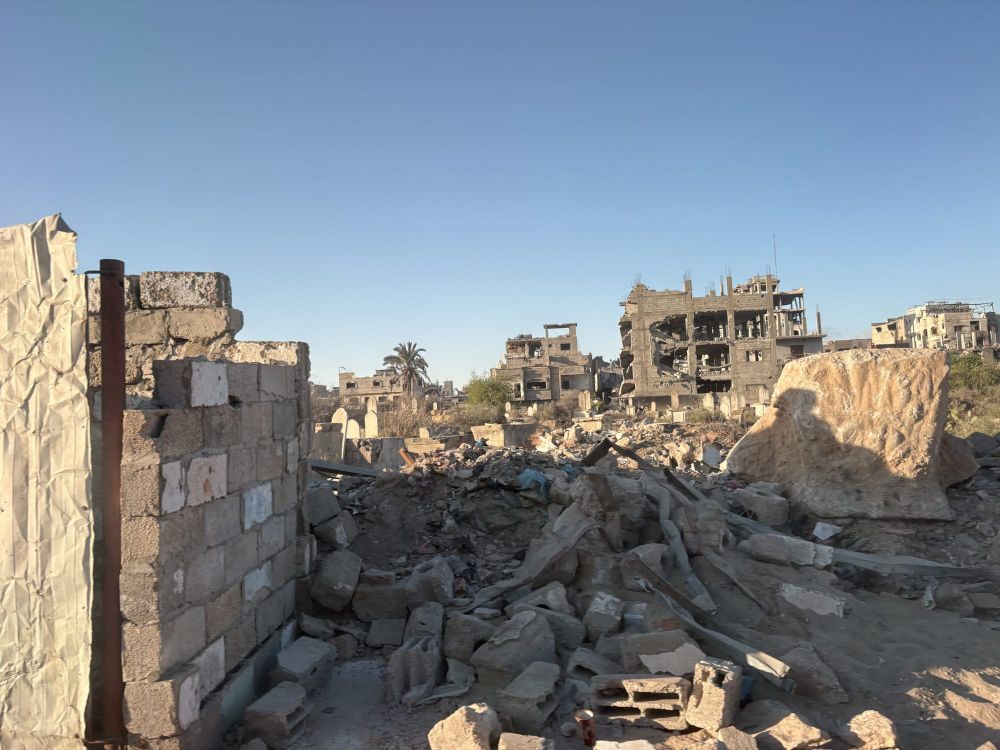
But Rafah was no longer Rafah—it was all rubble. I walked to my home and found the neighborhood leveled. Streets, the mosque, the supermarket—nothing remained. My heart ached, and all I had left was my key, now just a memory.
It was the hardest day of my life—the day I wept over the rubble of my home, the first day back in Rafah after months. My family worried more about me than the home, and we tried to rebuild ourselves. I resumed my online studies, despite having no desk, and I still held onto my dream of becoming a translator.
And after several months of all these events, in mid-March, on a sudden night, the war returned—coming back as a war of destruction, but this time more harshly. It came back just as I was trying to rebuild myself from what I had lived through and witnessed, just as I was trying to salvage what I could from my shelled home.
The war didn’t just return—it closed the crossings, the bombing was everywhere, goods became scarce, prices soared, and life changed overnight once again.
Survival became a daily struggle. Meals dwindled to one a day, and I lived on a single loaf of bread. My cousin Yahya shared a photo of his family dividing bread equally—it might seem like a joke, but it was reality. Additionally, cash payments had a 50% commission; if a commodity cost $30, you needed $60. I lost over 20 kilograms during this period and was still losing weight.
In early June, when famine started to spread, the Gaza Humanitarian Foundation (GHF), an American-Israeli organization claiming to provide aid, appeared—but it was a deadly trap. Dozens were killed or injured daily while trying to collect food. I lost my friend Ahmed on one trip, yet going back to the GHF site was often the only way to provide for my family. This war forced us to grow up fast; our thoughts shifted from studies to survival.
My father didn’t agree to my going to American aid distributions again, so we stopped relying on flour and sought alternatives. Most goods were unavailable or too expensive. I saved some pasta, which we used to make bread for several days. When it ran out, we made bread from lentils—inedible, but we forced ourselves to eat it.
A few days later, I noticed the strain on my mother. The unchanging meals—canned food, lentils, beans, and inedible bread—were wearing us down. We no longer dreamed of meat; we longed for natural flour.
By the end of July, with my stomach weakening from hunger, I scrolled through my phone and saw the famine’s effects on children—some undernourished, some skeletal. My little brother Mohammed sat behind me and asked a question heavier on my heart than seeing my own home: “Can we die from hunger?” I realized the beast of famine was harsher than anything else. I told him, “God sees us, and things will get better soon.”
The next day, desperate and starved, we heard several trucks had entered Gaza, bringing some flour, though at soaring prices. It was the first sign of relief; new goods were always expensive at first, then became more affordable. My cousins and I were hungry but hopeful. For days, we survived on the bare minimum: lentil soup, less than a kilo of pasta, and tea without sugar.
On the evening of Aug. 6, my family and I were sitting together when my phone rang, and it was my friend Hamza: “Hassan, do you want a 50-kilo sack of flour through the banking app, and at a reasonable price?”
After so much despair, his words struck me with a mix of disbelief and overwhelming relief—it felt like a miracle. I immediately answered, “Of course.” He told me to come pick it up the next morning at his tent. It wasn’t an ordinary call but a victory over the beast that had gnawed at our bones—even if only temporary.
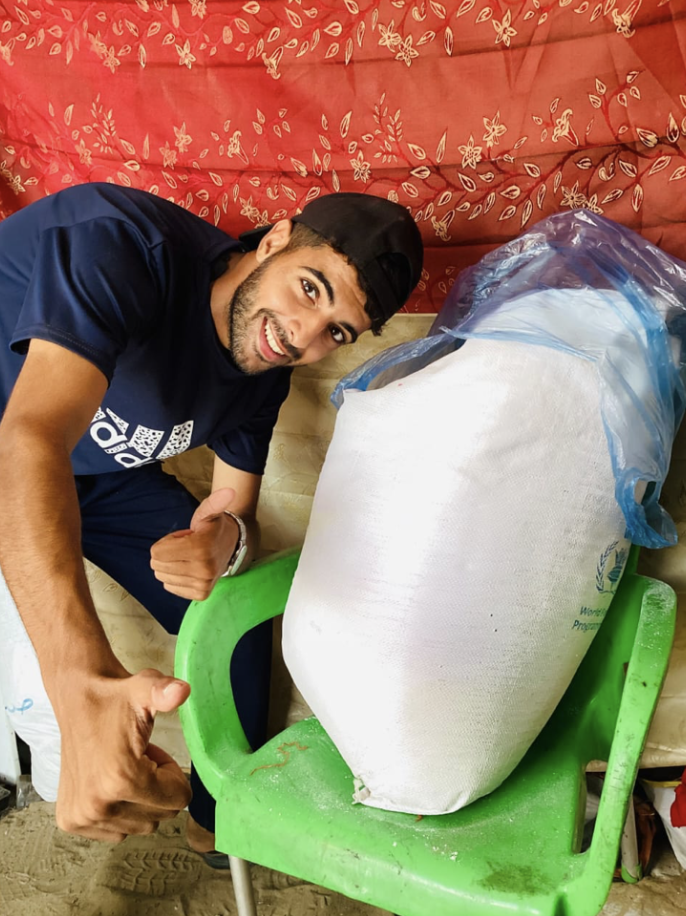
I hadn’t slept that night and didn’t tell my family what had happened. Early in the morning, I woke my brother Mohammed: “Come on, we have a trip to make.” At Hamza’s tent, we saw the flour, and Mohammed said, “So that’s it, we won’t starve.” We carried our prize back. On the way, I called my mother: “Mama, wake up so we can knead the dough and take it to the baker.” It was a sentence we hadn’t heard for months; her voice changed, and I could feel her joy. Back at the tent, my family was overjoyed. That day, we could eat bread without dividing it or limiting ourselves. It wasn’t an ordinary day; it was a victory.
Editorial Team:
Lara Witt, Lead Editor
Carolyn Copeland, Top Editor
Stephanie Harris, Copy Editor
Author
Sign up for Prism newsletters.
Stay up to date with curated collection of our top stories.