‘Does that mean my friends are gonna get taken?’: The children of Minneapolis grapple with ICE separating families
Some immigrant parents are avoiding seeking medical care for sick children, while other kids worry about their friends’ safety
Real journalists wrote and edited this (not AI)—independent, community-driven journalism survives because you back it. Donate to sustain Prism’s mission and the humans behind it.
On most weekday mornings this January, as she drives her 6-year-old son to school, Desiree, a mother of two in Minneapolis, also picks up another child, often from an immigrant family, on her way.
The children she has been driving to and from school have kept changing, but her routine has remained the same. It began after the killing of Renee Nicole Good by Immigration and Customs Enforcement (ICE) officer Jonathan Ross less than three weeks ago, as many terrified immigrant parents, too scared to step out of their homes, requested pickups and drop-offs for their kids in a city under federal siege.
Desiree, who requested to be identified by her first name only due to fear of retaliation, said the children she drives “tend to be kind of quiet, nervous.”
“They’ve never met me before,” she said. “Thankfully, I have my kiddo with me too, and so they can offer some comfort. Sometimes you bring snacks or toys to play with in the car, so that it’s not quite so intimidating.”
Minneapolis is reeling from a deluge of crises: a surge in federal agents and increasingly hostile immigration raids, harassment and threats targeting Somali-owned day cares, the killing of Good, federal agents swarming outside schools, the arrest of 5-year-old Liam Ramos and other children, and now the killing of Alex Pretti on Saturday. Families in the besieged city are struggling to cope with the onslaught of challenges.
“It makes me feel like I’m living in a war zone,” Desiree said. “My body’s in fight or flight constantly because there’s a very real sense of terror.”
A Somali American father of four, who requested to remain anonymous for fear of persecution, told Prism, “At the end of the day, the land of the free, the land of hope, it’s not free anymore. I don’t feel free, I fear for my life.”
The impact on immigrant families has been especially devastating and wide-ranging—from parents worrying about heading out for work or shopping for essentials, to being afraid of even visiting a hospital during a medical emergency.
Scared sick
“I had a patient show up at 4:30 in the morning. She had four children with influenza, vomiting, diarrhea at home,” Dr. Vaishali Jha, a pediatric emergency medicine physician at Children’s Minnesota, said at a briefing by physicians in Minnesota about the obstructions to health care caused by the federal siege. “She had to self-triage and think, ‘Which is the sickest kid?’”
Jha said the mother watched for federal agents outside her window all night. When the road was clear, she brought her eldest child, a 13-year-old, to the hospital.
“She had a 6-year-old, 8-year-old, and a 3-year-old at home, with worse symptoms than him. But she said they wouldn’t know what to do if [an] ICE vehicle was around,” Jha said.
“We are endangering these children,” she said, “not only for their illness from today, but they are being traumatized.”
The Children’s Minnesota hospital system said in a statement that it will continue to provide care to patients and families regardless of immigration status. But that’s if they even show up.
“When ICE agents are in and around our hospitals—which again, we know that they are, including my own—parents are rightfully scared to come in,” Dr. Janna Gewirtz O’Brien of the Minnesota chapter of the American Academy of Pediatrics said at the press conference.
“They’re delaying care, they’re not seeking help,” she said. “They’re weighing this fear of putting their family at risk against the health of their child. This is an impossible decision that no parent should ever be in.”
Parents on watch
Across Minneapolis, parents have restructured their days around ICE watch and protecting their children. They rotate shifts to stand guard during school recess, keeping an eye out and making sure students get inside, and they stand outside day care centers, patrolling the door. Parents have also joined school crossing guards, equipped with whistles, to alert the community if ICE agents are near the campus.
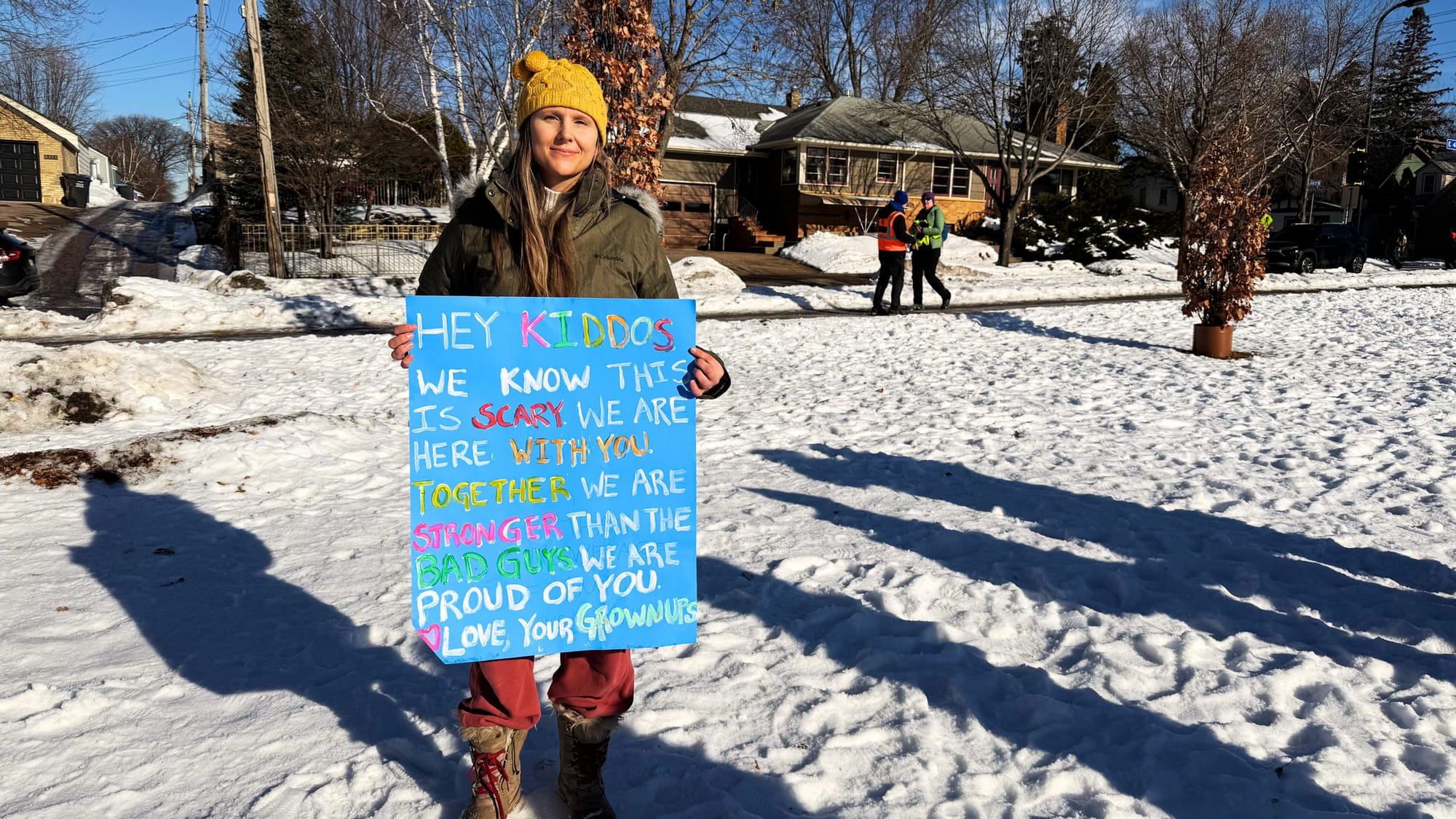
Just this month, at least four children have been taken by ICE agents in the Columbia Heights Public School District. In recent weeks, local officials have reported federal agents circling schools, swarming outside a high school campus, tackling people, handcuffing staff members, and deploying chemical irritants.
The Somali American father Prism spoke with said that his children arrived home from school one day feeling fearful after federal agents allegedly questioned staff on their school bus.
“They have the same rights as everyone else,” he said, adding that he told them, “We just have to stay strong and go to school and work on your grades.”
Duniya Omar, a Somali American cafe owner in Minneapolis and mother of two, told Prism that after she saw a video of another Somali American woman being questioned by federal agents, she started carrying her passport around everywhere.
“I don’t want to be dragged on the cold snow,” Omar said. In December, ICE agents dragged an immigrant woman in Minneapolis out of her car and then held her face down in the snow.
The fear for their children’s safety has spread to non-immigrant families as well. One mother, who requested anonymity due to fear of retaliation from federal authorities, told Prism that she was no longer allowing her 8-year-old son to walk the two blocks from their home to school on his own.
“We don’t feel comfortable allowing him to do that anymore, and it has nothing to do with our neighbors and everything to do with ICE patrolling around,” she said.
Amid the crisis, scores of Minnesotans have joined mutual aid groups that assist vulnerable families with their everyday needs.
Desiree, for instance, said she has been helping immigrant families with grocery delivery and giving rides to those who need them.
“I also do school patrol, where we monitor the area around the school, especially during pickup and drop-off,” she said.
“What has been striking has been the amount of work we’ve had to do ourselves,” said Emily Wagner, an emergency room physician who has also been involved in helping organize supplies and deliveries to immigrant families. “We are keeping our community safe right now.”
“Get inside and stay inside”: How children are reacting
In a group chat of high schoolers, classmates have been cautioning their immigrant friends to stay at home. Braeden, a 17-year-old high school junior in Minneapolis, told Prism, “We’ve all been talking with my other friends and telling them to get inside and stay inside … stay safe, lock the doors.”
On Jan. 7, hours after Good had been killed, federal agents had swarmed outside Braeden’s school, less than 3 miles away from the site of the shooting. Braeden, who is using only his first name for safety reasons, had just returned home when he found out. Immediately, he rushed back to Roosevelt High School to make sure everyone was OK.
Schools in the city had closed down for the remainder of the week. When they reopened the following Monday, there was an option to attend all classes remotely, which many immigrant families selected.
Kit, a high school senior who requested to be identified by their first name only due to fear of retaliation, told Prism, “I’m a white student. I understand that I have privilege and that they’re not often targeting me, but I am still scared to go back to school, and I’m worried about my peers who are immigrants.”
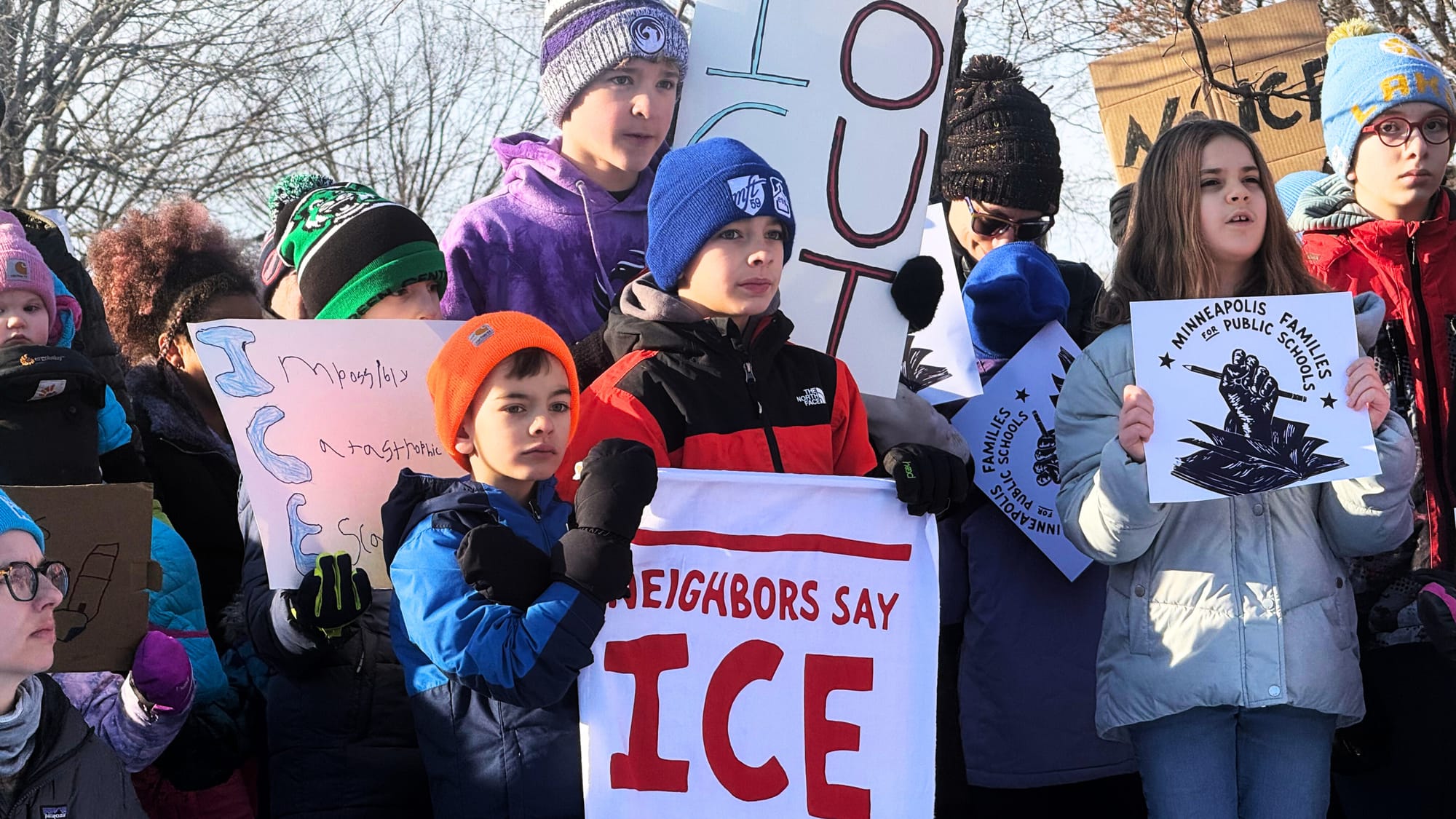
Many children and teens throughout Minneapolis have witnessed ICE activity in their neighborhoods or seen their friends and classmates stop attending school.
“When ICE enforcement occurs in or near places where children should be safe, like homes, schools, and hospitals—and we know they’re in hospitals—children experience fear that disrupts their sense of stability,” said O’Brien, from the American Academy of Pediatrics.
One Minneapolis mother, who requested to remain anonymous for fear of retaliation, said, “Trying to explain really simply to your kids what’s happening and why is really hard.”
She added that her children are worried about their friends.
“They’re like, ‘What about so and so, are they an immigrant?’” she said, adding that they also ask, “Does that mean my friends are going to get taken?”
A state of mourning
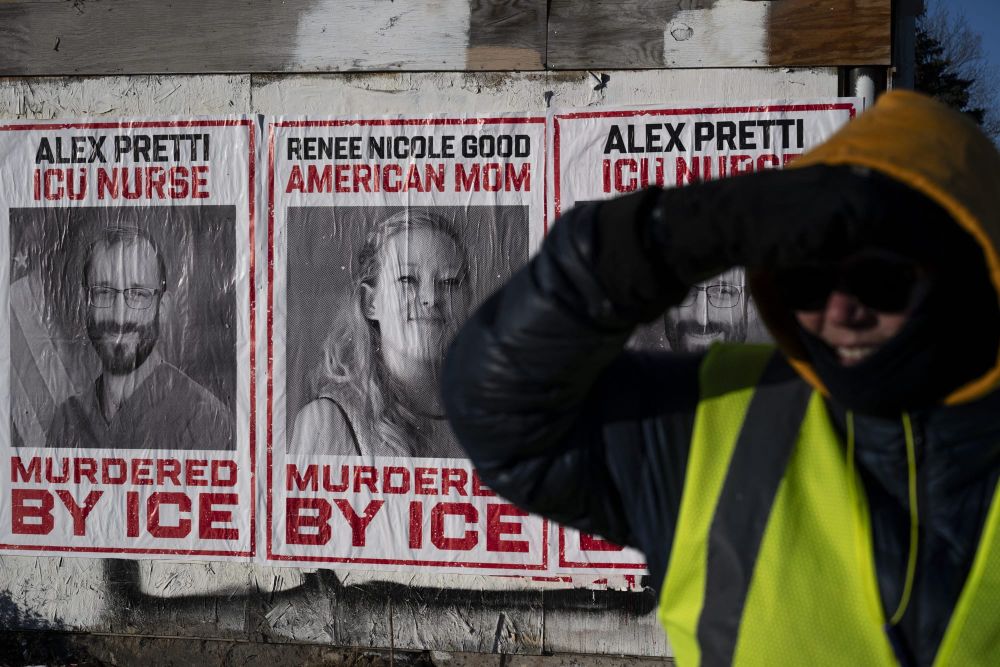
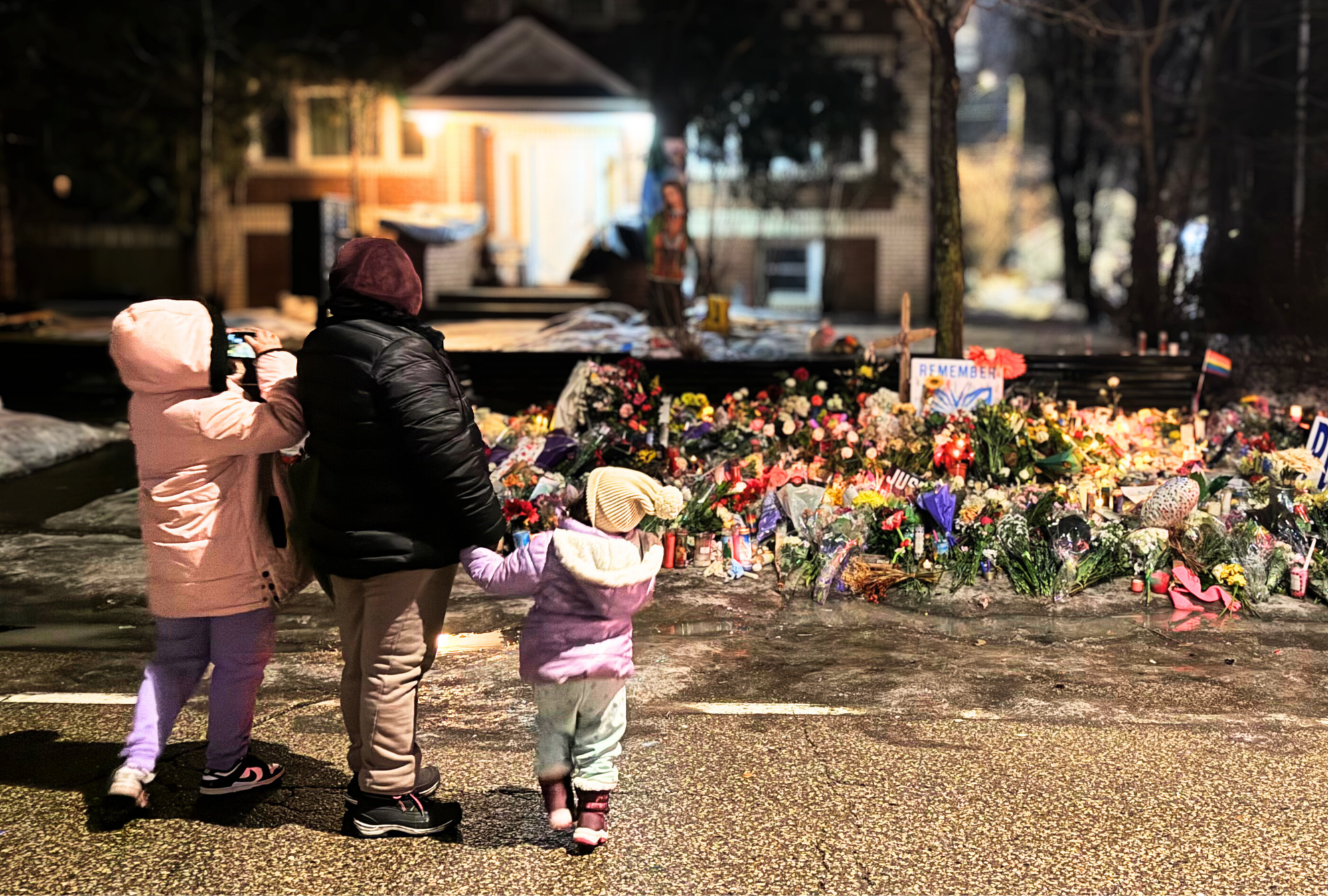
As its residents move from one crisis to another, Minnesota has felt like a state of mourning. Less than three weeks after Good was shot in the face and killed by an ICE officer, Border Patrol agents pinned down Pretti, an intensive-care nurse at a veterans hospital, and fired 10 gunshots after having disarmed him, according to videos of the incident.
“You saw he had a phone in his hand helping a woman up, and he was dragged—that could have been any one of us who are out there trying to protect our neighbors,” said Desiree, breaking into sobs. “I look at my babies and I keep thinking, I have to be out there doing what I can, and I just hope … that I will come back to them.”
“It feels different. I never felt this way,” said Omar, who migrated from Kenya to the U.S. when she was 5 years old. Good was killed four blocks from her cafe.
“Three kids lost a mother,” Omar said while her 7-year-old daughter Mawadah, after whom her cafe is named, hugged her.
On Friday, as thousands of Minnesotans took to the streets in one of the largest general strikes in recent U.S. history, Omar felt it wasn’t safe for her to attend the rally. “I wish I was there, but sadly, I wasn’t.”
The solidarity, though, has deeply moved Omar.
“After all this, I’ve never loved being a Minnesotan this much before,” she said. “Because how beautiful we are. On Friday, it was negative 25 [degrees], everybody was outside. You know how cold that is? And people still came outside.”
The following day, Pretti was killed by Border Patrol agents. That night, Omar decided to visit the site where the nurse had been shot.
Just like at the spot where Good was killed, the site of this tragedy, too, had given way to a makeshift memorial with flowers and signs. There was singing and chanting, said Omar, and a bonfire around which people were talking.
There were vigils held elsewhere in the city too.
Desiree was going to attend one in her neighborhood with her family. But first, she needed to speak to her 6-year-old son about it. “We explained that we were going to honor all of the people who have been harmed by the immigration officers and to be with our neighbors and support each other.”
When they went to the vigil, which Desiree said was attended by around 200 people, her son held up a candle for Pretti.
“It was nice to be with so many people,” said Desiree. “There’s so much fear right now, but feeling the power of being together is really powerful.”
People passed out lyrics for songs the crowd sang together.
One of them, immortalized by Dr. Martin Luther King Jr. and the civil rights movement in the U.S. decades ago, was “We shall overcome.”
Editorial Team:
Sahar Fatima, Lead Editor
Carolyn Copeland, Top Editor
Stephanie Harris, Copy Editor
Authors

Meghnad Bose is an award-winning investigative journalist based in the U.S. He is a professor of journalism at The University of Memphis, where he heads the MA program in Open Source Investigative Rep

Rana Roudi is a multimedia journalist based in New York City. She reports on global human rights, conflict, and immigration. She graduated from the Columbia University Graduate School of Journalism in
Sign up for Prism newsletters.
Stay up to date with curated collection of our top stories.