Never eat the candy on your pillow: The artist’s hustle
Art gives incarcerated people a chance to create something beautiful and unique in an environment that cultivates monochrome sameness
Dear Reader,
In my last column about prison hustles, I invited you to consider how you’d provide for yourself if you were inside the fence. I want to continue that conversation here, this time focused on how incarcerated people use their talents to make the most of a bad situation.
Let’s dive in.
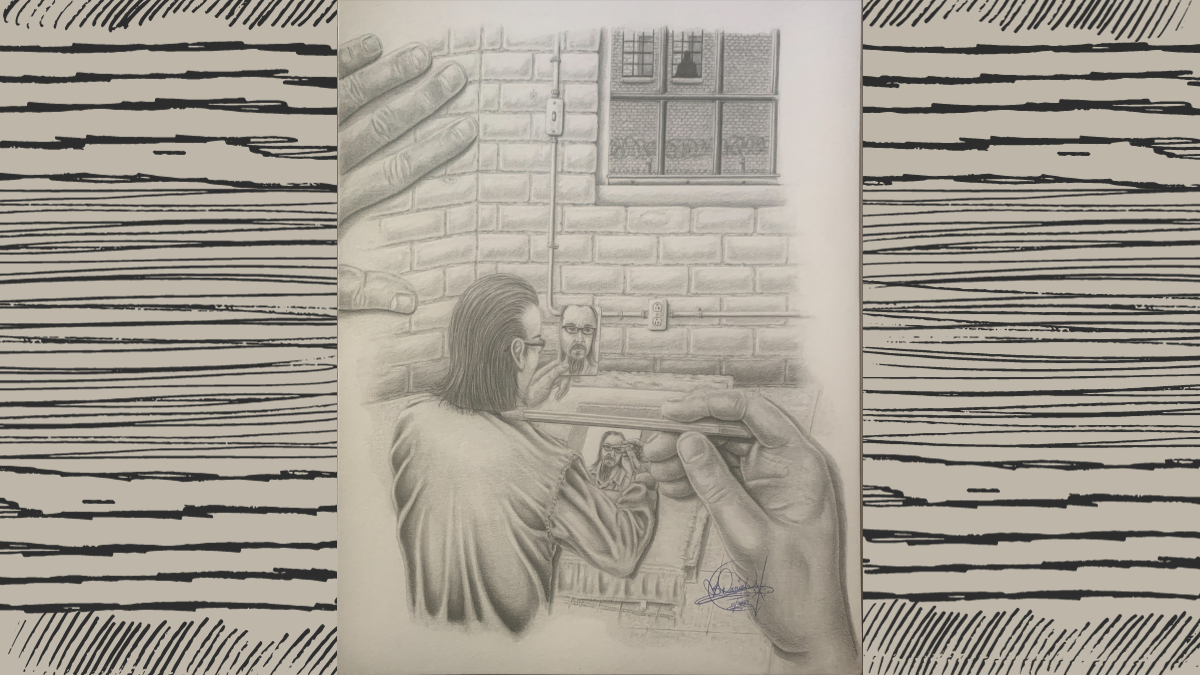
Artwork in prison ranges from cartoon sketches that someone might commission for their children in exchange for noodles or a bag of coffee to high-quality illustrations for projects that incarcerated people hope to one day publish.
The artist’s hustle isn’t an easy line of work to get into. You have to have some form of talent. Whether you use patterns to trace and color cartoons onto notebook paper or come up with your own designs, you have to be good enough to make others want to purchase your work. If you can do that, you can make money.
William is an artist who is also incarcerated in Burgin, Kentucky’s Northpoint Training Center. He has an eye for the details that others overlook—and a knack for hustling. Whether he’s drawing portraits of people’s loved ones or painting Heath Ledger as the Joker and Linda Blair as Pazuzu in “The Exorcist” on a coffee cup, his work can’t be obtained for less than $25 a head.
“I quit painting cups because I’m not going to spend 50 hours of my life painting a $100 piece of artwork on a $2.50 cup that someone only wants to pay me $15 for,” William said. “It’s essentially about the work I put in. There has to be a reward in the end.”
Some guys sell their colored artwork for ramen. Others earn $100 commissions that they spend weeks producing. William has been artistically inclined since his youth, and he’s extraordinarily talented—something he says doesn’t really serve him in the prison environment.
“Everyone wants something, and very few can actually afford to pay for it,” he said. “But I hustle because I have no support from family or friends behind these fences. I’m completely on my own.”
There’s another reason William gravitates toward art: It’s cathartic.
“I can lose myself in the rendering of the finest details, and every hour I spend drawing feels like another hour I’m cheating the state by not being here mentally,” William said. “I spent almost all of my life before becoming incarcerated destroying things: relationships, friendships, the lives of the innocent people that I victimized with violence—and my own life. Art allows me to create, as opposed to destroying. When I draw or paint, I am able to bring something beautiful into the world. I can heal instead of hurt.”
But articulating how drawing and painting actually makes him feel is harder for William to convey.
“To be honest, I do not know how to put those feelings into words,” he said, explaining that he’s drawn Christmas cards for thousands of people since he was first incarcerated nearly 30 years ago. William has never mailed one of his own Christmas cards because he said he doesn’t have anyone to send one to.
“My parents have been deceased for many years, and my two brothers left me for dead for almost just as long,” said William, wrapping his hands around his coffee cup. “I draw portraits for men in here so that they can send an original piece of artwork home to their mothers for Mother’s Day or their wives for Valentine’s Day or their anniversary because they can’t be there. I draw pictures of their children, though I never get to see my own son. It is difficult, more than anyone could possibly understand. What I feel sometimes cuts me to the bone. I draw for these guys because I have to. I would pay anything to be able to send a drawing to my mother.”
Drawing is important in prison—not just as a hustle, but because it allows artists to show those around them that creating something beautiful is possible. William said he doesn’t think of himself as any more special than anyone else with an institutional number. He hopes that his work shines a light on incarcerated artists who bring beauty into the world.
“There is a lot of ugly on my side of the fence,” William said. “Bringing color, texture, and form into the lives of people whose lives are lived out in monochrome is important. I have a pretty rare skill set, so it allows me to bring something to the hustle game that not just everyone else can jump in and undercut me on. I draw what I wish I could live. At the end of the day, though, it’s really about self-expression and being unique in a place that cultivates sameness.”
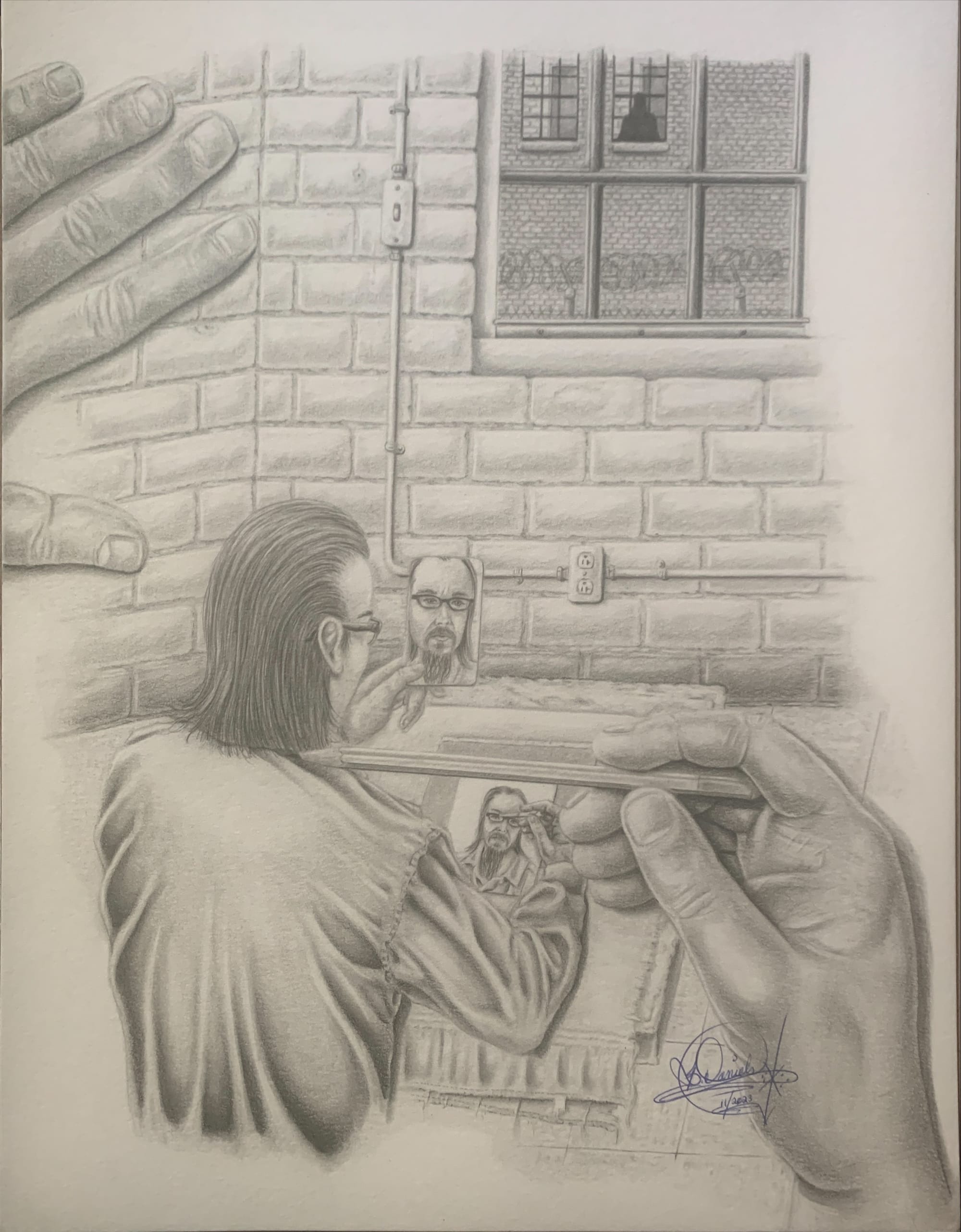
In prison, artwork is one of the few things officers don’t interfere with. Prison artists often draw other inmates’ faces, and they’re rarely disturbed while hard at work. This is considered a true sign of respect.
“I love the look on everyone’s faces when they see me draw a portrait from a picture of a face no larger than my thumbnail. A picture that no one else would even consider trying to do. Because it is the only picture that they have of their great-great grandmother, their favorite uncle, or their child,” William said.
Doing anything artistic in an environment like prison is hard to do. Prison is not an inspirational place. Not only that, but everyone hates on you and tries to undercut you because they’re envious of the money your talent makes you.
It is not lost on William that he’s making nickels and dimes for professional-quality artwork he could be making real money on if he only had a studio on the outside.
“But this is prison, and if I want to survive, I need to fill a niche,” William said. “Ultimately, the pay sucks, but being able to create in a place that only seeks to stifle originality gives me a sense of accomplishment, a sense of self, and keeps me human in an inhuman place.”
What artists do in here is technically against the rules. But on this side of the fence, people with hustles don’t worry about rules and limitations.
“I make things happen because I have to,” William said.
Artists create beautiful works for all to see, and how they present their work to the world is all that matters to them—even if it means breaking the law to do it.
The Right to Write (R2W) project is an editorial initiative where Prism works with incarcerated writers to share their reporting and perspectives across our verticals and coverage areas. Learn more about R2W and how to pitch here.
Author
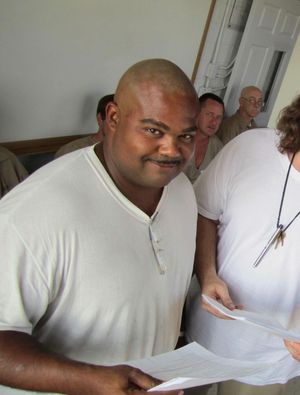
Derek R. Trumbo, Sr., a multiple-time PEN Prison Writing Award winner, is an essayist, playwright, and author whose writing has been featured in "The Sentences That Create Us: Crafting A Writer's Life
Sign up for Prism newsletters.
Stay up to date with curated collection of our top stories.