Texas Legislature passes laws strengthening campus protest rules, allowing citizens to be labeled foreign actors
Legislators claim HB 127 and SB 1349 are intended to protect Texas sovereignty, but organizers say “they’re trying to match what’s happening at the federal level”
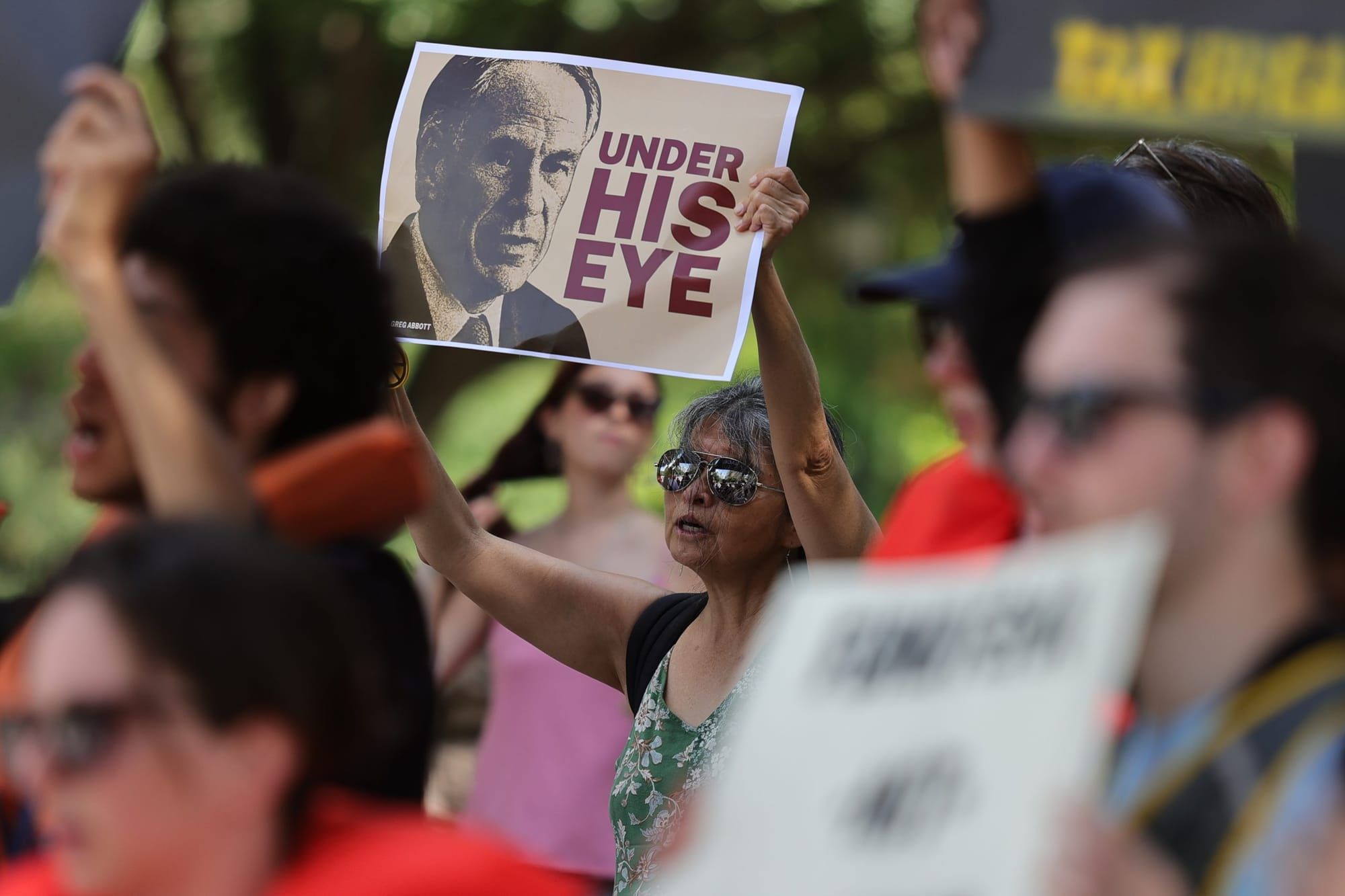
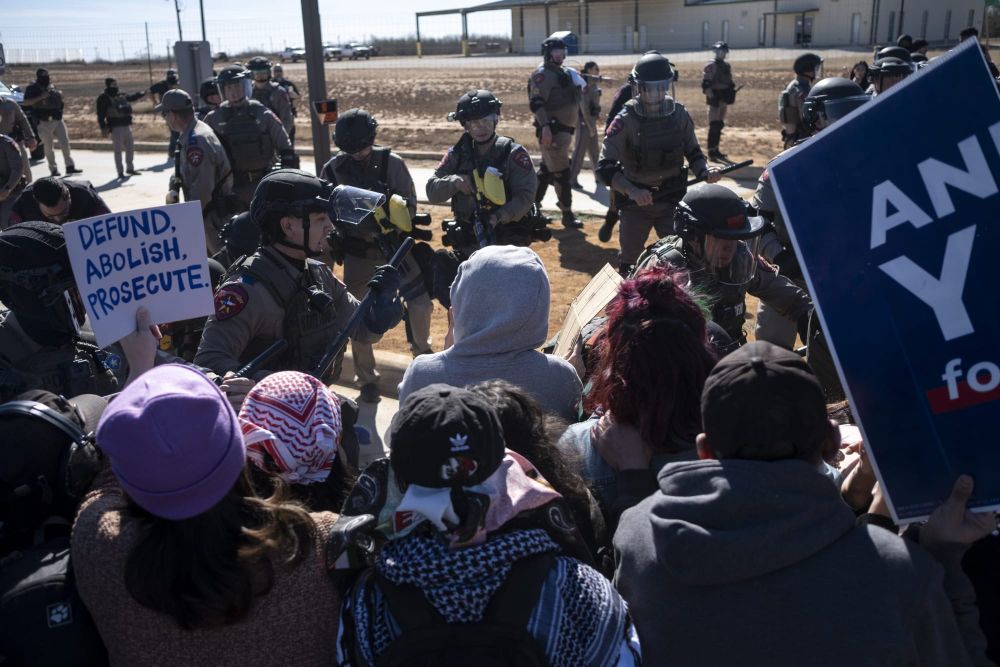
Texas quietly passed two laws this past spring that appear to strengthen the state’s ability to arrest and detain pro-Palestine protesters on U.S. college campuses and name citizens as foreign actors. The 600 bills Gov. Greg Abbott signed into law include a cluster of bills targeting citizens from China, Russia, Iran, and North Korea, such as HB 127 and SB 1349, which will both take effect on Sept. 1.
The bills come as immigration authorities detain students for their involvement in anti-genocide activism.
As the Trump administration continues to escalate threats and actions against international students, the U.S. faces uncertainty around the Israel and U.S. war on Iran, and domestic activism against the genocide in Gaza continues, the impact of Texas expanding its powers could lead to increased oppression of targeted immigrant groups.
“The reality is for immigrants—whether they’re undocumented, legal residents, U.S. citizens in a mixed-status family, or even look like they could be ‘foreign’ according to the current administration—there’s uncertainty around immigration policy,” Sarah Syed, policy manager for Asian and immigrant community advocacy group Woori Juntos, told Prism. “The line between safe and vulnerable has become dangerously blurred, and so we’re finding ourselves in vulnerable positions, and no one is truly safe from deportation any more, in my opinion.”
Foreign agents and cold war narratives
SB 1349 creates a new criminal offense of “transnational repression,” which would add “enhanced penalties” to charges as vague as “discourag[ing] another person from engaging in protected conduct” (free speech), and would charge people as agents of foreign governments or terror organizations.
“We want to fortify Texas against external influences that would undermine our legal system, intimidate our residents, and this legislation makes sure that our law enforcement agencies are well prepared to handle emergency threats while safeguarding our state sovereignty,” the bill’s primary author, state Sen. Bryan Hughes said in introducing the bill.
During testimony, Michael Lucci, founder of “global threat” researcher State Armor, said the bill’s target was clear: “It hurts the agents of foreign adversaries, genocidal regimes, and foreign terrorist organizations.” Jacqueline Deal, a fellow at Foreign Policy Research Institute, who also sits on the advisory board of State Armor, testified that the next step is to “rise to the occasion and protect people on the ground here who are entitled to the rights and privileges and liberty and freedom of speech and assembly and religious belief that all Americans deserve.”
Those comments came as free speech and assembly rights continued to be threatened for student protestors and legal residents detained and deported by Immigration and Customs Enforcement. Advocates warned of increased risks to protesters, who have had sweeping actions and accusations lobbed against them. Last August, for example, Houston Mayor John Whitmire lobbed an unfounded claim that pro-Palestinian protesters outside his home were “being paid by Iran.”
The language in the bill is “dangerously vague and subjective,” said Sameeha Rizvi, civic engagement organizer for the Austin branch of the Council on American-Islamic Relations (CAIR).
“There is no clear definition of what it means to ‘act on behalf’ of a foreign government, and no safeguards to prevent this law from being weaponized against marginalized groups, especially Muslim, Arab, immigrant, and Palestinian communities,” Rizvi said in an email. “This bill draws directly from post-9/11 and Cold War narratives that frame immigrants and foreign-born residents as inherent threats, with few protections against profiling or abuse.”
The explicit risk of this bill being leveraged against U.S. citizens was articulated when Rep. Don McLaughlin asked the bill’s sponsor, Rep. Janie Lopez, about the identical House bill.
“So in your view, an agent of a foreign government, that could include a U.S. citizen too?” McLaughlin asked.
Lopez answered, “Yes.”
“We faced, especially at the state, a lot of anti-immigrant sentiment, a lot of anti-Asian sentiment,” Syed reflected on this past legislative session. “They were advancing a lot of really discriminatory bills forward that would have a greater impact later on.”
The confluence of bills worked together like a web, targeting immigrants and international student protesters. “Lawmakers were working together to pass the same kind of law, ” Syed explained. “If it couldn’t pass through this avenue, they could pass it through another avenue.”
The Legislature also passed SB 17, with an amendment that allows the governor to expand the list of countries’ nationals banned from purchasing land in Texas.
“All together, these bills send a chilling message: that your rights and safety in Texas are not based on your actions, but on where you were born,” Rizvi said. The cluster of bills “all operate on the assumption that foreign-born residents, especially from Muslim-majority or Asian countries, are inherently suspicious and must be monitored, restricted, or excluded,” she said.
Threats to universities
Another set of bills passed in Texas targets universities, including House Bill 127, to “protect institutions of higher education from foreign adversaries.” The bill is expansive, including restrictions on everything from “foreign adversary education software” to “academic partnerships and student associations.” The latter includes regulation on cultural exchanges, study abroad programs, and student associations. Vague, repetitive language of “foreign adversary” gives little clarity, but testimony on the bill offered some insight.
“While I haven’t been able to draw a direct line between Qatari funding and specific instances of campus antisemitism, what I do know is that Qatari funding on college campuses obviates the need for alumni donors,” Natalie Ecanow of the Foundation for Defense of Democracies said in public testimony in support of the bill. “By forcing administrations to be responsive to Qatar and Qatari entities, they’re yielding to a government that has sponsored terrorist groups, sided with Islamists against the West, and failed to hold Hamas accountable for the Gaza war.”
Rizvi told Prism, “This bill reflects a dangerous return to McCarthy-era politics, amplified by the current wave of anti-Palestinian repression that escalated after the student protests in fall 2023.”
Texas passed one bill that specifically regulates campus protests, while another bill would require schools to use a particular definition of antisemitism in discipline proceedings. Rep. Christian Manuel told the Texas Tribune, “I just think it goes too broad, and I hate to say this, I think it’s too un-American.”
Although the bills have yet to go into effect, the tactic of fear is already affecting communities, Syed and Rizvi shared, speaking to a continued erosion of trust.
“A lot of folks don’t know that Texas can pass unconstitutional laws,” Syed said. “The laws are not always on our side, so it’s important to fight back.”
CAIR and Woori Juntos both offer education and training for their communities. “Beyond education, we’re also conducting a full policy review of all the legislation passed this session and will be developing a legislative plan of action, including advocacy, coalition work, and public education campaigns,” Rizvi said.
“Immigrant rights should not be seen in isolation,” Syed said, reflecting on the intrinsic connection between different movements. “We have to continue to stand with communities, amplify their voices, and ensure no one is left behind.”
Correction, July 16, 2025: This story was updated to reflect the correct title for Sarah Syed, policy manager for Woori Juntos.
Editorial Team:
Sahar Fatima, Lead Editor
Carolyn Copeland, Top Editor
Stephanie Harris, Copy Editor
Author
Saba Khonsari is a writer living in Houston, Texas. She is active in local abolitionist coalitions and campaigns focused on advocating at the city and county levels. Her work has appeared in The Texas
Sign up for Prism newsletters.
Stay up to date with curated collection of our top stories.