The Superfund program promises to clean up polluted lands. Does it?
Over 400,000 Indigenous peoples live within three miles of a heavily contaminated site, including 19 superfund sites on tribal lands
Real journalists wrote and edited this (not AI)—independent, community-driven journalism survives because you back it. Donate to sustain Prism’s mission and the humans behind it.
The fish in Minnesota’s Cass Lake are only safe to eat in moderation. Health advisories based on guidance from the Environmental Protection Agency (EPA) state that if people consume more than one or two fish from the lake per month, it might lead to a buildup of toxic chemicals in their bodies. The guidance is intended to stave off illness and protect local community members, but the solution—to eat fewer fish—conflicts with Indigenous peoples’ reliance on the surrounding ecosystem for food, culture, and connection to ancestral lifeways.
For Leanna Goose, a mother and enrolled member of the Leech Lake Band of Ojibwe, a tribal community in northern Minnesota equidistant between Fargo and Duluth, decades of chemical pollution of soil and groundwater in the Band’s homelands has rendered the land poisonous to those entrusted with a sacred relationship to its care.
“If you contaminate the land, you contaminate the people who, in turn, live off of that land,” Goose said.
The Leech Lake of Ojibwe people are dealing with the fallout from pollution that began almost 80 years ago. From the 1950s through the 1980s, the St. Regis Paper Company dumped wood-processing byproducts into onsite ponds and burned at least 550,000 gallons of toxic creosote and pentachlorophenol sludge at the city dump (though the actual amount of pollution is likely much higher, as thorough waste disposal records were not maintained).
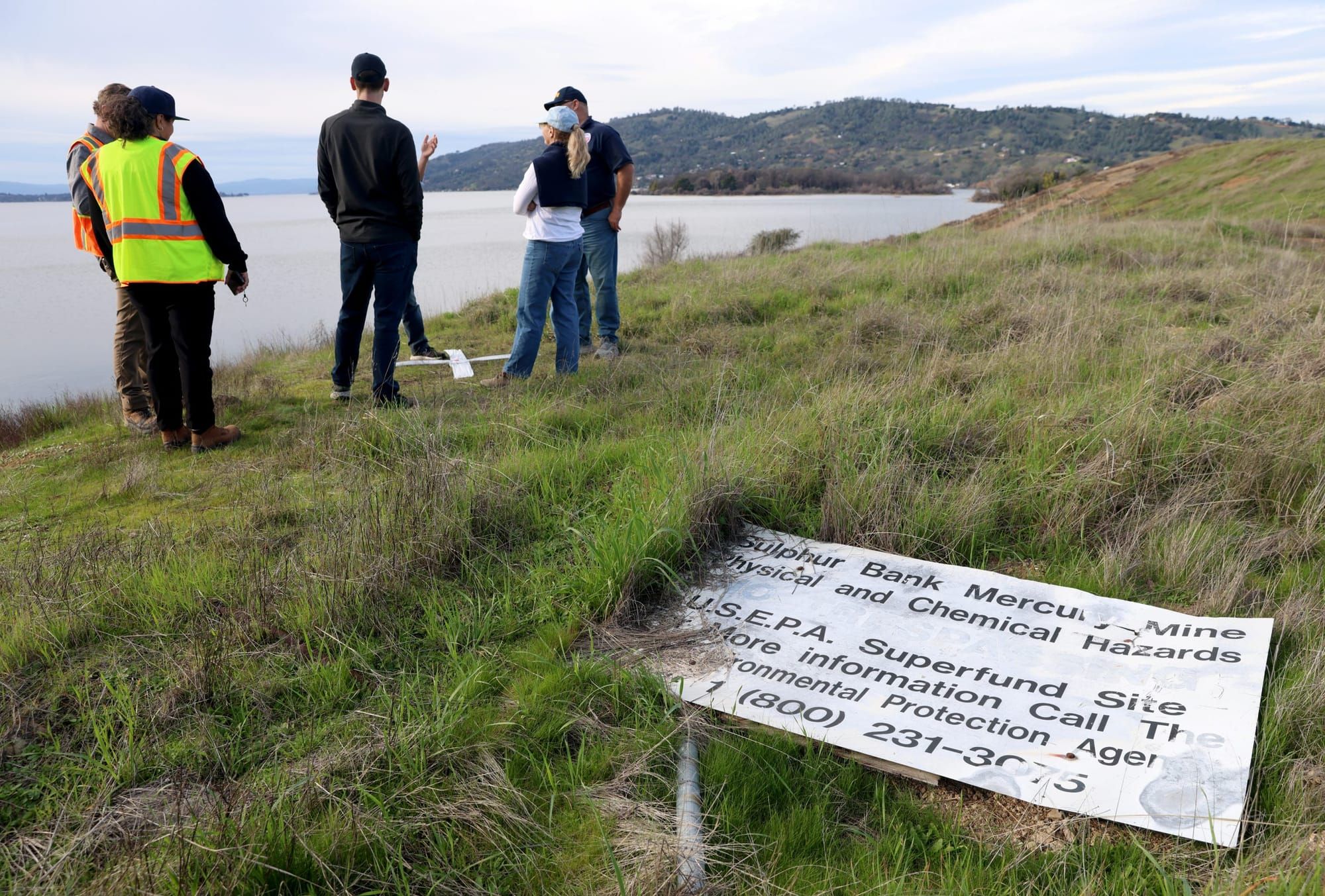
The level of pollution in the town of Cass Lake, where the Band is located, was so significant that the site was given a special status for study and remediation and placed on the National Priorities List (NPL) for the Comprehensive Environmental Response, Compensation, and Liability Act, more commonly known as the Superfund program. Created in 1980, the program identifies and manages the worst of the worst toxic pollution—just over 1,300 sites—and a small fraction of the more than 450,000 polluted lands identified by the EPA for cleanup. Until the end of 1995, corporations paid a federal tax that funded Superfund cleanups. However, industry pressure successfully reduced the tax obligations of their operations, so for two decades, taxpayers footed the bill for remediation, not polluters. In 2021, Congress reauthorized two tax-levying mechanisms that are supposed to help pad the coffers of the public fund, though fees collected from corporations cannot account for all the funds required for remediation.
A leader in her community and a voice for Indigenous sovereignty and leadership on issues related to extraction, water protection, and stewardship of the more-than-human world, Goose has met with EPA staffers to discuss the threats of legacy pollution on the lifeways of the Leech Lake Band peoples.
But it’s only in recent years that formal guidance has allowed tribal leaders to provide more direct input into the remediation process. For many Indigenous leaders, their exclusion mirrored the structural mechanisms that allowed so much pollution to persist near their communities in the first place. Despite decades of federal involvement in the cleanup of groundwater and soil led by the EPA, the bodies of water on the Leech Lake Band’s reservation still pose a threat to the public’s health and well-being—and this story is not unique to them.
What is the EPA doing to address pollution?
Over 400,000 Indigenous peoples live within three miles of a heavily contaminated site or one with formal Superfund designation by the EPA, illustrating the disproportionate effects of environmental contamination shouldered by Indigenous communities nationwide.
Of the 1,343 contaminated sites listed on the NPL for cleanup, 19 superfund sites are located on tribal lands, and 141 are within 10 miles of a tribe’s reservation, according to an analysis by the National Indian Health Board. Chronic exposure to toxic chemicals significantly increases the risk of cancer and heart disease, but the environmental burden bears a uniquely corrosive impact on tribal members’ health because of compounding socioeconomic, political, and historical factors.
Historically, governments and private companies imposed pollution onto Indigenous communities precisely because they were Indigenous, largely without proper respect for or adherence to treaty rights and obligations. In recent years, the EPA, the federal arm in charge of the cleanup of contaminated sites, has attempted to shift the collaboration between regional offices and tribes. But without adequate tribal consultation, the agency risks recreating the very dynamics that led to the land’s pollution in the first place.
For decades, there was no federal environmental policy outlining how companies, religious organizations, and other extractive entities recovered precious metals, fossil fuels, and other raw materials that could be used in the production of chemical agents, weapons, and energy. Companies were free to dump and dispose of toxic chemical refuse in nearby waterbodies and directly onto the land. Federal policy reflected the dominant narratives at the time, namely that the environment could withstand unmitigated polluting activities; that corporations mining materials like uranium served a public interest in wartime goals such as national security; and that certain communities were better suited to take on the burdens of pollution than others.
While many regional EPA offices and employees today may be sympathetic to the needs and perspectives of tribal nations, actual involvement varies widely depending on the insight EPA officials have into tribal cultural practices, the desire by federal workers to collaborate with tribal governments and communities, and cross-cultural education on the ways that environmental stewardship is generally thought of differently within tribal communities. There is also another glaring issue: What does it really mean to “clean” the land?
In 2019, the Government Accountability Office (GAO) found that the EPA didn’t maintain reliable data identifying Superfund sites that were located on or near tribal reservations or lands with a strong Indigenous interest, such as lands held in trust by the federal government or those with recognized cultural significance. In addition to Superfund locations, there were other inconsistencies related to tribal involvement or data gaps, including data that was lost when the agency moved its record-keeping from one application to another.
Alfredo Gómez, the director of natural resources and environment research at the GAO, said in an interview with Prism that the EPA failed to provide agency-wide guidance regarding what constituted a “consultation,” or when a tribe should be brought into the remediation process, what weight should be given to tribal perspectives and what records of this communication should be kept. Despite 2011 guidance by the EPA directing staffers to undertake a four-phase consultation process when decisions might impact tribal interests, inconsistencies in consultation have persisted.
Members of one tribe interviewed for the GAO report, the St. Regis Mohawk Tribe, were dissatisfied with the solution the EPA rendered in their community located along the northern border shared with Canada. Tribe members were unable to eat fish from the nearby St. Lawrence and Grasse rivers because of chemical dumping by General Motors. Fish and waterways are used in ceremony, cultural practice, and for subsistence; access was prevented by risk of exposure to polychlorinated biphenyls, a once regular part of the aluminum die casting process that was banned for its toxicity by the federal government in 1979.
“The question is: What is EPA doing about the concerns that the tribe has expressed?” Gómez said.
To clean up the St. Regis Mohawk ancestral lands, the EPA installed one “cap” at the industrial landfill at the Superfund site and another at a portion of the St. Lawrence River where untreated sediment posed a risk to aquatic ecosystems. According to the final report, the tribe would have preferred that the toxic waste be excavated and shipped beyond tribal boundaries.
Environmental policy is about “relationships between people”
There are ways in which the EPA has endeavored to honor and implement Indigenous land practices—though it’s not always clear if or how these practices are prioritized on Indigenous land.
In 2018, the EPA issued guidance on the incorporation of Indigenous traditional ecological knowledge (TEK) into remediation plans for contaminated lands, a step further than previous agency guidance that merely sought to ensure the “close involvement of Tribal Governments in making decisions and managing environmental programs affecting reservation lands.”
Samantha Chisholm Hatfield, an assistant professor at Oregon State University who is an expert in TEK, said that TEK gained traction in Western science circles just over a decade ago. Until then, Indigenous ways of thinking about ecological repair, health, and restoration were siloed into “niche” or “specialized” science without universal applicability.
TEK is a Western term that is used to define Native action and Indigenous science, one that’s “highly complex and time-honored,” Chisholm Hatfield told Prism. TEK incorporates wisdom from at least four generations—often as much as 12—in the hope of maintaining a reciprocal and mutually beneficial relationship with the more-than-human world. She cautioned against the use of Indigenous knowledge without the participation of Indigenous peoples.
There is an inherent tension between the ways that the EPA and tribes go about their respective restoration work. Monica Barra, a cultural anthropologist and assistant professor of race and environment at the University of South Carolina, said that remediation and consultation processes can reinforce power dynamics between Indigenous communities and the federal government.
Consider the cultural and scientific differences between the two. Western science and federal approaches to remediation operate on a time scale of a decade or two, while Indigenous wisdom and cultural knowledge consider many generations ahead of the present time. Barra told Prism that collaboration between these two groups, with one suffering at the hands of another, comes back to a question of “whose knowledge is correct and why?”
“It’s not just environmental policy,” Barra said. “It’s human policy. Environmental relations have always been about mediating relationships between people.”
She acknowledges that EPA workers are generally environmentalists, researchers, and scholars who are committed to their work and “whose hearts are in the right place.” Western science and its brute mechanisms of dredging, filling, landfill use, dumping, and capping may excise key information about history, social behavior, or community health that would prove beneficial for developing long-term environmental solutions. Without those considerations, Barra said that science can be part of “advancing or sustaining racialized and geographic inequalities.”
In that way, pollution of the land not only impedes Indigenous communities’ connection to culture, but also actively threatens their physical health.
Continued challenges and emerging solutions
The Coeur d’Alene Tribe has called the northwestern panhandle of Idaho home since time immemorial. In 1883, mining companies began to construct what would become one of the largest mining districts in the world of silver, lead, and zinc. In the first century of operation, mines in the Coeur d’Alene homelands excavated and smelted an estimated 130 million metric tons of mineral and metal ore, along the way dumping an unknown amount of mining tailings—the leftover slurry of rocks and chemicals—directly into the Coeur d’Alene River.
In 1983, one of these mining sites–the Bunker Hill Mining and Metallurgical Complex Superfund Site–was placed on the NPL. While the Superfund site is upstream of the tribe, contamination was allowed to flow unabated downstream for a century, feeding directly into Coeur d’Alene Lake, the “heart of the Coeur d’Alene people,” said Rebecca Stevens, the lake restoration and lake management plan coordinator for the tribe. By the time of federal intervention, the nearby communities and the Coeur d’Alene Tribe took on the consequences of the mining, with blood levels in children measuring far above the Centers for Disease Control and Prevention’s standard of 3.5 to 5 micrograms per deciliter. According to many experts, there is no safe threshold of blood lead levels in children, as exposure can harm the development of the brain and nervous system.
In 2011, a settlement was reached between Hecla Mining–the company responsible for the environmental damage—the tribe, the state of Idaho, and the federal government to fund the cleanup of the lake, relevant bodies of water, and surrounding sites. Cleanup of the lake, where 83 million tons of historic mine waste are deposited, is ongoing.
Stevens has worked with the tribe since 2005 and witnessed as the EPA has “learned to talk to the tribes early and often.”
“It’s taken years, but they’re finally learning it’s just in their best interest to work with us,” Stevens said. “I think we’ve come a long way, and [EPA staff] know that we’re not shy to speak up and be candid.”
The Coeur d’Alene Tribe is federally recognized, which means that it is entitled to a government-to-government relationship with the U.S. This status helps provide the legal backing to the tribe’s human rights claims of sovereignty, which translates to decision-making power and a seat at the table.
Still, the tribe has had to advocate for Indigenous leaders and tribal officials to be treated as partners, rather than mere stakeholders. “We’ve pushed for EPA [not to] just come in at the end of the day and expect us to sign off on a project for cultural resources inventory or assessments,” said Stevens, who is not Indigenous.
More broadly, Stevens told Prism that it has also been a challenge to work with the EPA in developing shared visions for what becomes of remediated lands, even while the agency as a whole has been a productive partner. For cultural resource purposes, the Coeur d’Alene Tribe wants to restore a parcel of the Superfund site that was acquired through the settlement with the mining company. Stevens said that the EPA came back to the table with a proposal to use the land as a waste consolidation area, which is entirely incongruent with the tribe’s state interest. According to Stevens, the agency plans on going forward with its plan. However, the agency is also looking at options to conduct some sort of “land swap” that might compensate the tribe for the loss of land.
It creates major challenges when the EPA makes a decision “without the tribe’s involvement,” Stevens said.
And tribal involvement differs site to site. Zachary Sasnow, the remedial project manager for Superfund sites in the Midwest, said that educational programs are offered to agency staff to help them better work with tribal governments. As for the cleanup on the Leech Lake Band’s ancestral lands, Sasnow said that the EPA maintains what’s called a cooperative agreement with the Band.
“We engage with them in some way, shape, or form pretty much weekly, at least,” he said, noting there are a number of entry points for community input and involvement, including a community advisory group and work with the Band’s environmental department.
The EPA’s efforts have come a long way since cleanup began in the 1980s. The Cass Lake site was added to the NPL in 1984, and shortly thereafter, the Minnesota Pollution Control Agency oversaw how the polluting corporation—originally Wheeler Lumber Bridge and Supply Co., later St. Regis Paper Co., Champion International, and now International Paper—managed waste byproducts from its operations, which included the construction of a groundwater pump and treat system.
In 1995, the EPA took over the site, conducting soil excavation to remove some of the more densely polluted material into an off-site landfill. The EPA also conducted a risk assessment from 2007 to 2014, during which it found that pollutants at Cass Lake, such as dioxins, were more toxic than originally believed when the site was listed on the NPL in the 1980s. Dioxins are a chemical compound that can disrupt healthy immune, reproductive, and endocrine function. They can also cause cancer.
“[We’ve] determined over the last few decades, through different work and different actions we’ve taken, that the remedies that were put in place by the state in the 1980s weren’t necessarily adequate for our current understanding of what the risks are,” Sasnow said.
Even with continued evaluation of the site and treatment of pollution, unknowns remain. A groundwater plume of dissolved contamination, mainly creosote and diesel fuel used in the wood treatment process, is a concern, Sasnow told Prism. The treatment site flows into wetlands and tributaries where manoomin, or wild rice, grows. Manoomin is central to the Ojibwe creation story; maintaining healthy water flow through the rivers and lakes where the wild rice grows is tantamount to maintaining the cultural and communal health of Anishinabee peoples.
The long lead time for remediation is a testament to the stubbornness of the pollution found on Indigenous lands, but there are some tribes and grassroots groups experimenting with their own solutions.
Such is the case with the polluted lands at the Loring Air Force Base, a Superfund site in Aroostook County, Maine, on the ancestral homelands of the Mi’kmaq Nation. The land where the base sits was returned to the Mi’kmaq peoples in 2009. But by that time, the area was a threat to public health due to the military activities that heavily polluted the soil and groundwater with polyfluoroalkyl substances (PFAS). Though the site was listed on the NPL in 1990, it’s only in the last few years that community members and environmental activists have found what could be a long-term solution: using hemp to pull out PFAS.
PFAS are highly toxic chemicals that industries and federal agencies have used since the 1940s in manufacturing and firefighting. Because they’re so difficult to remove from the environment, they’ve been dubbed the “forever chemical” and only in recent years have scientists developed methods to filter PFAS out of water. Less attention has been paid to soil, which is a growing concern given that food crops may be uptaking the pollutant. Hemp has a unique ability to absorb harmful chemicals from the soil and may even be a long-term solution that doesn’t just cover up the problem.
“It’s going to take time to clean the environment, but it’s worth it,” said Chelli Stanley, a scholar, environmentalist, and activist who first began working on Superfund cleanup with the Mi’kmaq Nation in 2019.
In her experience, Stanley said that the EPA is “generally respectful of tribes” and the agency “tends to support tribal sovereignty.” She also noted that the regional EPA has been supportive of the tribe’s use of hemp to heal the land, a solution that falls outside the bounds of what’s typically seen as remediation.
Still, this support may be an anomaly. Stanley told Prism that the EPA’s current methods to “clean” the land make people impacted by Superfund sites feel unsupported. According to the environmentalist, it’s unhelpful for the agency to merely “cap things” on a reservation and then call them clean.
“It’s not cleaning up anything,” Stanley said. “There’s no real solution. It’s just pushing it off.”
Editorial Team:
Tina Vasquez, Lead Editor
Carolyn Copeland, Top Editor
Rashmee Kumar, Copy Editor
Author

ray levy uyeda is a staff reporter at Prism, focusing on environmental and climate justice.
Sign up for Prism newsletters.
Stay up to date with curated collection of our top stories.