Advocates spotlight U.S. complicity in Sudan genocide
A lack of media coverage and international pressure leaves many Sudanese communities in the dark after el-Fasher was seized by the Rapid Support Forces
Real journalists wrote and edited this (not AI)—independent, community-driven journalism survives because you back it. Donate to sustain Prism’s mission and the humans behind it.
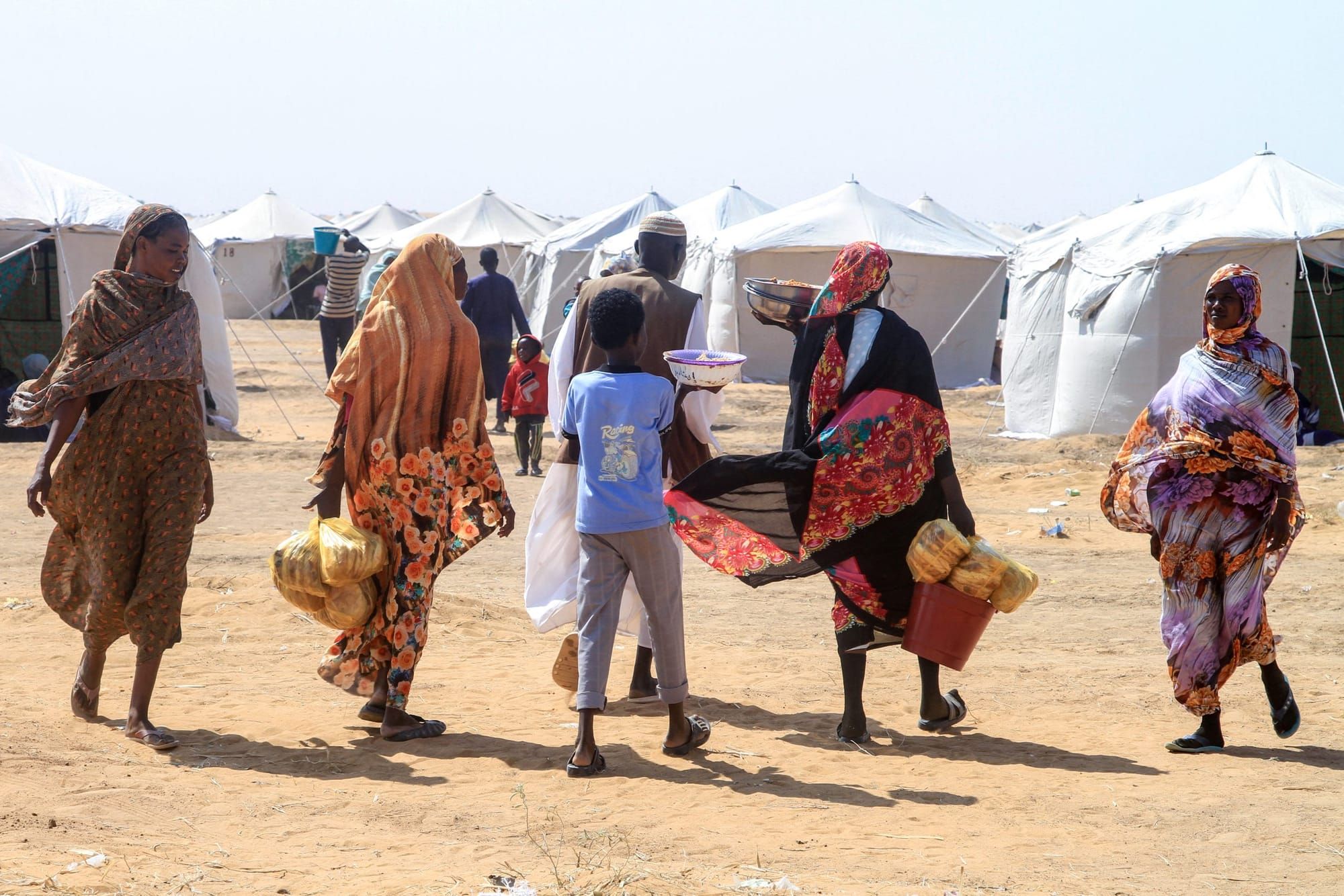
After the Sudanese paramilitary force Rapid Support Forces (RSF) seized control of the capital of North Darfur on Oct. 26, following more than 500 days of siege, the United Nations estimated that 89,000 people have fled, while thousands of others remain trapped in el-Fasher as the genocide and forced famine in Sudan continue.
The RSF, which has been fighting the Sudanese Armed Forces (SAF) for control of the country since April 15, 2023, is armed with weapons, intelligence, and financial support provided by the United Arab Emirates, a long-standing U.S. ally. Up to 150,000 have been killed in Sudan since 2023, with 12 million displaced; over 2,000 people have been murdered in el-Fasher alone since Oct. 26.
Researcher and former journalist Reem Abbas was living in Khartoum, the capital of Sudan, when the war began in 2023, the most recent aggression in a long history of tensions. Abbas told Prism that the UAE’s support of the RSF throughout the genocide, as well as the complicity of countries that have supported it, have created “not just an internal civil war, but a proxy conflict where there is a lot of imperialism involved.” In 2024, Middle East Eye reported that the UAE uses a complex network of supply chains to funnel munitions via Libya, Chad, and Uganda. According to the report, RSF leader Mohamed Hamdan Dagalo also has a commercial empire based in Dubai, and gold from RSF-controlled mines in Sudan is traded in the UAE.
“ As long as countries are selling weapons to the UAE and the UAE continues to supply the militia, the international community and many countries become complicit in this genocide,” Abbas said. “The U.S. has expanded its foreign policy to the Gulf, so it does not want to deal with the Sudan situation without its allies.”
Although the U.S. has largely been portrayed in Western media as a mediator to end the civil war, it has continued supplying the UAE with weapons, including $1.4 billion in weapons sales earlier this year. The U.S. also committed to a $1.4 trillion economic relationship with the UAE across aerospace, health, and AI sectors. Additionally, the Trump administration banned Sudanese nationals from entering the U.S. in April and ended a 12-year Temporary Protected Status for South Sudanese nationals effective Jan. 5, 2026, giving them 60 days to leave the U.S.
“ From day one, we heard the fighting, we heard the gunfire, we heard the fighter planes, and we stayed in our home thinking that this is going to end. But then things were becoming very difficult,” Abbas said. She said food started running out in shops, creating a difficult situation for her family, including her parents and child.
Abbas said she and her family became internally displaced after leaving Khartoum and went to a city two hours away.
“We left with very little, thinking that we’ll be back in a few days or a few weeks,” Abbas said. “It was a struggle to rent, and it became a war, so there’s a lot of new expenses, and the town was full of people fleeing the capital, fleeing the fighting. We left to another country, and we were very lucky to be able to do that, but I’m not gonna say it was easy. I feel that my family’s still living in limbo.”
Abbas said she and her family wanted to stay in Sudan, and they did for as long as possible, but she could not continue working online, and her parents no longer had access to their necessary medications. Abbas later returned to Sudan to start working again, but came back to find her family home looted and almost fully destroyed.
Our family and many families, we don’t want anything other than just to return to live in our home, to live in our country. No one wants to be a foreigner. No one wants to be a refugee in any other place.
Reem Abbas, researcher and former journalist
“Our family and many families, we don’t want anything other than just to return to live in our home, to live in our country,” Abbas said. “No one wants to be a foreigner. No one wants to be a refugee in any other place.”
While the SAF currently controls most of Khartoum after much back-and-forth with the RSF, fighting has persisted, and it is intensifying in the Darfur region.
“ El-Fasher has been under siege for about 18 months now, so there were severe restrictions on food getting in, on water availability, on fuel, on medical care,” said Nic Pyatt, regional Africa director and interim Sudan country director for Nonviolent Peaceforce, an international civilian protection organization with camps on the ground across Sudan. “Medical facilities within el-Fasher have also been consistently targeted, as have civilian areas, like mosques and children’s playgrounds.
Pyatt said the continuous breach of international humanitarian law and targeting of civilians has caused “a huge restriction on people’s livelihoods in terms of everything from basic food to civilian protection.” El-Fasher was one of the only cities in the Darfur region fully controlled by the SAF before clashes with RSF began in April 2023. Now, the U.N. reports that roughly 21.2 million people in Sudan face high levels of acute food insecurity, with besieged areas such as el-Fasher in a deep famine.
“ We saw month-by-month the ability of [humanitarian and medical] organizations to respond just dropping until it was almost zero,” Pyatt said. “For people in and around el-Fasher right now, the best we could hope for is that there is a cessation of hostilities. People … are traumatized, they’re malnourished. Many can’t move. Many cannot afford to go.”
Testimonies and footage of atrocities have surfaced online by the few journalists continuing to report while living through the horrors themselves. Sara Qudah, the Middle East and North Africa regional director for the Committee to Protect Journalists (CPJ), told Prism that the organization has confirmed that at least 14 journalists have been killed by the RSF, while dozens of others have been abducted, assaulted, or disappeared.
“We are seeing mass killings of civilians and journalists being abducted, and their abduction is filmed and posted online by RSF,” Qudah said. One of the journalists she referenced was Al Jazeera’s Muammar Ibrahim, who was detained in el-Fasher on Oct. 27. The RSF posted videos of his abduction with no consequences. “This is a war crime,” Qudah said. “This can’t happen without any investigation and any accountability, but yet it’s happening in Sudan.”
Qudah said it has been more difficult for CPJ to thoroughly track the killing of journalists, as it does in Gaza, because of the continued media blackout. She also noted that this has caused an increase in sexual harassment and rape of female journalists and Sudanese women by militia, who were already subject to sexual violence before the war. Despite the blackout, satellite imagery of el-Fasher, recently released by the Yale School of Public Health’s Humanitarian Research Lab, shows the sites of massacres previously covered up by the RSF with blood stains that can be seen from space.
“ It really breaks my heart that Sudan did not receive attention from the international community as it should have because el-Fasher fell. But the war did not start last week, and the siege in el-Fasher did not start this week [of Oct. 26],” Qudah said. “But no one was paying attention. It’s really something that makes you wonder to what point do they need to reach for the international community to pay attention.”
Abbas, the researcher from Khartoum, said the talking points in the media that paint the people of Sudan as terrorists must stop, as the militia continues bombing civilian facilities, hospitals, and schools, just when communities believe they can go back to feeling a sense of normalcy.
“ The reporting on Sudan has a lot of disinformation,” Abbas said. “The militia is against the return of life itself. The civilians are the biggest losers in this war, in the sense that people have lost everything: generational wealth, homes, livelihoods, their own ability to exist in their home.”
Editorial Team:
Sahar Fatima, Lead Editor
Carolyn Copeland, Top Editor
Rashmee Kumar, Copy Editor
Author
Neha Madhira is an award-winning gender, health and politics reporter with a focus in South Asia and the Middle East. Previously, she was a breaking news reporter in Austin, Texas, where she broke the
Sign up for Prism newsletters.
Stay up to date with curated collection of our top stories.