Imagine showing up to work every day, but all of the decisions are made by people who don’t actually work at the company. Now, imagine if everything you hear about the company suggests that it’s failing. According to Jonathan Collins, a political science and education professor at Teachers College, Columbia University, this is the feeling students in New York City’s public schools have been experiencing for decades.
For more than 20 years, New York City’s school system has operated under a system called mayoral control. In this system, the mayor and borough presidents get executive power over the school district by appointing the majority of school board members.
However, the temporary state law that empowers this form of school governance in the city will expire in June 2024 unless it is extended by the state legislature. While the mayor requests an extension, the legislature has leverage from a long-anticipated report from the New York State Education Department in which members of the public who spoke out mostly opposed the system.
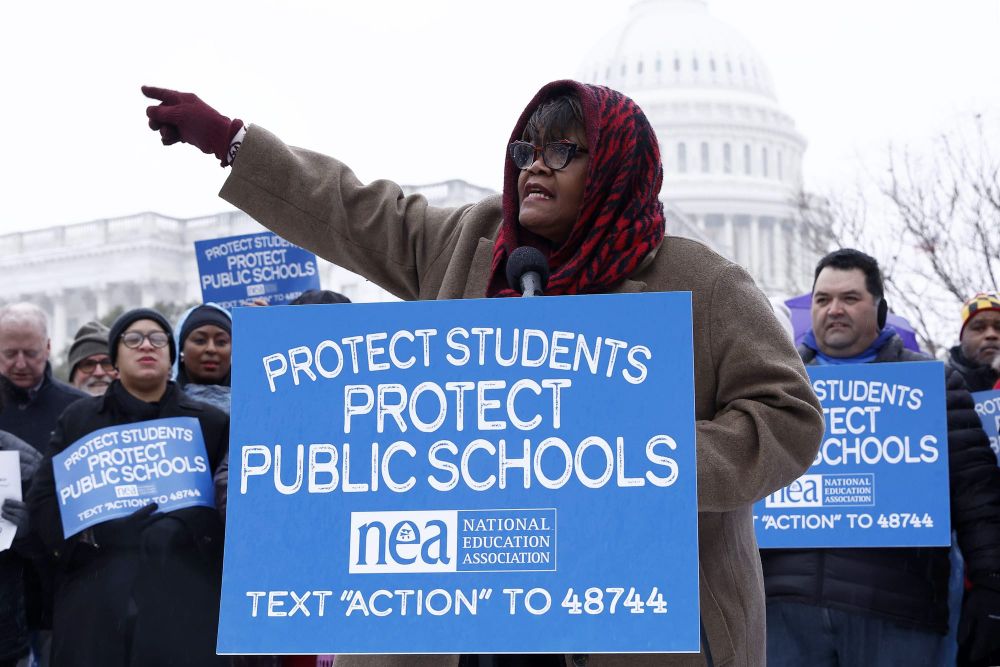
As New York state’s legislature reconsiders the future of school governance in New York City, student advocates are seizing the opportunity to demand voting rights for the student representatives on the city’s school board: the Panel for Educational Policy (PEP).
“It’s a fairly common and basic idea that people have the right to determine how their communities are governed, and I don’t see why that should not be extended to young people,” said Django Spadola, a 15-year-old New York City high school student and a youth director at IntegrateNYC, which is leading a campaign to expand voting rights and increase student membership.
The New York State Education Department’s 2022 report stated that “[s]tudents and adults testified in favor of greater inclusion of students in decision-making.” The report quotes a student testimony from the public hearing in Manhattan, where the student said, “We deserve to have self-determination.”
A 2021 National School Boards Association report showed that 31 states allow local boards to have student representatives. National Student Board Member Association (NSBMA) founders told Education Week that seven states allow for “preferential voting” from student members. Maryland is the only state that allows student members in some districts and on the state board to cast binding votes. In Anne Arundel County, Maryland, student members have been voting alongside adults since 1975. State legislation recently expanded voting rights to new districts, including Baltimore County.
Ethan Eblaghie, a high school senior and the former student commissioner of Baltimore City Public Schools, was the first student commissioner to gain voting rights in Baltimore two years ago.
“If the student rep doesn’t get a vote, there is no incentive for the school district to actually care what students are thinking about or wanting because [the district’s] decisions can move forward unimpeded by opposition,” Eblaghie said.
Zachary Patterson, co-founder of the NSBMA, which provides training, resources, and a community to student board members across the country, said the idea of a nonvoting member is “quite bizarre.”
Some New York legislators are taking these students seriously. In an emailed statement, progressive state Sen. Robert Jackson said that granting voting rights to students on the PEP would be “a step toward more equitable governance” and that it would be “fundamentally just and responsible.”
“By enabling [students] to vote on the Panel for Education Policy, we elevate their role from mere participants to equal stakeholders,” Jackson said. “It is essential that we involve students in every process that shapes the policies affecting them.”
David Bloomfield, a professor of education policy at Brooklyn College, said granting students voting rights could be “a serious proposal on the table.”
“It’s quite attractive as a political matter, not necessarily for student voters, although many students do vote, but it gives an attractive look to any politician,” Bloomfield said.
Bloomfield said the positive side to allowing students to vote on the PEP would be “the board having an inside view of what it’s like to be a student in their district,” in addition to providing “a great lesson in civic engagement for that student and their peers.”
Bloomfield said one argument against allowing students to vote on boards is that not all students are “taxpayers in the traditional sense,” so they could be more likely to vote for greater spending.
However, granting full voting rights to student members would require a more substantial change to New York state law, which limits student board members’ roles to “ex-officio non-voting members,” according to Bloomfield. Changing this could not be done by amending the mayoral control law alone: it would require further legal changes.
But, according to Bloomfield, it would be permissible and consistent to grant student members the power to cast advisory votes by just amending the mayoral control law. Advisory votes cast by students would not impact the outcome of the vote, but it would ensure that students’ opinions would be recorded.
“It’s just that these students would be on the record,” Bloomfield said. “I think it would be positive to give some baby teeth to the students.”
Bloomfield said New York state law bars student members from participating in school board executive sessions, where conversations about confidential information about disciplinary or personnel issues take place. Advisory votes would not apply to executive sessions without a more substantial change to state law.
Ava Pittman, a 15-year-old youth director at IntegrateNYC, said students “are the people being directly impacted by these decisions” and argued for full voting power.
“If we don’t have a say, how do we know it’s being tailored to what we need?” Pittman asked.
Jennifer Tran, the other co-founder of the NSBMA, said that when students lack voting power, adult board members “can just ignore” the student representative’s input. Tran said her only avenue to impact the school board she served on—without a binding vote—was to find an adult member or two to support her idea.
“There was a palpable power dynamic between myself and the adult school board members,” Tran said. “What they saw was a student on the school board, not another school board member.”
Contrarily, Abisola Ayoola, a student member on Maryland’s State Board of Education, has voting power.
“My voice holds just as much space and just as much weight as the other board members, and I really get to provide that student perspective when we’re making decisions,” Ayoola said.
Collins, the professor at Columbia, said granting voting rights to student representatives on the PEP would put pressure on the PEP to “get the right selection process.”
“You don’t want student board members who are student board members in name only,” Collins said. “You want them to be representative of students, especially the students who need the greatest amount of advocacy.”
Avery Federe, a 16-year-old high school student in New York City and a youth director at IntegrateNYC, said there should also be a reform to make the PEP student representatives elected positions. Currently, student representatives are selected from a pool of students who participate in city programs.
“Adults appointing youth to these boards are not representing the interests of the people who are being affected, and that’s really inequitable and unfair to students,” Federe said.
Collins also said that adding voting rights for student representatives would increase the PEP’s responsibility to train student representatives on procedure. “The PEP has to ensure that they’re putting kids in positions to lead successfully,” Collins said.
Tran and Patterson with the NSBMA said a lack of training and resources is a huge issue felt by student board members across the country, which is why they provide training to board members.
“You can get [student members] to understand every single aspect that goes into running an effective and powerful school district. It’s just that you need to take the time to explain it to them like you’d explain it to every other board member that gets elected,” Tran said.
Collins also said that providing voting rights to student representatives could expose them to political pressures. “Politics is messy, and we have to keep kids out of the mud as much as possible,” he said.
But Patterson is less worried.
“As long as the student board member has systems that allow them to seek support when times are challenging, that provides them this additional safety net,” Patterson said.
“I’ve been screamed at, I’ve been threatened to be sued, and that’s OK because I was a school board member,” Patterson said. “Student board members consent to enter this role, and, by measure of the student board member consenting to enter this role, they take on a responsibility to be able to handle what comes.”
Students at IntegrateNYC had ideas about how to make the PEP more welcoming for students, including increasing the number of student members involved.
Tran said the current situation on NYC’s PEP, where there are two student representatives and 23 adult members, is “a big ratio.”
“I would likely feel like it’s a bit of a hostile environment,” Tran said.
UPDATE 4/17: The original draft of this article stated that New York City’s school board currently only has one student representitive. As of February, two student representatives sit on the New York City’s school board. The article has been updated to reflect this.
Author

Julian Roberts-Grmela is a journalist based in New York City.
Sign up for Prism newsletters.
Stay up to date with curated collection of our top stories.