Trump’s targeting of students protesting genocide opens new lines of attack
The detainment of Mahmoud Khalil and others shows how attacks on protesters are weaponizing immigration structures and relying heavily on outside agitators
After former Columbia University student Mahmoud Khalil was detained in a Louisiana Immigration and Customs Enforcement (ICE) facility on March 8, President Donald Trump vowed that his arrest would be the first of “many to come.”
Khalil is a Palestinian-Syrian permanent U.S. resident and recent Columbia graduate who was active in last year’s Gaza encampment protests. His detainment and further actions against students that followed highlight how attacks on anti-genocide student protesters are ramping up on several different fronts, including through the weaponization of immigration structures, the influence of Zionist outside agitators, and the full weight of the U.S. government.
On March 13, Leqaa Kordia, a Palestinian from the West Bank who is also a former Columbia student, was detained by Homeland Security agents in Newark, New Jersey, and taken to Prairieland Detention Center in North Texas. A Columbia doctoral student from India, Ranjani Srinivasan, had her visa revoked but chose to leave the country herself. Columbia’s interim president, Katrina Armstrong, stated the same day that Homeland Security agents had searched two dorms. According to students, agents have also been seen in other public buildings on campus.
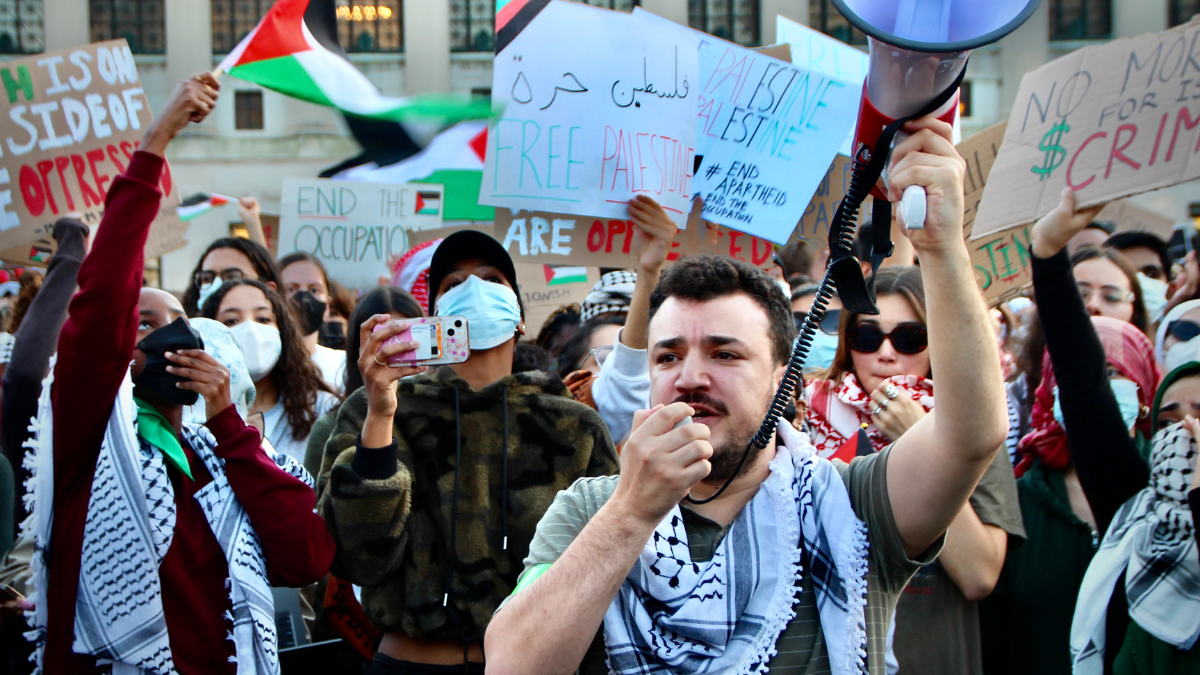
After last week’s events, protests have surged on college campuses and around the country. On Tuesday, Israel resumed heavy airstrikes on Gaza in the latest escalation of the genocide, killing more than 400 Palestinians and injuring over 500. Although a ceasefire went into effect in January, Israel has reportedly violated the agreement more than 900 times.
Most students and protesters around the country have been labeled as “pro-Hamas supporters” or antisemitic for their advocacy against Israel’s ongoing genocide of Palestinians. Secretary of Homeland Security Kristi Noem posted a video on X of Srinivasan pulling a suitcase at LaGuardia Airport in New York and calling her a “terrorist sympathizer.”
But students and student journalists on the ground say those accusations are baseless.
“Earlier on in the coverage I was doing, I was trying to emphasize the peaceful nature of these protests,” said Columbia student and journalist Claudia Gohn, who reported on the protests for the Columbia Spectator. “Nothing about what I saw during the encampment was violent except for when the police were going in and arresting students.”
Gohn said that in the comments section of her articles, she has seen posts such as, “I hope they get sent to Gaza,” or “I hope Hamas rapes these students.”
“ My friend was interviewed by India Today, and [the interviewer was] talking about the ‘violent antisemitism going on on campus.’ … It was the first time that we’ve had to defend such blatantly false claims,” Gohn said. “It almost got tiring because we were having to qualify everything that we were saying or writing with what was happening.”
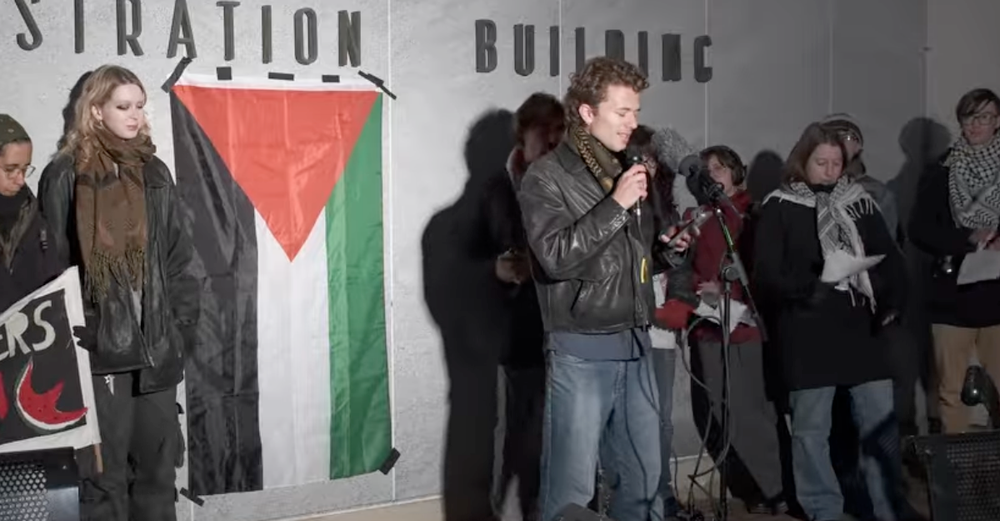
Last week, Columbia also expelled, suspended, and revoked the degrees of 22 students involved in the 2024 “Hind’s Hall” demonstrations on campus. This came after the Trump administration sent the university a letter of nine demands it must follow in order to discuss the cancellation of $400 million in federal funding. The Trump administration also sent 60 other universities letters to “protect Jewish students on campus.” Other universities, regardless of whether they were sent the letter, have also begun following suit, such as UCLA, which canceled a public health course on Palestinian health and launched a campus initiative to “combat antisemitism.” Yale University also abruptly suspended international law scholar Helyeh Doutaghi after a news site partly powered by artificial intelligence called her a “member of a terrorist group,” referencing a Palestinian prison solidarity group placed on the U.S. sanctions list in 2024.
“ The role of third-party vigilantes cannot be understated here, and there is a history in this country of private McCarthyites helping to facilitate, normalize, or instruct state repression,” said Chip Gibbons, the policy director for D.C.-based Defending Rights and Dissent. “When it comes to Palestinian Americans or Palestinians, we know these private networks have been particularly vociferous and have been particularly impactful in getting what they want.”
Betar U.S. is one of the right-wing organizations that Gibbons referenced, which has labeled itself a Zionist organization and directly claimed credit for Khalil’s arrest. The group also claims to have sent the Trump administration a “deportation list” of thousands of others it has called supporters of “jihad and intifada.” An international student at Columbia who did not want to be identified publicly said the fear caused by this list, as well as Khalil’s and Kordia’s detainment has made others feel too scared to go to class.
“I remember the Saturday when I saw ICE in the library. And two hours later, I hear Mahmoud has been arrested,” she said. “ I was literally writing an essay about protests… about the usage of social media during the Arab Spring. But, at the same time, someone is being arrested for speaking their mind, and then [my professor] asks us to write about protests in countries that are authoritarian. It’s the irony behind it.”
Gibbons said the actions of these anti-Palestinian groups are troubling because “the Trump administration is eager to appease them.”
“ There’s going to be two parallel tracks of next steps,” Gibbons said. One step will be lawyers fighting Khalil and Kordia’s cases in court. “But there also has to be a political movement in solidarity with them that makes it clear that what happened is unacceptable,” Gibbons said “I don’t think you can understate the importance of political solidarity.”
Lauren Bohn, a friend of Khalil’s, said they met when she was based in Lebanon as a reporter after the Arab Spring. They last hung out meaningfully in Istanbul three years ago, when they had iftar together during Ramadan.
“He was so excited at the time because he had just found out that he had gotten into Columbia and was trying to figure out how to make it work financially. He had never been to New York City before and took his admission with a sense of deep honor. He earned his place there,” Bohn said. “With that feeling of honor and gratitude also came a deep sense of responsibility because he immediately began talking to me about what this degree could do, not for his career, but for his humanitarian work,” including on the Syrian refugee crisis.
This is not just a story about Mahmoud and his disappearance; it’s also a story about all of us. … We’re all essentially chess pieces whose freedoms are deeply threatened, and we’re watching them be slowly revoked.
Lauren Bohn, friend of Mahmoud Khalil
Bohn also stressed that Khalil is not someone who likes to be in the limelight but that now is the time when people see “who is standing in support of students and human rights and who isn’t.”
“It just feels as though he’s some chess piece in a greater game,” Bohn said. “This is not just a story about Mahmoud and his disappearance; it’s also a story about all of us. In this current world order, and with this current administration, we’re all essentially chess pieces whose freedoms are deeply threatened, and we’re watching them be slowly revoked. This is very much a trial run for the administration to see how much they can get away with.”
Both Khalil’s and Kordia’s cases are pending, and the American-Arab Anti-Discrimination Committee (ADC) filed a lawsuit on March 16 against the Trump administration for attempting to deport international students and scholars who protest or express support for Palestinian rights, on behalf of three plaintiffs from Cornell University. A hearing is also set for Khalil on March 27 in Louisiana.
“This is one of those times people will look back on and ask what we did,” Chris Godshall-Bennett, ADC’s legal director and co-counsel, said in a press release. “We will not stand idly by while the government disappears its political opponents.”
Editorial Team:
Sahar Fatima, Lead Editor
Carolyn Copeland, Top Editor
Rashmee Kumar, Copy Editor
Author
Neha Madhira is an award-winning gender, health and politics reporter with a focus in South Asia and the Middle East. Previously, she was a breaking news reporter in Austin, Texas, where she broke the
Sign up for Prism newsletters.
Stay up to date with curated collection of our top stories.