Black residents’ lawsuit against Louisiana parish may proceed, judge rules
Community organizations allege that St. James Parish has discriminated against Black residents by allowing chemical facilities in majority Black areas, dubbed “Cancer Alley”
Real journalists wrote and edited this (not AI)—independent, community-driven journalism survives because you back it. Donate to sustain Prism’s mission and the humans behind it.
Black residents of St. James Parish in southern Louisiana are one step closer to proving that decades of industrial pollution is the direct legacy of enslavement in the U.S. On Feb. 9, a federal district court judge ruled that a lawsuit against the parish may proceed, finding that the plaintiffs’ claims have standing.
“It’s a violation of civil rights, and has been going on for over 60 years,” said Gail LeBoeuf, a 72-year-old elder who has lived in St. James Parish her whole life. LeBoeuf is a co-founder of Inclusive Louisiana, a plaintiff in the case.
In March 2023, the Center for Constitutional Rights and the Environmental Law Clinic at Tulane University sued St. James Parish on behalf of Inclusive Louisiana, Mt. Triumph Baptist Church, and RISE St. James, three leading community organizations that have led the decadeslong fight against the corporate exploitation of the region’s land and water.
The lawsuit alleges that the Parish’s racist and discriminatory approvals process for industrial facilities violates the 13th and 14th Amendments of the Constitution. The plaintiffs are seeking an immediate end to permits allowing for new facilities or the expansion of existing facilities, protection of burial grounds of enslaved people buried in the parish, and appointment of an independent monitor to track remediation.
“The form the injunction must take should be commensurate with the historic nature and devastating physical and psychological extent of the harms Defendants have imposed primarily on Black residents,” the lawsuit reads.
Officials from St. James Parish did not immediately respond to Prism’s request for comment.
In court filings, the Parish dismissed the plaintiffs’ allegations as “sensational,” arguing that the history of slavery has no material or pertinent consequences on land-use decisions today. The Parish also claimed that pushing facilities into majority-Black districts was not intentional.
“Even if Plaintiff proves all the facts in the Complaint, there is no evidence that the elected officials who adopted the Land Use Plan were motivated, even in part, by a discriminatory intent,” the parish argued in court filings.
The plaintiffs’ claim “suggests an adverse impact on Black residents in Districts 4 and 5 (which is denied) but does not establish or allege a ‘racially discriminatory motive on the part of the [Parish] Council,’” the Parish asserted. “Plaintiffs’ historical recitation of racial discrimination in Louisiana and in St. James Parish is insufficient.”
Parish residents shared a different experience with Prism.
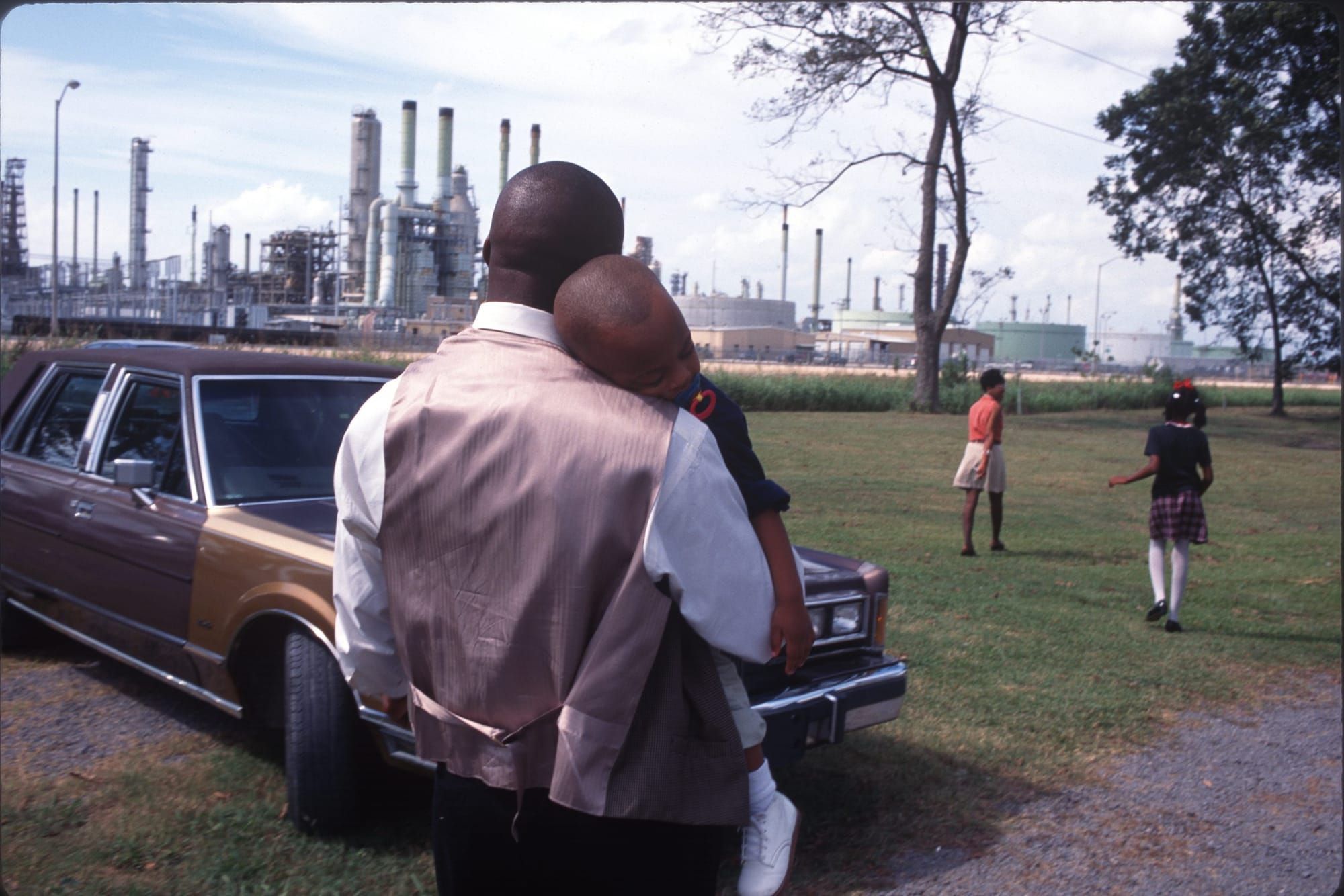
“I’m from people that, though they could not read or write, they understood that there was an existence that was being denied them,” LeBoeuf told Prism. “When they became free, they understood what that freedom was. I’m just three, four generations later, and we’re still fighting for the same things. We may have our freedom, but we don’t have it like we should. We find ourselves fighting for clean air, clean water, and clean soil in St James.”
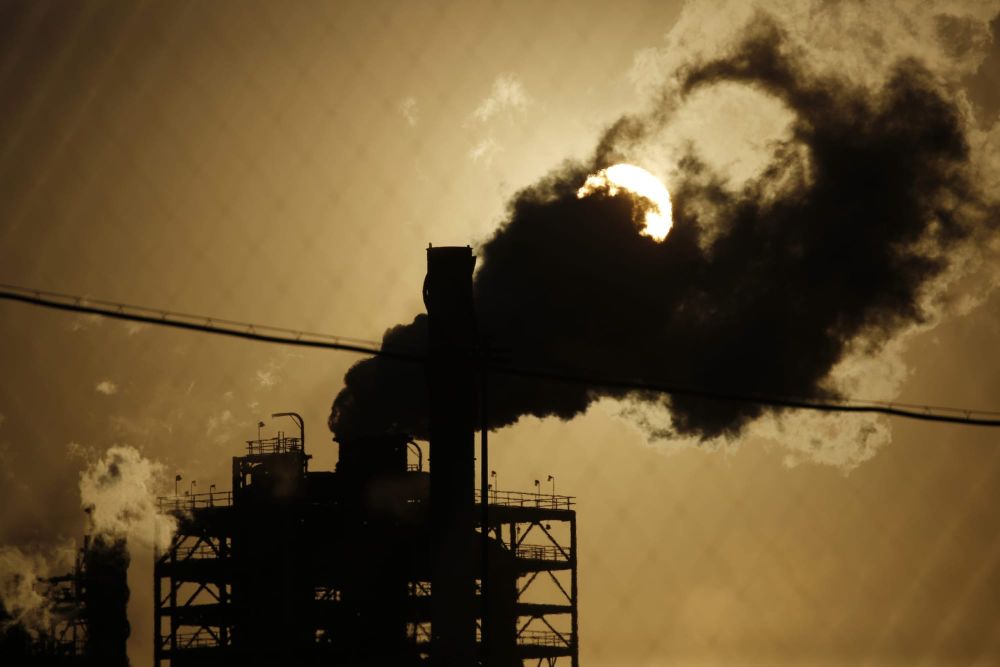
Located on the banks of the Mississippi River, St. James Parish is the heart of “Cancer Alley,” an 85-mile stretch of land where 200 industrial chemical facilities sit. For the past half-century, no industrial plant has been given a permit to build in a majority-white part of St. James Parish, the lawsuit alleges, while nearly all of the 32 plants imposed on the Parish have been granted permits to construct in the 4th and 5th Districts, where the population is 52% and 89% Black, respectively.
The area has a long history of residents battling industrial facilities; they argue that the area will not be sacrificed for corporate gain.
In 2021, RISE St. James founder Sharon Lavigne won the international Goldman Environmental Prize for her lifelong work organizing against toxic industry pollution in St. James Parish. Notably, in 2018 she helped defeat the land-use application by Wanhua, a Chinese chemical company and plastics manufacturer. St. James Parish officials rolled out the red carpet for the company by rezoning a residential area to allow for proximate industrial operations and by offering the multibillion-dollar company a 10-year tax exemption. Lavigne’s efforts ultimately led to the company withdrawing its application.
Until now, leaders at the helm of St. James Parish have largely avoided accountability for their decisions. The judge’s determination that the lawsuit can proceed is a turning point in the residents’ efforts to seek justice on behalf of themselves, their families, and their ancestors.
The lawsuit identified a longstanding pattern in which elected representatives of St. James Parish approved facilities seeking to entrench themselves in Black neighborhoods while sparing white communities of the concomitant toxic pollution. Facilities in St. James Parish release a number of carcinogens and mutagenic chemicals, according to the lawsuit, from particulate matter, sulfur dioxide, and benzene, to ethylene oxide. Chronic exposure to any one of these chemicals can result in cancer—giving the region its sordid nickname.
According to Environmental Protection Agency data, both the 4th and 5th Districts rank in the 95th to 100th percentile nationwide for Air Toxic Cancer Risk, the lawsuit says.
We have suffered enough. We don’t need anymore. The end result is death. All a Black neighborhood gets from a plant is death.
Myrtle Felton, co-founder of Inclusive Louisiana
While the cumulative impact of the compounded exposure has yet to be fully recorded, residents see that the end result for the region, most likely, is premature death. According to the lawsuit, Myrtle Felton, a co-founder of Inclusive Louisiana, told the St. James Parish Council, “We have suffered enough. We don’t need anymore. The end result is death. All a Black neighborhood gets from a plant is death.”
The lawsuit alleges that by allowing industry to take root in the majority-Black 4th and 5th Districts, officials have protracted and enlivened the vestiges of slavery. The complaint demonstrates the geographic overlay of plantations and chemical facilities, a pattern of environmental injustice that not only violates the Constitution, but has kept Black families in southern Louisiana in a destructive paradigm of poor health and economic immobility. It also presents a reality that bears similarities to periods of legal discrimination in the U.S. such as the Black Codes and Jim Crow, and dating back to enslavement, when Black people were not considered human, but property.
Meanwhile, white residents of St. James Parish are shielded from chemical exposure by design. A 2014 land use plan allowed for two-mile buffer zones “separating an industrial site from tourist plantations, schools, and Catholic churches,” according to the lawsuit. The plan did not outline buffer zones for Baptist or predominantly Black churches or schools in the 4th and 5th Districts.
LeBoeuf is hopeful that the lawsuit can be a blueprint for other communities fighting toxic pollution in their backyards.
“This is not an isolated incident,” LeBoeuf said. “St. James Parish is unique in how they did it, but this has been going on all across this country—the poor neighborhoods, Black and brown neighborhoods. … America has woken up to its own prejudices.”
Editorial Team:
Sahar Fatima, Lead Editor
Lara Witt, Top Editor
Rashmee Kumar, Copy Editor
Author

ray levy uyeda is a staff reporter at Prism, focusing on environmental and climate justice.
Sign up for Prism newsletters.
Stay up to date with curated collection of our top stories.