‘Solidarity is always the way forward’
In a Q&A with Prism, abolitionist organizer Kelly Hayes discusses her new anthology “Read This When Things Fall Apart,” featuring encouraging letters from movement leaders, writers, and activists
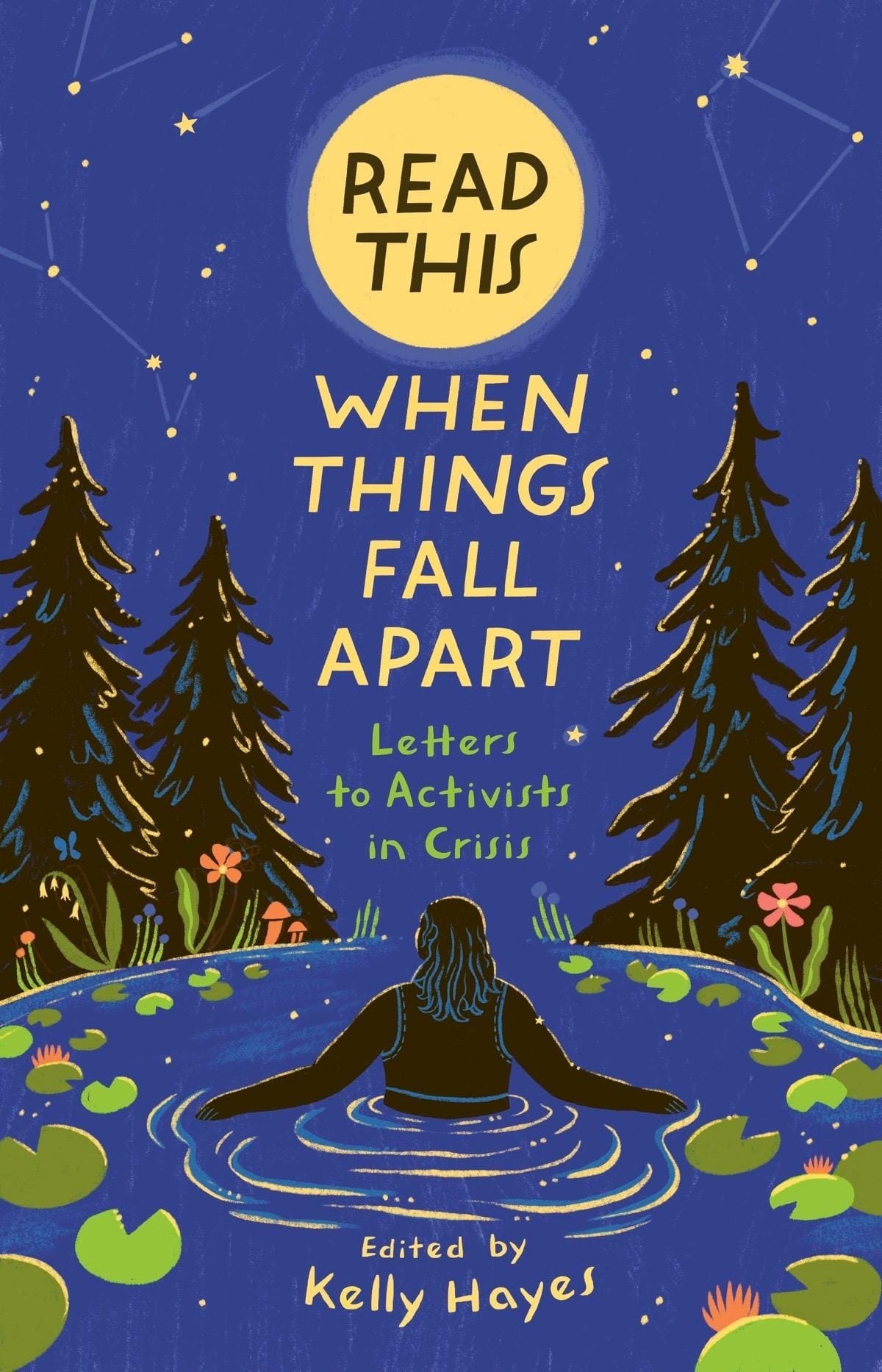
If you firmly believe that community is the path toward collective liberation, chances are you’ll recognize some familiar names in “Read This When Things Fall Apart: Letters to Activists in Crisis”: “No Cop City, No Cop World” anthology co-editor Micah Herskind, abolitionist organizer Mariame Kaba, incarcerated organizer Stevie Wilson, Truthout editor-at-large Maya Schenwar, and tech journalist Brian Merchant, among others.
Edited by organizer and “Movement Memos” podcast host Kelly Hayes, the new anthology compiles letters written by movement leaders, writers, and organizers who have faced burnout, grief, repression, and despair—and found ways to keep going. Contributors also dive headfirst into difficulties of political organizing, yet still offer advice for solidarity, imagination, and care as essential tools for our collective survival.
Needless to say, Hayes’ timing is impeccable. As the Trump administration guts services and funding for millions of people across the U.S., while also targeting immigrants, trans people, and other marginalized groups with state violence, many are feeling hopeless. Intended exactly for times like these, Hayes’ book is a salve.
“Read This When Things Fall Apart” will be released Nov. 4 by AK Press. Prism spoke to Hayes about movement work, navigating collective crises, and dealing with burnout. The conversation has been edited for length and clarity.
Adryan Corcione: What inspired the anthology format, which features letters to activists from multiple contributors?
Kelly Hayes: I see this book as a bundle of letters you can carry around in your purse or your backpack. We wanted to make something that felt loving and personal. Originally, it was going to be a zine. Our hope was to help people orient themselves and make the next right choice.
We talked about these letters as messages to friends and co-strugglers we haven’t met yet. We chose to write letters to people experiencing the crises and challenges addressed in the book because there’s something very human about a personal letter. Our written communications with other people are often constrained by character limits and expectations around brevity and getting to the point. Letter-writing almost feels like a lost art. Most people I know who still write long, thoughtful letters are either incarcerated or pen pals with incarcerated people. That’s a movement tradition: to resist the culture of forgetting those who are disposed of by the system.
Corcione: Is there a particular contributor you were really happy to have included?
Hayes: I’m grateful that this book includes a letter from incarcerated organizer Stevie Wilson. The perspective of incarcerated organizers is so important right now, because who in the U.S. knows more than they do about organizing under fascism? Letter-writing has a longstanding role in our movements across generations and continents. It’s something we ought to do more of, to break with the norms of social media and digital communication. There’s something about the personal nature of a letter, written from the heart, that runs counter to the artificial slop that is overtaking so many digital spaces. There are people who actually use generative AI to draft personal communications. We need to live and create in opposition to that artificial creep that’s phasing our humanity out of the words we share. We need more genuine connections, not less.
Corcione: How did you choose the writers who contributed to the anthology?
Hayes: This project started the way a lot of my projects start: with me sharing an idea with my friends first and asking, “Is this a good idea? Who wants to do this with me?” The people I spoke to about it early on were really into the idea, and the more people I talked to, the more the project bloomed. Most of the people whose writing is featured in this book are friends and co-strugglers of mine. Some are my best friends. A few are people I’ve been in conversation with over the years because our work and ideas overlap in important ways. It was really an organic process and a collective labor of love. I really didn’t set out to curate a particular set of perspectives. It was more about what a group of people, bound up in a web of relationships, had to offer.
Corcione: The text offers wisdom to activists and organizers across different identities and backgrounds, including anti-Zionist Jewish people, tech workers, and parents. Why is it important to read the letters that don’t apply to your particular organizing?
Hayes: There are ways that some lessons can apply to us, even if we’re not in a specific situation. For example, I have learned a lot from poet and cultural worker Atena Danner over the years about how to practice patience, how to navigate difficult conversations, and how to be welcoming to families and parents in our movement spaces. I’m not saying that all of her expertise in those areas is the result of being a parent, but her experiences as a parent definitely sharpened some of her skills and insights, which are important for those of us who aren’t parents. We don’t have to be in a particular situation to gain something from what others have learned.
Author and editor Maya Schewar’s letter is another strong example. I’m not an anti-Zionist Jewish person dealing with alienation due to divides in the Jewish community around the genocide in Gaza, but I know what it’s like to be part of a social group, a community, and a society that does not share my horror, alarm, or moral indignation about something I know to be wrong. More and more of us are going to have to grapple with that kind of alienation as fascism becomes the dominant social force in our society. The disposal of surplus human beings was already normalized in our society. To be a person who is awake to that injustice can feel deeply alienating. How do we cope with that alienation? How do we find and reach people who can be swayed and activated?
Corcione: Do you have any words to offer activists and organizers who struggle to step back from movement work during times of collective crisis?
Hayes: We all make mistakes and cause harm sometimes, but some of the worst moments I’ve seen good people have were when they were operating under pressure. These moments were the product of their not recognizing that they needed to pause, rest, and care for themselves. When we keep showing up ragged, exhausted, and raw, we are eventually going to snap and handle something poorly. Those impacts can ruin relationships, tank direct actions, or even cause organizations to unravel. If you’re struggling with centering your own needs for your own sake, please remember that when we are too tired and cannot self-regulate, we can often wind up having disproportionate reactions or addressing conflicts with words and actions that are not in alignment with our values.
We don’t work for our movements. We constitute our movements. When we are all exhausted, unwell, and highly reactive, due to unprocessed grief or trauma, that’s the state our movements are in as well. We need to pace ourselves in ways that allow us to access rest, healing, and joy, so that we can do this for the long haul.
Don’t treat yourself as disposable—that’s the logic of the deathmakers.
Kelly Hayes
Corcione: Donald Trump was reelected as you were working on this anthology. Did that change the direction of the project?
Hayes: Writer Leah Lakshmi Piepzna-Samarasinha added a note to their letter about suicidality, mentioning how Trump’s reelection might impact people’s emotional struggles, but I don’t think anyone else made any adjustments. Most of these letters were written with a sense of what our general political trajectory was—even if we couldn’t foresee all of the horrid specifics.
Authoritarianism, fascism, and collapse are forces and threats we’ve been grappling with for years. Even folks in blue cities have experienced authoritarian politics and policing in some contexts, as Micah Herskind describes in his letter about lessons from Atlanta, Georgia’s Stop Cop City movement. A lot of us had a sense of where all of this was going, which was why we knew this book was needed.
Corcione: If activists and organizers are still feeling burned out by the time they finish the book, do you have any words of wisdom to offer them?
Hayes: They should take care of themselves and wrap themselves in whatever makes life feel worthwhile. Whether that’s the company of friends, immersing themselves in nature, or maybe just the slow, gentle practice of doing things that feel restorative. When I am moving too fast, one of the first things I drop the ball on is my physical therapy exercises. I know I need to do them, or my back and shoulder will get worse, and there will be cascading consequences. But I sometimes let those routines fall away, because other things feel more pressing. Maybe ask yourself: What have I sacrificed that I need to reclaim? What have I neglected? Who or what do I need to reconnect with? I would slowly and gently try to put those things back into place, or even find them for the first time.
You’re a human being. Don’t treat yourself as disposable—that’s the logic of the deathmakers. Make yourself whole. You don’t just deserve healing and joy; you need those things. We need you here, on earth, in your community, where you belong.
Corcione: What major takeaway do you hope readers get from this book?
Hayes: I hope this book helps people to continue reaching for each other, rather than recoiling, isolating, or giving up. Solidarity is always the way forward. In spite of all the ways we sometimes disappoint each other, we are each other’s best hope. We have to keep inviting each other, welcoming each other, listening to each other, encouraging each other, and comforting each other. We have to help each other build the confidence to believe that together, we can make good things happen. When we have that confidence, we’re more likely to pool our capacities in meaningful ways and make lasting political commitments. We were never meant to survive alone. We need each other, and we need to help each other stay.
Editorial Team:
Tina Vasquez, Lead Editor
Carolyn Copeland, Top Editor
Stephanie Harris, Copy Editor
Author
Adryan Corcione is a white queer essayist and journalist living on occupied Lenape land. Their writing has appeared in Teen Vogue, Truthout, Filter Mag, and more, covering topics like harm reduction,
Sign up for Prism newsletters.
Stay up to date with curated collection of our top stories.